(Less Delayed) Report from the Fronts #31: July 1917


July began with the aptly named July Offensive of the Russians.  It was launched by the Minister of War and de facto head of the Provisional Government, Alexander Kerensky (hence also named the Kerensky Offensive), and commanded by Aleksei Brusilov of the successful Brusilov Offensive of 1916.  Kerensky, determined to honor his commitment to the Allies, completely underestimated the popular desire for peace, which the Bolsheviks were demanding, and overestimated the state of the army, which was deteriorating rapidly.  Brusilov was convinced a military collapse could not be avoided, but he would take a shot at a new offensive.
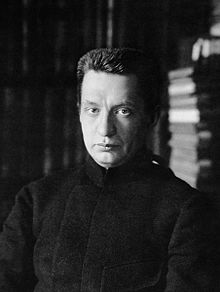
Kerensky
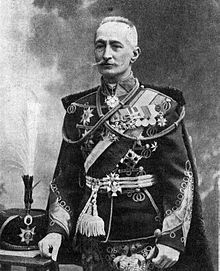
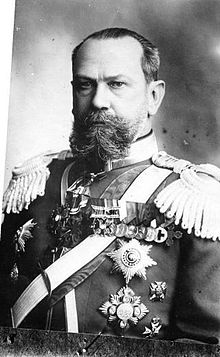
General Brusilov
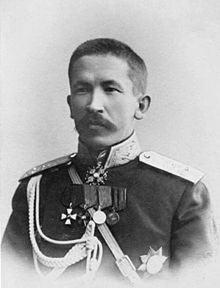
General Kornilov
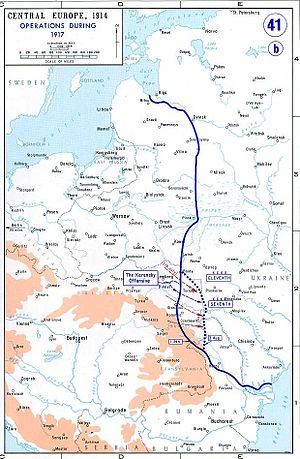
The July Offensive

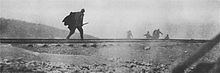
The offensive literally began with a bang, the biggest artillery barrage of the Eastern Front, which blew a hole in the Austrian lines and allowed an advance, but German resistance caused mounting Russian casualties.  Morale began to crumble even more quickly, and with the exception of General Lvar Kornilov’s well-trained shock battalions, the infantry essentially stopped following orders.  The advance ended completely on 16 July, and three days later came the inevitable German-Austrian counterattack, which drove the Russians back 150 miles, right into the Ukraine.

The failure of the July Offensive to a great extent doomed the Provisional Government, though the ultimate success of the Bolsheviks would depend upon a certain amount of luck.  On 19 July Kerensky replaced Prince Georgy Lvov as Prime Minister and became Commander-in-Chief in August, but the handwriting on the wall was growing larger.  When the July Offensive came to a halt on the 16th, soldiers and workers, demanding “all power to the Soviets,” began demonstrations in St. Petersburg and other cities, the July Days.  The Bolshevik leadership was taken by surprise, but ultimately supported the movement, only to be confronted with troops loyal to the Provisional Government.  The Central Committee of the Bolsheviks called off the demonstrations on 20 July, and Kerensky began a wave of arrests.  Lenin narrowly escaped capture, but many other Bolsheviks, like Leon Trotsky and Grigory Zinoviev, ended up in prison.

Grigory Zinovievba
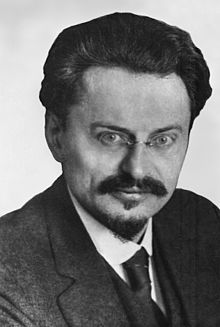
Leon Trotsky
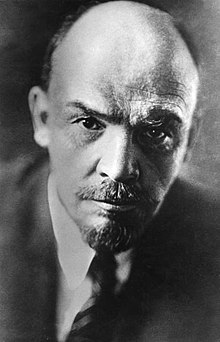
Vladimir Lenin
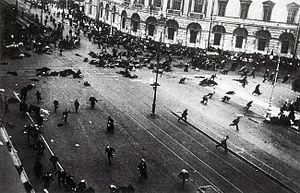
Riot in St. Petersburg


Not to be outdone, at the opposite end of the war the British launched the Battle of Pilckem Ridge on 31 July.  Actually, Pilckem Ridge was the first of a series of offensives collectively called the Third Battle of Ypres (or Passchendaele), which would stretch into December and were a continuation of the Flanders Campaign begun with the Battle of Messines Ridge in June.  “Wipers,” as Tommy called it, would be a four month mud bath for Commonwealth troops.

Typical Ypres conditions
German prisoners

Third Battle of Ypres

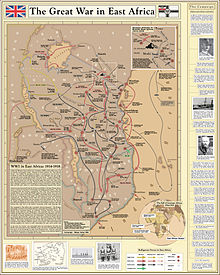
On a more romantic – and drier – note, on 6 July Colonel Lawrence and his Bedouins captured the town of Aqaba with virtually no casualties, though not quite as the movie depicted it.  The real fight was on 2 July at Abu al Lasan about fifty miles northeast of Aqaba.  A separate Arab force had seized a blockhouse there, but a Turkish battalion recaptured it and then killed some encamped Arabs, which outraged Auda Abu Tayi, the leader of Lawrence’s Howeitat auxiliaries.  He took the town, slaughtering some 300 Turks, and local tribes flocked to him, swelling Lawrence’s force to 5000.  They then moved on Aqaba, which had already been shelled by Allied naval forces, and the garrison surrendered at their arrival at the gates.  Lawrence then immediately returned to Cairo, a camel ride of over 200 miles.

Aqaba today

Triumphal entry into Aqaba

Lawrence at Aqaba

Auda Abu Tayi


In miscellaneous news from July, on the 2nd the first regular merchant convoy left Virginia for Britain, and on the 7th the last daylight air raid on London took place, producing over 200 civilian casualties. On 28 July the British Army formed a Tank Corps, and on the 17th the Palace, responding to anti-German sentiment, announced that Britain was no longer under the House of Saxe-Coburg and Gotha (from Queen Victoria’s consort Albert) but the House of Windsor.  Kaiser Wilhelm, King George V’s cousin, responded that he planned to see The Merry Wives of Saxe-Coburg-Gotha.

King George V
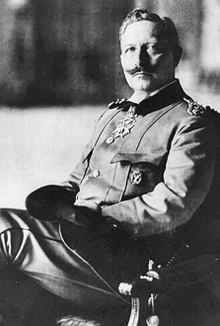
Cousin Willy


Finally, in a very clever move, on 22 July King Rama VI of Siam (Thailand) declared war on the Central Powers.  Through adroit diplomacy, playing the French and British against one another, Siam had managed to remain the only independent state in southeast Asia and saw an opportunity to strengthen its position and gain influence in the postwar world order by sending a token force to the Western Front.  It would work (and Bangkok is now a favorite destination for European – and especially German – tourists).
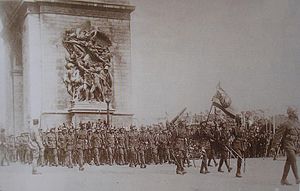
The Thai Expeditionary Force at Paris
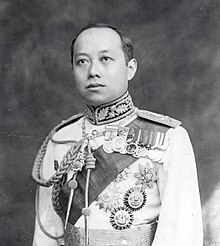
King Rama VI


Report from the Fronts #23: November 1916

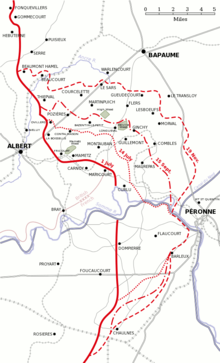
The big news of November, certainly for British troops, was the end of the Somme Offensive.  On 11 November the Battle of Ancre Heights, begun on 1 October, came to end, and two days later the Battle of Ancre began, supposedly to take advantage of German exhaustion from the previous fight.  In fact Haig also wanted a success to counter criticism of the whole campaign and to improve the British position at an upcoming Allied conference.  He was also under pressure to prevent German troops from being sent east, though it is hard to see how this small scale operation (12 British against 4 German divisions) could make any difference to the Russians and Romanians.

German prisoners at Ancre

German prisoners at Ancre

British cavalry at Ancre

British cavalry at Ancre

Battle of the Somme

Battle of the Somme

The Battle of Ancre came to an end on 18 November.  Five days of fighting had left the British with about 20,000 casualties and the Germans with some 45,000 (for the period 1-18 November), which was considered by some officers to be a victory.  The troops involved in the fighting were apparently not polled on this question.  With the winter snows beginning Ancre became the last push of the Somme Offensive, which in four and a half months of combat had moved the front eastward some four miles..

The cost for these gains was staggering.  Figures are still being disputed a century later, but Commonwealth casualties were about 420,000, French around 200,000 and   German losses anywhere from 450,000 to 550,000.  The traditional view has been that the Somme was an unmitigated disaster – German officer Friedrich Steinbrecher: “Somme, the whole history of the world cannot contain a more ghastly word” –  but some argue that the Allies had no other strategic option in 1916 and needed to do something to relieve pressure on the Russians.  There is indeed evidence that the German army was seriously weakened and demoralized by the Somme, but it nevertheless still took another two years to collapse.

Meanwhile, the Italian version of the Somme went on.  On 1 November General Cadorna launched the Ninth Battle of the Isonzo, attempting again to enlarge the Gorizia bridgehead with his exhausted troops.  It ended on 4 November with minimal gains and 39,000 Italian and 33,000 Austrian casualties.  The Italians were suffering, but Austrian manpower problems were even greater, and German units were desperately needed.  For the moment, however, the front shut down for the winter, to the delight of troops on both sides of the line, I expect.

Over the top at Isonzo Nine

Over the top at Isonzo Nine

Isonzo front

Isonzo front

On the Macedonian Front the Allies were more successful.  In response to the Bulgarian offensive into eastern Macedonia in August the Allies counterattacked in September and by November were into Serbia, capturing Monastir on the 19th.  On the same day the Allies demanded that the Royalist government in Athens expel ministers of the Central Powers and turn over all war material.  Athens refused, and on 23 November the Venizelos government in Salonika declared war on Germany and Bulgaria.  On 30 November Allied troops landed at the Piraeus, the port of Athens.  Greece was on the edge of civil war.

King Constantine

King Constantine

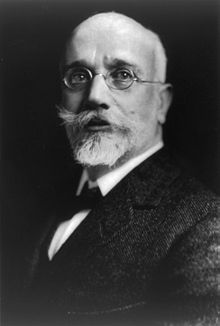
Eleftherios Venizelos

Eleftherios Venizelos

French troops at Athens

French troops at Athens


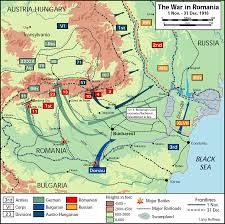
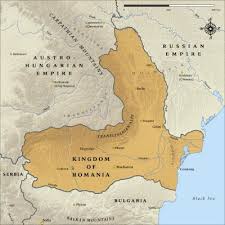
Romania, meanwhile, was in serious trouble.  On 1 November the German Ninth Army under former Chief of Staff Erich von Falkenhayn moved southeast out of the southern Carpathians.  The exhausted Romanians could not resist the 80,000 troops and 30,000 horses, and German cavalry was in Craiova on 21 November, pushing the Romanians east towards Bucharest.  Another part of Falkenhayn’s army assaulted the Vulcan Pass on 10 November, and by the 26th they were in the Romanian plain.  (An up and coming young officer participating in the Battle of Vulcan Pass was Erwin Rommel.)  On 23 November Mackensen, having essentially finished with the Dobruja, sent troops north across the Danube towards Bucharest.  It did not look good for Romania.

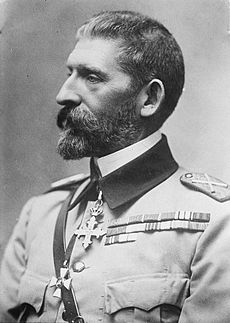
King Ferdinand and his troops

King Ferdinand and his troops

Romanian artillery

Romanian artillery

Romanian front

Romanian front

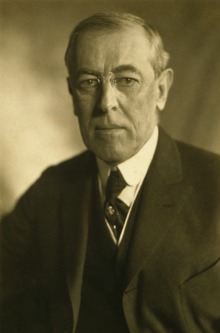
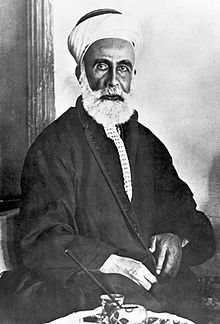
In miscellaneous news, on 4 November Sharif Hussein of Mecca was crowned King of the Arabs (the Saudis would have something to say about that), and on the 15th the British finally began moving across Sinai.  Germany and Austria proclaimed on 5 November the establishment of an independent Polish state, which I expect most Poles greeted with skepticism, and Woodrow Wilson was reelected President of the United States.  And Beatty replaced Jellicoe as the Commander-in-Chief of the Grand Fleet on 29 November.

Woodrow Wilson

Woodrow Wilson

Hussein ibn Ali  King of the Arabs

Hussein ibn Ali
King of the Arabs


A more momentous event was the death from pneumonia on 21 November of Franz Joseph I, Emperor of Austria, King of Hungary and Croatia, King of Bohemia.  Politically and militarily the death of the 86 year old ruler meant little, especially inasmuch as the Austrian war effort was increasingly controlled by the Germans.  But Franz Joseph was nevertheless a monumental figure; he had ascended the throne in 1848 and at 68 years was the third longest reigning monarch in European history (Louis XIV of France 72 years; Johann II of Liechtenstein 71 years).  More than his fellow monarchs he symbolized the old Europe that, like his Empire, was being destroyed by the Great War.

Franz Joseph I 1851

Franz Joseph I
1851

Franz Joseph's tomb in the Vienna crypts

Franz Joseph’s tomb in the Vienna crypts

Franz Joseph I 1910

Franz Joseph I
1910


.

Report from the Fronts #20: September 1916

September 1916 is depressingly similar to August: more British attacks on the Somme front, more French assaults on Fleury, another Isonzo and the never-ending chase in East Africa.  The novelty is the entrance of the Romanians into the fray, but in the end (spoiler alert!) they will only reprise the poor Serbians.

The detritus of death

The detritus of death

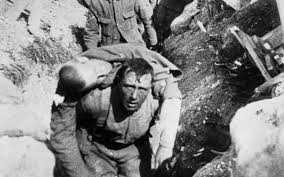
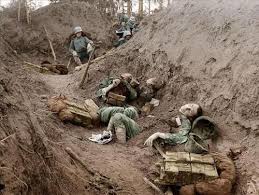
Death in the trenches

Death in the trenches

Life in the trenches - British

Life in the trenches – British

Life in the trenches - some Germans

Life in the trenches – some German

Over the top

Over the top


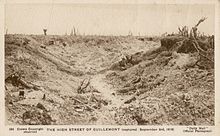
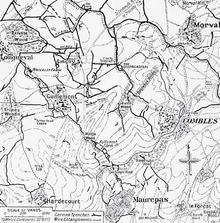
On the Somme, in order to protect the Delville Wood salient the British launched an assault towards Guillemont to the south on 3 September (the same day the Battles of Delville Wood and Pozières ended), capturing the village on the first day.  Meanwhile, the French captured Clèry, but on the 4th the Germans counterattacked – possibly their biggest in the Somme campaign – almost stopping the entire offensive, which was already bedeviled by poor Allied coordination and British supply deficiencies.  The Battle of Guillemont ended on 6 September – to be followed on 9 September by the Battle of Ginchy, which was seized, and small advances by the French south of the Somme.

Guillemont - High Street

Guillemont – High Street

On to Ginchy

On to Ginchy

German trenches and wire on the Somme front

German trenches and wire on the Somme front

Battle of the Somme

Battle of the Somme

The eternal face of wqr

The eternal face of war

The new face of war


On 15 September the third and final general offensive by the British in the Somme campaign began with the Battle of Flers–Courcelette, situated roughly a mile north of Bazentine and Pozières.  The British and French, who advanced in the south, failed to encircle Combles, the strategic objective, when the battle ended on 22 September, but the assault was resumed on 25 September with the Battle of Morval, followed a day later by the Battle of Thiepval Ridge.  (Getting confused?  So were the Allied commanders.)  When the offensive ended on 28 September, Combles had been captured but the British were still short of their ultimate objectives – Thiepval was not captured – slowed by the weather and crumbling coordination among the various units.   The Germans allowed no serious breakthrough, but suffered very heavy casualties – 135,000 for the month of September.

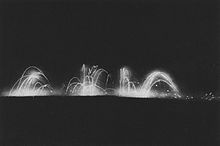
Battle of Thiepval at night

Battle of Thiepval at night

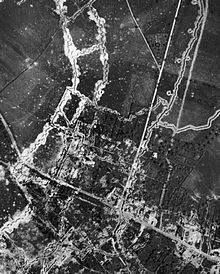
Thiepval

Thiepval

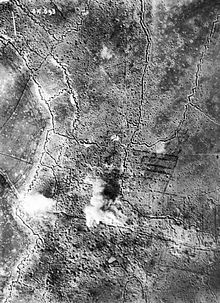
Bombardment of Thiepval

Bombardment of Thiepval

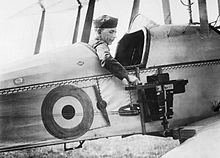
British plane with reconnaissance camera

British plane with reconnaissance camera

(The one noteworthy development in this dreary series of battles for a few thousand yards of territory was the first appearance of the tank.   This will be examined later.)

Meanwhile, down the road from the Somme the French carried on with their own show.  On 9, 13 and 15-17 September assaults were made on Fleury – or what was left of it.  The beat goes on.

In Italy General Cadorna decided it was time for another shot, and on 14 September the Seventh Battle of the Isonzo began.  Quick to learn, Cadorna abandoned the wide front offensive and instead focused on a specific object: extending the Gorizia bridgehead.  But making no headway, he called off the assault on the 17th.  The score for the seventh inning: 17,000 Italian casualties, 15,000 Austrian.  In fact, he was wearing away Austrian resources, though one wonders how excited his troops were to know that.

The real action was in southeastern Europe, where the Central Powers were responding to the Romanian attack into Transylvania.  The Allies had apparently assumed that because of the Somme and the still moving Brusilov Offensive the Central Powers would have difficulty dealing with Romania.  They were wrong.

Romanian invasion of Transylvania

Romanian invasion of Transylvania

It is true that once the Romanians made their way through the difficult passes in the Carpathians, which bordered Transylvania on the east and south, they encountered weak resistance, but the Austrians sent in four divisions and the Germans eight under Falkenhayn (who was looking for work).  Though the Romanians felt they were on the verge of breaking through into the Hungarian plain, on 18 September Falkenhayn launched an offensive in the southeast and the Romanian push halted, partly because of Falkenhayn and partly because of growing threats to Romania itself.  (Incidentally, in the course of the war 150,000 Romanians died as soldiers of the Austrian-Hungarian army.)

Queen Maria decorating troops

Queen Maria decorating troops

Joffre inspects Romanian troops

Joffre inspects Romanian troops

Romanian troops in Transylvania

Romanian troops in Transylvania


On 1 September Bulgaria declared war on Romania, presumably elated at the prospect of crushing her neighbor and gaining more territory.  The next day General Mackensen’s Danube Army, a mixed bag of Bulgarians, Turks and some Germans, invaded the Dobruja, the Romanian province stretching along the Black Sea from the Danube delta south to Bulgaria.  By 16 September Mackensen, brushing aside Romanian and Russian troops, was just short of the key port of Constanza, where his drive was halted by the Russians and Romanian troops pulled out of Transylvania.

No medals for these Romanians

No medals for these Romanians

Mackensen crossing the Danube

Mackensen crossing the Danube

Counter-offensive against Romania

Counter-offensive against Romania

Another reason the Romanians were having difficulty was the failure of the Allies to live up to their agreements.  They were receiving only ten percent of the ammunition they were promised, the Russians had failed to send sufficient forces into the Dobruja and the promised offensive on the Macedonian front produced very little.  And speaking of Greece, the Albania government showed up in Salonika on 20 September, and on the 29th Venizelos, having fled Athens four days earlier, formed an opposition government on Crete.

In miscellaneous news, though losing town after town, Lettow-Vorbeck and his askaris nevertheless continued to elude a quarter million South African troops in East Africa.  By the end of September Arab forces had captured Ta’if and with the help of the Royal navy the Hejaz coastal towns of Rabegh, Yenbo and Qunfida.  During these operations 6000 Ottoman prisoners were taken, and of those POWs 700 Arabs from Mesopotamia joined the Revolt; one of these was Nuri as-Sa’id, who would later be Prime Minister of Iraq.

Nuri as-Sa'id

Nuri as-Sa’id

Arab mounted troops

Arab mounted troops

the Hejaz

The Hejaz

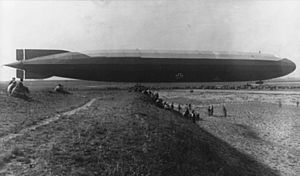
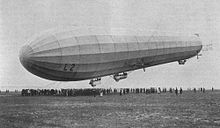
On 1 September the New Zealand Compulsory Military Service Bill became operative, filling the need for more Allied bodies to feed into the meat grinder.   And on 2 September 16 German airships, the largest airship attack of the war, bombed London and on 24 September Allied aircraft bombed the Krupp works in Essen.  In both cases the damage was negligible – as was the case with strategic bombing throughout the war – but the raids underlined what the Great War was already revealing: the world was changing dramatically.  Not that this would stop Europe from rushing into another war.

A Schütte-Lanz airship

A Schütte-Lanz airship

The British Handley-Page bomber

The British Handley-Page bomber

Gotha bombs

Gotha bombs

The German Gotha bomber

The German Gotha bomber

A Zeppelin airship

A Zeppelin airship


Report from the Fronts #19: August 1916

August 1916 marked two years of war and was little different from the month before or the one to follow.  On the Somme front the Battles of Delville Wood and Poziéres continued, piling up casualties for little gain and emulating the ongoing action to the south at Verdun.  There on 1 August the Germans launched a surprise assault on Fort Souville and were duly counterattacked by the French, who on 18 August recaptured Fleury – or what was left of it.

Fort Souville

Fort Souville

Poilus attacking Fleury

Poilus attacking Fleury

Fort Souville today

Fort Souville today


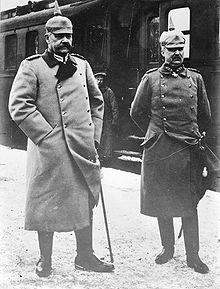
On 29 August Verdun claimed a major German casualty when Falkenhayn was sacked as Chief of Staff and replaced by Hindenburg.  The apparent failure of the Verdun campaign and the beginning of the Somme and Brusilov Offensives played into the hands of Hindenburg and Ludendorff, who had been conspiring against Falkenhayn.  Ludendorff became First Quartermaster-General, but he was in fact the real power, rapidly assuming control of the entire military and ultimately the Reich itself.

Falkenhayn

Falkenhayn

Hindenburg and Ludendorff

Hindenburg and Ludendorff


To the south the Isonzo Follies started up again as General Cadorna sought to take advantage of an Austrian line weakened by the removal of troops for the Trentino Offensive.  The Sixth Battle of the Isonzo (or Battle of Gorizia) kicked off on 6 August with a two pronged assault against the long-sought prize of Gorizia, which the Austrians abandoned on 8 August.  Gorizia was the gateway to Trieste and Ljubljana, but the poorly equipped Italian troops could make no further headway and Cadorna ended the offensive on 17 August.

Gorizia

Gorizia

General Luigi Cadorna

General Luigi Cadorna

Isonzo front

Isonzo front

This was Cadorna’s first success, and Italian morale skyrocketed with the capture of the city they had wanted since 1914.  But they wanted Gorizia in order to seize Trieste and invade Slovenia, and in fact that would never happen, leaving Cadorna with only a wrecked city and more dead: 21,000 (not counting the missing) to the Austrian’s 8000.  Throwing 22 divisions against 9 Austrian allowed the (limited) breakthrough to Gorizia, but Cadorna’s frontal assaults were extremely costly.

Exhausted Italian troops

Exhausted Italian troops

Battle of Doberdo (beginning of Isonzo six)

Battle of Doberdo (beginning of Isonzo Six)

Gorizia after capture

Gorizia after capture


Not costly enough, however, to prevent Rome from sending troops to join the growing international camp at Salonika on 12 August, presumably to back up Italian claims in the western Balkans. On 28 August Italy declared war on Germany, apparently under pressure from the Allies, since the two countries were not in direct conflict (German troops would not appear on the Italian front until 1917) and actually benefited from non-belligerence.

Meanwhile, Greece tottered toward open participation in the war.  National pride and the Bulgarians in Macedonia spurred the Venizelist (pro-Entente, anti-Royalist) forces clustered in Salonika, and on 29-30 August Venizelist officers, supported by the Allies, launched a successful coup against the loyalists.  Troops across northern Greece joined the revolt, and the seed of a government in opposition to Athens, the “National Defense Committee,” was formed.  Loyalist officers fled south.

Greek troops in Salonika

Greek troops in Salonika

Admiral Kountouriotis, Eleftherios Venizelos, and General Danglis.

Admiral Kountouriotis, Eleftherios Venizelos, and General Danglis.


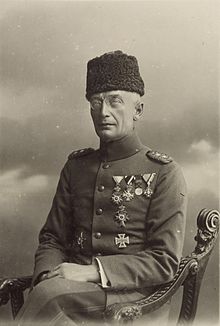
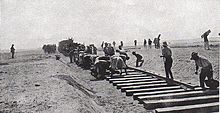
To the south the Turks, who had been steadily creeping across Sinai during July, took what would be a final shot at the Suez Canal on 3 August, advancing towards Romani, about 20 miles from the Canal.  The British had been busy, however, building a rail line east out of Kantara and could now send out more substantial forces.  The result was the Battle of Romani on 3-5 August, during which the Turkish army was decisively defeated, suffering 9200 casualties to the Allied 1130.  But the Ottoman commander, Friedrich Kress von Kressenstein, had prepared fortified positions during his advance, and his surviving forces were able to execute an orderly retreat.  Nevertheless, by 12 August the Turks had been driven all the way back across Sinai to El Arish.  The Battle of Sinai had ended and the Battle for Palestine could begin.

Australian 8th Light Horse at Romani

Australian 8th Light Horse at Romani

Kress von Kressenstein

Kress von Kressenstein

Turkish advance and retreat in Sinai

Turkish advance and retreat in Sinai

Building the railroad across Sinai

Building the railroad across Sinai

Kressenstein with a smoke

Kressenstein with a smoke


The big news of August 1916 was the entrance of Romania into the war.  King Carol I, a Hohenzollern like the Kaiser, had signed a defensive alliance with the Central Powers, but in 1914 the Romanian people favored the Allies and Romania remained neutral.  King Ferdinand I, who succeeded Carol in October 1914, was more inclined towards the Entente and wanted Transylvania, an Austrian province with a Romanian population, but was wary of the Russians and being left in the lurch by the French and British.  Only after the Allies agreed to stringent terms (most of which were subsequently ignored) did he make his move.

British propaganda

British propaganda

Romanian invasion of Transylvania

Romanian invasion of Transylvania

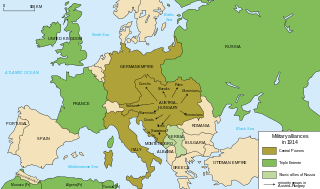
Romanians (black) in 1914

Romanians (black) in 1914

Romania om 1914

Romania in 1914

King Ferdinand I

King Ferdinand I

An alliance was made with the Entente on 17 August, and on the 27th Romania declared war on Austria-Hungary and began mobilization.  The next day a Romanian army invaded Transylvania, prompting Germany to declare war; Turkey followed on 30 (?) August and Bulgaria on 1 September.  September would not be a good month for the Romanians.

Oh, the South Africans and Belgians continued capturing towns in East Africa, but Lettow-Vorbeck continued to lead them on a merry chase.


Report from the Fronts #15: May 1916

May 1916 was a relatively quiet month, at least by Great War standards. Even the great “Blood Pump” of Verdun slowed somewhat, though that was scant comfort for the men, especially on the west bank of the Meuse, who became casualties during the weeks of back and forth.  At the beginning of the month Pétain was moved up to command of the Groupe d’armées du centre (Army Group Center), and the Second Army, defending Verdun, was given to General Robert Nivelle, who determined to recover Fort Douaumont from the Germans.  Because of the impending Somme offensive, he was limited to one division with another in reserve (pocket change by Western Front standards), and after a three day bombardment General Charles Mangin, who was later known as the Butcher (“Quoi qu’on fasse, on perd beaucoup de monde” – “Whatever you do, you lose a lot of men”), attacked on 21 May.

The Butcher

The Butcher

General Robert Nivelle

General Robert Nivelle

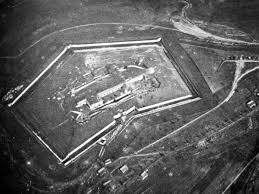
Fort Douamont before the war

Fort Douaumont before the war

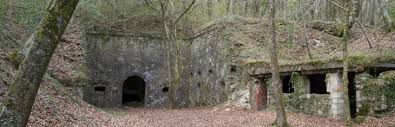
The French captured about half the fort the first day, but reinforcements were cut off by a German counter-attack and on 24 May the thousand soldiers in the fort surrendered.  The failed assault cost the French 5,640 casualties, about half the attacking force; the Germans lost 4,500 men.  Incidentally, the German defenders of Douaumont had already suffered casualties without the French lifting a trigger finger.  On 8 May some soldiers had attempted to make coffee using flamethrower liquid for fuel, and the cooking fire spread, igniting shells and a firestorm in the fort.  Hundreds died immediately, but more tragic – and by the dark standards of the war, comic – soot covered men fleeing the fort were shot at by their fellow soldiers, who thought they were being attacked by French African troops.

Fort Douaumont entrance today

Fort Douaumont entrance today

Inside Fort Douaumont

Inside Fort Douaumont

Inside Fort Douaumont

Inside Fort Douaumont

Fort Douamont today

Fort Douaumont today

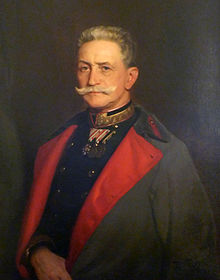
On the Italian front General Cadorna was not ready for the next installment of the Isonzo Follies, but the Austrians felt it was time for them to take a shot. Despite incredible supply difficulties because of the terrain the Austrian Chief of Staff, Franz Conrad von Hötzendorf, planned an offensive out of the Austrian-occupied Trentino, the area north of Lake Garda.  If the 11th and 3rd Austrian Armies could break the Italian line, they would be loose in the Venetian plain, only forty miles from Venice and behind the Italian forces on the Isonzo some eighty miles to the east.  And the plan actually almost worked.

General Luigi Cadorna

General Luigi Cadorna

General Franz von Hötzendorf

General Franz Conrad von Hötzendorf

Italian front

Italian front: Trentino offensive red arrows to the left

Cadorna had a quarter million troops in the area of the offensive, but Hötzendorf had managed to concentrate twice that number along a thirty mile front. Italian intelligence could hardly miss these preparations, but Cadorna was convinced, mainly by the terrain, that nothing would be going down there, and in any case his First Army commander ignored his orders to prepare deeper defenses.

Italian troops

Italian troops

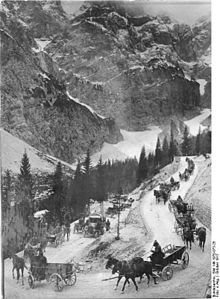
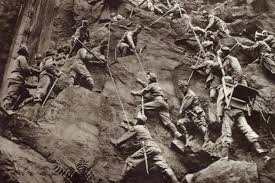
Fighting in the Alps

Fighting in the Alps

Austrian supply line

Austrian supply line

And so the Trentino Offensive (or Battle of Asiago) began on 14 May as 2000 Austrian guns opened up. The Italian center collapsed within days, and by the end of May the Austrians were six miles beyond Asiago and at the edge of the Venetian plain.  Cadorna rushed reinforcements to the area (the plain had an excellent railway grid) and the offensive was slowed by the immense logistical difficulties, but by the beginning of June the situation was definitely critical.

The inevitable result

The inevitable result

Fighting in the Alps

Fighting in the Alps

Asiago are after the offensive

Asiago area after the offensive

The Trentino Offensive was the only serious land engagement of May; major offensives were brewing on the Western and Eastern Fronts.  On 25 May a force from Rhodesia entered German East Africa, and both the Russians and British were occupying more territory in Persia.  By 15 May Russian forces were in northern Mesopotamia, and on 18 May a contingent of Cossacks made contact with the British on the Tigris River.

On 16 May the Second Military Service Act passed Commons and became law on the 25th; married men were no longer exempt.  The net was growing wider in order to supply the abattoir in France.

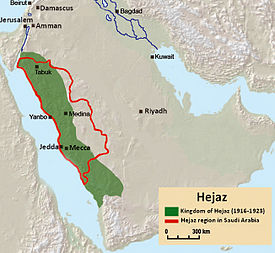
On 9 May the British and French agreed to the Sykes-Picot plan for partitioning the Ottoman Empire and on the 23rd notified the Russians, who were already on board.  Meanwhile, the Empire was about to break up on its own, as the Allies began blockading the coast of the Hejaz on 15 May.  The Turkish vilayet (province) of Hejaz comprised the western coastal area of the Arabian Peninsula south to Yemen, including the holy sites of Mecca and Medina, and was under the authority of the Sharif and Emir of Mecca, Hussein bin Ali, who had been in communication with the French and British and planned a revolt for June.

Mecca and the Kabba in 1910

Mecca and the Kaaba in 1910

Sharif

Sharif Hussein bin Ali

The Hejaz

The Hejaz

We will see.


Report from the Fronts #14: Unusual Banknotes

I recently acquired two banknotes that are pertinent to these reports. The first is a one rupee note issued in February 1916 by the Deutsch-Ostafrikanische Bank (German East Africa Bank).  It is actually an Interims-Banknote, a provisional banknote, which is hardly surprising inasmuch as the German colony was being invaded from every side.  Cut off from Germany and losing all the major towns, the colonial authorities began printing these emergency bills, ultimately using every sort of paper – even wrapping paper and wall paper – they could get their hands on.  When the regular paper ran out, they began using paper made from jute.  Coins were being minted from shell casings.

General Paul von Lettow-Vorbeck

General Paul von Lettow-Vorbeck

Interims-Banknote - obverse

Interims-Banknote – obverse

Interims-Banknote - reverse

Interims-Banknote – reverse


When Lettow-Vorbeck had to abandon the capital, Dar es Salaam, Governor Heinrich Schnee accompanied him and insisted on bringing the four tons of remaining banknotes.  This load required 400 porters and slowed the march, causing Lettow-Vorbeck to threaten to burn the lot if he was delayed again.  When in 1917 this supply was gone, along with the mints in Dar es Salaam and Tabor, Lettow-Vorbeck used a child’s printing kit to make crude Buschnoten, bush notes.

Buschnote - reverse

Buschnote – reverse

Governor Heinrich Schnee

Governor Heinrich Schnee

Buschnote - obverse

Buschnote – obverse

One wonders what a single rupee would get one in 1916 Tanganyika.


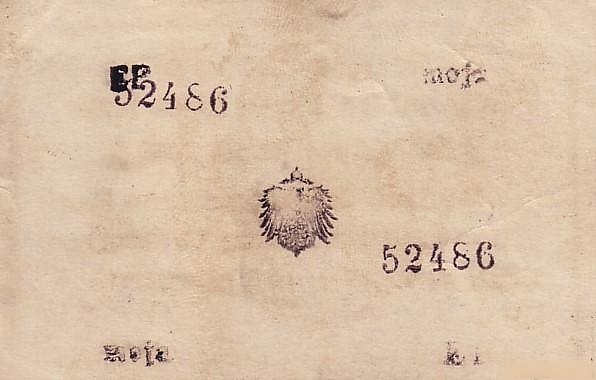
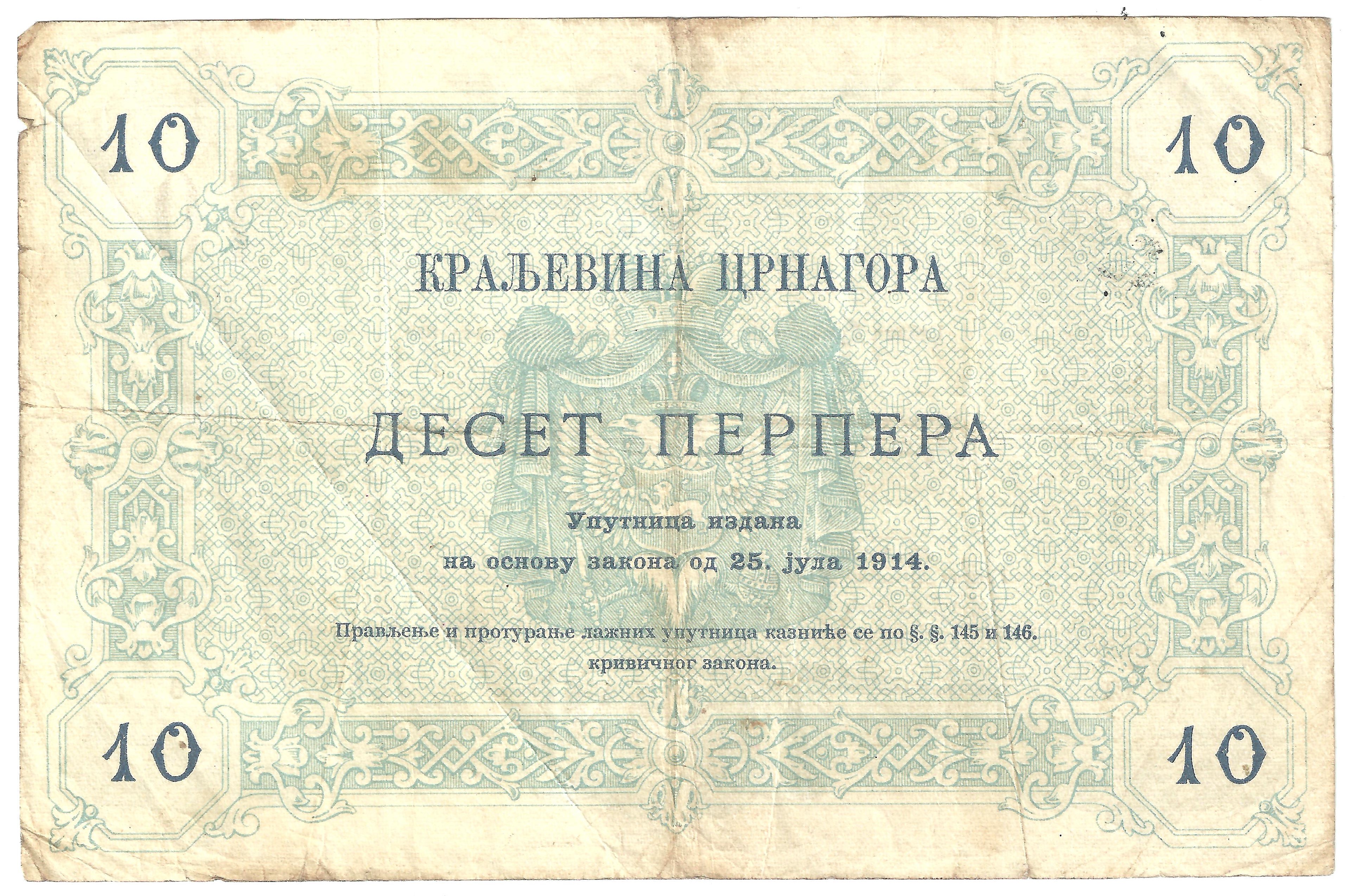
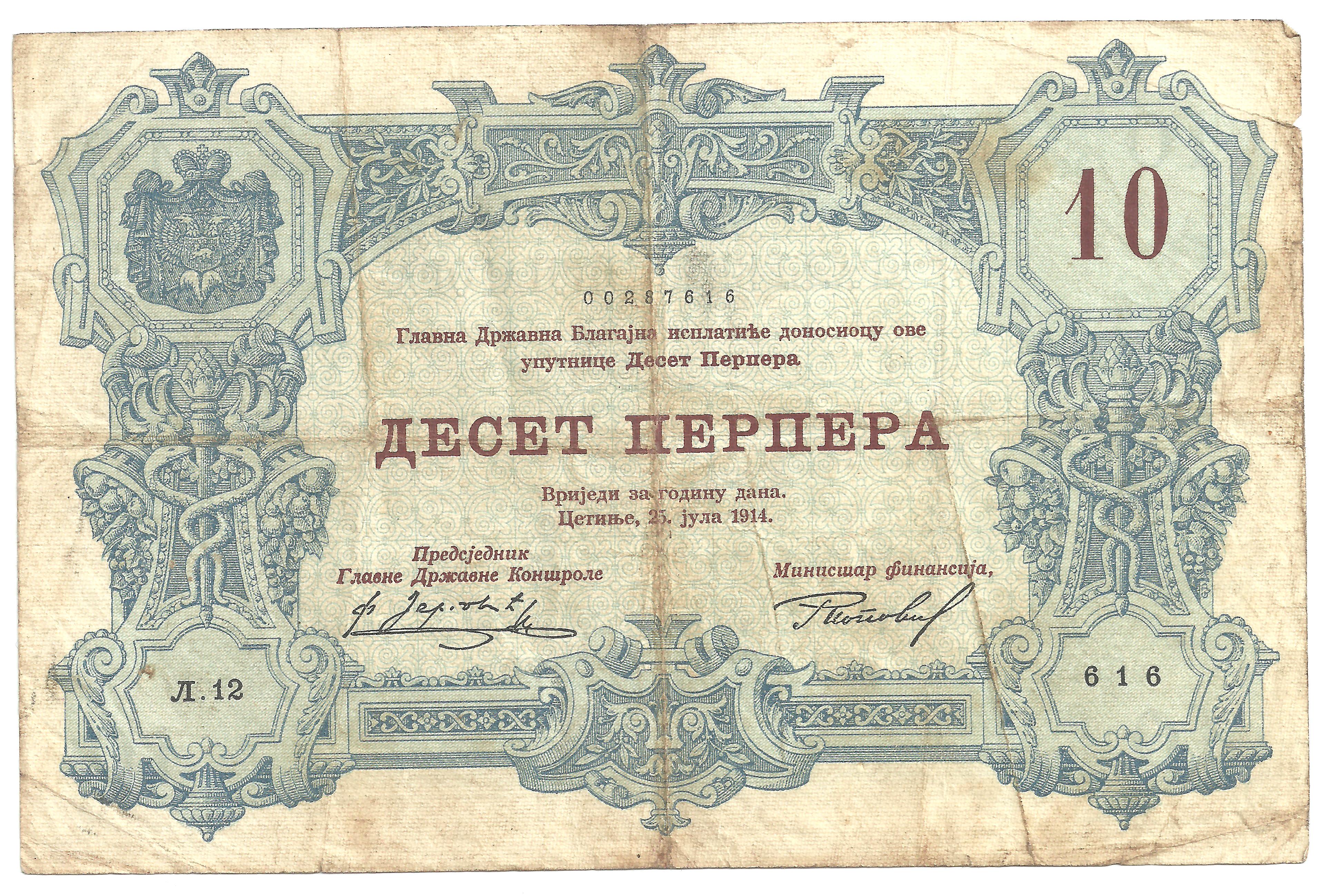
The second is more interesting – well, at least to me.  This is a ten perpera note issued in July 1914 by the Kingdom of Montenegro – Краљевина Црнa Горa (Kraljevina Crna Gora).  Why is this interesting?  Because although Montenegro was a discernable and frequently independent principality from the 16th century and was formally recognized as a kingdom by the Treaty of Berlin in 1878, it issued its own currency for only twelve years – or perhaps less.

10 perpera - reverse

10 perpera – reverse

10 perpera - obverse

10 perpera – obverse


In the second half of the 19th century Montenegro was using the Austria-Hungarian kroner (at least I think so, inasmuch as the new Montenegrin currency was based on the kroner), and this remained the case after 1878.  Prince Nikola I Petrović-Njegoš, ruler of Montenegro since 1860, introduced a national currency in 1906, the perper, named after the currency of Serbia. The king of Serbia, Alexander Obrenović, was assassinated in 1903, and Nikola believed himself to be the successor of the now extinct Obrenović dynasty and would unite all the Serbs.

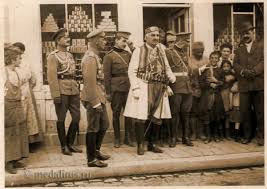
Nicola and friends

Nicola and friends

Proclamation of the Kingdom of Montenegro

Proclamation of the Kingdom of Montenegro

Nikola I of Montenegro

Nikola I of Montenegro

The 1906 issue was of small denomination coins, and gold perpera coins appeared in 1910, when Nikola proclaimed himself king. The first banknotes were not printed until 1912. In January 1916 both Serbia and Montenegro were overrun by the Austrians, and Nikola went into exile, ultimately in France. The Austrians subsequently overprinted existing perpera notes and in 1917 issued vouchers in perpera amounts.

The royal family before the war

The royal family before the war

The royal family in exile after the war

The royal family in exile after the war

In December 1918 Montenegro disappeared as an independent state, absorbed into the new Serbian dominated state of Yugoslavia, and Nikola was declared deposed, dying in exile a few years later. When Yugoslavia disintegrated in the 1990s and Montenegro became independent again, the government decided to use the Deutsche Mark and then the Euro. Thus, Montenegro essentially only issued its own currency from 1906 to 1916 and banknotes from 1912 to 1916.


Report from the Fronts #12: March 1916

(I have said next to nothing about life in the trenches, and rather than spend time detailing the unimaginable environment of the Western Front, I recommend two books. Richard Holmes, Tommy (2004) is an exhaustive but delightful study of every aspect of trench life, and Ernst Jünger, Storm of Steel (In Stahlgewittern) (many editions) is the sometimes surreal memoir of a German soldier who lived through the entire war.  I have discovered that my major chronological source for the war was in error regarding the Fifth Battle of the Isonzo, which began in March and not February.)


When we left Verdun at the end of February, the German offensive had stalled because of mud, and von Falkenhayn began considering whether to cancel the operation.  The expectation had been that artillery could suppress the enemy guns on the west side of the Meuse, but this did not prove to be the case, and the French artillery, well-positioned on heights and behind hills, wreaked havoc among the German troops advancing along and to the east bank of the river.  But the front crossed the Meuse north of Verdun, and von Falkenhayn was convinced by subordinates that a southward advance on the west side of the river could silence the French guns.  General Heinrich von Gossler’s plan involved assaulting the village of Mort-Homme and Hill 265 (sounds like Vietnam) near the Meuse on 6 March and then Avocourt and Hill 305 to the west on 9 March.

Phillipe Pétain (far left)

Phillipe Pétain (far left)

Falkenhayn

Falkenhayn

Verdun front at the end of March

Verdun front at the end of March

Like so many offensives on the Western Front, it did not work out that way.  Despite a heavy bombardment – Hill 304 was lowered by seventeen feet – the French artillery and counterattacks slowed the advance and inflicted great casualties.  Only after a week did the Germans achieve the objectives for the first day, capturing Hill 265 on 14 March.  On 22 March two German divisions attacked a position near Hill 304 and were slaughtered by a rain of shells, and the offensive came to an end.  By the end of the month the Germans had suffered 81,607 casualties for minimal gains, and Verdun was still French.  There would be nine more months of this.  The commander on the French side at this time, incidentally, was General Philippe Pétain, who would later become the head of state of the Germany puppet Vichy France (1940-44). 


Elsewhere in the war, the Fifth Battle of the Isonzo began on 9 March.  The Italian army in the north had been rested and refurbished, and the French were pressuring Rome for an offensive.  After four failed attempts one must suspect that there was little expectation of any breakthrough, and the point of the operation was in fact to relieve the pressure on the Russians and on Verdun, though how that would happen is not at all clear, especially in the case the French at Verdun.  Even General Cadorna termed the offensive a “demonstration,” which label of course made no difference to the troops, who would be just as dead when shot.

Austrian fort on the Isonzo front

Austrian fort on the Isonzo front

Though some fighting continued to the end of the month, the battle essentially ended after only six days because of the horrible weather conditions, demonstrating once again the futility of these assaults. Despite an almost three to one advantage in men and guns the Italians could make no headway, and each side suffered just under 2000 casualties.  How fine to die for your country in a pointless “demonstration.”  Incidentally, the stony ground and cliffs made this front even more dangerous, since every shell impact would produce a deadly cloud of stone splinters.

Under the same pressure to take some of the heat off the Western Front on 18 March the Russians launched the Lake Naroch offensive in White Russia (Belarus). The Russians had more guns and three times as many troops as the Germans and came up with a somewhat less than novel plan: (inaccurately) shell the German positions for two days and then send bunched formations of infantry charging across the muddy ground.  By the end of the operation on 30 March General Alexei Evert had gained six miles and lost 110,000 men to the Germans’ 20,000 (German estimates).  The Germans promptly retook the territory.

German troops at Naroch

German troops at Naroch

Russian troops at Naroch

Russian troops at Naroch

General Alexei Evert

General Alexei Evert

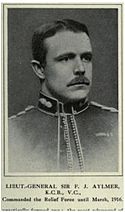
Meanwhile, the British troops besieged in Kut on the Tigris River had enough food to last until the middle of April, and in any case the spring rains would soon make the whole area a disease-ridden quagmire. On 8 March a relief force of some 20,000 under General Fenton Aylmer reached Dujaila, downriver from Kut, and assaulted a Turkish force half their size.  But the Turks, under the command of Golz Pasha and Halil Pasha (Halil Kut, a major actor in the Armenian genocide), had fortified Dulaila well, having learned a lot about entrenchment from Gallipoli. Aylmer lost about 4000 men to Golz’s 1200 and retreated down the river.  He was sacked on 12 March.

Turkish 6th army field headquarters

Turkish 6th army field headquarters

Halil Pasha - mass murderer

Halil Pasha – mass murderer

General Fenton Aylmer

General Fenton Aylmer

Golz Pasha

Golz Pasha

In Africa General Jan Smuts, who had fought against the British in the Second Boer War, invaded German East Africa (Burundi, Rwanda and Tanzania) on 5 March.  With an army of over 70,000 South Africans, Indians and Africans he struck southwest from British East Africa (Kenya), while Belgian forces attacked from the west.  On 10 March Smuts took back Taveta, just east of Mt. Kilimanjaro, and three days later Moshi, south of the peak.  The capture of Kahe, south of Moshi, on 21 March brought an end to the operations around Kilimanjaro; the Germans had left.  Lettow-Vorbeck had only 13,800 troops, mostly Askaris, and had no choice but to withdraw when faced with overwhelming numbers, something easily done given his superior mobility.  The Allies would steadily capture real estate, but never Lettow-Vorbeck, and meanwhile their troops were dying of disease.

Bridge destroyed by Lettow-Vorbeck

Bridge destroyed by Lettow-Vorbeck

General Paul von Lettow-Vorbeck

General Paul von Lettow-Vorbeck

General Jan Smuts (right)

General Jan Smuts (right)

hard to see map

hard to see map

The remainder of the events of March 1916 were of a political or strategic nature.  True to its word, on 1 March Germany expanded its submarine warfare, ultimately bringing the United States closer to involvement in the war.  On 9 March Germany declared war on Portugal, which had refused to return German steamers captured on the Tagus River in February; with even less reason Austria-Hungary also declared war six days later.  Actually, inasmuch as Portuguese East Africa (Mozambique) bordered on German East Africa there was indeed a point of contact between the two countries, and Lettow-Vorbeck would happily use that territory in his Great Chase with the British.

Lettow-Vorbeck

Lettow-Vorbeck

Allied interference in Persia continued, with Russian operations in the northwest and British forces – the south Persian Rifles under Sir Percy Sykes – in the south.  On 25 December 1915 the Allies had “persuaded” the Shah to appoint a more pro-Entente Prime Minister, Prince Farman Farma, and now on 5 March he and his cabinet were compelled to resign for refusing to support Russian-British control of the Persian military and finances.  Anglo-American meddling in Iranian affairs was just beginning.

Prince Farman Farma and Percy Sykes

Prince Farman Farma and Percy Sykes

            More “resignations.” On 15 (?) March Grand Admiral Alfred von Tirpitz, the father of the German navy, resigned as Secretary of State of the Imperial Naval Office, having lost the support of the Kaiser and naval establishment because, ironically, of his support for unrestricted submarine warfare.  More emblematic, on 29 March Alexei Polivanov, who had been struggling to reform the Russian army, resigned as the Minister of War.  In August 1915 he had argued against Nicholas’ assumption of supreme command and thus alienated Alexandra, who persuaded her husband to sack him.  One can hardly get choked up about the impending execution of this couple.

Empress Alexandra

Empress Alexandra

Grand Admiral Alfred von Tirpitz

Grand Admiral Alfred von Tirpitz

Alexei Polivanov

Alexei Polivanov

Finally, on 12 March the Allies held a conference in Chantilly to discuss the summer offensive; the outcome would be the nightmare of the Somme.  And there was another conference at Paris from 26 to 28 March, the result of which was a declaration of unity among the Allied powers: Britain, France, Belgium, Portugal, Italy, Serbia (which technically did not exist at the moment), Russia and Japan.  The Czar must have been delighted to have as an ally the power that had annihilated his Baltic and Far Eastern fleets a decade earlier.  (Yes, Japan; I have been ignoring the relatively trivial events of the Far East and Pacific.)

Paris in 1916

*Paris in 1916

(Delayed) Reports from the Front #11: February 1916

The major development in February 1916 was the commencement of the Battle of Verdun, perhaps the most horrific slaughter of the war, certainly for the French and Germans. (Later in the year the British – well, British generals – would show their own mettle in the face of mega-casualties with the Somme offensive.)  Meanwhile, less catastrophic battles went on around the periphery of the war.

On 9 February the British finally gained control of Lake Tanganyika when the German gunboat Hedwig von Wissman was sunk by the Mimi and Fifi.  But that was not going to stop Colonel Lettow-Vorbeck from leading a merry chase for the next three years.  On 17 February the last German troops in South Cameroon headed for internment in Spanish territory, and the following day the last German garrison (in Mora) surrendered, ending the thirty-two year German occupation of the colony; other white people would take their place for the next half century.  The allies also continued picking apart German East Africa.

The Hedwig von Wissman

The Hedwig von Wissman

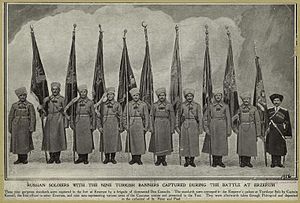
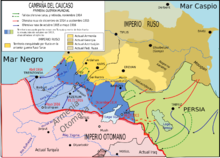
To the east the Russian Caucasus offensive begun in October of the previous year plowed on, and on 16 February Cossacks entered the strategically important city of Erzurum.  Compared to what was about to begin in the west, this was a trivial battle: the Russians suffered 9000 casualties, the Turks 15,000.  The Russian commander, incidentally, was Nikolai Yudenich, who would be one of the major counterrevolutionary White generals in the Russian Civil War.

Yudenich

Nikolai Yudenich

Russians in Erzurum

Russians in Erzurum

The Caucasus campaign

The Caucasus campaign

And in northern Italy General Cadorna, his army reorganized and under pressure to draw German troops away from the Western Front, launched the Fifth Battle of the Isonzo on 15 February. The offensive would last a month and result in nothing but more dead Italians and Austrians.  Nevertheless, the Isonzo Follies would go on.

Things were popping on the diplomatic and administrative fronts.  On 10 February the new British Military Service Act kicked in, and soon a growing wave of conscripted Tommies would be sucked into the maelstrom of the Somme.  The nickname “Tommy,” incidentally, came from a War Office instructional publication of 1815, in which the fictional trooper was named Tommy Atkins.  The name caught on as the universal designation of a British soldier, as epitomized in Kipling’s poem Tommy:


O it’s Tommy this, an’ Tommy that, an’ ‘Tommy, go away’;

But it’s ‘Thank you, Mister Atkins,’ when the band begins to play –

The band begins to play, my boys, the band begins to play,

O it’s ‘Thank you, Mister Atkins,’ when the band begins to play.

Rudyard Kipling

Rudyard Kipling


On this same day the last of the Serbian army moved to Corfu, followed the next day by an Italian force. On 16 February the Montenegrin army began its sojourn on the Isle of the Defeated.  Life there was not good.

While these Balkan troops were finding new accommodations, London decided the War Office rather than the India Office should henceforth direct the Mesopotamian campaign, which was now confined to attempting to rescue the army at Kut.  On 23 February a British Ministry of Blockade was created, a sign that the Allies were realizing – finally – that this would be war of attrition and the Central Powers must be deprived of supplies, including food.  This of course would cause problems with the neutral states in Europe.

The Germans were already attempting to starve Britain with their submarine warfare, which had certainly caused difficulties with the neutrals, especially the United States.  On 10 February Berlin notified Washington that armed merchant ships would be treated as hostiles, and on the last day of the month reminded the Americans that an extended submarine campaign would not be delayed.

And of far more importance to the next war rather than the present one, on 28 February Britain began creating the core of a strategic bomber squadron, which would be able to directly attack enemy industry.

Finally, the big one.  On 21 February the Germans launched an offensive towards the Verdun salient on the Meuse River.  Capturing this area would be strategically valuable, but the Chief of the German General Staff, von Falkenhayn, having concluded that Germany could not compete with Allied resources in a war of exhaustion, determined to bleed the French army white and force a separate peace.  Verdun was chosen as the target not so much because of strategy as its immense importance to French pride and as a symbol of national resistance.  The idea was that the French would do anything to defend Verdun and consequently throw endless numbers of poilus into the meat grinder.  (Poilu means “hairy one” and stemmed from the plethora of beards and mustaches sported by the troops.)

Poilus

Poilus

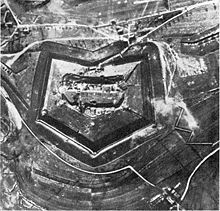
The citadel of Verdun itself had been fortified in the seventeenth century by the famous military architect the Marquis de Vauban, and the town was surrounded by two rings of 28 forts, modernized before the outbreak of the war.  The most important was Douaumont, occupying high ground to the northeast and thus in the direct line of the German attack.  Unfortunately for the French, seeing how easily the Germans had taken the Belgian forts in 1914, Joffre had decided traditional fortifications could not withstand German siege guns, and in 1915 the forts had been stripped of most of their guns and garrisons.  A more linear trench and wire line had been begun.  Joffre knew in January 1916 that the Germans were planning an assault on the Verdun front, but he assumed it was a diversion.

Fort Douaumont

Fort Douaumont

Marquis de Vauban

Marquis de Vauban

The meat grinder

The meat grinder

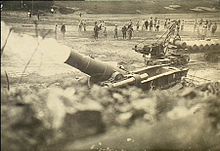
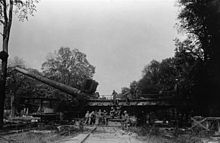
But the Germans were indeed serious.  They laid railway lines and brought up 1201 guns, two thirds of them heavy or super-heavy, such as the 420mm (16.5 in.) howitzer.  The plan envisaged firing 4,000,000 shells in eighteen days, which would require an average of thirty-three munitions trains a day.  One million Germans would assault a French garrison of some 200,000.

French heavy mortar

French heavy mortar

German railway gun

German railway gun

Verdun battlefield a century later

Verdun battlefield a century later

By 25 February German troops had moved forward almost two miles (employing flamethrowers for the first time), and a party of about 100 actually reached the northeast corner of Fort Douaumont, seeking cover from their own artillery fire.  They did not know the fort had been essentially abandoned, but encountering no resistance and fearing French artillery fire, they found a way inside and ultimately captured a warrant officer and twenty-five troops, most of the garrison.

German flame throwers

German flame throwers

French regiment at Verdun

French regiment at Verdun

The advance then bogged down, literally, as a brief thaw turned the ground to mud, making it extremely difficult to move the guns (one is reminded of Operation Barbarossa), which had been outrun by the infantry.  Meanwhile, by the end of the month the French had brought up 90,000 reinforcements, an impressive achievement given the inadequacy of their rail links to the Verdun region.

The serious slaughter was just beginning, but the battle would go on until December, the longest of the war.

Reports from the Front #10: January 1915

Most of the action in the first month of 1916 was in the Balkans and Mesopotamia. The troops on the Western Front were busy enough fighting the mud and cold, little realizing that the cataclysm of Verdun would get underway the following month.  The Eastern Front was quiet: the Russians were recovering from the disasters of 1915 and planning a new offensive, while the Germans and Austrians were engaged in picking apart the Balkans.  Even General Cadorna was taking a break from his Isonzo Follies.

The destruction of Serbia

The destruction of Serbia

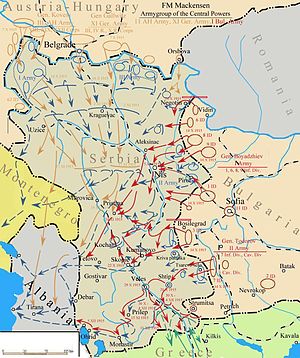
Serbs were raining down on Greece.  On New Year’s Day King Peter I of Serbia arrived at Salonika, and on 17 January he moved to Aidipsos on the Greek island of Euboea to take the waters at the thermal springs (he was old and ailing).  Meanwhile, his troops were going to Corfu.  On 10 January the allies informed the Greek government that the remnants of the Serbian army would be moved to the island, and three days later the Greeks refused.  Well, the French had already occupied Corfu two days earlier, and on 15 January they began to ship something like 100,000 exhausted Serbs to the island and other locations, where they would die in droves from malnutrition and disease.  The Serbian government in exile was established at Brindisi.220px-Pobedata_nad_syrbia[1]

Serbs on Corfu

Serbs on Corfu

Peter I of Serbia

Peter I of Serbia

Hard on the heels of the Serbs came the Austrians, who by the end of the month occupied all Albania except the far south. Albania had only come into existence a few years earlier in the wake of the Second Balkan War of 1913 and was assigned territory, Epirus, in the south that was ethnically Greek.  (This disregard for ethnic realities would become endemic in the formation of countries in eastern Europe in the wake of the war.)

As a result the Greeks, who had already occupied the territory earlier and left, sent in troops (with allied approval) on 27 October 1914, while the Italians seized a number of islands. The result was the Macedonian Front, running along the northern Greek frontier through southern Albania to the Adriatic, and any Austrian or Bulgarian advance further south was thwarted.  The Albanian monarch (a German), Wilhelm I, fled.  Albania, incidentally, was not a belligerent.

Wilhelm I of Albania

Wilhelm I of Albania

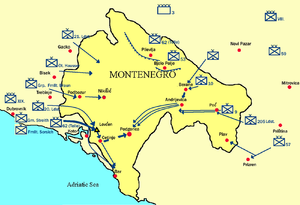
On 10 January the Austrians began nosing into Montenegro, leading to an armistice between the two powers two days later.  But Montenegro had helped the Serbs and in any case was important to Austria, being situated between the Empire and their new possession of Albania, and on 20 January the armistice ended.  The country fell to the Austrians, and King Nicola I fled to France and the Albanian government was ensconced in Bordeaux.

Montenegran soldiers

Montenegran soldiers

The Montenegro campaign

The Montenegro campaign

Nikola I of Montenegro

Nikola I of Montenegro

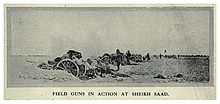
The other hot spot in January 1916 was the Tigris River.  On 4 January a force of some 19,000 troops, mostly Indian, under General Fenton Aylmer began moving north to relieve Kut.  They encountered Goltz Pasha at Sheikh Sa’ad on 6 January, and although the Turks were outnumbered four to one, Goltz managed to hold out until 8 January, when he moved about ten miles up the river to Wadi. On 14 January the British attacked this new position, and while they failed to break through, Goltz retreated another 5 miles to the Hanna defile.

Golz Pasha

Goltz Pasha

General Fenton Aylmer

General Fenton Aylmer

British artillery at Sheikh Sa'ad

British artillery at Sheikh Sa’ad

On 19 January General Percy Lake replaced Nixon as supreme commander of the Mesopotamian campaign. It made no difference.  The British attacked at Hanna on 21 January and failed, and having suffered heavy casualties in the battles and from disease, the relief force retreated south to Ali Gharbi, where they had started.  In the three battles the British had suffered 8600 casualties, the Turks 2230.  The siege of Kut would go on.

General Percy Lake

General Percy Lake

British hospital ship on the Tigris

British hospital ship on the Tigris

British troops on the Tigris

British troops on the Tigris

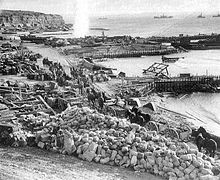
Another failed operation finally came to an end when on 7-8 January allied troops were evacuated from Helles beach at the tip of the Gallipoli Peninsula.  The evacuation proved to be the most successful operation of the whole campaign, and not a man was lost, though the Turks knew it was about to take place.  The Gallipoli campaign proved a disaster, with tens of thousands of lives lost for absolutely no gains, hardly surprising since the landings resulted almost immediately in a mini-Western Front on the peninsula.  Both sides suffered about a quarter million casualties, though the Turks could of course claim a victory.

Helles beach

Helles beach

The political repercussions had a more lasting effect.  Winston Churchill, who had been an instrumental force behind the operation, lost his job as First Lord of the Admiralty and went off to fight on the Wester Front.  Kitchener’s influence began to wane, and the failure would contribute to the fall of the Asquith government at the end of the year.

Churchill would earn a reputation for hare-brained military schemes, but to some extent this was unfair.  The basic idea made sense.  It is very unlikely that a naval bombardment of Istanbul would drive the Turks out of the war, but an allied naval presence in the Sea of Marmara and the Bosphorus would take pressure off the Russians and render communications between the European and Asiatic parts of the Ottoman Empire far more difficult.

Churchill on the Western Front 1916

Churchill on the Western Front 1916

The problem was not the idea but rather extremely poor operational planning and execution, in which Churchill had no real role.  The naval component was woefully inadequate and poorly led, especially the minesweeping units, but the land campaign had a reasonable chance of seizing the forts on the European side of the straights.  That they did not was due to poor planning and intelligence (tourist maps had to be used), overconfidence, insufficient artillery and above all, terrible leadership at all levels.  There were any number of instances in the early stages at Helles when the troops could have kept the initiative and rolled over Turkish positions, but few of the commanders were actually on the beaches, communications were hopeless and requests for support were ignored.  The Turks thus had the time to bring up reinforcements and prepare their defenses, and the result was stalemate.

In other news, on 13 January the Turks began occupying positions in western Iran, partly in reaction to Russian forces in the northwest of the country and British in the south.  Iran was neutral but was in no position to resist these incursions, any more than she could resist the later violation of her sovereignty during the Second World War. Or the CIA engineered overthrow of their democratically elected government in 1953, which resulted in the ascendancy of the brutal US supported Shah.  What would you be chanting in the streets if this had happened to your country?

On 22 January Romania, encircled by belligerents and avid for territorial gains, specifically Transylvania, opened negotiations with Russia for aid.  Rumania was bound by treaty to come to the aid of Austria were she attacked, and the Rumanian king, Carol I, was a Hohenzollern, the ruling house of the German Empire.  When the war broke out, Carol wanted to enter the war as an ally of the Central Power, but the government and public opinion preferred the allies, particularly since Transylvania was a Hungarian possession.  Rumania decided she was not bound by the treaty, since Austria had “started the war,” and the country initially remained neutral.  In October of 1914 Carol was succeeded by Ferdinand I, who was more amenable to honoring the will of the people.

Carol I of Rumania

Carol I of Rumania

Ferdinand I of Rumania

Ferdinand I of Rumania

Rumania in 1914

Rumania in 1914

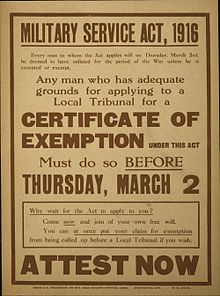
Finally, as a sign of the times, on 27 January the British Parliament passed the first Military Service Act, in effect establishing conscription, which already existed in France, Russia, Austria and Germany.  Defended by its navy and requiring only relatively small forces to secure the Empire, unlike the continental powers Britain could make do with a volunteer army, and in 1914 the regular army was just short of a quarter million men, half of whom garrisoned the Empire.  The BEF initially comprised only 150,000 men; the Germans fielded 1,850,000 and the French 1,650,000.  That certainly would not fill the maw of the trenches, and single men without children in the 18 to 41 age group would henceforth (it would become effective on 2 March) be liable for service unless they were in a war related occupation.  Subsequent acts would expand the pool, as the meat grinder of the Western Front demanded more and more bodies, and by 1918 the British had some 4,000,000 men in uniform.

1916 conscription notice

1916 conscription notice

And so the third calendar year of the war began.

Reports from the Front #6: September 1915

September 1915 saw the Austrian-German tide in the east slow down because of lengthening lines of communication, but by the beginning of that month the Russians had already lost all of Poland and 750,000 prisoners. Perhaps more important than these losses was a change in command. On 5 September the Supreme Commander of all Russian forces, Grand Duke Nicholas Nickolaevich, was sacked by the Czar. He was a decent soldier but seemingly incapable of controlling the unprepared and fragmented command structure of the Russian army, which was loaded with incompetent appointees. In his place Czar Nicholas appointed…himself. A bigger blunder could hardly have been made.

Grand Duke Nicholas

Grand Duke Nicholas

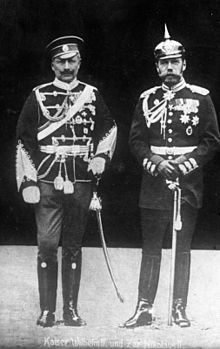
The Czar and the Kaiser, who seem to have put on the uniforms

The Czar and the Kaiser, who seem to have put on the wrong uniforms

In reality the head of the Stavka, General Mikhail Alekseyev, managed the war, but by assuming supreme command the Czar had identified himself with the conduct of the war, regardless of whether he actually had anything to do with it. And the conduct of the war under Alekseyev was terrible. He clearly did not understand modern warfare and in any case could do little about the corruption and incompetence of the officer class, much of which stemmed from nepotism and court intrigue. Now the Czar, who already had a rep for not being overly concerned about the welfare of his people and had no idea how to wage a war, would take the blame, especially as his presence at the front advertised the fact that he was indeed in command. As defeats mounted and life became even more miserable for the average Russian soldier, it was only natural that he be blamed, particularly since it was easy to believe the Czar was being jerked around by his unpopular German wife, Alexandra, and the notorious “monk” Rasputin. With this decision Czar Nicholas stepped closer to the abyss of the Revolution.

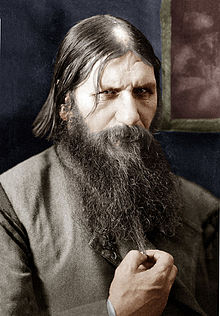
Rasputin

Rasputin

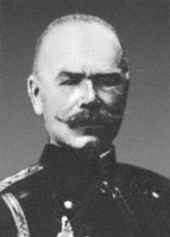
Alekseyev

Alekseyev

Empress Alexandra

Empress Alexandra

With a new El Supremo on 7 September the Russians launched a counter offensive at Tarnopol, in the far south of the front; nine days later it was abandoned. On 16 September the Germans captured Pinsk, and two days later they took Vilna, threatening to break open the northern front. Italy’s entry into the war helped by drawing Austrian forces to the southwest, but nevertheless, by the end of the month things were looking grim for the Russians.

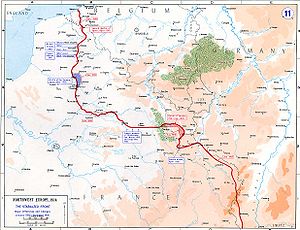
Moving east

Moving east

Meanwhile, the Balkans were lighting up with diplomacy as the neutrals were considering their options. On 22 September Bulgaria ordered general mobilization in the wake of reaching a favorable frontier agreement with the Turks, who wanted Bulgaria in the war on their side. The Bulgarians were seeking territorial expansion, especially at the expense of the Serbs, and finally decided the Central Powers were the better bet. The Greeks, who had little love for the Turks (and had over a million fellow Hellenes in western Turkey) and now feared the Bulgarians, began negotiations with the western allies, asking for a guarantee of 150,000 allied troops. At least the Greek Prime Minister, Elefthérious Venizélos, did; King Constantine I was seriously pro-German. Nevertheless, on 23 September the Greeks began to mobilize, and the next day the French and British agreed to send troops. On 27 September the King secretly gave in to the allied deal, but the following day the Greek government (minus Venizélos) formally refused the allied help and Constantine went along. This would ultimately lead to the “National Schism,” a veritable division of Greece between the monarchists and the supporters of Venizelos.

Constantine I in a German uniform

Constantine I in a German uniform

Venizelos

Venizelos

On the Western Front the lazy, hazy days of summer came to end with the fall offensives. On 25 September the French opened the Second Champagne Offensive, while to the north they and the British began the Third Battle of Artois (the Battle of Loos was the British component and saw the first use of gas by them). Do these names seem familiar? They are the same sectors of the front attacked back in May, and the result would be the same. Granted, there were good strategic reasons to mount this offensive, but why should anyone expect it to succeed this time, when in fact the German defenses in depth were far more developed now? The battles would last into October and November and achieve nothing but casualties. This is the sort of wishful thinking that would characterize the decisions of the chateau generals for the next several years.

Im Westen nur Dummheit

Im Westen nur Dummheit

There was an allied attack in the Cameroons on 8 September, but otherwise, in Afrika nichts Neues. On 1 September Germany agreed to demands by the United States to limit submarine warfare; she would later be more desperate.

And that’s what happened 100 years ago this month.