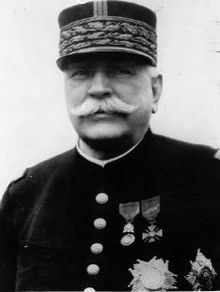
Report from the Fronts #34: October 1917

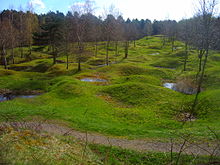
The area around Ypres

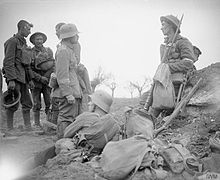
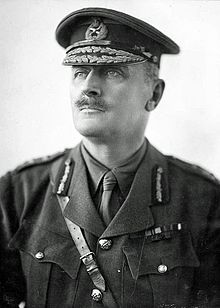
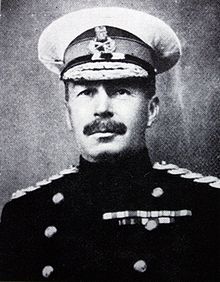
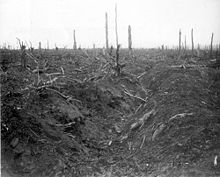
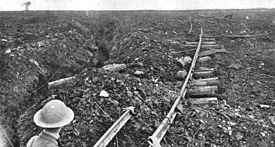
Third Ypres ground on.  On 4 October ANZAC troops assaulted the Broodseinde Ridge, gaining the objective on the first day and further unsettling the Germans, who were having trouble dealing with the new allied leapfrog tactics.  Unsurprisingly, the success led to arguments among the commanders about pushing further, but the presence of substantial German reserves behind the line and the usual difficulty of bringing up the artillery over the shattered battle ground sank that idea.  General Herbert Plumer – in a Trumpian moment – called Broodseinde “the greatest victory since the Marne.”  Tell that to the 20,000 commonwealth casualties.

No mans land
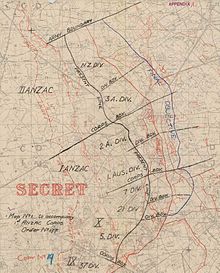
Battle of Broodseinde
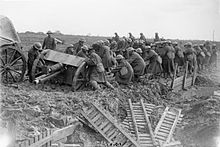
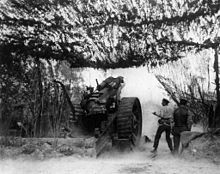
Bringing up the guns

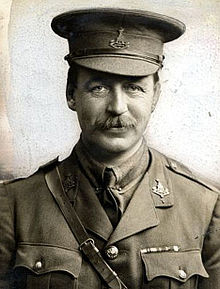
Herbert Plumer

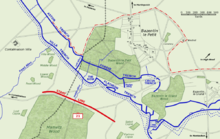
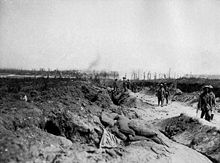
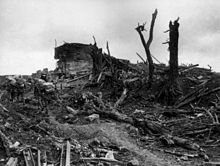
Next up in the Ypres Mud Fight was the Battle of Poelcapelle, an attempt by French and British units on 9 October to push half the way from Broodseinde Ridge to Passchendaele.  But the “easy” victories were over.  The heavy rains returned, and bringing up the artillery over blasted ground to secure gains was becoming incredibly difficult.  As a result, the Allies were unable to hold most of the captured ground against German counterattacks, and the battle ended after a single day.  Some 10,000 Allied troops were casualties, many drowned in shell holes; since the beginning of the month the Germans had suffered 35,000.

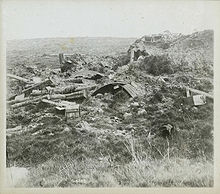
Typical Ypres terrain – Chateauwood
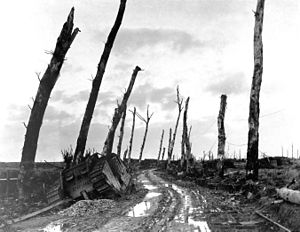
The road into Poelcapelle

Battle of Poelcapelle

Three days later the Allies attacked again – the First Battle of Passchendaele – Generals Plumer and Haig mistakenly thinking that the earlier advance had been generally successful (that is how bad communications were).  The result was a repeat of Poelcapelle, and the Brits and ANZACS suffered 13,000 casualties failing to take Passchendaele Ridge; it was perhaps the worst day in New Zealand military history.

The Butcher of the Somme

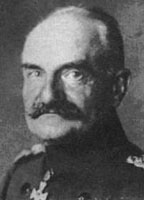
German losses for this specific battle are unknown, but it is clear that while the Ypres battles were gaining little ground, they were nevertheless inflicting heavy losses, which the Germans could ill afford.  Two divisions being sent to Italy for the upcoming offensive went instead to the Ypres sector, and the commander of the army group covering the northern stretch of the Western Front, Crown Prince Rupprecht of Bavaria, had actually considered a withdrawal, which might have endangered the German position and submarine bases on the Belgian coast.  This in fact was one of the Allied goals for the Ypres offensive.
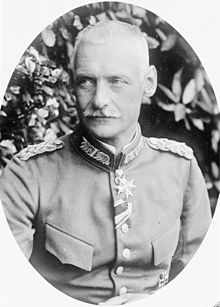
Crown Prince Rupprecht

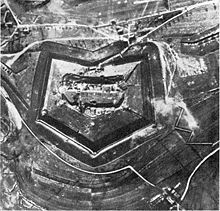
Meanwhile, to the south the French opened the Battle of La Malmaison on 23 October.  This was essentially a continuation of the Second Battle of the Aisne from back in April (remember the Nivelle Offensive?), and by 27 October the French had captured the Chemin des Dames Ridge in its entirety and the fortress town of La Malmaison – or what was left of it.  It cost the French 14,000 casualties, the Germans 50,000.
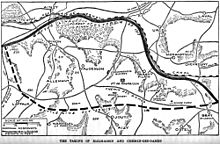
Battle of Malmaisson
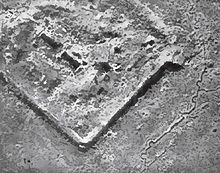
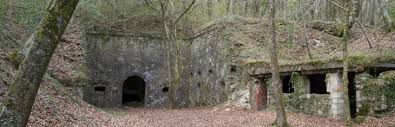
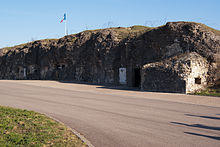
The Malmaison fort


The last phase of Third Ypres kicked off on 26 October with the Second Battle of Passchendaele, a mostly Canadian affair.  The aim was to seize the Passchendaele-Westrozebeke Ridge, both for observation advantages and in order to establish a winter defensive line on the drier high ground.  The assault was to be executed in four limited advances separated by pauses, allowing time for guns and supplies to be brought up and fresh troops switched in after each phase.

On the road to Passchendaele

Same terrain a century later


The plan actually worked, though the slaughter and the endless mud made this battle just as unpleasant for the poor beggars on the ground as the earlier operations.  The first two phases took place on 26 October and 30 October and were relatively successful, most of the Passchendaele Ridge being secured.  The second two phases would take place in early November, but meanwhile disaster in Italy through a monkey wrench into the plans to capture Passchendaele itself.
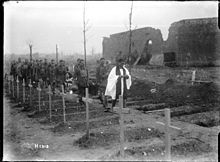
Battlefield funeral

Morning at Passchendaele

Passchendaele before and after


On 24 October the Twelfth Battle of the Isonzo began, but this one was very different from the previous eleven.  This time it was the Austrians and Germans who attacked, not just at the Isonzo but all along the front from the Adriatic near Trieste west to the Trentino.  The main thrust, however, was at Caporetto in the upper Isonzo valley, and the conflict is also known as the Battle of Caporetto (or Kobarid).  And the German-Austrian forces fared a lot better than the incompetent Luigi Cadorna.

Battle of Caporetta

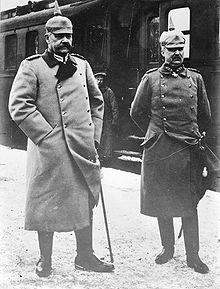
Field Marshal Hindenburg had already decided Austria needed help, despite the objections of the man who was increasingly in control, Quartermaster General Erich Ludendorff, who probably realized the Italian Army was presently incapable of any serious offensive.  Caporetto was chosen because it controlled an excellent road into the Venetian plain (a chemist also declared the valley perfect for a gas attack), and the new 14th Army, nine Austrian and six German divisions under General Otto von Below, would spearhead the assault, which would ultimately send some 350,000 troops against 875,000 Italians.  Overall command of the Isonzo Army Group was in the hands of General Svetozar Boroević, the Croatian (!) commander who had halted all of Cadorna’s offensives.  Unlike his opponent, who was despised by his men, “our Sveto” was loved by his and known as the “Knight of Isonzo.”

Our old friend, Luigi Cadorna

Otto von Below
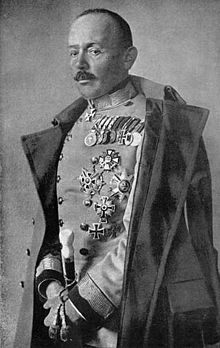
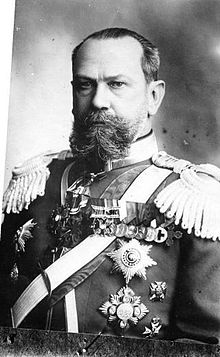
Svetozar Boroević

The offensive began with a massive gas barrage (chlorine-arsenic and diphosgene), which in the absence of wind settled into the valley, and Italian troops began fleeing, knowing that their gas masks would function only for a couple of hours.  A subsequent artillery bombardment hit the now lightly defended fortifications, and von Below’s troops poured into the valley, their flanks protected by Alpine units that secured the heights.  The infantry penetrated 16 miles in the first day, and while the Italians managed to block the attacks flanking the main group, the Italian army was reeling.  Rushing in troops from other sectors only led to more Austrian assaults along the entire front.
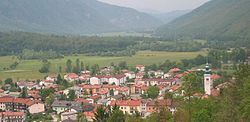
Caparetto

The situation was not helped by General Cadorna, who failed to appreciate the seriousness of the situation and the already low morale of his men, much of it the fault of his own ineptitude and harsh methods.  General Luigi Capello, commander of the 2nd Army, which was the target of the main thrust, almost immediately asked to withdraw to the Tagliamento River but was refused by Cadorna, leading to the surrender of more Italian troops.  By 28 October the offensive had reached Udine, and two days later Cadorna called for a retreat across the Tagliamento, which took four days.  Italy was on the verge of collapse.

Italian prisoners

Waiting for the offensive
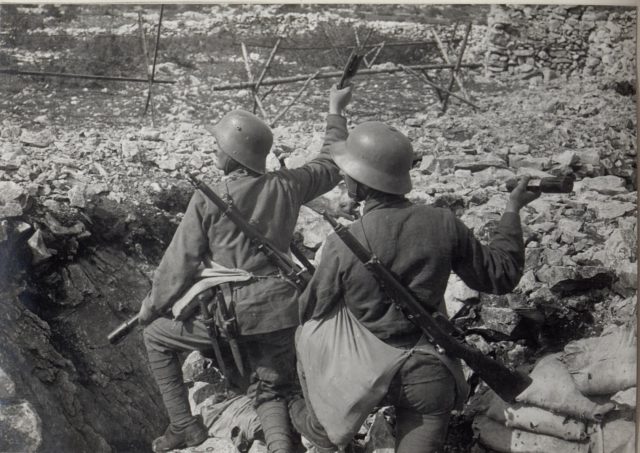
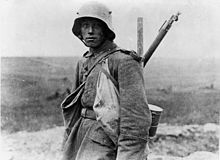
German assault troops

Incidentally, active in the battle was a young first lieutenant commanding the Royal Wurttemberg Mountain Battalion: Erwin Rommel.  In 52 hours from 25 to 27 October the 27 year old Rommel and his 150 men captured some 9000 enemy troops and 81 artillery pieces, suffering only six dead and 30 wounded.  He would later be awarded Germany’s highest military award, the Pour le Mérite.

The young Rommel

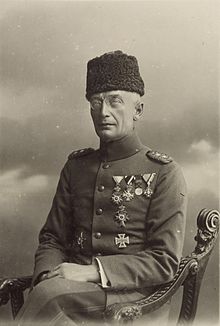
Meanwhile, the Southern Palestine Offensive (Third Battle of Gaza) began on 31 October with the Battle of Beersheba, the eastern anchor of the Turkish line from Gaza.  The small town was well guarded by trenches and outlying strongpoints, and Fevzi Çakmak Pasha, commander of the 7th Army, which was responsible for the eastern section of the Gaza-Beersheba line, had some 4500 men available, though not all were at Beersheba.  General Edmund Allenby, commander of the Egyptian Expeditionary Force, had some 50,000 men and in a complex operation (water was the major problem) intended to assault the town from the west with infantry and from the east, where there was no wire or horse traps, with mounted troops.  Beersheba was encircled and attacked and captured in a single day.

Fevzi Pasha
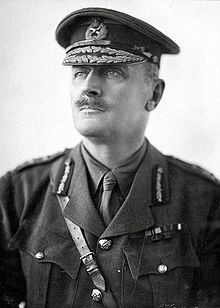
Edmund Allenby

Battle of Beersheba

Palestine front


While the Battle of Beersheba marks the first Allied victory in Palestine and would lead to breaking the Turkish Gaza line, it is better remembered for the last effective cavalry charge in history.  Coming from the southeast, the Australian 4th Light Horse Brigade had traveled over 30 miles of desert to reach the town by dawn, and near 4 PM they were ordered to take the town.  The 4th and 12th Light Horse Regiments began their advance at about 4 miles from the town and began taking fire at 2 miles, but help from supporting artillery and the speed (and surprise) of the charge minimized Turkish effectiveness.  Leaping across the trenches, the 4th and some of the 12th dismounted and began shooting at the Turks from the rear, but the bulk of the 12th, armed with bayonets in place of lances or swords, rode into Beersheba and captured it.

Australian Light Horse

Beersheba

Beersheba
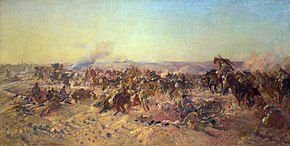
Charge of the Light Horse

(As it happens, the last major cavalry charge took place in 1942.  On August 23 on the Eastern Front 600 Italian horse, armed with sabers and grenades, charged a formation of 2000 Soviet infantry and actually dislodged them from their positions.

In miscellaneous news from October, on the 11th the German navy began operations against the Baltic Islands, capturing them all by the 20th and sinking a Russian battleship in the process.  In early October Peru and Uruguay cut diplomatic relations with Germany (Costa Rica did so in September), and on the 26th Brazil declared war, fed up with German submarines sinking Brazilian merchant vessels.  In 1918 a (relatively) sizable Brazilian force would actually travel to France.
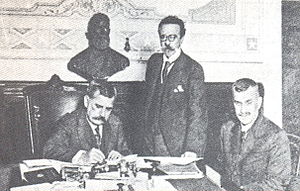
Brazil declares war

Finally, an event everyone has heard of: on 15 October Mata Hari was shot by a French firing squad.  Margaretha Geertruida Zelle was born in the Netherlands and in 1905 began a highly successful career as an exotic dancer in Paris, eventually becoming the mistress of a French millionaire.  Believing her to be the ultimate femme fatale that she would become in legend, in 1916 the French Deuxième Bureau recruited her as a spy, hoping she could seduce German Crown Prince Wilhelm, who had enjoyed her performances before the war, and wheedle military information out of him.

Mata Hari in 1905

And again


The problem with this was that although the Crown Prince was the commander of an Army Group, he relied completely on his staff, inasmuch as he had never directly commanded anything larger than a regiment.  More stupidity in a war filled with it.  In late 1916 Zelle contacted the Germans in Madrid and offered them French secrets (of which she had none), either for money or to engineer a meeting with the Crown Prince.  In January of 1917 the German military attaché in Madrid sent to Berlin a message about Zelle’s activities as a spy in a code that was known to have been broken, perhaps because Germany military intelligence was fed up with her.

Crown Prince Wilhelm

Zelle was arrested in Paris on 13 February and subsequently convicted of espionage in a joke of a trial.  In the wake of the French army mutiny and the failure of the Nivelle Offensive a foreign spy was an extremely convenient scapegoat for the political establishment, which apparently determined to seize the opportunity.  There was no concrete evidence against her and her defense attorney was forced to operate under serious limitations, but destined to serve political ends, she was convicted and shot.  A naïve woman, seduced herself by French intelligence, had to die for the glory of France.  The records of the proceedings and trial were sealed until October 2017, by which time the perpetrators of the crime would be safely dead.
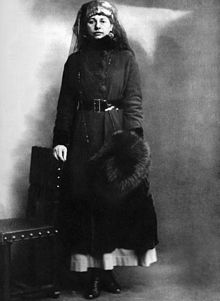
Mata Hari when arrested

And the war went on.


(Less Delayed) Report from the Fronts #31: July 1917


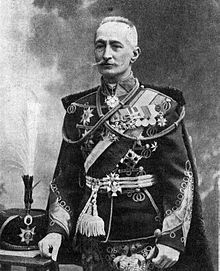
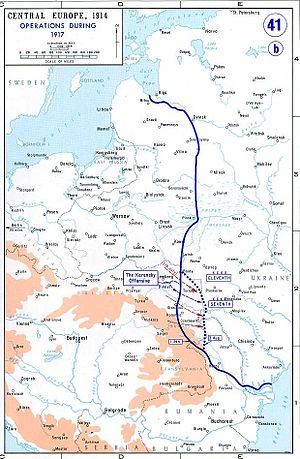
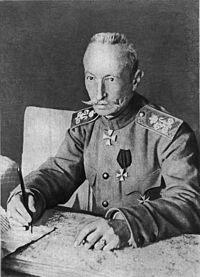
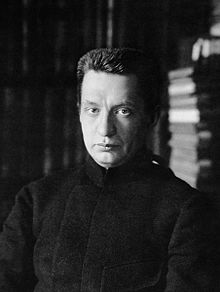
July began with the aptly named July Offensive of the Russians.  It was launched by the Minister of War and de facto head of the Provisional Government, Alexander Kerensky (hence also named the Kerensky Offensive), and commanded by Aleksei Brusilov of the successful Brusilov Offensive of 1916.  Kerensky, determined to honor his commitment to the Allies, completely underestimated the popular desire for peace, which the Bolsheviks were demanding, and overestimated the state of the army, which was deteriorating rapidly.  Brusilov was convinced a military collapse could not be avoided, but he would take a shot at a new offensive.

Kerensky

General Brusilov

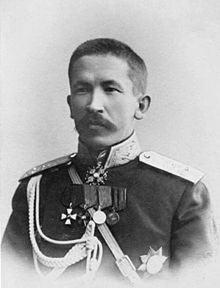
General Kornilov

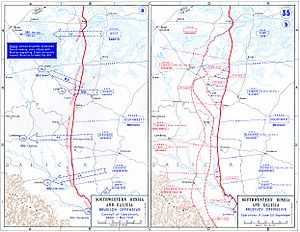
The July Offensive

The offensive literally began with a bang, the biggest artillery barrage of the Eastern Front, which blew a hole in the Austrian lines and allowed an advance, but German resistance caused mounting Russian casualties.  Morale began to crumble even more quickly, and with the exception of General Lvar Kornilov’s well-trained shock battalions, the infantry essentially stopped following orders.  The advance ended completely on 16 July, and three days later came the inevitable German-Austrian counterattack, which drove the Russians back 150 miles, right into the Ukraine.

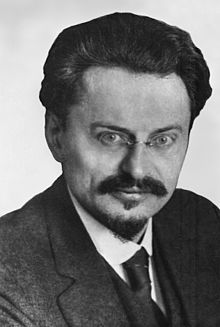
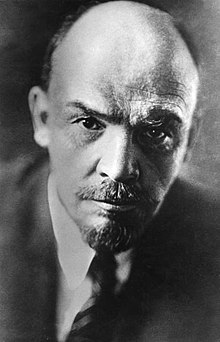
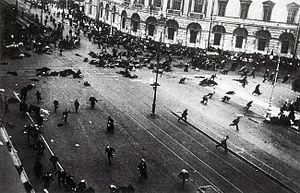
The failure of the July Offensive to a great extent doomed the Provisional Government, though the ultimate success of the Bolsheviks would depend upon a certain amount of luck.  On 19 July Kerensky replaced Prince Georgy Lvov as Prime Minister and became Commander-in-Chief in August, but the handwriting on the wall was growing larger.  When the July Offensive came to a halt on the 16th, soldiers and workers, demanding “all power to the Soviets,” began demonstrations in St. Petersburg and other cities, the July Days.  The Bolshevik leadership was taken by surprise, but ultimately supported the movement, only to be confronted with troops loyal to the Provisional Government.  The Central Committee of the Bolsheviks called off the demonstrations on 20 July, and Kerensky began a wave of arrests.  Lenin narrowly escaped capture, but many other Bolsheviks, like Leon Trotsky and Grigory Zinoviev, ended up in prison.

Grigory Zinovievba

Leon Trotsky

Vladimir Lenin

Riot in St. Petersburg


Not to be outdone, at the opposite end of the war the British launched the Battle of Pilckem Ridge on 31 July.  Actually, Pilckem Ridge was the first of a series of offensives collectively called the Third Battle of Ypres (or Passchendaele), which would stretch into December and were a continuation of the Flanders Campaign begun with the Battle of Messines Ridge in June.  “Wipers,” as Tommy called it, would be a four month mud bath for Commonwealth troops.

Typical Ypres conditions

German prisoners

Third Battle of Ypres

On a more romantic – and drier – note, on 6 July Colonel Lawrence and his Bedouins captured the town of Aqaba with virtually no casualties, though not quite as the movie depicted it.  The real fight was on 2 July at Abu al Lasan about fifty miles northeast of Aqaba.  A separate Arab force had seized a blockhouse there, but a Turkish battalion recaptured it and then killed some encamped Arabs, which outraged Auda Abu Tayi, the leader of Lawrence’s Howeitat auxiliaries.  He took the town, slaughtering some 300 Turks, and local tribes flocked to him, swelling Lawrence’s force to 5000.  They then moved on Aqaba, which had already been shelled by Allied naval forces, and the garrison surrendered at their arrival at the gates.  Lawrence then immediately returned to Cairo, a camel ride of over 200 miles.

Aqaba today

Triumphal entry into Aqaba

Lawrence at Aqaba

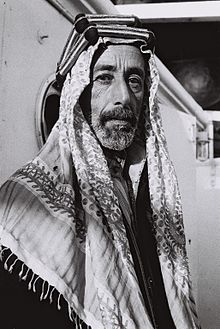
Auda Abu Tayi


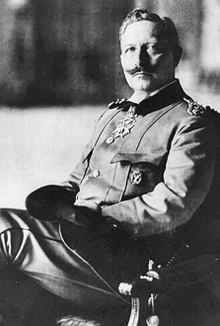
In miscellaneous news from July, on the 2nd the first regular merchant convoy left Virginia for Britain, and on the 7th the last daylight air raid on London took place, producing over 200 civilian casualties. On 28 July the British Army formed a Tank Corps, and on the 17th the Palace, responding to anti-German sentiment, announced that Britain was no longer under the House of Saxe-Coburg and Gotha (from Queen Victoria’s consort Albert) but the House of Windsor.  Kaiser Wilhelm, King George V’s cousin, responded that he planned to see The Merry Wives of Saxe-Coburg-Gotha.

King George V

Cousin Willy


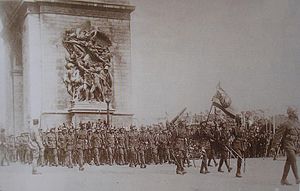
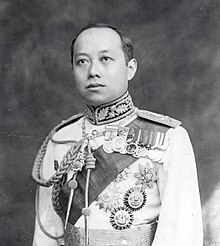
Finally, in a very clever move, on 22 July King Rama VI of Siam (Thailand) declared war on the Central Powers.  Through adroit diplomacy, playing the French and British against one another, Siam had managed to remain the only independent state in southeast Asia and saw an opportunity to strengthen its position and gain influence in the postwar world order by sending a token force to the Western Front.  It would work (and Bangkok is now a favorite destination for European – and especially German – tourists).

The Thai Expeditionary Force at Paris

King Rama VI


(Seriously Delayed) Report from the Fronts #30: June 1917

The Big Push for June was the Battle of Messines, which marked the beginning of Britain’s Flanders Offensive; like the French they apparently could not wait for the Americans.  The assault was launched on 7 June with the detonation of nineteen mines under the German lines, catching the enemy by surprise and promptly killing 10,000 troops.  The mining had begun in 1915 – so little had the front changed – and 454 tons of explosives went up in twenty seconds, dwarfing the Somme mines and creating the largest explosion in history before the Trinity bomb.

Lone Tree mine crater

Destroyed German trench

Battle of Messines Ridge

The effectiveness of the British mines and creeping barrage allowed the most important objective, the Messines ridge, to be taken on the first day, and when the battle ended a week later, it remained in Allied hands.  The offensive was certainly a tactical success, gaining the high ground, as it were, and setting the stage for the next advance, but one (who was not an Allied general) might question the strategic gain.  The ridge cost each side some 25,000 casualties.

Messines, post-battle

Messines: fake tree observation post

Messines: allied artillery


Certainly a greater boost to Allied morale was the arrival of General John Pershing in France on 13 June and 14,000 troops of the American Expeditionary Force on the 25th.  The Allied commanders wanted to immediately send them to the front, but Pershing wanted more training and was adamant that his boys would fight as American units not simply replacements.  The doughboys (from the adobe dust in the Mexican war?) would not hit the trenches for another several months, but their presence was already a clear boost to morale.

American doughboy

Pillsbury doughboy

Foch, Pershing, Pétain, Haig


Speaking of morale, on 8 June the French military began seriously dealing with the mutiny with arrests and courts-martial, but with surprising restraint, which annoyed many of the generals.  Nevertheless, Philippe Pétain, the new Chief of the General Staff, and President Raymond Poincaré supported a lighter touch, and while there were 629 death sentences handed down, only 43 executions were actually carried out.  More effective in restoring order was the institution of regular leaves and a promise of only severely limited offensives until the Americans arrived in strength.

Poincaré

Pétain


French execution


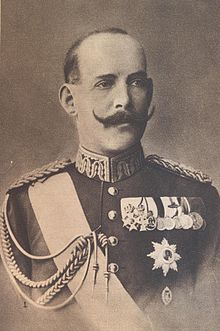
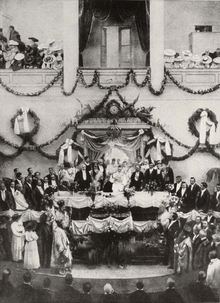
On the Greek “front” the Allies demanded on 11 June that King Constantine abdicate, which he did the following day, passing the throne to his son, who became Alexander I.  Alexander was clearly a puppet of the Allies, who now occupied more Greek territory, but under his “rule” Greece would benefit from the Allied victory.  Unfortunately for Alexander, he would die from a monkey bite in 1920, to be succeeded, ironically, by his father.  Venizelos, leader of the provisional government in Salonika, became Prime Minister on 26 June and took power in Athens the next day.  Greece was now formally at war with Germany, Austria-Hungary, Bulgaria and the Ottoman Empire.

Venizelos

King Constantine I

Coronation of Alexander

King Alexander I


Off in the new Russian Republic the Provisional Government turned down a German offer of an armistice on 9 June, perhaps not a good decision inasmuch as by 21 June the Black Sea Fleet was in full mutiny.  Kerensky believed that a successful offensive in Galicia in July would restore military morale.

In miscellaneous news, Italy announced a Protectorate over Albania on 3 June…and on 8 June the Tenth Battle of the Isonzo ended with no gains and 150,000 Italian casualties.  To the southeast Edmund Allenby, formally of the Western Front, took over Commonwealth forces in Egypt, bad news for the Turks.  And Colonel Lawrence and Auda Abu Tayi (“I am a river to my people.”) and his Howeitat were on their way to Aqaba.

Edmund “Bloody Bull” Allenby

Lawrence

Auda Abu Tayi

Auda and sundry Howeitat


Report from the Fronts #26: February 1917

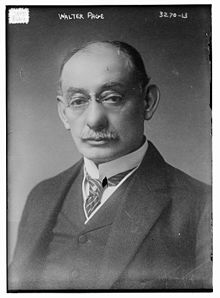
On 1 February Germany kept its word and resumed unrestricted submarine warfare, and two days later the United States severed diplomatic relations with the Second Reich.  And Washington had yet to see the Zimmermann telegram.  British intelligence did not want to reveal that they had the German code and also important, that they were intercepting American diplomatic traffic, which they continued to do for the next quarter century.  (Nothing new a century later.)  After many subterfuges were considered, they showed the telegram to a secretary in the American embassy in London, who passed it on to the ambassador, Walter Page, who met with Balfour on the 23rd.  Page sent it to Wilson, who released it to the press on 28 February.

U-14 a typical U-boat

U-14 a typical U-boat

Germany's unrestricted submarine warfare zone

Germany’s unrestricted submarine warfare zone

Walter Page

Walter Page

How much impact the telegram had on Washington and American public opinion is hard to gauge.  It must certainly have had an effect on anti-German sentiment, but it appears that the submarine warfare was the key issue for the government.  Wilson had already cut diplomatic ties, and on 26 February he asked Congress to arm US merchant vessels.  There was plenty of anti-Mexican feeling, especially after Pancho Villa raided US territory, but innocent Americans dying in torpedoed ships was extremely compelling.  I suspect war would have soon come to America regardless of Arthur Zimmermann.

US Navy recruitment poster

US Navy recruitment poster

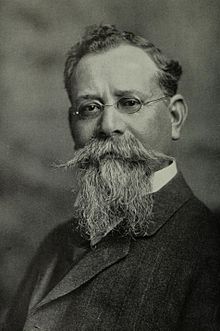
And it was all a waste of time.  Mexican President Venustiano Carranza (of the “Preconstitutional Government”; he became official President on 1 May) was too intelligent to even consider war against the United States, which would have little problem dealing with Mexico despite a commitment to the European war.  He could only have serious doubts about Germany’s promise of financial and material aid, and he could figure out that the his northern neighbor was not likely to cede any territory unless occupied by the Germans.

venustiano Carranza

Venustiano Carranza

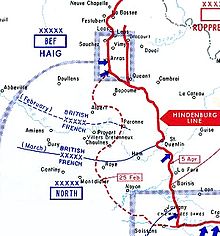
Meanwhile, Germany began on 25 February to implement its new defensive strategy by beginning, in the Ancre sector, a gradual withdrawal to the Hindenburg Line.  This line of improved fortifications – also known as the Siegfriedstellung – was begun in September, accompanied by the Hindenburg Program, designed to further mobilize the German armaments industry.  120,000 soldiers with the required skills were returned home, and 800,000 workers were exempted from the draft.  Meanwhile, the Reichswehr would sit on the defensive while the U-boats won the war.

Retirement to the Hindenburg/Siegfried Line

Retirement to the Hindenburg/Siegfried Line

Hindenburg/Siegfried Line

Hindenburg/Siegfried Line

Hindenburg/Siegfried Line

Hindenburg/Siegfried Line


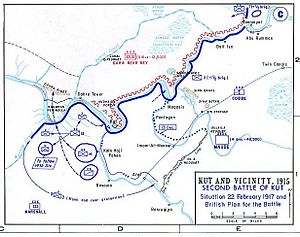
Far to the east Commonwealth troops were retrieving the honor lost at Kut al-Amara a year earlier.  General Stanley Maude had set out from Basra with 50,000 troops in December and reached Kut on 22 February, having defeated minor Turkish forces in three battles while moving upriver in January.  The following day elements of the 82nd Punjabis crossed to the north bank west of Kut, outflanking the Turkish defenses.  Faced with encirclement and vastly outnumbered, Kâzim Karabekir Bey skillfully withdrew his 14,000 troops upriver on the 23rd, having suffered some 3000 casualties to the Indian 1000.  Maude would continue the advance to Baghdad.

British soldier aiding Turks

British soldier aiding Turks

A sepoy of the 82nd Punjabis

A sepoy of the 82nd Punjabis

General Stanley Maude

General Stanley Maude

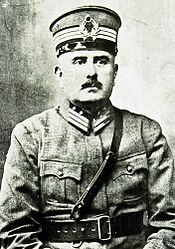
Kâzım Karabekir Pasha

Kâzım Karabekir Bey

Kut 19717

Kut 19717


And on 14 February Britain proposed to Japan that it would recognize their claims to German possessions north of the equator if they supported British demands to the south.  The British government also promised the return of Alsace-Lorraine to France.  Happy Valentine’s Day.

March would see far more momentous events.


Report from the Fronts #25: January 1917

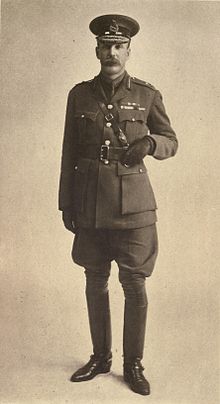
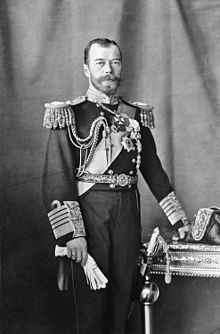
Because of the weather there was little action in the west in January, though planning for the spring offensive was underway.  On the first day of the year Douglas Haig, the “Butcher of the Somme,” was promoted to Field Marshal, the highest rank in the British Army, but this was certainly no reflection of his military talents.  Nicholas II had been made a British Field Marshal exactly one year earlier, and Wilhelm II and Franz Joseph had been honored with the title in 1901 and 1903.

Field Marshal Wilhelm

Field Marshal Wilhelm

Field Marshal Franz Jospeh

Field Marshal Franz Joseph

Field Marshal Haig

Field Marshal Haig

Field Marshal Nicholas

Field Marshal Nicholas


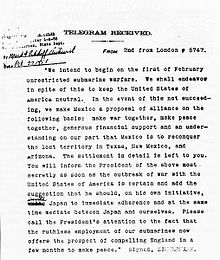
Far and away the most important missive of January was the so-called Zimmermann telegram.  On 16 January the German Foreign Minister, Arthur Zimmermann, sent a coded telegram to the German ambassador in Mexico, Heinrich von Eckhardt, routing it through the hands of the ambassador in Washington, who forwarded it to Eckhardt on 19 January.  Unfortunately for the Germans (and unknown to the Americans; some things never change), all the cable traffic passing through the relay station at Land’s End in Britain (the German transatlantic cables had been cut at the beginning of the war) was being monitored, and a copy was passed to the Admiralty intelligence section, quaintly named Room 40, for decoding.

Heinrich von Eckardt

Heinrich von Eckardt

Arthur Zimmermann

Arthur Zimmermann


The decrypted message was a bombshell:

“We intend to begin on the first of February unrestricted submarine warfare. We shall endeavor in spite of this to keep the United States of America neutral. In the event of this not succeeding, we make Mexico a proposal of alliance on the following basis: make war together, make peace together, generous financial support and an understanding on our part that Mexico is to reconquer the lost territory in Texas, New Mexico, and Arizona. The settlement in detail is left to you. You will inform the President of the above most secretly as soon as the outbreak of war with the United States of America is certain and add the suggestion that he should, on his own initiative, invite Japan to immediate adherence and at the same time mediate between Japan and ourselves. Please call the President’s attention to the fact that the ruthless employment of our submarines now offers the prospect of compelling England in a few months to make peace.”

British translation

British translation

Coded telegram

Coded telegram

Partially decoded telegram

Partially decoded telegram


The Germans had decided to resume unrestricted submarine warfare, suspended in September 1915, regardless of the danger of drawing America into the war.  While the Central Powers were being slowly strangled by the British blockade, the Entente had access to armaments and more important, food from the United States.  Ludendorff uncritically accepted the contention of the Navy, which strongly advocated the resumption of unrestricted warfare, that there were no effective countermeasures to submarine warfare and concluded that the time was ripe to strike.  Ironically, it was the Kaiser who raised doubts, advised by a close friend who was familiar with America and understood the potential power of the country.  He was ignored by Ludendorff.

The Russian military was rapidly collapsing and Romania had been virtually eliminated, freeing large numbers of troops for transfer to the west.  Further, the United States was in the midst of an undeclared conflict with Mexico, which it had invaded in 1914, and there were currently American troops still in the country.  Ludendorff believed that unlimited submarine warfare in the Atlantic could bring Britain to its knees before the Americans could mobilize sufficiently to have an impact on the war, especially if Mexico could be persuaded to attack them.  This would prove to be a disastrous miscalculation and would doom Germany to defeat.

On 31 January Germany announced that the resumption of unrestricted submarine warfare would begin the next day.  Washington was of course not amused, but was, however, still unaware of the Zimmermann telegram and would not receive it from the British until 19 February.

Meanwhile, in the east Romanian towns were still falling to the Germans, and on 6 January the last Romanian and Russian troops were driven out of the Dobruja.  I have not been tracking Russian ministers, but January presents an excellent example of the chaos descending on St. Petersburg: in that single month the Prime Minister, Alexander Trepov, the War Minister, Dmitry Shuvalev, and the Foreign Minister, Nikolai Pokrovsky, resigned or were sacked.  In the period from September 1915 to February 1917 – the “Czarina’s Rule” – Russia had four Prime Ministers, three Foreign Ministers, three War Ministers, five Interior Ministers, two Transport Ministers, and four Agricultural Ministers.  This was no way to run a country during wartime.

Nikolai Pokrovsky

Nikolai Pokrovsky

Alexander Trepov

Alexander Trepov

Dmitry Shuvalev

Dmitry Shuvalev

The British were doing better.  The Sinai military railroad reached El Arish on 4 January (the all-important water pipeline would arrive on 5 February), making possible an assault on Rafa, the last major Turkish garrison in Sinai (there were still a handful of Turks and armed Bedouins at Nekhl and Bir el Hassana). It was seized on 9 January, making way for an invasion of Palestine.  Meanwhile, Commonwealth and Turkish aircraft spent the month merrily bombing each other; horses were a favorite and easy target.

Turkish POWs on the road to El Arish

Turkish POWs on the road to El Arish

British firing line at Rafa

British firing line at Rafa

Northern Sinai

Northern Sinai

Sinai-Palestine frontier - boundary pillars

Sinai-Palestine frontier – boundary pillars

Battle of Rafa

Battle of Rafa


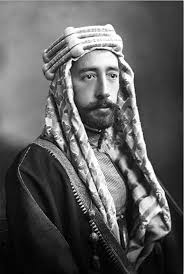
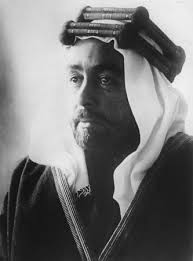
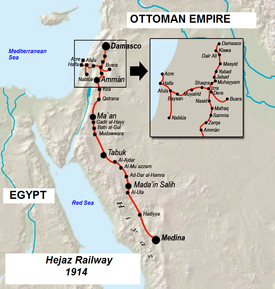
Finally, the Arab revolt was picking up steam and becoming a serious annoyance to the Turks.  T.E. Lawrence had convinced the leaders of the revolt in the Hejaz, two of Hussein’s sons, Faisal (future king of Iraq) and Abdullah (future king of Jordan) to coordinate with the British and to attack the Hejaz railway instead of Medina.  Not only was Medina a tough nut to crack, but defending and repairing the rail line, utterly vital to the Turkish position in the Hejaz, would tie up far more Ottoman troops.   Arab guerilla and Allied air attacks were already having an impact, forcing the Hejaz commander, Fakhri Pasha, to abandon his attempt to reach Mecca and return to Medina on 18 January.

Fakhri Pasha

Fakhri Pasha

Faisal

Faisal

Abdullah

Abdullah


Since July 1916 the Arabs had controlled the port of Yenbo, west of Medina, but needed a base further north.  The choice was Wejh, halfway up the coast from Yenbo to Aqaba, and on 3 January Faisal began moving up the coast with a force of 5300 foot and 5100 camel cavalry, supplied by the royal Navy.  They turned out to be unnecessary.  400 Arabs and 200 Royal Navy personnel were landed north of Wejh and surprising the Ottoman garrison, easily took the town on 24 January.

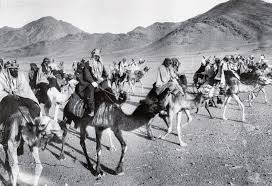
The Arabs were ready for serious business.  They now had 70,000 men in the field, though many were still poorly armed; Faisal was based at Wejh, Abdullah at Wadi Ais north of Medina and Ali, the third brother, near Medina.  The Regular Arab Army, formed in 1916, were full-time conventional troops and wore uniforms (British style of course, which is why the present day armies of the Middle East look British), while the more familiar (because of the movie) and romantic Bedouin raiders were essential guerilla forces.  They were difficult to command and fought when it suited them, but a raiding party on camels could cover a thousand miles with no support and suddenly appear from out of nowhere, which is to say, the desert.  Colonel Lawrence (among others) knew how to use these forces, especially against the railway.

The Hejaz railway

The Hejaz railway

Bedouin raiders - Lawrence on the dark camel

Bedouin raiders – Lawrence on the dark camel

The Regular Arab Army

The Regular Arab Army

Ali

Ali


The Hejaz campaign a century later

The Hejaz campaign a century later

More remains

More remains

Take that,Turks!

Take that,Turks!

Report from the Fronts #19: August 1916

August 1916 marked two years of war and was little different from the month before or the one to follow.  On the Somme front the Battles of Delville Wood and Poziéres continued, piling up casualties for little gain and emulating the ongoing action to the south at Verdun.  There on 1 August the Germans launched a surprise assault on Fort Souville and were duly counterattacked by the French, who on 18 August recaptured Fleury – or what was left of it.

Fort Souville

Fort Souville

Poilus attacking Fleury

Poilus attacking Fleury

Fort Souville today

Fort Souville today


On 29 August Verdun claimed a major German casualty when Falkenhayn was sacked as Chief of Staff and replaced by Hindenburg.  The apparent failure of the Verdun campaign and the beginning of the Somme and Brusilov Offensives played into the hands of Hindenburg and Ludendorff, who had been conspiring against Falkenhayn.  Ludendorff became First Quartermaster-General, but he was in fact the real power, rapidly assuming control of the entire military and ultimately the Reich itself.

Falkenhayn

Falkenhayn

Hindenburg and Ludendorff

Hindenburg and Ludendorff


To the south the Isonzo Follies started up again as General Cadorna sought to take advantage of an Austrian line weakened by the removal of troops for the Trentino Offensive.  The Sixth Battle of the Isonzo (or Battle of Gorizia) kicked off on 6 August with a two pronged assault against the long-sought prize of Gorizia, which the Austrians abandoned on 8 August.  Gorizia was the gateway to Trieste and Ljubljana, but the poorly equipped Italian troops could make no further headway and Cadorna ended the offensive on 17 August.

Gorizia

Gorizia

General Luigi Cadorna

General Luigi Cadorna

Isonzo front

Isonzo front

This was Cadorna’s first success, and Italian morale skyrocketed with the capture of the city they had wanted since 1914.  But they wanted Gorizia in order to seize Trieste and invade Slovenia, and in fact that would never happen, leaving Cadorna with only a wrecked city and more dead: 21,000 (not counting the missing) to the Austrian’s 8000.  Throwing 22 divisions against 9 Austrian allowed the (limited) breakthrough to Gorizia, but Cadorna’s frontal assaults were extremely costly.

Exhausted Italian troops

Exhausted Italian troops

Battle of Doberdo (beginning of Isonzo six)

Battle of Doberdo (beginning of Isonzo Six)

Gorizia after capture

Gorizia after capture


Not costly enough, however, to prevent Rome from sending troops to join the growing international camp at Salonika on 12 August, presumably to back up Italian claims in the western Balkans. On 28 August Italy declared war on Germany, apparently under pressure from the Allies, since the two countries were not in direct conflict (German troops would not appear on the Italian front until 1917) and actually benefited from non-belligerence.

Meanwhile, Greece tottered toward open participation in the war.  National pride and the Bulgarians in Macedonia spurred the Venizelist (pro-Entente, anti-Royalist) forces clustered in Salonika, and on 29-30 August Venizelist officers, supported by the Allies, launched a successful coup against the loyalists.  Troops across northern Greece joined the revolt, and the seed of a government in opposition to Athens, the “National Defense Committee,” was formed.  Loyalist officers fled south.

Greek troops in Salonika

Greek troops in Salonika

Admiral Kountouriotis, Eleftherios Venizelos, and General Danglis.

Admiral Kountouriotis, Eleftherios Venizelos, and General Danglis.


To the south the Turks, who had been steadily creeping across Sinai during July, took what would be a final shot at the Suez Canal on 3 August, advancing towards Romani, about 20 miles from the Canal.  The British had been busy, however, building a rail line east out of Kantara and could now send out more substantial forces.  The result was the Battle of Romani on 3-5 August, during which the Turkish army was decisively defeated, suffering 9200 casualties to the Allied 1130.  But the Ottoman commander, Friedrich Kress von Kressenstein, had prepared fortified positions during his advance, and his surviving forces were able to execute an orderly retreat.  Nevertheless, by 12 August the Turks had been driven all the way back across Sinai to El Arish.  The Battle of Sinai had ended and the Battle for Palestine could begin.

Australian 8th Light Horse at Romani

Australian 8th Light Horse at Romani

Kress von Kressenstein

Kress von Kressenstein

Turkish advance and retreat in Sinai

Turkish advance and retreat in Sinai

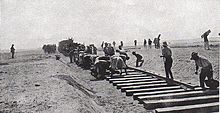
Building the railroad across Sinai

Building the railroad across Sinai

Kressenstein with a smoke

Kressenstein with a smoke


The big news of August 1916 was the entrance of Romania into the war.  King Carol I, a Hohenzollern like the Kaiser, had signed a defensive alliance with the Central Powers, but in 1914 the Romanian people favored the Allies and Romania remained neutral.  King Ferdinand I, who succeeded Carol in October 1914, was more inclined towards the Entente and wanted Transylvania, an Austrian province with a Romanian population, but was wary of the Russians and being left in the lurch by the French and British.  Only after the Allies agreed to stringent terms (most of which were subsequently ignored) did he make his move.

British propaganda

British propaganda

Romanian invasion of Transylvania

Romanian invasion of Transylvania

Romanians (black) in 1914

Romanians (black) in 1914

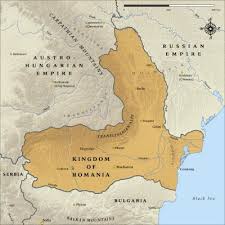
Romania om 1914

Romania in 1914

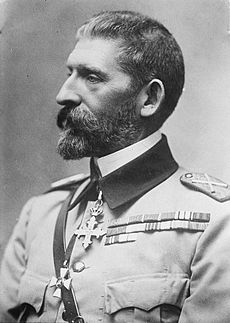
King Ferdinand I

King Ferdinand I

An alliance was made with the Entente on 17 August, and on the 27th Romania declared war on Austria-Hungary and began mobilization.  The next day a Romanian army invaded Transylvania, prompting Germany to declare war; Turkey followed on 30 (?) August and Bulgaria on 1 September.  September would not be a good month for the Romanians.

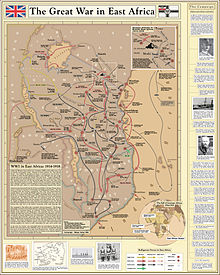
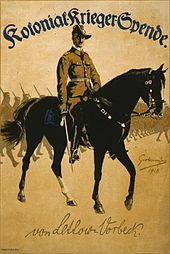
Oh, the South Africans and Belgians continued capturing towns in East Africa, but Lettow-Vorbeck continued to lead them on a merry chase.


Report from the Fronts #18: July 1916

On the Western Front July 1916 began with a bang, literally, as nineteen massive mines buried under German lines were exploded by the British to kick off the long-awaited Somme Offensive. The mines, many begun the previous year, contained a total of 210,800 pounds of high explosive, which together constituted one of the biggest non-nuclear blasts in history.  Three of the mines were behemoths: Hawthorn Ridge at Beaumont-Hamel (40,600 lbs.) and Y Sap and Lochnagar at La Boisselle (40,000 and 60,000 lbs. respectively); Lochnagar was believed to be the loudest man-made noise up to that time, heard as far away as London.  Impressive, but they did not substantially aid the offensive.

Mine tunnel

Mine tunnel

Lochnagar crater today

Lochnagar crater today

Hawthorn Ridge mine

Hawthorn Ridge mine

Hawthorn Ridge crater

Hawthorn Ridge crater

Lochnagar crater

Lochnagar crater


The Somme Offensive had been in the works since 1915 and was intended to be a primarily French operation with the British in support, but the German assault at Verdun had drained away French troops and it was British/Commonwealth forces that ended up bearing the brunt of this Big Push.  The section of the trench line north and south of the Somme River, defended by General Fritz von Below’s Second Army, was chosen by Joffre for the attack, though it is not at all clear why.  There was no particular strategic importance to the area, and because it had been quiet since 1915, the Germans had been busy increasing the stiffness and depth of their fortifications.

The Butcher of the Somme

The Butcher of the Somme

Papa Joffre

Papa Joffre

Somme Offensive

Somme Offensive

Haig of course went right along with this, delighted it would be primarily a British show.  Eleven divisions from General Henry Rawlinson’s Fourth Army would attack in the area of Albert, supported on their left flank by two divisions of General Edmund “Bloody Bull” Allenby’s Third Army; the right flank would be covered by five divisions of the French Sixth Army on both sides of the Somme.  (Joffre had originally planned on 40 French divisions.)  The goal was the seemingly mythical “breakthrough,” which would allow forces (including all available cavalry!) to head for Douai and Cambrai.  The Allies had air superiority, a factor that was gaining in importance.

Edmund Allenby

Edmund Allenby


Fritz von Below

Fritz von Below

Henry Rawlinson

Henry Rawlinson

The Somme Offensive was in actuality a series of thirteen more or less distinctive named battles that stretched on into November.  The initial attack, the Battle of Albert (1-13 July), pushed the Germans into a substantial withdrawal south and north of the Somme, but the Commonwealth forces in the center got nowhere against the Germans on higher ground.  It was in fact a disaster.  The British suffered 57,470 casualties (19,240 killed) on the first day; their total casualties in the next eleven days were c. 25,000.  1 July 1916 is acknowledged as the worst day in the history of the British army.

A German "Sommekämpfer"

A German Sommekämpfer

Tommys advancing in the Somme Offensive

Tommys advancing in the Somme Offensive

The fault can be pinned on Haig and Rawlinson, who believed (like most high commanders) that a heavy barrage would take out the machine guns and wire.  Perhaps against their own trench line, but not the deep triple lines and reinforced bunkers of the busy Germans.  The defenses were virtually intact, and the slow-moving British infantry were annihilated.  Two subordinate commanders were sacked (for not pushing their men harder!), but as historian Martin Middlebrook later put it, “Haig and Rawlinson were protected by the sheer enormity of the disaster.”  To fire or criticize them would be a PR disaster – and the offensive went on.

Indian cavalry at Bazentine

Indian cavalry at Bazentine

Battle of Bazentine Ridge

Battle of Bazentine Ridge

But it now comprised more limited engagements and objectives, as the Allies encountered nasty fighting in fortified villages and dense woods.  The Battle of Bazentin Ridge (14-17 July) went better than the original offensive, pushing out a thousand yards and capturing Bazentine le Petit, but further advance was foiled by the confusion and poor communications, frequent companions of Great War offensives.

Delville Wood 14 July

Delville Wood 14 July

Delville Wood 15 July

Delville Wood 15 July

Delville Wood 16 July

Delville Wood 16 July

Delville Wood 18-20 July

Delville Wood 18-20 July


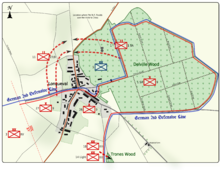
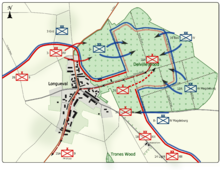
Meanwhile, a bit to the southeast the Battle of Delville Wood (14 July – 15 September) resulted from the effort to secure the right flank of the force in Bazentine, and on the first day the First South African Brigade, making its Western Front debut, seized most of the wood.  The Germans counterattacked, and by 20 July when British attacks rescued the remnants from the wood, the South African brigade had virtually ceased to exist.

Battle of Delville Wood

Battle of Delville Wood

South African General Henry Lukin

South African General Henry Lukin

Delville Wood

Delville Wood


The Battle of Fromelles (19-20 July) actually took place some fifty miles north of the Somme and was a small scale operation designed to take advantage of weaknesses brought on by the transfer of German troops to the Somme.  Well, there were none in this bit of the line, and the two divisions in fact attacked a ridge defended by twice their number, suffering 7080 casualties to the German’s 1500-2000.  The Australian Fifth Division, also making its first appearance on the Western Front, suffered 5533 of those casualties; the battle was later described as “the worst 24 hours in Australian history.’  For what?

The last Somme engagement to be initiated in July was the Battle of Pozières Ridge (23 July – 7 August), which was the only part of a general offensive north and south of the Somme to have any success.  Pozières was a village two miles northwest of Bazentine, and its capture would isolate the Germans in the fortified village of Thiepval.  The Australian First Division took the village immediately, but inasmuch as the rest of the offensive promptly collapsed into uncoordinated mini-engagements, the Aussies became the center of attention of the German artillery and suffered huge casualties.  The German counterattack would come at the beginning of August.

Pozières plateau

Pozières plateau

Road to Pozières

Road to Pozières

 Pozières- captured German bunker

Pozières- captured German bunker

Meanwhile, on the Eastern Front the Baranovichi Offensive in what is now Belarus finally began.  The commander of the Western Army Group, Alexei Evert, had resisted going on the offensive in June as the northern wing of the Brusilov Offensive, perhaps because he remembered the disaster of his Lake Naroch Offenisive back in March.  But the supreme Command insisted, and on 2 July 410,000 troops of the Russian Fourth Army attacked 70,000 Germans of the Ninth Army.  When the on and off offensive finally ended on 29 July, the Russians had gained no ground and lost 80,000 men to the German 13,000.  Is it any wonder revolution was brewing?

Evert's men - future corpses and revolutionaries

Evert’s men – future corpses and revolutionaries

Alexei Evert

Alexei Evert


In other news, the counterattack at the Trentino ended on 7 July, freeing General Cadorna free to contemplate another shot on the Isonzo.  On 25 July Serbian troops (Remember Serbia?) showed up at Salonika, followed in five days by a contingent of Russians, of whom there seemed to be an endless supply.  Incidentally, on 25 July the Russians took Erzincan (Erzinjan) in northeastern Turkey; this is as far as they would penetrate into Anatolia.

Finally, things were heating up on the Arab front.  In Sinai the Turks began an offensive towards the Suez Canal on 19 July, but far more important to the post-war world, Britain signed a treaty with Abdulaziz Ibn Sa’ud, Emir of Nejd and Hasa, the creator and future king of Saudi Arabia.  That kingdom would include the Hejaz (Too bad, Sherif Hussein) where on 27 July Arab forces took Yenbo, the port of Medina, easing their supply problems.  And soon Lawrence would show up.

Ibn Saud

Ibn Sa’ud

The Hejaz

The Hejaz


Report from the Fronts #17: June 1916

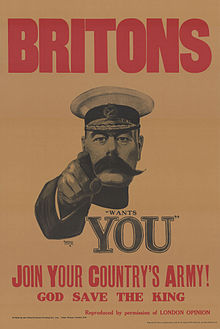
The Battle of Jutland came to an end on 1 June, but the forces deployed for the engagement took one more ship.  The U-boats had played no active role in the battle, but they had laid mines, and on 5 June the armored cruiser HMS Hampshire, on its way from Scapa Flow to Archangel, Russia, struck one off the west coast of the Orkney Islands.  Because of the extremely rough weather, only twelve crewmen out of 662 crew and passengers survived the sinking of the warship.  Among the missing was Field Marshall Herbert Kitchener, the literal icon of the war.

Uncle Herb Wants You!

Uncle Herb Wants You!

Herbert Kitchener

Herbert Kitchener

HMS Hampshire

HMS Hampshire


Kitchener was in fact in many ways an icon of the High Victorian Age, the victor at Omdurman (Sudan 1898) and the Second Boer War (1899-1902), literally the face of Britain in the Great War and a man (yes, this is very Victorian) whose sexuality was constantly questioned. He was criticized for some of his actions in the Boer War – the Breaker Morant case and the concentration camps – and for ammunition problems at the start of the Great War, but it cannot be denied that he was instrumental in dramatically increasing munitions production and laying the foundation for the immense army sent to the continent.

Less well known (at least outside the knitting community – my world class knitting spouse informed of this) is that he was responsible for the “Kitchener stitch.”  During the war he exhorted women to knit sweaters, scarves and socks for the boys, but it turned out the seam across the front of the sock irritated Tommy toes.  Kitchener came up with a stitch that eliminated the seam – or at least he took credit for it.  Inasmuch as Victorian Field Marshalls did not knit, he must have obtained the idea from a female acquaintance, who remains unknown to history.

The Kitchener stitch

The Kitchener stitch

On the Western Front everyone was killing time waiting for the Big Push on the Somme, but that did not mean that Death took a holiday.  On 2 June the Germans, hoping to divert allied resources from the coming offensive, initiated the Battle of Mont Sorrel in the Ypres sector.  This was a paltry affair, involving only three divisions on each side, but when it ended on 14 June, there were 8000 British/Canadian casualties and 5765 German – and no gains.

After the battle

After the battle

Battle of Mont Sorrel

Battle of Mont Sorrel

And the Blood Pump at Verdun continued, though at a relative trickle now.  On 2 June the Germans launched an offensive east of the Meuse again, beginning with an attack on Fort Vaux.  The fort was taken on 7 June, when after a subterranean battle in the galleries the garrison surrendered, having had no water for three days.  Taking the position cost the Germans 2740 casualties to 600 for the French, of which 246 were prisoners; the capture of the fort advanced the German line about 70 yards.

The essence of Verdun

The essence of Verdun

Fort Vaux

Fort Vaux

Inside Fort Faux

Inside Fort Vaux

The main offensive, covering a three mile front, began on 23 June and quickly advanced a mile, capturing Forts Thiaumont and Froidterre but failing before Fort Souville.  The Germans reached Chapelle Sainte-Fine, only a bit more than three miles from the Verdun citadel, but were thrown back to Fleury by a counterattack.  This halted the advance, and with supply problems and concern about the coming Somme offensive (the initial bombardment began on 24 June) the Germans called off the attack.  Chapelle was as close as they would ever get to Verdun.  The village of Fleury, incidentally, would change hands fifteen more times by the middle of August.

All that is left of Fleury

All that is left of Fleury

Fort Thiaumont

Fort Thiaumont


German advance from February to June

German advance from February to June


In Italy the Trentino offensive ended on 3 June, and Cadorna launched a counterattack eleven days later; it did not achieve enough to earn a name as a distinct battle. Further east, Greece was on the verge of civil war, with the pro-German royalist government in Athens and the pro-Entente Venizelist (remember him?) forces in the north.  On 3 June the liberals declared martial law in Macedonia, essentially ending any rule from Athens, and on 6 June the Allies initiated a “pacific blockade” of Greece to put pressure on the government.  On 21 June the Allies delivered a note demanding that Greek forces be demobilized and a new government formed; it was accepted and the blockaded was ended the following day.

Pro-Venizelos restaurant in Thessaloniki

Pro-Venizelos restaurant in Thessaloniki

King Constantine I and Prime Minister Venizelos in 1913

King Constantine I and Prime Minister Venizelos in 1913


Meanwhile, to the northeast the Russians, under pressure from the Allies to draw German and Austrian troops away from Verdun and the Italian Front, began their own summer offensive. General Aleksei Brusilov, commander of the Southwestern Front, convinced the Tsar to allow an attack into Galicia, which commenced on 4 June.  The “Brusilov Offensive” sent 633,000 Russians against 467,000 Austrians and Germans along a 300 mile front, and employing limited but more accurate artillery fire and the type of shock units the Germans were using at Verdun, Brusilov immediately broke through the Austrian lines.

Alexei Evert

Alexei Evert

Aleksei Brusilov

Aleksei Brusilov

Brusilov Offensive

Brusilov Offensive

Within a week the Austrians were in headlong retreat, and Brusilov had already bagged 200,000 prisoners.  The penetration exposed his northern flank, however, and General Alexei Evert, the commander of the Western Front, just to the north, was opposed to the whole offensive and delayed moving out.  As a result, the Germans and Austrians were able to bring up new troops, and when Evert finally attacked on 18 June, he made little headway, partly because he learned nothing from Brusilov’s new tactics.  Evert was after all responsible for the disaster at Lake Naroch in March 1915.  Nevertheless, by 24 June the Russians had captured Bukovina, the southernmost part of Galicia.

June also saw more Turkish and British activity in western Persia and the merry chase after Lettow-Vorbeck continued in Africa, but the big news in June was the beginning of the Arab Revolt.  The British and French had been making big promises to Arab leaders since the war had started, hoping to stir revolts that would tie down Ottoman troops, and in early June (the date is not clear) Sharif Hussein bin Ali, fearing the Turks were about to depose him, signed up with the Allies.  As the Sharif and Emir of Mecca, Hussein could field some 50,000 troops, though they were woefully short of modern weapons.

Sharif Hussein bin Ali

Sharif Hussein bin Ali

The Hejaz

The Hejaz

On 5 June Hussein’s sons Ali (who would succeed his father as King of the Hejaz) and Faisal (who would later be King of Syria then King of Iraq) jumped the gun by attacking Medina but were easily repulsed by the Turkish garrison.  Five days later Hussein proclaimed the Hejaz independent and colorfully signaled the beginning of the Revolt by firing a shot from the Hashemite palace.  5000 of his men promptly attacked the Turkish forts in the city and on the third day captured the Ottoman Deputy Governor, who ordered his men to surrender.  Better equipped and trained than the Arabs, the 1000 Turkish troops refused, and the fighting continued into the next month.  With British naval and air support the port of Jidda was also attacked by Arab forces on 10 June and fell six days later.

Faisal (in 1933)

Faisal (in 1933)

Ali (in 1933)

Ali (in 1924)

Arab soldiers

Arab soldiers

No, the most romantic figure of the Great War, T.E. Lawrence, was not yet directly involved, but the movement that would dramatically alter the face of the Middle East was underway.  Colonel Mark Sykes (of the Sykes-Picot agreement) even designed for the Arabs a flag, which would be the pattern for the national flags of most of the post-war Arab kingdoms.

Flag of the Hejaz

Flag of the Hejaz

Mark Sykes

Mark Sykes


Report from the Fronts #12: March 1916

(I have said next to nothing about life in the trenches, and rather than spend time detailing the unimaginable environment of the Western Front, I recommend two books. Richard Holmes, Tommy (2004) is an exhaustive but delightful study of every aspect of trench life, and Ernst Jünger, Storm of Steel (In Stahlgewittern) (many editions) is the sometimes surreal memoir of a German soldier who lived through the entire war.  I have discovered that my major chronological source for the war was in error regarding the Fifth Battle of the Isonzo, which began in March and not February.)


When we left Verdun at the end of February, the German offensive had stalled because of mud, and von Falkenhayn began considering whether to cancel the operation.  The expectation had been that artillery could suppress the enemy guns on the west side of the Meuse, but this did not prove to be the case, and the French artillery, well-positioned on heights and behind hills, wreaked havoc among the German troops advancing along and to the east bank of the river.  But the front crossed the Meuse north of Verdun, and von Falkenhayn was convinced by subordinates that a southward advance on the west side of the river could silence the French guns.  General Heinrich von Gossler’s plan involved assaulting the village of Mort-Homme and Hill 265 (sounds like Vietnam) near the Meuse on 6 March and then Avocourt and Hill 305 to the west on 9 March.

Phillipe Pétain (far left)

Phillipe Pétain (far left)

Falkenhayn

Falkenhayn

Verdun front at the end of March

Verdun front at the end of March

Like so many offensives on the Western Front, it did not work out that way.  Despite a heavy bombardment – Hill 304 was lowered by seventeen feet – the French artillery and counterattacks slowed the advance and inflicted great casualties.  Only after a week did the Germans achieve the objectives for the first day, capturing Hill 265 on 14 March.  On 22 March two German divisions attacked a position near Hill 304 and were slaughtered by a rain of shells, and the offensive came to an end.  By the end of the month the Germans had suffered 81,607 casualties for minimal gains, and Verdun was still French.  There would be nine more months of this.  The commander on the French side at this time, incidentally, was General Philippe Pétain, who would later become the head of state of the Germany puppet Vichy France (1940-44). 


Elsewhere in the war, the Fifth Battle of the Isonzo began on 9 March.  The Italian army in the north had been rested and refurbished, and the French were pressuring Rome for an offensive.  After four failed attempts one must suspect that there was little expectation of any breakthrough, and the point of the operation was in fact to relieve the pressure on the Russians and on Verdun, though how that would happen is not at all clear, especially in the case the French at Verdun.  Even General Cadorna termed the offensive a “demonstration,” which label of course made no difference to the troops, who would be just as dead when shot.

Austrian fort on the Isonzo front

Austrian fort on the Isonzo front

Though some fighting continued to the end of the month, the battle essentially ended after only six days because of the horrible weather conditions, demonstrating once again the futility of these assaults. Despite an almost three to one advantage in men and guns the Italians could make no headway, and each side suffered just under 2000 casualties.  How fine to die for your country in a pointless “demonstration.”  Incidentally, the stony ground and cliffs made this front even more dangerous, since every shell impact would produce a deadly cloud of stone splinters.

Under the same pressure to take some of the heat off the Western Front on 18 March the Russians launched the Lake Naroch offensive in White Russia (Belarus). The Russians had more guns and three times as many troops as the Germans and came up with a somewhat less than novel plan: (inaccurately) shell the German positions for two days and then send bunched formations of infantry charging across the muddy ground.  By the end of the operation on 30 March General Alexei Evert had gained six miles and lost 110,000 men to the Germans’ 20,000 (German estimates).  The Germans promptly retook the territory.

German troops at Naroch

German troops at Naroch

Russian troops at Naroch

Russian troops at Naroch

General Alexei Evert

General Alexei Evert

Meanwhile, the British troops besieged in Kut on the Tigris River had enough food to last until the middle of April, and in any case the spring rains would soon make the whole area a disease-ridden quagmire. On 8 March a relief force of some 20,000 under General Fenton Aylmer reached Dujaila, downriver from Kut, and assaulted a Turkish force half their size.  But the Turks, under the command of Golz Pasha and Halil Pasha (Halil Kut, a major actor in the Armenian genocide), had fortified Dulaila well, having learned a lot about entrenchment from Gallipoli. Aylmer lost about 4000 men to Golz’s 1200 and retreated down the river.  He was sacked on 12 March.

Turkish 6th army field headquarters

Turkish 6th army field headquarters

Halil Pasha - mass murderer

Halil Pasha – mass murderer

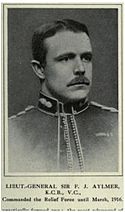
General Fenton Aylmer

General Fenton Aylmer

Golz Pasha

Golz Pasha

In Africa General Jan Smuts, who had fought against the British in the Second Boer War, invaded German East Africa (Burundi, Rwanda and Tanzania) on 5 March.  With an army of over 70,000 South Africans, Indians and Africans he struck southwest from British East Africa (Kenya), while Belgian forces attacked from the west.  On 10 March Smuts took back Taveta, just east of Mt. Kilimanjaro, and three days later Moshi, south of the peak.  The capture of Kahe, south of Moshi, on 21 March brought an end to the operations around Kilimanjaro; the Germans had left.  Lettow-Vorbeck had only 13,800 troops, mostly Askaris, and had no choice but to withdraw when faced with overwhelming numbers, something easily done given his superior mobility.  The Allies would steadily capture real estate, but never Lettow-Vorbeck, and meanwhile their troops were dying of disease.

Bridge destroyed by Lettow-Vorbeck

Bridge destroyed by Lettow-Vorbeck

General Paul von Lettow-Vorbeck

General Paul von Lettow-Vorbeck

General Jan Smuts (right)

General Jan Smuts (right)

hard to see map

hard to see map

The remainder of the events of March 1916 were of a political or strategic nature.  True to its word, on 1 March Germany expanded its submarine warfare, ultimately bringing the United States closer to involvement in the war.  On 9 March Germany declared war on Portugal, which had refused to return German steamers captured on the Tagus River in February; with even less reason Austria-Hungary also declared war six days later.  Actually, inasmuch as Portuguese East Africa (Mozambique) bordered on German East Africa there was indeed a point of contact between the two countries, and Lettow-Vorbeck would happily use that territory in his Great Chase with the British.

Lettow-Vorbeck

Lettow-Vorbeck

Allied interference in Persia continued, with Russian operations in the northwest and British forces – the south Persian Rifles under Sir Percy Sykes – in the south.  On 25 December 1915 the Allies had “persuaded” the Shah to appoint a more pro-Entente Prime Minister, Prince Farman Farma, and now on 5 March he and his cabinet were compelled to resign for refusing to support Russian-British control of the Persian military and finances.  Anglo-American meddling in Iranian affairs was just beginning.

Prince Farman Farma and Percy Sykes

Prince Farman Farma and Percy Sykes

            More “resignations.” On 15 (?) March Grand Admiral Alfred von Tirpitz, the father of the German navy, resigned as Secretary of State of the Imperial Naval Office, having lost the support of the Kaiser and naval establishment because, ironically, of his support for unrestricted submarine warfare.  More emblematic, on 29 March Alexei Polivanov, who had been struggling to reform the Russian army, resigned as the Minister of War.  In August 1915 he had argued against Nicholas’ assumption of supreme command and thus alienated Alexandra, who persuaded her husband to sack him.  One can hardly get choked up about the impending execution of this couple.

Empress Alexandra

Empress Alexandra

Grand Admiral Alfred von Tirpitz

Grand Admiral Alfred von Tirpitz

Alexei Polivanov

Alexei Polivanov

Finally, on 12 March the Allies held a conference in Chantilly to discuss the summer offensive; the outcome would be the nightmare of the Somme.  And there was another conference at Paris from 26 to 28 March, the result of which was a declaration of unity among the Allied powers: Britain, France, Belgium, Portugal, Italy, Serbia (which technically did not exist at the moment), Russia and Japan.  The Czar must have been delighted to have as an ally the power that had annihilated his Baltic and Far Eastern fleets a decade earlier.  (Yes, Japan; I have been ignoring the relatively trivial events of the Far East and Pacific.)

Paris in 1916

*Paris in 1916

(Delayed) Reports from the Front #11: February 1916

The major development in February 1916 was the commencement of the Battle of Verdun, perhaps the most horrific slaughter of the war, certainly for the French and Germans. (Later in the year the British – well, British generals – would show their own mettle in the face of mega-casualties with the Somme offensive.)  Meanwhile, less catastrophic battles went on around the periphery of the war.

On 9 February the British finally gained control of Lake Tanganyika when the German gunboat Hedwig von Wissman was sunk by the Mimi and Fifi.  But that was not going to stop Colonel Lettow-Vorbeck from leading a merry chase for the next three years.  On 17 February the last German troops in South Cameroon headed for internment in Spanish territory, and the following day the last German garrison (in Mora) surrendered, ending the thirty-two year German occupation of the colony; other white people would take their place for the next half century.  The allies also continued picking apart German East Africa.

The Hedwig von Wissman

The Hedwig von Wissman

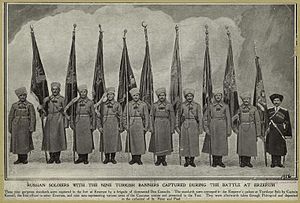
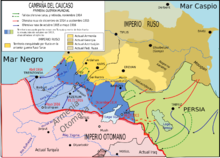
To the east the Russian Caucasus offensive begun in October of the previous year plowed on, and on 16 February Cossacks entered the strategically important city of Erzurum.  Compared to what was about to begin in the west, this was a trivial battle: the Russians suffered 9000 casualties, the Turks 15,000.  The Russian commander, incidentally, was Nikolai Yudenich, who would be one of the major counterrevolutionary White generals in the Russian Civil War.

Yudenich

Nikolai Yudenich

Russians in Erzurum

Russians in Erzurum

The Caucasus campaign

The Caucasus campaign

And in northern Italy General Cadorna, his army reorganized and under pressure to draw German troops away from the Western Front, launched the Fifth Battle of the Isonzo on 15 February. The offensive would last a month and result in nothing but more dead Italians and Austrians.  Nevertheless, the Isonzo Follies would go on.

Things were popping on the diplomatic and administrative fronts.  On 10 February the new British Military Service Act kicked in, and soon a growing wave of conscripted Tommies would be sucked into the maelstrom of the Somme.  The nickname “Tommy,” incidentally, came from a War Office instructional publication of 1815, in which the fictional trooper was named Tommy Atkins.  The name caught on as the universal designation of a British soldier, as epitomized in Kipling’s poem Tommy:


O it’s Tommy this, an’ Tommy that, an’ ‘Tommy, go away’;

But it’s ‘Thank you, Mister Atkins,’ when the band begins to play –

The band begins to play, my boys, the band begins to play,

O it’s ‘Thank you, Mister Atkins,’ when the band begins to play.

Rudyard Kipling

Rudyard Kipling


On this same day the last of the Serbian army moved to Corfu, followed the next day by an Italian force. On 16 February the Montenegrin army began its sojourn on the Isle of the Defeated.  Life there was not good.

While these Balkan troops were finding new accommodations, London decided the War Office rather than the India Office should henceforth direct the Mesopotamian campaign, which was now confined to attempting to rescue the army at Kut.  On 23 February a British Ministry of Blockade was created, a sign that the Allies were realizing – finally – that this would be war of attrition and the Central Powers must be deprived of supplies, including food.  This of course would cause problems with the neutral states in Europe.

The Germans were already attempting to starve Britain with their submarine warfare, which had certainly caused difficulties with the neutrals, especially the United States.  On 10 February Berlin notified Washington that armed merchant ships would be treated as hostiles, and on the last day of the month reminded the Americans that an extended submarine campaign would not be delayed.

And of far more importance to the next war rather than the present one, on 28 February Britain began creating the core of a strategic bomber squadron, which would be able to directly attack enemy industry.

Finally, the big one.  On 21 February the Germans launched an offensive towards the Verdun salient on the Meuse River.  Capturing this area would be strategically valuable, but the Chief of the German General Staff, von Falkenhayn, having concluded that Germany could not compete with Allied resources in a war of exhaustion, determined to bleed the French army white and force a separate peace.  Verdun was chosen as the target not so much because of strategy as its immense importance to French pride and as a symbol of national resistance.  The idea was that the French would do anything to defend Verdun and consequently throw endless numbers of poilus into the meat grinder.  (Poilu means “hairy one” and stemmed from the plethora of beards and mustaches sported by the troops.)

Poilus

Poilus

The citadel of Verdun itself had been fortified in the seventeenth century by the famous military architect the Marquis de Vauban, and the town was surrounded by two rings of 28 forts, modernized before the outbreak of the war.  The most important was Douaumont, occupying high ground to the northeast and thus in the direct line of the German attack.  Unfortunately for the French, seeing how easily the Germans had taken the Belgian forts in 1914, Joffre had decided traditional fortifications could not withstand German siege guns, and in 1915 the forts had been stripped of most of their guns and garrisons.  A more linear trench and wire line had been begun.  Joffre knew in January 1916 that the Germans were planning an assault on the Verdun front, but he assumed it was a diversion.

Fort Douaumont

Fort Douaumont

Marquis de Vauban

Marquis de Vauban

The meat grinder

The meat grinder

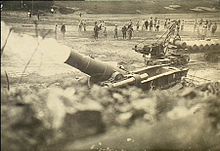
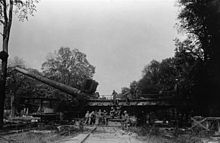
But the Germans were indeed serious.  They laid railway lines and brought up 1201 guns, two thirds of them heavy or super-heavy, such as the 420mm (16.5 in.) howitzer.  The plan envisaged firing 4,000,000 shells in eighteen days, which would require an average of thirty-three munitions trains a day.  One million Germans would assault a French garrison of some 200,000.

French heavy mortar

French heavy mortar

German railway gun

German railway gun

Verdun battlefield a century later

Verdun battlefield a century later

By 25 February German troops had moved forward almost two miles (employing flamethrowers for the first time), and a party of about 100 actually reached the northeast corner of Fort Douaumont, seeking cover from their own artillery fire.  They did not know the fort had been essentially abandoned, but encountering no resistance and fearing French artillery fire, they found a way inside and ultimately captured a warrant officer and twenty-five troops, most of the garrison.

German flame throwers

German flame throwers

French regiment at Verdun

French regiment at Verdun

The advance then bogged down, literally, as a brief thaw turned the ground to mud, making it extremely difficult to move the guns (one is reminded of Operation Barbarossa), which had been outrun by the infantry.  Meanwhile, by the end of the month the French had brought up 90,000 reinforcements, an impressive achievement given the inadequacy of their rail links to the Verdun region.

The serious slaughter was just beginning, but the battle would go on until December, the longest of the war.