Stuff from Way Back #28: Hey, Buddy, Can You Spare a Myth?

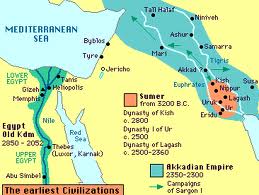
The early parts of the Biblical book of Genesis involve a great deal of water, which might seem odd in the mythic tradition of a society that emerged and evolved in the relatively arid environs of Palestine. There is of course the Mediterranean Sea, but the land itself is very dry, depending for the most part on rainfall for agriculture. The local rivers are mere rivulets compared to the Tigris and Euphrates and the Nile, which river systems witnessed the birth of the first urban civilizations, Sumer and Old Kingdom Egypt. Yet the creation story in Genesis begins with a watery chaos, and later the first human society is destroyed in a world-wide flood, a somewhat unlikely proposition in a land that experienced only the very ephemeral flash floods common to desert regions. Such stories would make much more sense in the hydraulic societies of Mesopotamia and Egypt.


And indeed in the creation myths of these areas the emergence of the familiar universe involved aquatic beginnings. For the Egyptians the process was peaceful, reflecting the confidence of a culture whose world-view was shaped by an isolated, secure, bountiful and essentially unchanging environment. The primeval hill arose from the waters, and there Atum (or Ptah), a self-created god, generated other deities by spitting out or ejaculating them or in a later more sophisticated account simply speaking their names. They in turn produced more gods and ultimately men in an ordered world without end.

Atum

Atum

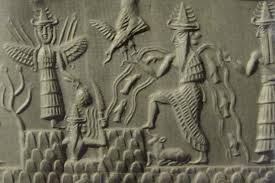
The Sumerians, on the other hand, lived in a far less hospitable environment: the Tigris and the Euphrates, unlike the Nile, were wild unpredictable rivers, there were extremes of weather and life was very insecure because of the constant warfare among the city-states and the periodic incursions of barbarians. Consequently, in their view (and that of subsequent societies in the region) creation was a struggle, and the forces of order under Enlil (later Marduk) had to wage an epic battle against Tiamat, the chaotic salt waters. Further, creation was not necessarily permanent and could collapse back into chaos, just as the Sumero-Babylonian societies were continually threatened with natural and man-made catastrophe.

Water world

Sumer


Enlil

Enlil

The Sumero-Babylonian tradition also features a global flood, a tale so ubiquitous that some actually hold the utterly nonsensical idea that there was indeed a planetary deluge. Southern Iraq, the location of Sumer, was frequently flooded by the Tigris and Euphrates overflowing their banks and the sea driven in by storms, natural disasters that early on gave rise to the tradition of a universal flood. Significantly, the Egyptians did not produce such a story, since while the Nile did flood, it did so on a regular annual basis, rejuvenating the farmland rather than creating havoc. Sumer was a land of natural and human conflict; Egypt was not.


Here then is the source of all that Biblical water. With the rise of empires, such as the Babylonian and Assyrian, communications between the Land of the Two Rivers and Syria and Palestine on the Mediterranean coast were greatly enhanced, and along with goods and people ideas and tales traveled eat and west. The story of Abraham coming from Ur, the most important of the Sumerian cities, is a reflection of this. As the Yahwists, the future Hebrews, absorbed Canaanite groups, many of the local traditions of these peoples were woven into the evolving tapestry of early Hebrew history. Very probably a group that had come from the east preserved a memory of its origins, and the birthplace of Abraham, himself a local cult figure from Hebron, was transferred to Ur. Thus the watery story from the Sumero-Babylonian creation epic, Enuma elish, traveled west to become, with many alterations, part of the mythic tradition of a distinctly non-watery people.


So also did the flood story make its way to the Hebrews. The tale is most fully recounted in the epic of Gilgamesh, the tablets of which date from the reign of the Assyrian king Ashurbanipal in the seventh century BC, but there is a Sumerian version from about 1700 BC, and it undoubtedly draws upon even earlier accounts. Long ago the gods sent a flood to destroy mankind, but the god Ea (Enki) took pity and warned Utnapishtim (Ziusudra in the Sumerian version) of Shuruppak to build a huge boat. He did so, and when the flood came, he boarded with his family and clan and “the beasts and the birds.” But the gods relented and the deluge ended, and the ark came to rest on Mt. Nimush. Utnapishtim released a “watch-bird,” which returned, then a swallow, which also returned, and finally a raven, which did not. Humanity was saved, and Utnapishtim was given the gift of eternal life.


Utnapishtim

Utnapishtim

Ea/Enki

Ea/Enki

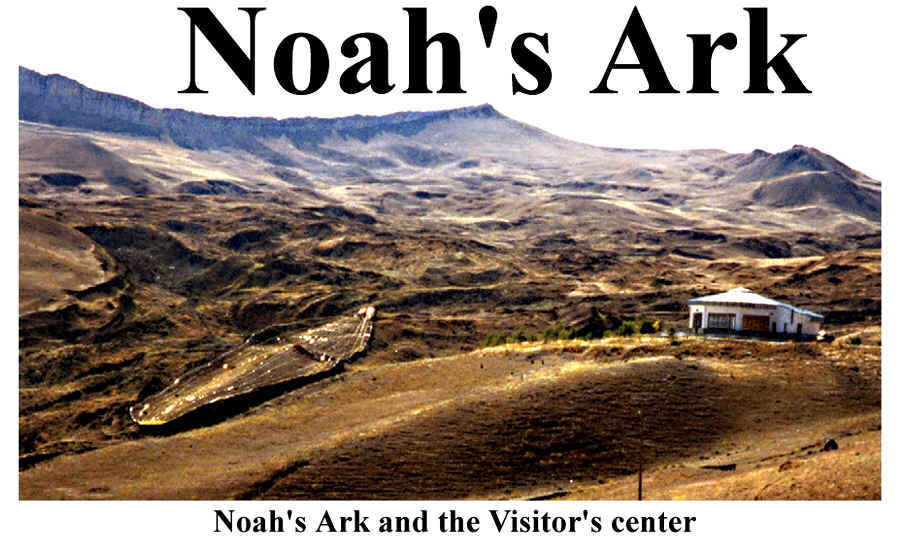
And so a group of people in Palestine, who would never have seen any real flood, came to accept a universal deluge as part of their mythic history. That oral tradition was ultimately recorded and became part of the Hebrew testament, later accepted as valid by Christianity and Islam. As a result for almost two millennia half the population of the planet believed in the literal truth of a story created by a “pagan” people they had never heard of and would despise as unbelievers if they had. Even today there are those who ignore the overwhelming and obvious evidence of science, Biblical analysis and common sense and insist on the historicity of a flood, diligently searching the mountainous interior of Anatolia for traces of the ark of Ziusudra/Utnapishtim/Noah.

Rare photo of Noah

Rare photo of Noah

A sucker born every minute

A sucker born every minute

Joshua Redux

The current Prime Minister of Israel, Benjamin Netanyahu, seems the embodiment of intransigence and resistance when it comes to the West Bank and peace with the Palestinians, but he appears almost liberal when compared to his Economics Minister, Naftali Bennett. Bennett is head of the extremist Jewish Home party, the third largest group within the coalition currently controlling the government, and he is willing to bring that government down should “Bibi” continue showing such weakness. His is a sweeping mission: “My task is to keep Judaism alive, to make it stronger and to fight its enemies.” Inasmuch as slightly more than half of world Jewry lives outside Israel, his mission statement might be a bit too sweeping, but conservative Israeli politicians seem to feel that Israel is Judaism.

Joshua Redux

Joshua Redux

In his struggle Bennett’s main concern is the West Bank, the territory that in the eyes of the world is to become the Palestinian state. In the eyes of Bennett, however, the West Bank is Israel. He actually has a point, at least to the extent that this territory was once Judea and Samaria, the heart of ancient Israel. But that was a couple of millennia ago, and one can hardly claim, as he does, that the land has belonged to the Jews for 3000 years. There have certainly been Jews living in the area all that time, but the state of Israel disappeared in antiquity and until the creation of modern Israel Jews were a minority. If any group can claim the land on the basis of continuous habitation, it would be the Arabs. Bennett’s reply to this argument is simple: anyone who makes it does not understand history, at least history as he imagines it. Thus, referring to the Israeli “occupation” of the West Bank is completely wrong, because, as Bennett puts it, “You can’t occupy your own land.”


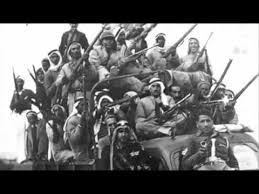
This is of course nonsense, and in any case, claiming territory on the basis of prior occupation, especially so long ago, is an extremely dangerous principle. But Bennett would doubtless point out that Israel is a special case because of the history of the Jews and especially the Holocaust, a proposition perhaps more palatable to the West because ancient Israel and its “history” are so important to Christianity. Special case or not, the problem is that people who are not Jews have been living on this land for more than a thousand years and are wondering why they must be displaced because of the actions and guilt of the West. Palestine was manifestly not, as the Zionist catchphrase put it, “a land without a people,” and in 1948 the Palestinians saw half of their homeland given to the Jews by an international organization created and dominated by a country whose President was anxious to secure the American Jewish vote for his reelection.

armed non-people

armed non-people

But historical fact notwithstanding, Bennett, like many others, fervently believes Judea and Samaria are part of Israel, and consequently, settling Israeli citizens in the West Bank, seen as a gross violation of international law by the rest of the planet (quietly by the US), is quite proper. And like the Lord of Hosts once smiting the idol worshippers in the land He gave unto His people, there is the Israeli Defense Force, smiting their modern enemies, though they are no longer idol worshippers. These are the Chosen People, chosen a second time by the United States, the closest thing earth now has to a Judge of the Nations. The world is treating Israel unfairly, according to Bennett, an ironic supposition given that under the protection of the United States Israel is permitted behavior condemned by international covenants (which we are pledged to uphold).

 
Bennett believes time is on his side since the settlement program, despite the (empty) objections of the Washington, is actually accelerating, and every Israeli colonist is, as they say, a fact on the ground. There are already more than a half million Israelis (including almost half the ministers in the Netanyahu cabinet) living in the West Bank; send in enough and it is Israel, regardless of quibbles about silly international law. But Bennett is not an unreasonable man and is willing to compromise. Israel will annex only Area C, which is to say, 68% of Palestinian territory, and the Arab inhabitants (180,000) will be offered the blatantly second class citizenship already enjoyed by their cousins in Israel proper. The other 32% of the West Bank will be administered by a toothless Palestinian Authority, protected of course by the Israeli Defense Force and Shin Bet, the Israeli secret police. This sounds a lot like the Generalgouvernment, the Nazi administrative structure that ruled Poland. And sooner or later the entire area would almost surely be annexed.

Apartheid plan

Apartheid plan

Bennett and friends apparently do not see the underlying problem in all this – or they simply do not care. Apart from the fact that outright annexation of that much territory, acquired through conquest, is likely to be difficult for even ever compliant Washington to swallow, Israel would then control a huge and ever growing Arab population, confined to obvious Bantustans. Not only would this guarantee eternal hostility and instability, but Israel would be not just a Jewish state but also an Apartheid state. On the other hand, so long as the United States puts up with it, what do the Israelis care what the world thinks? The Palestinians are doomed. Where are the Romans when you need them?


(I just discovered a related news item regarding the West Bank, one that demonstrates the strength of Israel in American politics.  New Jersey Governor Chris Christie was speaking before the Republican Jewish Coalition and happened to refer to the West Bank as “occupied territory,” which characterization did not please the crowd.  He promptly apologized to billionaire Zionist Sheldon Adelson for his “misstatement,” though of course the West Bank is as much occupied territory as Poland was under the Germans.  The UN resolution of 1947 created the state of Israel, and the West Bank and Jerusalem were not part of that state.  That the Arabs did not accept the partition is irrelevant; the resolution also created a Palestinian state, the territory of which Israel is now occupying (and settling).  And the American media?  A former White House hack, Bill Burton, responded to a question from Candy Crowley of CNN by saying that the remark showed that Christie is “not on top of his game,” which is perhaps true if he dared to speak the truth to this particular audience.  But Crowley then told viewers that presidential candidates are “all going to make really stupid mistakes, which that was one.”  She could not be bothered to even mention that this “really stupid mistake” involved stating a fact.)


And question it they did. Former Deputy White House Press Secretary Bill Burton told CNN’s Candy Crowley on Sunday that Christie’s remark is “the sort of thing that shows he’s not on top of his game like you need to be when you’re a presidential candidate.” Instead of pointing out the absurdity of Burton’s statement, Crowley validated his point, saying, “They’re [presidential candidates] all going to make really stupid mistakes, which that was one.” Just like that, the self-described “most trusted name in news” assured viewers that there is no Israeli occupation of Palestine.

Sheol Welcomes Ariel Sharon

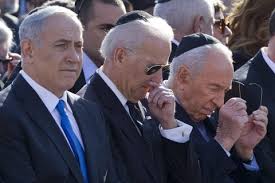
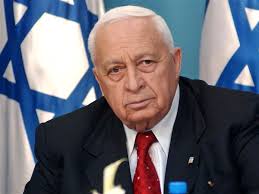
After eight years in a coma Ariel Sharon (1928-2014), Israeli military leader, Prime Minister and war criminal, died on 11 January. Ironically, but quite understandably, he was lauded as a man of peace by western leaders. American Secretary of State John Kerry asserted that Sharon was a man who attempted to “bend the course of history toward peace,” a truly ludicrous proposition that demonstrates the stranglehold Israel has on US politicians. Among Israelis he was more honestly known as the “Bulldozer,” while for Palestinians he was the “Butcher,” a recognition of his complete disregard for non-Jewish lives. Apart from his Jewishness Sharon was an individual who would have been quite comfortable in the Hitler administration, something that may be said about a disturbing number of Israeli politicians these days.

Joe  Biden is Jewish?

Joe
Biden is Jewish?

the world remembers the man of peace

the world remembers the man of peace

Sharon was a sabra, that is, he was actually born in Palestine, giving him marginally more credibility in his claim to the land than someone who had recently arrived from Brooklyn. To his credit he was not involved in terrorism against the British, as were two other Israeli Prime Ministers, Menachim Begin and Yitzhak Shamir, but this may simply be because of his youth. He fought as part of the Haganah in the War of Independence in 1947-48 and after the armistice in 1949 he remained in the Israeli military for the next quarter century. During this long tenure he showed himself to be a brilliant military commander, but he was also insubordinate and extremely aggressive, often losing more men than his superiors thought was necessary.

the young warrior

the young warrior

From the beginning of his career he also demonstrated a ruthlessness and complete lack of morality when dealing with his country’s enemies. Shortly after the armistice he organized Unit 101, a sort of special operations squad that conducted raids across the armistice lines in retaliation for Arab attacks, to some degree setting the standard for the Israeli military. Collateral damage among Arab civilians was not a concern, and responding in 1953 to an Arab raid into Israel, his unit attacked the West Bank (then controlled by Jordan) village of Qibya, which had been used by the Arab force. His men blew up 45 houses, a school and a mosque, killing between 65 and 70 civilians, at least half of them women and children. The operation was disavowed by the Israeli government.

the old politician

the old politician

Sharon performed brilliantly during the 1956 Suez crisis, the 1967 Six Day War and the 1973 Yom Kippur War, but controversial political views led to his dismissal in 1974. His political career began the following year, and despite his lack of experience he was made Minister of Agriculture when Menachim Begin became Prime Minister in 1977. During this period Sharon became the major supporter of the settlement movement, which began in 1974 with the creation of Gush Emunim (Block of the Faithful), whose members wished to see the West Bank annexed by Israel. Sharon’s policy: “Everybody has to move, run and grab as many (Judean) hilltops as they can to enlarge the (Jewish) settlements because everything we take now will stay ours. … Everything we don’t grab will go to them.” The Jewish settlement of Palestinian territory would be Sharon’s greatest achievement and his lasting legacy.

defenders of Greater Israel

defenders of Greater Israel

the legacy

the legacy

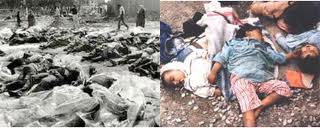
In 1981 Begin appointed Sharon Minister of Defense, and a year later Israel invaded Lebanon, providing the opportunity for Sharon to become an actual war criminal. On 15 September 1982 in response to the assassination of Lebanese president and Israeli ally Bashir Gemayel Sharon, Begin, chief of staff Rafael Eitan and foreign Minister Yitzhak Shamir decided to reoccupy West Beirut, violating their agreement with the United States. The Israeli army surrounded the Sabra neighborhood and Shatila refugee camp, where thousands of Palestinians, mostly women, children and old men, lived, and the following day Sharon and Eitan invited the Christian Phalange militias (See Ironies from Israel #2) to “mop up” the refugee camps, providing Israeli jeeps to transport them. The Phalange, originally modeled on the Nazi SA, entered the camps and began raping, mutilating and butchering the inhabitants, all of this being observed by Israeli officers stationed in buildings around the area. When darkness fell, the Israeli army continuously fired flares, illuminating the camps. The following morning the army ordered the Phalange to stop. By that time more than a thousand Palestinians, including small children, had been killed.

"personally responsible"

“personally responsible”

The United Nations condemned the massacre as “genocide,” with which term the US and other nations disagreed. An independent commission headed by Seán MacBride concluded that Israeli authorities or forces were indirectly or directly responsible for the slaughter, while the Israeli Kahan Commission, created only after 400,000 protestors gathered in Tel Aviv, concluded that Israel was only indirectly responsible. Sharon, Eitan and some intelligence officials were found to “bear personal responsibility,” and it was recommended that Sharon be dismissed. He refused to resign and Begin refused to fire him until massive protests forced a compromise whereby Sharon would cease to be Minister of Defense but remain in the cabinet. He also acquired the name “Butcher of Beirut.”

 
International outrage subsided, and Sharon remained part of the cabinet for the next eighteen years, serving as Minister Without Portfolio, Minister for Trade and Industry, Minister of Housing and Construction, Minister of Energy and Water Resources and Minister of Foreign Affairs. He became Prime Minister in 2001 and served until his stroke in 2006. As a cabinet minister he vigorously pushed the settlement of the
West Bank, but in 2005 he “disengaged” from Gaza, forcibly removing some 7000 Jewish settlers. For this he was lauded as a “man of peace,” taking the first bold step towards ending the occupation and creating a Palestinian state. What nonsense. Unlike the West Bank, which is essentially Judea, Gaza was never part of ancient Israel and consequently expendable in the creation of Greater Israel, and the move took some of the attention away from the massive settlement program in the West Bank. “Disengagement” meant turning Gaza into a huge prison camp, its frontiers, territorial waters and air space controlled by the Israelis, who periodically bomb its fading infrastructure.

 
In an attempt to end terrorist attacks and suicide bombings in 2002 he launched Operation Defensive Shield, the largest military operation in the West Bank since the Six Day War. Various international organizations concluded that both sides could be faulted for their behavior and that Israeli use of heavy weapons in urban areas resulted in civilian casualties. More critically, the Israelis purposefully destroyed much of the Palestinian infrastructure, including private property belonging to a number of NGOs. By deliberately debilitating the Palestinian Administration and weakening the economic infrastructure Defensive Shield dramatically aided the settlement program.

 
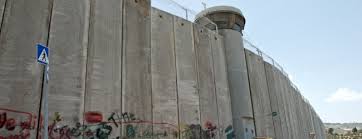
In 2002 private groups began the construction of the “separation barrier,” which after some hesitation Sharon’s government embraced, pouring in funds. The concrete wall, generally more than twenty feet high, and other obstacles, including exclusion zones, are designed to protect Israel, but it also allows the Israelis to begin transferring Palestinian land to Israel by running the wall east of the 1967 cease fire line. More than 8% of the West Bank has now been in effect turned into Israel.


passing the baton

passing the baton

a new crusader castle

a new crusader castle

Many Israelis see Ariel Sharon as an embarrassment and even a war criminal, but generally he is remembered for his heroic and brilliant exploits during Israel’s major wars. His lasting legacy, though, is the settlement of the West Bank, where more than a half million Israelis now live and enjoy rights and resources denied the Palestinians. Israel now directly controls about two thirds of the proposed Palestinian homeland, while the remainder is cut up by Israeli-only roads and military enclaves. In complete conflict with international law Israel is gradually annexing the West Bank and painting herself into a corner. If the Palestinians are granted citizenship in Greater Israel, it will no longer be a Jewish state, which is unthinkable. The only alternative is apartheid, a system that is slowly being established. And through inaction and political cowardice my country is abetting this loathsome development.

honesty!

honesty!

Worst Legislator Who Actually Has a Brain Award

(This piece is self-indulgent and motivated solely by disgust. Next week I will endeavor to do something of interest to all.)


There would appear to be few members of the United States Congress for whom the good of the country is their primary concern. Rather, being reelected comes first, which means soliciting huge amounts of money, which is hardly likely to be handed over without some promise of a payback in the form of legislation. This is tacit and apparently acceptable corruption. Adding to the abysmal quality of our legislators is the recent appearance of Republican extremists, such as Sen. Ted Cruz, who are willing to threaten the welfare of the nation if they do not get their way. There are also growing numbers of anti-science ignoramuses, such as Rep. Paul Broun, who wish to make legislative decisions on the basis of beliefs plainly contradicted by fact. That men like Cruz and Broun are complete buffoons does not seem to bother their constituents, perhaps because they represent southern states.

 
There are indeed many disgusting individuals in Congress who seem to be doing their best to injure the country, whether from self-interest, extremist ideology or simple stupidity, but my pick for the Worst Legislator Who Actually Has a Brain Award is Rep. Ileana Ros-Lehtinen of Florida’s 27th congressional district, which includes Dade county. She is an American of Cuban extraction, who has served in the House of Representatives continuously since 1989. She is best known as Israel’s woman in Congress, a significant distinction given that most all of Congress is inclined to give the Jewish state unqualified support, but she is also an enthusiastic supporter of the security state that America is turning into.

Israeli agent

Israeli agent

 
Ros-Lehtinen’s legislative activities on the domestic front suggest a person who might be comfortable with the Stalin administration. It must be said, however, that her positions on social legislation are not extremist, but rather simply conservative. She supported the Defense of Marriage Act, an implicit anti-gay stance, but later became a champion of gay rights, presumably because her eldest child turned out to be transgender. (There seems to be a lot of this going around among conservatives who discover they have gay or lesbian children.) She singlehandedly scuttled the International Protecting Girls by Preventing Child Marriage Act, concerned that funds might be used for abortions. She opposes stem cell research and any estate tax and supports drilling in the Arctic National Wild Life Refuge. She supported the disastrous Bush tax cuts and opposes the Peace Corps, although it is not at all clear why.

 
These are standard conservative positions, and while they are increasingly out of step with the majority of Americans, they are not extreme or particularly detrimental to the country. The same cannot be said for her positions regarding the emerging security state. She supported the Military Commissions Act, which was created to provide a replacement for the Combatant Status Review Tribunals, which were declared unconstitutional by the Supreme Court. Besides circumventing the Geneva Convention this act was so worded that an American citizen could be denied habeas corpus, for which it was also declared unconstitutional. She has advocated that the Patriot Act, which was passed by an intimidated Congress in response to a (bogus) state of war, become permanent. This would make what were presumably temporary and extreme measures, to wit, dramatic increases in the power of the Presidency and the security services, permanent fixtures of the federal government. That legal scholars have seriously questioned the constitutionality of many of the provisions of the Patriot Act is apparently unimportant. One is reminded of the emergency Enabling Act of 1933, which also gave the executive enhanced power and became permanent, establishing the basis for the dictatorship of Adolf Hitler.

 
In the area of foreign policy Ros-Lehtinen is, in my opinion, seriously misguided and is injuring American interests abroad. She of course voted for the utter catastrophe that was the Iraq war, but then again, virtually everyone did, abandoning rationality for the satisfaction of revenge – against anyone. Whether the target was actually culpable was unimportant, as Ros-Lehtinen boldly declared: “Whether or not there is a direct link to the World Trade Center does not mean that Iraq is not meritorious of shedding blood. The common link is that they hate America.” Now, that is a reasoned policy. Of course, no hawk can ignore domestic politics, and having declared that harsher penalties should be imposed on Libya, she balked at the NATO airstrikes, presumably because they were initiated by a Democratic President: “I am concerned that the President has yet to clearly define for the American people what vital United States security interests he believes are currently at stake in Libya.” It seems there is no problem that President Bush failed to do this in the case of Iraq.

 
Born in Cuba and living in south Florida, Ros-Lehtinen is understandably, if not rationally, an extremist when it comes to the communist left-over in the Caribbean. The half century embargo of Cuba is probably the most obviously failed policy ever implemented by the United State. It has not brought about regime change, and indeed communist Cuba has already survived the Soviet Union by a quarter century. The major impact has been the impoverishment of the island and the complete absence of the sort of interaction that might soften or even change the regime. Inasmuch as Cuba is a threat to no one, and certainly not the United States, continued support of this failed embargo can only be understood in terms of emotion and revenge. Ros-Lehtinen is Cuban and represents a district that is packed with Cubans, many old enough to have fled when the revolution took place. In fact, it would seem that the continuation of this now silly embargo is due to the fact that as a Presidential candidate, if you oppose it, you lose south Florida, and if you lose south Florida, you lose Florida, and if you lose Florida, you lose the election. This may not be true, but politicians think it is.

 
When Obama dared to shake the hand of Raúl Castro at the Nelson Mandela funeral, Ros-Lehtinen exploded with rage, ranting about exchanging greetings with this bloody dictator. Well, Castro is indeed a dictator, there are political prisoners in his jails and Cubans enjoy very few freedoms, but the guy is a lightweight on the authoritarian stage. I have not heard her or other anti-Castro zealots complain about China, which is at least nominally communist and certainly more bloody. They still have a gulag, they have shot people in the streets and they are methodically turning Tibet into a Chinese province, yet the policy here is engagement. Incidentally, in their fulsome praise of Mandela American politicians and media had virtually nothing to say about Mandela’s close relationship with Castro and Arafat.

 
Ros-Lehtinen has of course worked against every attempt to end the embargo and open a dialogue with the Cuban government and tried to block President Carter’s visit to Cuba in 2002. This is of course all stupid but hardly radical, but she has clearly revealed her extremism. She defended Veletin Hernández, who was convicted of murdering a Cuban who advocated talking to Cuba, and she worked to obtain a pardon for Orlando Bosch, who was convicted of terrorism and is suspected of complicity in the bombing of a Cuban airliner that killed 73 people. She has publically advocated assassinating Fidel Castro and apparently anyone else she deems an oppressor. Most rational people would consider defending convicted murderers and supporting the assassination of foreign heads of state to be extremist.

 
But it is Ros-Lehtinen’s unqualified support for the state of Israel that seems most inimical to American interests and is certainly for me the most disgusting part of her political activity. She has authored a seemingly endless stream of bills seeking to tie the United States financially and militarily even more closely to Israel and impose more restrictions on the Palestinians. Any criticism of Israel, even if rooted in established American policy, will bring an immediate condemnation from her. When the State Department expressed concern about growing Israeli settlement activity in Palestine, she demanded that the administration stop such attacks on our ally, even though the United States has opposed the settlements for decades and they are blatant violations of well-established international law.

 
She opposes American support for the Palestinian Authority and any agency that works with the Palestinians, even if the work is simply humanitarian aid. The Palestinian Authority certainly has its problems, but it is the recognized government of Palestine and the only authority that can engage in negotiations with Israel (pointless though they may be). The fifty year old United Nations Relief and Works Agency for Palestine Refugees in the Near East has been frequently accused of malfeasance, generally by Israel and its supporters, who oppose any public discussion of the conditions in the occupied territories, but many of the accusations have been shown to be groundless. In any case, while there are likely problems associated with UNRWA’s operations, most of its work has been manifestly humanitarian. She has also attempted to deny American funds to any UN agency that recognizes Palestine as a state, no matter how important that organization’s efforts are in helping distressed people. A major source of her campaign financing comes from Irving Moskowitz, a notorious supporter of the settlement program and annexation of East Jerusalem and the West Bank.

Irving the Bag Man

Irving the Bag Man

 
Regardless of how one estimates the value of Israel as a US ally, Ros-Lehtinen is clearly an extremist when it comes to the Israelis. She has defended Israel when it violates international law (not that international covenants mean anything to America anymore), but more seriously, she has rushed to Israel’s defense even when it is blatantly opposing established American policy, embarrassing us and undermining our own national interests. While most politicians are terrified of angering Israel and its American organizations, this crosses the line into anti-Americanism, of putting the interests of a foreign state above our own.

 
One wonders why. As a radical opponent of the Castro regime, you would think she would feel some sympathy for the Palestinians, who under the Israeli occupation are suffering a more oppressive regime than even the Cubans. Is it Moskowitz’s money? Is it her Jewish constituents? Is it some deep-seated hatred of the Palestinians? What could bring her to be essentially the agent of the Israeli government in Congress? Who knows? Congress is filled with a lot of strange and loathsome people.

Apartheid Old and New

A great man has died.

 
Nelson Mandela towered over his contemporaries, not just in South Africa but across a continent filled with brutal dictators, power-hungry rebels and religious fanatics. Mandela was the very rare successful revolutionary leader who was able to make the transition to peaceful democratic politics and lead his nation rather than dominate it. He participated in the peaceful dismantling of the worst racist structure of the second half of the twentieth century, urging reconciliation rather than revenge, astonishing for a man who had been imprisoned by the previous regime for 27 years. That Mandela was something less than a saint at times in his career does not detract from his accomplishments, and the failures of the current government of South Africa serve to increase his stature.

 
The celebration of his life and struggle against apartheid may also serve as a reminder that apartheid is still with us, though perhaps not on the grand scale of the Afrikaners, who relegated the entire native population of southern Africa to a second class status institutionalized by the state. This apartheid of the twenty-first century is not yet formally institutionalized nor so blatantly racist, but it is just as real and oppressive for those living under it. The new Afrikaners in fact cooperated in the 1970s with a virtually completely isolated South Africa in the development of nuclear weapons.

old apartheid

old apartheid

old apartheid

old apartheid

 
The new apartheid is being established of course by Israel in the West Bank, that is, occupied Palestine. Growing discrimination in the state of Israel against the 20% of the citizen body that is Palestinian is easily documented, but the discriminatory laws, the unofficial segregation and the sporadic violence are not part of any organized government instituted system. Instead, the developing official system of exclusion and imposed economic and social inferiority is found in what is internationally recognized as Palestinian land, making the Israelis more like the Nazis than the Afrikaners, surely an ironic turn. That this is all done in the name of military necessity makes it no less apartheid, especially considering that virtually none of the measures have anything at all to do with real security demands.

 
With seemingly randomly chosen exclusionary zones, Jewish only roads and residential enclaves and the total absence of any civic rights on the part of the Palestinians the Israeli occupation certainly looks like pre-liberation South Africa. The only real difference is that the land suffering under this system is not actually part of the state of Israel. It appears, however, that this is changing, inasmuch as there are now a half million Israeli colonists settled in Palestine, and there is not the slightest sign that they will ever leave. Rather, more and more Israelis are pouring in, despite the blatant violation of basic and well established international law and the opposition of almost all the international community. Israel is rapidly becoming the international pariah that South Africa once was.

new apartheid

new apartheid

new apartheid

new apartheid

 
Unfortunately, the Palestinians have no Nelson Mandela. Their iconic leader, Yasser Arafat, was a more typical revolutionary, excessively violent and utterly inept as a head of state. Not that it would make any difference. South Africa faced worldwide condemnation and sanctions, which played a major role in bringing down the apartheid regime. Israel has the virtually unqualified support of the United States, despite its constant violation of international covenants this country has pledged to uphold. There will be no international sanctions.

 
The colonization and the oppression must go on because there is no obvious way out. What Israeli government would attempt to evacuate five hundred thousand settlers when many of them would need to be forced, as was the case with the handful removed from Gaza. Will the Israeli army fight Israelis? Would these people ever agree to become a Jewish minority in a Palestinian state? And if Israel decides to annex “Judea and Samaria,” as many extremists desire, would it grant citizenship to the Palestinians, thus making Jews a minority in the Jewish state? The only answer is continuing apartheid.

 
The only hope is that the situation will become so unpleasant and injurious to American interests that it must act. One would think that even the American Congress could not stomach the forcible annexation of a conquered country. On the other hand, America no longer seems to care at all what the rest of the world thinks or how hypocritical it appears. The Palestinians can hope for nothing from the one time light of liberty to the world.

Wogs Need Not Apply

This is an issue of small significance compared to the revelation of our government’s massive surveillance programs and the administration’s Gestapo approach to dealing with informants, but it is symptomatic of our lopsided and self-destructive support for Israel.  And you are hardly likely to hear about this in the mainstream media.


Congress is now considering two bills (S. 462 and H.R. 938), which are both versions of the United States-Israel Strategic Partner Act of 2013.  Though the US and Israel have been joined at the hip for forty years, Congress continually passes bills such as these in order to fine tune the relationship, which is to say, add more clauses.  These are inevitably in favor of Israel, often to the detriment of Americans, and some are simply baffling.  For example, last year Congress passed the United States-Israel Enhanced Security Act of 2012, which commits the US to “the security of the state of Israel as a Jewish state.”  What does that mean?  How (and why) are we to guarantee the cultural make-up of a foreign society?  What exactly does “Jewish state” mean anyway, when twenty percent of Israel’s citizen body is not Jewish?


This new partnership act includes a visa waiver agreement with Israel.  The Visa Waiver Program permits the US and a foreign country (currently thirty-seven of them) to allow their citizens to visit one another for up to ninety days without a visa.  This is of course an excellent arrangement for friendly nations, but not surprisingly the agreement with Israel will contain a provision absent from previous agreements: Israel will retain the right, not extended to the US, to deny entry to any American citizen without explanation.  Apart from being blatantly unfair and insulting to Americans (who were not consulted about this), this provision is a humiliation for America.


Israel’s history of hassling visitors and denying many access to Israel or the Occupied Territories, often seemingly capriciously or for incomprehensible reasons, is so rich that the Department of State felt compelled to post a travel advisory on its website:  “U.S. citizens are advised that all persons applying for entry to Israel, the West Bank, or Gaza…may be denied entry or exit without explanation.”  One would think that this essentially guts the agreement as far as Americans are concerned, but nothing is impossible in the Alice-in-Wonderland world of our relationship with Israel.  And the advisory specifically notes that “U.S. citizens whom Israeli authorities suspect of being Arab, Middle Eastern, or Muslim origin may face additional, often time-consuming, and probing questioning by immigration and border authorities, or may be denied entry.”


Indeed!  Negroes and Irish need not apply.  This sort of blatant profiling and discrimination is technically illegal in America and counter to our stated values, but one might argue that given Israel’s experience with Palestinian terrorism, it is a perfectly sensible policy.  Perhaps, if the profiling actually only dealt with reasonable suspicion of a threat, but example after example demonstrates that this is quite obviously not the case.  If there is even the vaguest suspicion that you are pro-Palestinian or a critic of Israel, that you work for an NGO that has been critical of Israel or that you have simply visited a country hostile to Israel, you will be hassled and possible thrown out.  That this sort of thing really does happen is clear from the State Department advisory, since the statement must necessarily be an implicit criticism of Israel, something that is normally a mortal sin for the US government.


Here is a particularly obnoxious though typical example.  Nour Joudah, a US citizen, began teaching high school in the West Bank town of Ramallah last year; she had a one year multiple entry visa and a residency permit.  After one semester she took a vacation out of the country, and when she returned in January via the Allenby Bridge from Jordan, she was held up for six hours and then denied entry with no explanation.  Acting on the advice of the Israeli embassy in Washington, she tried again through Ben Gurion airport.  This time she was interrogated for hours, strip searched, taken to a detention center and deported back to Jordan the next day.  A surprisingly frank call from the US Consulate in Jerusalem informed her that nothing could be done to help “when it comes to Israel.”


There are endless stories similar to this, and I also experienced this petty behavior, though on a much smaller scale.  In 1991 I entered Israel through the Ben Gurion airport and made the mistake of accompanying my travel companion to the same customs station.  He was a Black from Cincinnati who had converted to Islam and adopted the very unlikely name of Herb Mohammed.  When the official saw Mohammed on his passport, she asked me if I was with him, to which I said yes.  We were then both sent to a room occupied by what looked like the Israeli military, who took our passports.  After cooling our heels for an hour or so we were given our passports and dismissed without a word of explanation.  Trivial perhaps, but common – and insulting, especially for a citizen of a country that is sending Israel, a very wealthy state for its size, a few billion dollars every year.  Incidentally, when I left Israel on El Al, I received the most thorough search I have ever experienced, and I had crossed frontiers in the Warsaw Pact curing the Cold War.


Why are our national politicians so willing to do this sort of thing?  Can you imagine this arrangement being proposed for any other country?  Are they afraid to be called anti-Semites?  Do they believe in some Jewish international financial cabal that will finance their campaigns?  It must be some sort of fear thing, since it is very hard to believe that virtually all our national politicians are so enamored of Israel, a state that frequently spits in our face and violates almost as many international agreements as the Third Reich, that they would continually adopt positions that are actually detrimental to the US.  Apparently the powerful Zionist lobby, the American Israel Public Affairs Committee, looms over the frightened gentiles in Congress like some Lord of Hosts, ready to smite those who will not do Their will.


Actually, the Christian extremists perhaps have a positive reason: watch over Israel and lobby for the third temple, which would bring on the End of Times they desire so much.  Then those pesky Jews will either become good Christians or be slaughtered.  Meanwhile, better that Jews should live in Israel instead of their neighborhoods.

terrorists

terrorists

not a terrorist

not a terrorist

not a terrorist

not a terrorist

not a terrorist

not a terrorist

Dressing smartly, Hamas Style

Perusing my posts, one can hardly fail to notice my lack of enthusiasm for the modern state of Israel, the establishment of which I consider to have been immoral and an utterly stupid recipe for endless strife in the region.  This does not, however, mean I approve of everything the Palestinians do, although a people can be excused a lot when one part of their country is being appropriated by their neighbor and the other is turned into a vast prison camp.  And something I certainly cannot approve of are the actions of Hamas.

Hamas was founded in 1987 as an offshoot of the Muslim Brotherhood and in 2006 won a majority of seats in the Palestinian Parliament, probably because of their social welfare work and the failings of Fatah.  This resulted in conflict between the two parties and Hamas control of Gaza in 2007.  Hamas’ electoral success is not recognized by the United States, which supports free elections only so long as they are not won by groups it does not approve of.  Hamas has been labeled a terrorist group, though it is hard to see why blowing up a bus is any more of a terrorist act than dropping cluster bombs in densely populated areas.

As one who understands, without condoning, Palestinian violence against Israeli civilians (the military are legitimate targets), the odd ineffectual Hamas rocket launched towards Israel does not concern me, apart from the fact that it ultimately brings horrific reprisals from Israel.  What is unacceptable is Hamas’ imposition of their extremist version of Islam on the inhabitants of Gaza, which is especially offensive given the generally secular nature of Palestinian society.  As usual, this imposition takes the form of endless prohibitions, virtually none of them supported by the Koran.  As if life in Gaza were not miserable enough.

Much of the silliness stems from the misogyny inherent in all the Abrahamic religions and taken to incredible extremes by Islam.  Since none of these supposedly religiously-inspired mandates are found in the Koran, we must assume they are dreamed up by Hamas theocrats, perhaps to demonstrate the innate superiority (and ignorance) of Muslim males.

That schools will be segregated by gender for students older than nine and men will never be permitted to teach females is a hardly surprising dictum for radical Islam, but it is an extreme measure for Palestinians, who have traditionally rejected this sort of nonsense.  Less common is the recent prohibition against women riding on the backs of motorcycles.  The Hamas authorities claim it is a safety measure (which no one else does), but they also state that it is intended to protect “community values,” which values are apparently determined by Hamas, since these Hamas “values” are not a facet of traditional Palestinian society.  The “safety” explanation was subsequently shown to be bogus when women were subsequently banned from riding motorcycles at all.  Hamas has also decided that women running a marathon is “un-Islamic” no matter how they are dressed, and women were prohibited from smoking the widely popular water pipes because it “destroyed marriages” and “sullied” the image of Palestine.  This last was, I believe, subsequently retracted.  And if you are a man in Gaza, don’t bother becoming a beautician: men cannot cut women’s hair.

But Hamas is in fact capable of at least momentarily attending to affairs other than their campaign to return women to their seventh century status as chattel.  With even less scriptural backing they are also attending to the proper image of the Islamic male.  Hair with gel or worse, spikes, will be summarily shaved off by Hamas fashionistas.  Longish hair will also be snipped, which seems odd considering the usual extremist demand that men not cut their beards.  Banning tight or low-riding pants is perhaps understandable in the bizarre world of Islamic sartorial concerns, but why is god offended by trousers that are long enough to cover the ankles?  Traditional Arab robes do that, and it must be asked: Did Mohammed ever see a man wearing pants?

In addition to these specifically Hamas ordinances in the name of god there are of course the expected hassles associated with this curious religion. Men are harassed if they are too uncovered at the beach, since presumably the bare Arab chest is just too much for the average woman to deal with.  To be fair, much of Latin American society is also uncomfortable with such exposed manliness.  In Gaza couples are stopped and required to prove they are in fact married, which might make you wonder how courting is undertaken at all.  I suppose this fits nicely with the tradition of no courting whatsoever since ideally the marriage would be arranged.  It all makes Sicily seem progressive.

Of course, all this strange and stifling behavior in the name of god would be entirely familiar to the ultra-orthodox haredi in Israel, who give the Taliban a run for their money when it comes to making the fair sex invisible, uneducated breeders and pretending the world is still in the first millennium BC.  But then, what is Islam but a return to god as the nasty Lord of Hosts rather than the only sometimes nasty forgiving and smiling savior of Christianity?

Stuff from Way Back #16: Moses and the Exodus (screenplay by King Josiah)

(The Preface of my novel mentioned that the Exodus is now in serious doubt.  Here is a fuller presentation of the arguments.)

Nothing is known about the historical Moses, and even his existence is now seriously doubted.  The stories about him found in Philo, Jospehus and the Midrash and Talmud have long been recognized as secondary and unhistorical, and our sole “primary” source for the leader of the Exodus is the Old Testament, which is itself derivative.  The first five books of the Bible, called the Pentateuch or Torah, are manifestly not historical documents, but rather the final version of a tradition that constantly revised stories handed down through perhaps thirty generations.  Like Homer’s Iliad, most of the Old Testament is oral history that was subsequently written down, though unlike the Iliad and the Odyssey, whose texts were thus frozen, the books of the Bible continued to be revised and edited.

Biblical scholars have discerned four major “authors” or strands interwoven in the text of the Pentateuch: the Yahwist, the Elohist, the Priestly and the Deuteronomist; and these sources were themselves assembled and edited into the finished product by a group of compilers, collectively known as the Redactor.  The oldest of these sources, the Yahwist, is dated to the tenth century BC, already two to three centuries after the putative date of the Exodus, and the editing of the texts continued into the sixth and fifth centuries BC and later; even as late as the time of Jesus there still existed no accepted canon for the Hebrew texts that made up the Biblical tradition.  And to this day the tiny Jewish community of Samaritans, the survivors of the northern Jewish state of Israel, possesses a Torah different from that of mainstream Judaism, the product of the southern state of Judah.

The books of the Pentateuch, once ascribed to Moses himself, almost certainly contain no real history.  They comprise instead collections of folk tales, wisdom and cultural information gradually assembled over the centuries into the often incoherent and inconsistent narrative that has come to be accepted as the early history of Israel.   Oral tradition is notoriously unreliable as a mechanism for preserving an historical narrative, since whatever the accuracy of the original account that account will inevitably be modified with each subsequent telling, as old material is forgotten or reshaped by the bard’s own environment.  As such, the facts and history were very malleable.  All the major figures of the Patriarchal period, such as Abraham, were most probably local heroes or cult figures, whose stories were modified and woven into the developing tapestry of a Hebrew national history as those localities came under the control of the west Semitic tribes that had accepted Yahweh.  A few, like Joseph, might be vague reflections of actual historical characters, but none of the exploits attributed to these figures can be accepted as historical fact.  Further, these stories were constantly revised by later editors, who reworked them according to the ideas, institutions and events contemporary to their own environments.  The figure of Moses’ brother, Aaron, for example, was added to the Exodus story much later by the Priestly source to emphasize the dignity and importance of the priesthood, which was frequently at odds with the prophets, who traced their line back to Moses.

A prominent problem with oral history is that the fish will always get bigger with each retelling.  Exodus and Numbers, for example, record that there were 600,000 men following Moses; that would make the Hebrew force more than half the estimated population of New Kingdom Egypt.  But the exaggerations and physical impossibilities recorded in the Biblical narrative are, ironically, not that serious a problem.  The supernatural will naturally and obviously permeate an account of an ancient people redefining their relationship with their deity, and the Bible is after all considered by believers to be divinely inspired.  This has led many to examine the miracles, such as the plagues sent by Yahweh, in terms of natural phenomenon that have been exaggerated and distorted by oral transmission.  This approach has worked well in many instances – the Nile did occasionally turn red and did produce plagues of frogs – and not so well in others – the death of the Egyptian first born can hardly be explained in rational terms.  But this can all be discarded by the non-believer, who need not buy into the alleged miracles.

Obvious mythic stories may also be identified without undermining the basic fact of the flight from Egypt.  For example, the tale of the important infant being set adrift in a basket on a river and then rescued to fulfill his destiny was a common one in antiquity: Romulus and Remus were floated on the Tiber and Sargon of Akkad on the Euphrates.  The same may be said of passages that conflict with the nature of Egyptian society.  The Pharaoh, as an example, was a god incarnate, and even the more humanized god king of the New Kingdom was not about to give audiences to the unimportant, especially not despised Bedouins.  The foreigners erecting Pharaoh’s buildings is the Delta were for the most part not chattel slaves but conscript labor, and there is little reason to believe that the Egyptians, who built border forts in the east to keep not just invading armies but also Canaanite migrants out of the Delta, would dispatch an army after a clutch of them leaving Egypt.  And it is even harder to understand – without divine intervention – how they were able to escape Pharaoh’s professional troops.

None of these contradictions and exaggerations, typical of oral tradition, need injure the historicity of some sort of Exodus, any more than the Iliad, Odyssey and Aeneid negate the fact that Troy actually was sacked by Greeks.  That there is an Exodus story in fact suggests a real event, since such epic tales were rarely, if ever, made from whole cloth, and partly for this reason Biblical scholars who have otherwise dismissed the Torah as ahistorical accept the Exodus, despite a complete lack of non-Biblical evidence.  (There is the victory stele of Merneptah, erected in 1207 BC, which in a list of enemies smashed in Canaan names “Israel,” using glyphs that generally indicate a nomadic people rather than a place.  This is the earliest appearance of the term Israel in an historical context, but exactly who these people are is completely unclear, and in any case nothing is said of their origins.)

The lack of any mention of the Exodus by one of the most serious record-keeping societies in pre-modern history might of course be attributed to the vagaries of time and destruction or to its insignificance in the affairs of Egypt.  But the archaeological record – or the lack of it – is more difficult to explain away, especially when the remains support an alternate history.  For the Exodus itself there are two archaeological difficulties.  First, while there are indeed royal granaries in Tjeku, almost universally accepted as the site of the Biblical Pithom, they date to a period later than the thirteenth century BC.  This problem might be dealt with, though unconvincingly, by pushing the date of the Exodus forward or assuming another location for Pithom, but the second difficulty admits to no apparent solution.  According to the Bible, before moving into Canaan the Hebrews sojourned at Kadesh (or Kadesh-barnea or Enmishpat), which is now identified with Ain el-Qudeirat, a substantial oasis in northern Sinai, on the Egyptian side of the frontier with modern Israel.  There are pottery remains from the Middle Bronze Age, far too early for dating the Exodus, and there are a series of forts, erected by the united Monarchy and Judah and dating from the tenth to the sixth centuries BC.  There are no remains from the centuries in which the Exodus might be dated and no signs of a substantial group of people settling in the oasis.

The real Moses?

The real Moses?

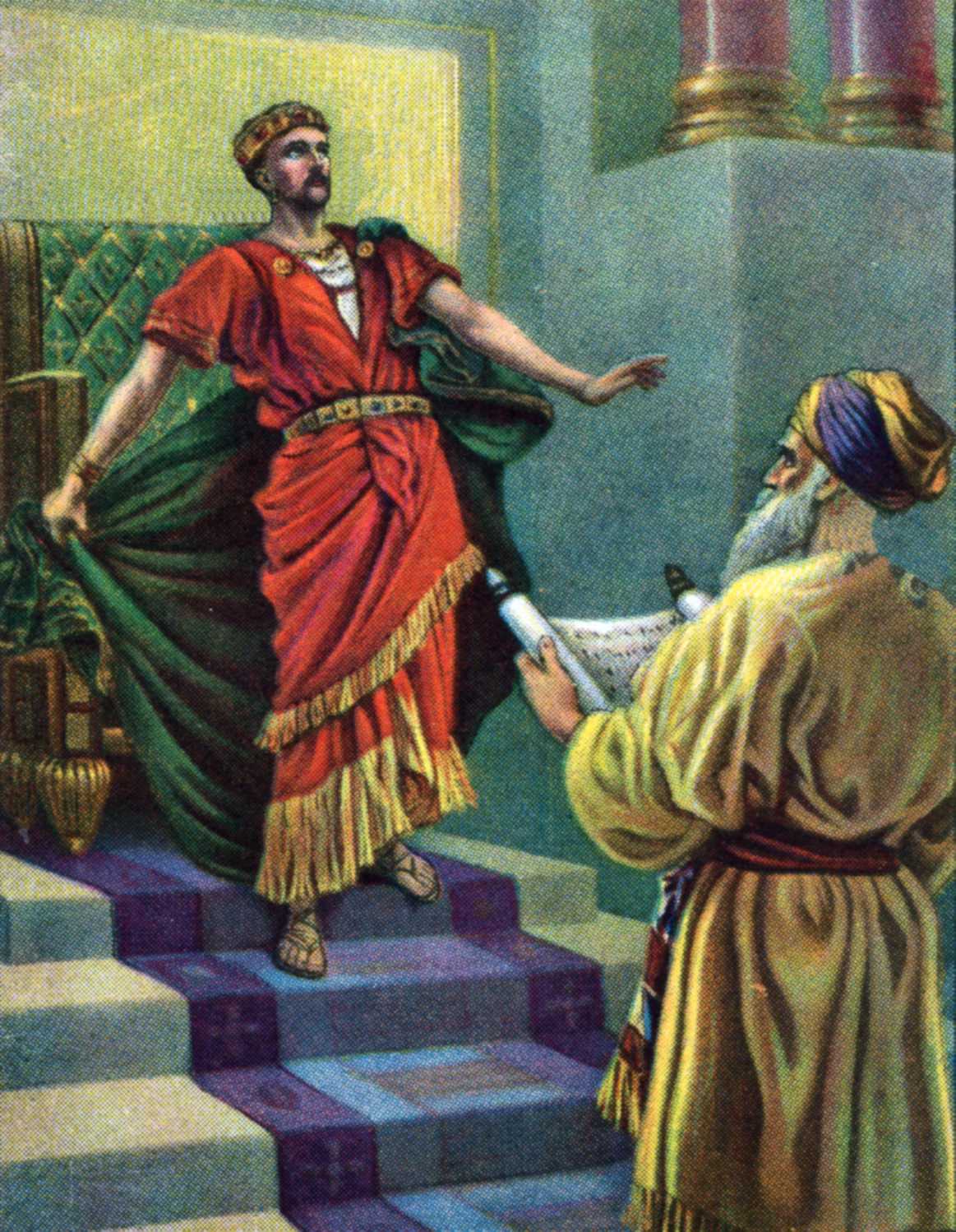
More compelling, however, are the results of four decades of excavation in the West Bank, the heart of ancient Judah and Samaria.  Scholars have long considered the Biblical account of the Conquest inadequate: how could a ragged group of refugees with their families in tow so easily conquer central Palestine and establish a strong and viable state and the dominance of Yahwism in less than a generation?   There were also already suspicions about the towns allegedly conquered by Joshua and company, and it is now accepted that most of them were later insertions in the narrative.  Many, like Jericho, simply did not exist at the time of the Conquest, and many places supposedly destroyed by the newcomers in fact fell during the Catastrophe, which changed the face of the eastern Mediterranean a century later.  More ominous, the towns given to the tribe of Judah by Joshua are identical to the frontier towns of seventh century BC Judah, and indeed, the campaigns of Joshua make more sense in the later environment, specifically the reign of King Josiah (639-609 BC) of Judah, than five hundred years earlier.

What the modern archaeological surveys have revealed is the essential lack of any evidence for the historical narrative presented in Joshua, Judges, Samuel and the earlier parts of Kings.  Instead, the pattern of the settlements in the highlands of Judea and Samaria show three successive waves of settlement from the east: first in the period 3500-2200 BC, then 2000-1550 BC and finally 1150-900 BC.  The intervals between these periods witnessed dramatic collapses of population with most of the settlement sites being deserted.  The material cultures of these settlements are roughly similar and, hardly surprising, on a much smaller and cruder scale than depicted in the Bible or actually found in the Canaanite towns in the western lowlands.  Even the largest villages contained only a few hundred people and had no public buildings of any sort and virtually no luxury items.  Little evidence of serious record keeping and even cult activities has been found and certainly no evidence of Yahwism.

The most likely understanding of this archaeological landscape makes the Hebrews indigenous to the region, a conclusion that dovetails with the absence of any evidence for the Exodus account.  The settlers appear to be primarily pastoralists from the Jordan valley and beyond, and in fact the earliest remains of each incursion are in the eastern fringes of the highlands and reveal dwellings arranged in oval patterns, certainly reflections of the oval arrangement of tents in a Bedouin encampment.  While local climate change during these two and half millennia may have played some small role, the real impetus behind the changes in population was the condition of the cities and villages in the coastal plain.  Pure animal husbandry requires some contact with farming villages in order to acquire certain goods, such as metal tools, and grain to supplement the meat and dairy diet.  If this is not available from traditional farmers, the pastoralists themselves must become more seriously involved in agriculture, which will ultimately lead to more sedentary communities and permanent settlements.  Once the grain surpluses and trading networks revive, old nomadic traditions and the agriculturally unrewarding nature of the highlands drive the populations back to pastoralism, and settlements begin to vanish.  This sort of relationship between farmer and Bedouin has been documented from antiquity to the present.

The settlement and de-settlement patterns in Judea and Samaria do indeed appear to match the history of the higher cultures to the west.  The second interval of settled population collapse (1550-1150 BC) occurred during the period of Egyptian rule, when agriculture flourished and the surpluses allowed highland settlements to be abandoned in favor of pastoralism.  When that stability and security, and consequently the trading network, vanished in the Catastrophe of the twelfth century BC, a final wave of settlement building resulted, producing some 250 sites.  Because the Catastrophe had vaporized the Hittite Empire to the north and turned Egypt into a weakling, until the approach of the Neo-Assyrian Empire in the ninth century BC there was no imperial power looming over Palestine, and tiny communities in the central highlands were able to develop and coalesce into an actual state – Israel.  Or perhaps two states – Israel and Judah – since the Biblical account of a single state fracturing into two cannot be trusted.

Thus, the people who became the Hebrews were indigenous to Palestine; they were in fact Canaanites.  So, from where comes the story of the Exodus and the Conquest?  Given the identity between the towns associated with Joshua and those with King Josiah and the recognition that Judges is part of what is called the Deuteronomist History, compiled in the time of Josiah, one can surmise that the epic tales of early Israel were fabricated in the late seventh century BC to support and in a sense sanctify the policies of Josiah, who might be identified as a latter day Joshua.  This was also the time of the Twenty-sixth (Saite) Dynasty, the last gasp of Egyptian power, when for a final time the Pharaohs nosed into Palestine.  This resurgent Egypt, a reminder of the glorious days of the Eighteenth and Nineteenth Dynasties, put the Two Lands back into the big picture being assembled in Jerusalem, allowing old tales of desert wanderings, forgotten conflicts and migrations in and out of the Delta to be woven into a new narrative of Hebrew origins useful to Josiah and his associates in their plans to “recreate” a unified and purified Israel.

King Josiah gets the first reviews.

King Josiah gets the first reviews.

Details found in the Torah in fact fit the seventh century BC far better than the thirteenth.  The kings of the Saite Dynasty were indeed erecting new buildings in the Delta, including Pithom, the Egyptian names in the Joseph story were more popular at this time and in Exodus the unnamed (!) Pharaoh seems to see Palestine as a threat rather than part of the Egyptian empire.  To the east, Kadesh, so prominent in the Exodus, is now the site of a Judean fort, and Edom, whose king refuses the Hebrews passage, only became a state in the seventh century.  It may be that these late details cover an ancient story of departure from Egypt, but they certainly show that the material was being rewritten and do add to the evidence for a seventh century origin for the Exodus and Conquest.

That the Old Testament is a sacred text for millions of Hebrews, Christians and Muslims ought not to obscure this historical reality of its composition and nature.  The early books of the Bible are clearly not history, and the details in them simply cannot bear the weight of the conclusions that have been laid upon them.  Trying, for example, to locate Mt. Sinai is an utterly futile exercise, since all the textual clues date from a later age that itself had not the vaguest idea where Sinai was, and the very existence of the mountain is now doubted by most scholars.  Most important, the god portrayed in the Pentateuch is a historical mishmash, revealing elements of the primitive henotheistic tribal deity of the age of Moses, the institutionalized national god of the states of Israel and Judah and the more perfectly monotheistic universal lord of the later prophets.  From this hodgepodge of stories and images of god the believers, ancient and modern, (and Hollywood) have taken what they will, inevitably creating a Moses and an Exodus that reflect the society and values of the interpreter, rather than what might conceivably have actually existed some three thousand years ago.  Moses and his god are a work in progress, constantly being reinvented, from the time of King Josiah to that of Cecil B. De Mille.

Hear, O Israel!

(I am considering shelving my current project, a scholarly book on Marathon; the twenty years of missed bibliography are overwhelming me and I am having doubts about humanity’s need for another classical tome.  I contemplate returning to a novel of Moses I began over twenty years ago, abandoned because an academic work appeared more important and because of the mounting evidence against the historicity of the Exodus itself.  Well, it is fiction and most people will certainly not rush to abandon a story so important to all the Abramic religions, so what the hell.  But writing fiction is not the same as writing history [well, usually not] and this could all be crap.  So, I will post some of what I have written and invite you to let me know if it works.  This week I offer the Preface [I just can not get away from being an historian] and the Prologue.)

PREFACE

This novel is historical fiction, but only in the sense that it takes place far in the past.  The society and environment of thirteenth century Egypt depicted in it are real, but except for the Pharaohs all the characters and events are fictional, including Moses and the Exodus itself.

Nothing is known about the historical Moses, and even his existence is now seriously doubted.  The stories about him found in Philo, Jospehus and the Midrash and Talmud have long been recognized as secondary and unhistorical, and our sole “primary” source for the leader of the Exodus is the Old Testament, which is itself derivative.  The first five books of the Bible, called the Pentateuch or Torah, are manifestly not historical documents, but rather the final version of an oral and written tradition that constantly revised stories handed down through perhaps thirty generations.  Biblical scholars have discerned four major “authors” or strands interwoven in the text of the Pentateuch: the Yahwist, the Elohist, the Priestly and the Deuteronomist; and these sources were themselves assembled and edited into the finished product by a group of compilers, collectively known as the Redactor.  The oldest of these sources, the Yahwist, is dated to the tenth century, already two to three centuries after the putative date of the Exodus, and the editing of the texts continued into the sixth and fifth centuries and later; even as late as the time of Jesus there still existed no accepted canon for the Hebrew texts that made up the Biblical tradition.

The books of the Pentateuch, once ascribed to Moses himself, almost certainly contain no real history.  They comprise instead collections of folk tales, wisdom and cultural information gradually assembled over the centuries into the often incoherent and inconsistent narrative that has come to be accepted as the early history of Israel.  All the major figures of the Patriarchal period, such as Abraham, were almost certainly local heroes or cult figures, whose stories were modified and woven into the developing tapestry of a Hebrew national history as those localities came under the control of the west Semitic tribes that had accepted Yahweh.  A few, like Joseph, might be vague reflections of actual historical characters, but none of the exploits attributed to these figures can be accepted as historical fact.  Further, these stories were constantly revised by later editors, who reworked them according to the ideas, institutions and events contemporary to their own environments.  The figure of Moses’ brother, Aaron, for example, was added to the Exodus story much later by the Priestly source to emphasize the dignity and importance of the priesthood, which was frequently at odds with the prophets, who traced their line back to Moses.

Much more fundamental, the historicity of the Exodus and the Conquest are now seriously doubted.  There is absolutely no non-Biblical evidence, textual or archaeological, for the Exodus, and the last forty years of excavations in Palestine have produced no evidence whatsoever of an outside conquest of the area in the later second millennium.  Rather, the archaeological remains are constantly at odds with the Biblical stories, especially regarding towns, many of which simply did not exist during the periods to which they are assigned by the Bible.  The evidence instead strongly supports the proposition that the people who became the Hebrews were ultimately indigenous to the area and came west from the Transjordan at the end of the end of the thirteenth century.  Less certain, but still more credible and better supported by the evidence than the Biblical account, is the suggestion that the traditions of a flight from Egypt and a violent conquest of Canaan, as well as much of the Biblical history of Israel and Judah, were in fact assembled for political reasons in the late seventh century under King Josiah of Judah.

That the Old Testament is a sacred text for millions of Hebrews, Christians and Muslims ought not to obscure this historical reality of its composition and nature, and as an historical source such a work must be approached very cautiously.  Certainly, the details found in the Biblical account of the Exodus cannot bear the weight of the conclusions that have been laid upon them.  Using, for example, clues in the text to locate Mt. Sinai is an utterly futile exercise, since all those clues date from a later age that itself had not the vaguest idea where Sinai was, and the very existence of the mountain is in fact doubted by most scholars.  Most important, the god portrayed in the Pentateuch is a historical mishmash, revealing elements of the primitive henotheistic tribal deity of the age of Moses, the institutionalized national god of the states of Israel and Judah and the more perfectly monotheistic universal lord of the later prophets.  From this hodgepodge of stories and images of god believers, ancient and modern, (and Hollywood) have taken what they will, inevitably creating a Moses and an Exodus that reflect the society and values of the interpreter, rather than what might conceivably have actually existed some three thousand years ago.  Moses and his god are a work in progress, constantly being reinvented, from the time of King Josiah to that of Cecil B. DeMille

Despite all the evidence to the contrary, many scholars still entertain some notion of an escape from Egypt, arguing that the Bondage is too unlikely and the Exodus too compelling and central to the Hebrew tradition to be pure inventions.  They consequently accept from the sweeping narrative of the Pentateuch the bare fact that sometime during the history of New Kingdom Egypt, possible in the thirteenth century BC, a group of west Semites left the Nile delta.  Rejected, however, are all the Biblical details and scale of the event, which after all went completely unnoticed by one of the most meticulous record-keeping civilizations in history.  Since names are very persistent in oral tradition, the group may well have been led by a man named Moses, but if so, it is nevertheless impossible to know anything about him and what role, if any, he played in bringing the god Yahweh to these people.

There is a problem on the Egyptian side as well.  While Egyptian history and society, especially during the New Kingdom, are well documented and we have a good appreciation of the nature of that society and its beliefs, we can never truly understand what went on in the heart and mind of the average Egyptian.  Like all the other pre-Greek inhabitants of the eastern Mediterranean world, including the early Hebrews, the Egyptians were mythopoeic, seeing life and will in all the phenomena of nature.  Egyptian, Sumero-Babylonian and Assyrian religious texts allow us to construct an intellectual approximation of this mythic universe, but we do not know exactly what this meant in the life of an individual.  It is clear that in their daily lives the ancient Egyptians, who were after all human beings living in an agriculturally-based urban society, had a great deal in common with us, but it is also clear that they viewed the world around them in a way that is extremely difficult, if not impossible, for us to comprehend fully.

The dangers, then, for a novelist seeking to produce a historically credible Exodus are manifold, not the least of which is that the Exodus itself is not historically credible.  And even assuming the event took place, not only do we know absolutely nothing about it and the man who may or may not have inspired it, but also any attempt to create characters a modern reader can understand and relate to emotionally risks distorting the seriously alien nature of pre-classical society.  Moreover, we know that the evolution of Yahweh from a petty desert god to the universal deity of mature Judaism took more than a millennium, suggesting that one should be careful of placing too much responsibility on the shoulders of a single man, which of course is exactly what the Biblical tradition does to Moses.  On the other hand, religion is also an area of human endeavor where it is quite clear that a single individual in a single lifetime can have a tremendous historical impact, and it is perhaps possible that Moses, if indeed he existed, may have played such a role.

This novel presumes that there was an Exodus and offers a possible Moses, one who fits what we know about the historical development of the Hebrew religion and the practices of the time.  The tale may lose the sweep and majesty of the Pentateuch and its cinematic realization in The Ten Commandments, but what remains is something closer to historical possibility.

* * * * * * * * * *

Transliterated from hieroglyphics into Latin characters, Egyptian names come in a wide variety of spellings; I have attempted to use the most common versions.  Place names can be even more confusing, since a site will have an Egyptian name, an Arabic name, often a Greek name and sometimes a Biblical name.  The ancient Egyptian town of Iunu, for example, was known to the Greeks as Heliopolis, to the Bible as On and is today Tell Hisn.  In dealing with this I have followed a policy of enlightened inconsistency, generally employing the Egyptian name, except where the Greek is more familiar (e.g., Memphis rather than Mennufer).

The Egyptian cubit was composed of seven palms and equaled approximately .523 meters; 20,000 cubits equaled an atour, about 10.46 kilometers.  Ten kite equaled one deben, which was about 91 grams.

Richard M. Berthold

Albuquerque, New Mexico

##############################

CHRONOLOGY

(The chronology of Moses’ life is conjectural.

All dates are B.C.)


c. 1450 Hebrew tribes at Kadesh and in northern Canaan

1427-1401 AMENHOTEP II

1401-1391 THUTMOSE IV

c. 1400 Hebrew tribes active in central Canaan

1391-1353 AMENHOTEP III

1353-1334 AMENHOTEP IV (AKHENATON)

c. 1345 Yanhamu (Joseph) into Egypt

1336-1334 SMENKHKARE

1334-1325 TUTANKHAMON

c. 1335 Hebrew elements enter Egypt

1325-1321 AY

1321-1292 HAREMHAB

1292-1290 RAMSES I

1290-1279 SETI I

1279-1213 RAMSES II                

1265 Moses born

1237 Moses leaves Egypt

1228 Moses returns to Egypt

1227 Exodus; arrival in Kadesh

1213-1203 MERNEPTAH               

1203-1199 AMENMESSE?

1199 Moses dies

1199-1193 SETI II                    

##############################

PROLOGUE

Memphis

And Pharaoh said unto Joseph, See, I have set

thee over all the land of Egypt.

Genesis 41:41

The sun hung low over the western desert as Yanhamu emerged onto the broad roof of his house, a tall, almost spectral figure draped in a robe of fine white linen.  Curly hair gone gray and a swarthy face seamed with lines betrayed long years, but the gaunt body was unbent, the narrow head held steady.  Sharp eyes scanned the surrounding world.

The valley and the river were already in shadows, but the parched hills rising from the east bank were momentarily afire, bathed in oranges and pinks by the departing sun.  To the northwest the great man-made mountains of Khufu and Khefren were barely visible in the evening haze, but through the date palms that lined the walls of his estate Yanhamu could easily make out a half dozen pyramids to the south.  His location in the far northern suburbs of Memphis, on high ground hard up against the margin of the Red Land, actually placed him slightly to the west of the tombs that lined the western escarpment for as far south as he could see.  From this vantage point the pyramids were temporary beacons marking the boundary between desert and cultivated field, as the white limestone casing blocks of their western faces blazed with the last rays of the setting sun.

Though he had lived in Egypt for over four decades, Yanhamu was still awed and still a little mystified by these monuments to long dead kings and the Egyptian mania for the next life.  According to the priests, the pyramids were already ancient when the kings of Ur ruled the eastern lands.  And apparently already emptied by robbers of the treasure and bodies they were meant to protect through eternity, an irony that delighted Yanhamu.  Tens of thousands had labored for years to erect these immense piles, yet the body of the poor peasant, lying with a simple clay pot or favorite utensil in an unmarked desert grave and preserved by the dry sands, long outlasted those royal corpses.  The Pharaohs of Egypt were perhaps more cautious now; they were hiding their sarcophagi away in rock-cut tombs, especially in the high cliffs opposite distant Thebes.  But they still filled those tombs with staggering amounts of wealth, guaranteeing, in Yanhamu’s opinion, that their owners would rest undisturbed not for eternity, but only until authority broke down in the next time of troubles.

Of course, thought Yanhamu as he watched the sun slip below the horizon, extinguishing the royal tombs, most Egyptians simply refuse to believe that Pharaoh’s authority could break down, despite the evidence of the recent past.  The trouble that followed the death of Akhenaton some thirty years ago is already being forgotten, swallowed by the timelessness that pervades this land.

From his study of temple records he knew that the land had in fact suffered great upsets in the past, times when the god-king had been unable to insure that ma’at – justice and right – lay upon the kingdom of the Two Lands.  Egypt had even endured the humiliation of foreign rule under the Hyksos.  But few outside a small circle of priests were aware of Egypt’s history or that Egypt even had a history.  History implied change, and the Egyptian resolutely refused to recognize that there had been any significant change since the Creation.  Even death was only a sort of transition to another world where life would go on exactly as it had here.  And so the tremendous urge to preserve the body, to keep it as unchanging as the desert, river and sky that constituted the universe of the average Egyptian.  The very human fear that things would not be as they had always been, perhaps that was the real meaning of the vast necropolis that covered the western plateau from the delta to Thebes and beyond.

Soon enough I will be taking up residence in that silent city, mused Yanhamu, trying in vain to locate in the darkening desert the site of his own modest tomb.  And there I will wait with kings for the robbers, who to their surprise will find in the tomb of Yanhamu son of Sabtah nothing more than his body.

As usual this thought brought a smile to his face, and as usual he wondered if his wife and sons would actually keep their promise to inter him in an empty tomb.  For all their years of marriage and his distinctly un-Egyptian influence on her, Asenatis remained at heart an Egyptian, and the tomb was mostly a concession to her sensibilities.  What happened to the empty shell that had carried his life mattered little to Yanhamu, an attitude that set him apart from not only his wife, but virtually everyone he met.

And it was not just this, he knew.  His whole approach to the world about him was different.  He did not look at things in the way most men did, be they Egyptians or Canaanites or Hittites or Nubians.  They saw life and consciousness in everything in nature, in the weather, the rivers, the plants and animals, even the rocks of the earth.  Each and every thing in the universe possessed a unique personality that must be dealt with, just as one dealt with fellow humans.  Yanhamu did not for a moment doubt the existence of the gods, of powers that directed the great natural forces, and he believed that his spirit would survive the death of his body.  But from earliest adolescence he had been unable to accept the seemingly universal notion that the reeds in the river or the stones in his garden or the salt in his cupboard were companion beings, little different from the boatman or the gardener or his wife.

Addressing the inanimate could only strike Yanhamu as foolish, but such was the belief of virtually every person he met.  Even Haremhab, a hard-bitten military man and his close friend, had defended this world view, amazed that Yanhamu should question such an obvious fact of nature.  In his younger days Yanhamu had often wondered about the soundness of his own mind, so pervasive was this belief he could not share, but he had come to realize that whether he or the rest of mankind was right, it made little difference to his ability to get through life successfully.  It left an unbridgeable gulf between him and his fellow man, but as a Canaanite living in Egypt he would in any case have found a divide between himself and most he met, the native Egyptians.  His alienation from the common understanding of the nature of the world was more profound, relegating him to a universe in which conscious life was the oddity rather than the common denominator, but like the inbred Egyptian contempt for outsiders there was absolutely nothing he could do about it.

He rubbed his hands together.  The joints were swollen and painful again and the salve the physician had given him seemed to be losing its effectiveness.  Relegating the pain to the back of his mind, something he had learned in the hard days of his youth, he crossed to the eastern parapet of the roof.  Spread out below was the estate’s formal garden, which Yanhamu counted as Egypt’s greatest gift to civilization.  The arrangement was traditional: a rectangular pool filled with fish and lotus, surrounded by orderly rows of oleanders, chrysanthemums, jasmine and other flowers.  Further out, hiding the wall and the outside world, were sycamores, tamarisks, pomegranates, acacias and an unbroken line of palms.  Paths of crushed rock meandered about the garden, and all was in perfect order, maintained by an overseer who ruled over this tiny kingdom with as iron a hand as any Pharaoh.

Savoring the smells of the spring blossoms below, Yanhamu looked out towards the river, now at almost its lowest point.  In little more than two months akhit, the Season of Inundation, and the summer flood would begin, and once more the fields would return to the river, turning the villages and estates into little islands.  This was the blessing of Egypt, the annual flood that renewed the farmland with a thick carpet of silt and made this desert country perhaps the most bountiful in the world.  It was hardly surprising that Pharaoh spent so much time in ceremonies connected with the well-being of the river.

Yanhamu hoped that this akhit would not bring a “red” Nile.  There was the occasional year when the flood carried an extra burden of reddish-brown silt, providing the fields with an added measure of renewed fertility.  The peasants welcomed this “blood of Hapi,” a gift of the Nile god who in his cave far to the south poured out the life-giving waters, but like most not intimately involved with agriculture Yanhamu greeted the phenomenon with far less enthusiasm.  For whatever reason, a “red” Nile almost always heralded the imminent arrival of armies of frogs and clouds of insects.  The frogs he could live with, even though their irresistible invasion of every corner of the household meant doing exactly that.  But the flies!  The buzzing, biting, inescapable swarms of tiny flying creatures had more than once brought him to the desperate consideration of the existence of malevolent deities whose attention was focused on him alone.

For the moment, however, it was a scene of complete tranquility that confronted Yanhamu.  The land was soft in the twilight and the haze created by thousands of cooking fires, and the cool stillness of the evening was broken only by the barking of dogs and the occasional quacking of the ducks found on every estate.  Work in the fields, the endless toil of bringing water to the crops, had mostly ceased, and even Memphis, the bustling northern capital, was shutting down for the night.  This was the peace that Yanhamu – and every other old man in the world, he suspected – relished.  The revolutionary years of Akhenaton’s reign had been filled with excitement and were an experience he would not have missed, but that was for eager young men.  Old bones found comfort in traditional Egypt, quiet and unexciting, undisturbed in its dream of eternal sameness.

General Haremhab had done his job well, restoring ma’at to a land that had reached the brink of civil war.  Actually, it was Pharaoh Haremhab now, and his old friend’s elevation to the throne confirmed for Yanhamu the nonsense of dynastic succession.  Haremhab was an old army man, lacking even the vaguest connection with the royal family, and yet his performance as the most recent incarnation of the god Horus was magnificent compared to that of his pathetic royal predecessors.  The official line emanating from the temple of Amon-Re was even now styling him the first legitimate king since Amenhotep III.  So much for bloodlines.

Both he and Haremhab had gotten their start under the “heretic” Akhenaton.  Yanhamu had followed the example of generations of his Canaanite countrymen and fled local trouble and family problems by migrating to Egypt.  Rather than sinking like most into the food-producing masses, however, he parlayed his contacts in Canaan into a minor government job, where a talent for economic administration quickly appeared.  He was also fortunate enough to enter Egypt during Akhenaton’s revolution, a time when the traditional rigid patterns and xenophobia of Egyptian society were temporarily shelved, at least among the court circles.  Learning to speak and read Egyptian, he had rapidly advanced in power and by the time of Akhenaton’s death was virtually managing the national economy.

Those had been heady days of freedom indeed, as Akhenaton turned Egypt on its head with his religious revolution.  His aim of course was not the shattering of the tight molds of Egyptian culture; that was incidental to his real purpose.  Those close to the king knew him to be purely and simply a religious fanatic, consumed with the cause of his new god, the Aton.  Changing his name from Amenhotep, “Amon-Is-Content,” to Akhenaton, “It-Goes-Well-with-the-Aton,” he moved the court out of Thebes and built a new capital, Akhetaton, halfway down the river to Memphis.  From there he directed a campaign against the other gods of Egypt, especially the powerful Amon-Re, dispatching stonecutters to chisel the name of the “Hidden One” off monuments and walls.  Henceforth only two gods would matter in the Two Lands: the Aton and his incarnate son, Akhenaton.

Ironically, the Aton had reminded Yanhamu of the traditional gods of the desert dwellers.  Ironically, because one could hardly find a people more culturally distant from the Egyptian king than the nomadic herdsmen and sometime farmers of southern and eastern Canaan.  Yet, Akhenaton’s understanding of divinity was in many ways similar to that of the tribes wandering the fringes of the desert.  Each of the clans had a single, often nameless god with whom its members had made a sort of contract: you specifically watch over us and we will ignore other gods and worship only you.  These were family gods for people whose widest political horizon was the family, and their appellations revealed that fact: the god of Noath, the god of Cabor or simply the God.  And Akhenaton’s sun god was like that, a sort of family deity with whom the Pharaoh had an exclusive relationship.  Like the desert clans the king did not deny the existence of other gods, but only attempted to elevate the Aton as the sole important god of Egypt besides Pharaoh.

Yanhamu smiled.  Only?  Only demoting gods that had been with the Egyptians for thousands of years, a task not even a god-king might hope to accomplish.  Akhenaton’s misfortune had in fact been that he was not some desert clan chief, but Pharaoh, and his family numbered not in the hundreds, but in the millions, all of them following their own notions of heaven.  Nor was Akhenaton acting only against the religious convictions of his people.  Amon-Re, chief among the old gods, had powerful earthly defenders, and his temple, with its immense financial resources, was already a challenge to the government and army long before Akhenaton was born.  The priesthood of Amon-Re were not about to surrender their god, and more importantly their wealth and power, without a fight.

There, Yanhamu knew, was the real struggle.  The army and parts of the government initially supported the Pharaoh, but not because they were transported by his religious vision.  For the hard headed men who dealt with Egypt’s concerns here on earth Akhenaton’s revolution was the opportunity to check the swelling power of the temple of Amon and reassert the independence of the throne.  The Pharaoh must have been at least vaguely aware of this more mundane conflict, but if so, he never showed the slightest interest.  Instead, he remained shut away in Akhetaton, surrounded by the converted and seemingly converted, directing his war against the name of Amon-Re and dreaming of the triumph of the Aton.

It was only a dream. Akhenaton’s ideas were too radical, his assault on Egyptian tradition too blatant.  The priesthood of Amon held the support of the people and had little trouble depicting the Pharaoh as a heretic and perverter of ma’at and discrediting all those who followed his cause.  The sensible and the ambitious among the king’s supporters soon saw the inevitable outcome of the struggle and were deserting him even before his early death.  His short-lived successors, Smenkhkare, Tutankhamon and Ay, though members of his family, were all tools of the temple, and now Haremhab, ever the realist, was working diligently to restore order to the land and power and glory to the name of Amon-Re.  The Aton was forgotten, vanished from the consciousness of Egypt, as the walls of Akhenaton’s abandoned city were now vanishing beneath the desert sand.

Yanhamu was startled out of his reverie by sounds behind him.  He turned and saw the cleanly shaved head of his household steward, Kasa, emerge from the stairwell.  With painful slowness a thin and stooped body followed.

Here is something else that was already old when the kings of Ur ruled, thought Yanhamu, watching the ancient servant creep across the roof towards him.

“Your evening drink, Master,” announced Kasa in a reedy voice.  He held out a blue faience goblet decorated with scenes of Pharaoh smashing the enemies of Egypt.

“Thank you, Kasa, but you know it isn’t necessary for you to climb those stairs.  Next time get one of the house boys to do it.”

The bent back straightened slightly.  “It is my duty to attend the Master of the house.”

Receiving the expected solemn pronouncement, Yanhamu shrugged and took the drink.  As ever, his sense of mischief was tweaked by Kasa’s seriousness.

“Tell me, Kasa, what do you remember of Akhenaton?”

The old servant’s eyes went wide and darted to either side, searching for any temple agents who might be hiding on the roof.

“I do not recognize the name, Master,” he said in almost a whisper.

“Is your memory failing so rapidly, Kasa, that you forget our younger days, when you joined this house?  Who was it who then ruled over the Two Lands?”

“Pharaoh has always watched over the land, and Amon has always been his strength.”

The almost whisper had changed to an almost shout, and Yanhamu could imagine his neighbors on their rooftops looking up in surprise at this sudden pious proclamation shattering the evening quiet.  He had no doubt that his servant’s mind was as sharp as ever, but he also knew that like most Egyptians Kasa was careful and conservative when it came to political affairs.  And there were matters cautious people simply did not discuss these days, especially people in the household of a foreigner who had found his fortune in the service of the heretic king.

“Quite true, Kasa, quite true.  You may go.”

A perceptibly relieved chief servant bowed slightly and turned to face the long trek to the ground floor, moving a bit more spryly in his eagerness to escape the Master’s dangerous games.  He was utterly loyal to the man who had provided so well for him and his family all these years, but he was no closer now to understanding him than he had been when he entered the household back in the bad days.  The Master only underlined Kasa’s convictions about foreigners: this one had spent his life in Egypt in service to the kingdom, but still remained alien.  The constant questioning of everything, so typical of outsiders, was bearable, but this open disrespect for the gods was an invitation to trouble.  The Master was a good man, but how great was divine tolerance?  Kasa was convinced that only his frequent prayers and offerings stood between the house and disaster.  He had best head directly for the shrine in the alcove of the great room.

Yanhamu watched the retreating back for a moment.  No doubt off to beseech Amon-Re not to send a plague upon the household of the impious one.

He sighed and turned back to the view over the valley.  Details were disappearing rapidly in the deepening dark, and the now dim panorama would soon be replaced with isolated and more intimate images created by the odd lamp and exposed fire.

Why do we need to take ourselves so seriously, he wondered, his fingers idly tracing the carved figures on the goblet.  Is it fear that if we did not act with complete seriousness others might not believe us important?  Or perhaps that we might have trouble believing it ourselves?  Priests were easily the worst of the serious lot, no doubt because what they did was on the face of it pretty absurd when compared to other occupations.  Of course they portrayed it as the proper attitude of respect and awe when dealing with the gods, but Yanhamu suspected it had more to do with convincing themselves and their congregations that activities normally associated with children and the feeble-minded were indeed of the utmost importance.  Otherwise who would listen to grown men who spoke to statuary?  More than most, this society was steeped in religion, but the Egyptian also had a strong sense of humor, and any departure from the utter solemnity maintained by the priests might cause the temples to echo with laughter.

He sipped the beer, cool from evaporation and pleasantly bitter on the tongue.  A fine beverage, which in sufficient quantity could undermine the demeanor of the most solemn priest, something he expected happened often enough when the faithful were not present.  He certainly remembered witnessing drunken priests of Aton during his frequent visits to the court at Akhetaton, though never in the presence of Pharaoh, who was very serious about his god.  Ironically, the revolutionary nature of Akhenaton’s fanaticism created a freer, less serious atmosphere in the royal city, one that encouraged openness and experimentation.  Artists, given the opportunity to break free of thousand-year-old canons, had flocked to Akhetaton to produce works that were almost shocking, at least to the average Egyptian.  Far from following the traditional rigid forms, their depictions of the king actually played upon the abnormalities of his strange, androgynous body, emphasizing the elongated head, narrow shoulders and wide hips.  Many of these creations had struck Yanhamu as grotesque, but the unconventional approaches could also lead to objects of exquisite beauty.  Much to the dismay of Kasa, Yanhamu kept a copy of one of these works, a painted head of Queen Nefertiti, in his sleeping chamber.  He wondered briefly what had happened to the original.  If not destroyed by some servant of Amon, it was probably now sitting in a tomb somewhere.  How typically Egyptian to create beauty and then bury it away.

Setting the goblet down on the parapet, he stretched until the joints in his arms cracked.  As he began massaging his hands again, his ear caught the sound of music and voices in the distance, and he could see off to the left that the gardens of Senmut’s house were a bright island in the darkness.  The walls of the estate hid the party itself, but Yanhamu could imagine the pompous bureaucrat strutting about, constantly reminding his fawning guests of just how important he was to Pharaoh and the government of the land.

Haremhab, my poor friend, he thought.  Sparring with the temple and facing Egypt’s enemies must be a pleasure compared to dealing with puffed-up fools like Senmut.  Is it impossible to form a government that does not immediately fill up with inefficient little men who take themselves too seriously?  The governments of both Akhenaton, the detached fanatic, and Haremhab, the man of action, rested, he knew, on identical foundations of Senmuts, all striving to inflate the importance of their positions by creating unnecessary work and growing piles of reports.  These people seemed to be part of the nature of things, a burden that even an incarnate god could not lift from the kingdom.

On the other hand, he considered, picking up his drink, the Senmuts of the world are the heart of every large organization, and the High Priest of Amon must be as hampered and frustrated as Pharaoh in his efforts to get things done.  Perhaps I underrate you, Senmut.  Perhaps I should see you as another manifestation of the balance the gods have built into the universe.  In that case I salute you and your fellow papyrus eaters.  Kings and priests will come and go, but you will be with us always.  He drained the goblet, only half filled by a servant concerned for his master’s health, and let loose an immensely satisfying belch.

“But fortunately I don’t have to be with you always, or even briefly,” he said aloud.  Being an ex-minister of the better-to-be-forgotten Pharaoh meant being anathema to career officials, despite his lingering friendship with the man who was now Pharaoh, and Yanhamu expected and received few invitations to social gatherings.  Besides, even had he not been tainted by his association with Akhenaton, he would still be shunned by good society because of his origins.  All his years in Egypt and all his love for the land did not make him an Egyptian; he was and ever would be in their eyes an Asiatic.  Worse, he was from Canaan, a place that Egyptians felt especially demonstrated the innate superiority of their civilization.  And worse still, he came from one of the poor, semi-nomadic tribes of the region, which branded him as Habiru, in Egyptian estimation at best a tramp or migrant worker, at worst a bandit.  As far as class-conscious little men like Senmut were concerned, no amount of wealth or degree of success could overcome that disability.

Asiatics, and in particular the Habiru, Yanhamu certainly knew, had always been treated with contempt, but the situation had worsened considerably in the wake of Akhenaton’s reign.  Lost in his religious vision, the eccentric king had completely neglected Egypt’s foreign affairs, a factor that contributed to the ultimate desertion of the military to the side of Amon.  Lacking any attention from Egypt, the petty princes of Syria began falling away from Pharaoh’s control, aided from the north by the powerful empire of the Hittites.  Emboldened by the realization that Egypt was doing nothing to preserve her empire, the Hittites themselves were soon on the move and easily swallowed Syria and the Phoenician cities.  Disaffection had meanwhile spread throughout Palestine, and one by one the Egyptian garrisons were overwhelmed, their desperate pleas for more troops unanswered.  The surviving forces were finally withdrawn, and the land was abandoned to local rebels and adventurers, like the notorious Yashuia, leading large bands of Habiru.  Overnight the Egyptian empire had vanished, a casualty of Akhenaton’s devotion to the Aton.

Among those creating havoc in Palestine were many tribes known to Yanhamu from his youth, including his own.  While it seemed to him that they spent most of their time in bloody conflict with one another, he also remembered well his father’s hatred and envy of their settled neighbors.  If anything could unite the desert clans, it was their distrust of the town dweller, and any breakdown in the settled power structure was a signal for an assault on the cultivated lands.  Tribes in northern Canaan and around Kadesh in Sinai, he knew, were already stirring up trouble in central Palestine when he forsook his homeland for Egypt.  With the violence escalating in the face of Egyptian indifference, before long he was followed by a growing stream of refugees, many of them Habiru, who settled in the Nile delta, particularly the eastern fringes.  Egypt had been long accustomed to migration from Palestine, but not in such numbers, and the efforts of frontier officials to control the influx were thwarted by Akhenaton’s lax administration.

As he thought of the Habiru immigrants, Yanhamu found himself unconsciously staring off to the northeast, towards the settlements hidden in the distance and darkness.  Living there were many families from his own tribe, as well as large numbers of Simeonites, who had fled to Egypt after their failure to hold the city of Shechem.  Other tribes were represented, but he was not sure of their identities.  It took a desert mind to remember all the names and complex relationships of the Habiru clans; after a half century of dealing with documents Yanhamu no longer had the sharp memory of the illiterate.

Nor the interest, he thought.  These are not my people, whatever the blood connection.  Years before he had visited a Habiru encampment near Tjeku on the frontier and had been surprised and amused to discover that many of the families considered themselves to be of the “tribe of Yanhamu.”  It was pleasant to speak his mother tongue again, but he quickly realized that beyond the language he had little in common with these squabbling herdsmen and their petty tribal affairs.  He could not help comparing them to the hardworking Egyptian farmers and craftsmen.  Egypt had many shortcomings, but it was bringing ideas and beauty into the world.  The warlike Habiru had yet to leave any more sign of their passing than looted towns and animal droppings.

No, Egypt was his home, and if it never fully accepted him, it would accept his children.  They had inherited their mother’s features and language and despite their father’s origins thought of themselves as Egyptians.  Yanhamu had told them as much as he could remember of the tribal traditions he had learned from his father, but the boys had easily sensed the contempt in his words and dismissed them.  He had as little time for the desert gods of the Habiru as he did for their Egyptian counterparts, and apart from a healthy dose of skepticism his sons had consequently received an orthodox Egyptian religious education at the hands of Asenatis and the ardent Kasa.  Both had taken Egyptian wives, and their children were as distant from the Habiru and their culture as any full-blooded Egyptian.

Which is just as well, thought Yanhamu.  It hardly takes a professional fortuneteller to see that the future of the Habiru in the Two Lands is filled with trouble.  Egypt is back on course, and life is going to get hard for strangers.  Especially for strangers being blamed for all the trouble in Palestine and Syria. 

He knew, and Haremhab and the temple of Amon knew, that Egypt’s imperial problems were Akhenaton’s responsibility.  But when did any country willingly blame itself for its failures when there were convenient outsiders at whom to point the finger?  With order returning to the Nile valley popular feeling against the Habiru was growing, supported by the official attitude of the government and temple.  And the reconquest of Palestine could not be that far off, which meant a further increase in hostility towards Canaanites.  Yanhamu himself had no fears; he enjoyed the protection of Pharaoh, and in any case he was an old man.  With his family secure what happened in the next generation was a matter of interest, but not concern to him.

He yawned and stretched again, trying to ease the lower back pain that had come with standing too long.  The evening chill, carried on the rising north wind, was beginning to penetrate his thin gown, and a sudden shudder caught his body.

Time to retire, perhaps for another losing game of Senit with Asenatis, he told himself.  That or suffer Kasa’s reproaches.

Yanhamu looked a final time towards the northeast, then turned towards the stairs.

##############################

This is the land which I sware unto Abraham, unto Isaac, unto Jacob, and unto Bibi

(Pre-blog note: We celebrate a fantastic achievement for mankind: landing a one-ton nuclear powered science vehicle on Mars, all without human direction.  Unfortunately, most writers for the general media feel compelled, perhaps inevitably, to add that it cost $2.4 billion, implying that this is perhaps too expensive.  Why then do articles about the war in Afghanistan never mention that this war costs $2 billion a week?  The $2.4 billion Curiosity will operate for at least 104 weeks and actually produce something of value to humanity, which seems like a much better deal.  Perhaps if Curiosity carried weapons no one would notice the price tag.  Three cheers for my fellow geeks at NASA and JPL!)


The mainstream American media typically reports news involving Israel only when the Israelis do something spectacular, like invading Lebanon, or when American politics are involved, such as Mitt Romney’s brown-nosing comments about Jerusalem and the Palestinians.   Hardly surprising then that most American newspapers and television stations made no mention of the Levy Report, despite its important implications for Palestine and American policy in the area.  To be fair, some major newspapers, such as the NY Times, carried the story, but clearly most Americans, even those who keep abreast of the news, are unaware of the report, being inundated with the apparently more interesting details of the lives of mass murderers.

Regarding their occupation and colonization of the West Bank, Israel has (when it bothered at all) traditionally excused its clear violation of accepted international law by pointing out that inasmuch as there is no Palestinian state the strictures of such international instruments as the Fourth Geneva Convention and the UN Charter do not apply.  This rationale of course places Israel in what should be uncomfortable company: Hitler in part justified his monstrous treatment of the Soviet Union by noting that they had never signed the Geneva Convention.

This has apparently changed.  Prime Minister Netanyahu appointed a three member commission, headed by former High Court justice Edmund Levy, to investigate the legal status of the so-called “illegal” settlements, that is, those not authorized by the government.  The implication of course is that all the other settlements are legal, despite their obvious violation of basic international law.  But what the panel concluded goes way beyond the issue of the handful of “illegal” settlers, and it is breathtaking in its self-serving cynicism and implications.

Basically, they determined that that the “illegal” settlements – and thus all the settlements – are not illegal because they are not in fact in occupied territory.  This conclusion might seem a bit surprising since the Israeli army has been obviously occupying the West Bank for 45 years, and this is territory designated as part of the Palestinian state created by the same UN resolution that created Israel.  The commission, however, concluded that since Israel has been in the West Bank for such a long time that this is unique occurrence and thus not actually an occupation.  Bingo, all the settlements are perfectly legal in the light of international law.  As, I suppose, would be the German colonization of Poland if they had only hung on longer.

Israeli politicians either hailed this as a triumph of jurisprudence or remained silent, and I am unaware of an official response from the US government, which is in the midst of an election, when even the faintest criticism of Israel is viewed as political poison.  As a signatory of all the international conventions Israel is currently violating, it would be awkward for the US to officially accept the colonization of the West Bank, and our official position is that the settlements are unacceptable.  But no American president has dared take any action on the issue, and so far as I know, no administration has even publically referred to them as violations of international law.  Instead they are “obstacles to peace” or some such euphemism, despite the fact that as a High Contracting Party America is legally bound to “ensure respect” for the Fourth Geneva Convention, which the settlements blatantly violate.

The self-serving and perfectly silly arguments of the Levy Report are designed to satisfy the all-important settler block in the present extremist Likud coalition, but what are the wider implications if this position becomes the official policy of the Israeli state?  This would essentially amount to an annexation of the West Bank, and while the US has pretty much turned a blind eye to the annexation of the Golan Heights and east Jerusalem, this would be very different and disastrous for Israel and perhaps the US.

Annexing the West Bank, even if the word “annex” is avoided, would certainly create a crisis for Israel, which would be faced with only two options.  Israel could enfranchise the 2.3 million Palestinians who live there, but that would be the end of Israel as a Jewish state and is inconceivable.  The alternative is to create (or formalize what is already the case) an apartheid system, which would be the end of Israel as a democratic state.  The second solution would appeal to many religious fanatics, but it would mean the end of US support and the complete isolation of Israel unless it chooses to ally with blatantly undemocratic states like Russia and China.

Well, it would probably mean the end of American support.  American politicians of both parties have a very well established tradition of prostrating themselves before Israel for reasons that are actually becoming less compelling as relentlessly liberal American Jews reconsider their unqualified support of an increasingly illiberal and sometimes outright intolerant Israel.  Israel has become so imbedded in our political arena and its excesses so constantly ignored that it is not a certainty that American politicians, especially evangelically inclined conservatives, would actually abandon it.

We have been quite willing to call Israel a model democracy in the Middle East despite the clear evidence that Palestinian citizens are not just treated as second class but are actually legally disabled.  And in the eyes of many Americans every Arab is suspicious anyway, and the Palestinians have always been terrorists, right?  That Palestinians would be treated as American Blacks were before the civil rights legislation or as South African Blacks were under the apartheid government would clearly be no problem for many conservative Americans.  Yes, we finally severed relations with South Africa, but this is different.  Israel is vital to American security (at least that is what we have been told for a half century) and in any case this is the land the Bible says is special, the land where Jesus walked and where the end of days will take place.  Would Rick Santorum or Michele Bachmann be bothered by any of this?

Many conservatives in Israel are not bothered.  Dani Dayan, head of the Yesha party, has just argued in the NY Times that because Arabs have called for the destruction of Israel and because the West Bank was the heart of ancient Israel, it is not just reasonable but actually moral for Israel to acquire this territory.  Think of it as Judea and Samaria rather than Palestine and you will see the moral imperative to annex.  American evangelicals, who seem to have an incredible capacity for ignoring the truth, especially when religion is involved, would surely endorse this idea, particularly since it involves not just their religion but also national security, which for some has become a quasi-religious concept.

To be sure, because of its unqualified support for Israel and Arab dictators and monarchs, its massive military presence in the Middle East and its expanding program of assassination by drone, America already has little credibility in the Arab world.  But accepting an apartheid Israel would surely end our credibility as leader of the democratic world and spoil our relationship with Europe, whose politicians (even in Germany) are not pathetically subservient to the interests of Israel.

For an historian this is of course all fascinating stuff, but for an American, especially one already concerned about the road we are taking, this is scarey stuff.