Stuff from Way Back #1 Redux: Happy New Year, Q. Fulvius Nobilior

(A slightly different version of this piece was published more than two years ago, my first Stuff from Way Back.  It is perhaps my favorite anecdote from antiquity.  I am reposting it for the New Year and because I am a bit short of time.  It makes an excellent New Year’s Eve party anecdote, at least before everyone is gasolinoed.  Happy New Year, though I expect it will just see our country slide further into silliness and stupidity.)


Ever wonder why the year begins on January 1?  Probably not.  It is the sort of thing that is such an established facet of life that it never occurs to one to ask why:  “Because that’s when the calendar begins,” which is of course not much of an explanation.  That’s akin to saying because the previous year ends on December 31.  But consider: why should we begin our year in the middle of the winter and on a day that has absolutely no significance, except that somehow it has become the first day of the year.  Why not on a day that has some significance in nature, such as the equinoxes and solstices.  Or considering the importance of agriculture, why not in the spring, when life returns, or fall, when the harvest is in?


In fact, in antiquity states typically began their calendar years in the spring or in the fall with the harvest.  So, what happened?  Well, it’s because of the Romans and an otherwise relatively trivial event in their history.  It begins with the defeat of Hannibal.


Part of Rome’s booty in the Second Punic War (218-201 BC) was the Mediterranean coast of Spain, formerly territory of the now defunct Carthaginian empire.  The Romans of course had no intention of allowing this area to go free, but neither were they moved to any campaign of conquest in the Iberian peninsula.  Italian capital and manpower were exhausted by  the long and costly struggle against Carthage,  and the first half of the second century BC was filled with major conflicts in the Greek east.  The result was that the Roman occupation of Spain was haphazard and slow, driven by the desire to exploit the natural resources and to protect the coastal communities from the natives of the interior.


The Roman Senate was loathe to create provinces; they had to be administered and garrisoned, which was expensive.  Nevertheless, there were in Spain no potential client kingdoms ready at hand, and consequently the Spanish possessions were organized into two provinces in 197 BC.  But poor Roman administration led in that same year to the first serious insurrection, and crushing it triggered the First Celtiberian War (181-179 BC).  Relative peace then lasted until the outbreak of the Lusitanian War (154-138 BC), during which occurred also the Second Celtiberian War (153-151 BC) and the Third Celtiberian (or Numantine) War (143-133 BC).  Thus it was that three quarters of a century of cruel and bloody counterinsurgency warfare were necessary to pacify the peninsula, and the job was not actually completed until the reign of Augustus, the first emperor, at the end of the first century BC.  The Spanish provinces then went on to become the most peaceful and Romanized in the empire.


When in late 154 BC a number of Celtiberian tribes, encouraged by the Lusitanians, revolted, Rome appointed Q. Fulvius Nobilior commander of four legions about to be sent to quell the revolt.  Nobilior had just been elected consul, one of the two annual magistrates who were the executive heads of the Roman state.  The consulship, like the subordinate praetorship, conferred upon its holder imperium, the superior form of official power, one element of which was the all-important power to command troops.  The consuls (and to a lesser degree the praetors) were thus Rome’s generals.


The consuls and most of the other important magistrates began their terms of office on  the Ides of Martius, that is, March 15, which consequently placed the beginning of the Roman civil year at roughly the vernal equinox (March 21) and the beginning of the seasonal year.  The Senate was anxious to get Nobilior to Spain as early as possible in order to extend his campaigning season, but until he actually took office some three months hence the consul-elect had no authority to command troops.  Preeminently pragmatic, the Romans solved the problem and avoided any constitutional crisis by simply moving the beginning of the civil year, and thus Nobilior’s term, to the Kalends of Januarius, that is January 1.


When the new year began had never been of much importance in the generally sloppy and conflicting calendars of the ancient Mediterranean, and the Romans, seeing no compelling reason to move the beginning of the civil year back again, left it on 1 January.  (Coincidentally, Januarius was named after the god Janus, who as the god of gateways and transitions looked both ways, making the month of January very apt as the first of the year.)  This day was thus enshrined as the beginning of the year in the Julian calendar, which was passed on to Europe and much of the rest of the world.  Because of the Roman Senate and an obscure Iberian war, the vast majority of the human race celebrates New Year’s in the middle of the winter.


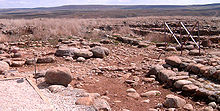
Reconstruction of Numantia's fortifications

Reconstruction of Numantia’s fortifications

Ruins of Numantia

Ruins of Numantia

Incidentally, in August Nobilior’s army was ambushed by the Belli and Arevaci on its way to capture the city of Numantia in north central Spain and lost 6000 men, and it was only saved from complete annihilation by his Roman cavalry.  He never did take the city and was replaced the following year.  The war went on.

Stuff from Way Back #24: Jesus, Jews and Romans

Christmas, celebrating the birth of Jesus, falls of course on December 25, but this is simply a tradition, inasmuch as no one has the vaguest idea on what day of the year he actually first saw the light – or in exactly what year for that matter. From the meager evidence in the New Testament the year of his birth most likely fell in the period 6 to 4 BC. Dionysius Exiguus was apparently the first to date from the birth of Christ in 525, though the practice did not become widespread until the eighth century. The Romans traditionally dated from the presumed founding of the city (753 BC in our system), while the Greeks dated in four year Olympiads from the presumed first Olympic games (776 BC), and it may be that confusion with the latter resulted in a four year error. So it is currently between 2017 and 2019.

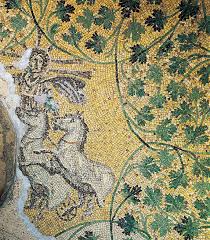
Sol Invictus on a date

Sol Invictus on a date

The birth date in December might be calculated as nine months from the spring equinox, when Jesus was believed to have been conceived, but there is no way to confirm the date of conception. Astronomy does not help since the star of Bethlehem, like the three kings, was clearly later added, in this case to fulfill a prophecy. More likely the December date was determined by two Roman holidays, the Saturnalia and celebration of Sol Invictus, both of which occurred around the winter solstice. Placing the birth at this time would provide Christians with an alternative to the pagan holidays, especially as a contrast to the celebration of the birth of the “unconquered sun god.” This latter idea dates back to a 12th century bishop but is challenged by many scholars. If he was born in December, it would have been mighty cold in that manger.

 
Despite the fact that all our knowledge of Jesus comes from the New Testament and sources derived from it, there is little question that he actually existed. It is simply impossible to believe that the religion could possibly have the impact and ultimate success it enjoyed were it all based on an elaborate hoax. On the other hand, we can be certain of very little of his life: he was an immensely charismatic and successful preacher, probably in the Galilee, almost certainly challenged the authority of the Temple and priesthood and was executed as a criminal. All other details of his life preserved in the Christian testament are at the very best suspicious and in most cases clearly false, added by his disciples and later writers to enhance the story. Religion works like that.


Jesus as Sol Invictus

Jesus as Sol Invictus

the Aryan Jesus

the Aryan Jesus

Regarding Christmas, for example, the Roman census for taxation was based on residence, not place of birth, which would be an incredibly stupid way to do it. Jesus’ birthplace was probably Nazareth in the Galilee, where his ministry was, certainly not in Bethlehem, which as the birthplace of David (whose own existence is now doubted) conveniently fulfills a number of Hebrew prophecies. The value of associating Jesus with predictions in Hebrew sacred writings regarding the coming of the messiah/king is obvious, since such supports his status as the chosen of the one god, the anointed one. In the gospels he enters Jerusalem seated on an ass, exactly as had been prophesied in Zechariah.

 
Jesus follows a pattern typical of the Hebrew prophets. Communing with god, the man realizes the corruption of the ancestral religion by the authority in the state, the king and/or priests (the fusion of secular and religious authority is a commonplace), and challenges it. He usually comes to a sad end but is remembered as a holy man and an agent of god. The difference in the case of Jesus is that this sad end will become part of the core belief of an entirely new religion, one which will bring a new understanding of the one god. That core belief, incidentally, the death and resurrection that serves as a beacon of hope for man, derives to a great degree from the Greek mystery cult. Christianity might in fact be considered something of a product of the encounter of Judaism and Hellenism.
We of course will never know, but it seems highly unlikely that Jesus believed himself to be the son of god. He was after all a Jew, and the rigorous monotheism of his inherited religion would not likely allow him to consider a divisible deity, a Yahweh with offspring, or for that matter the triune god of the religion he gave birth to. He might in his last years, swayed by the adoring crowds, have thought himself the promised messiah, the man sent by god, but it is difficult to believe that even on the cross he thought himself actually divine.

 
Jesus died because he was in the eyes of the priesthood a heretic and thus a threat to the established order and their authority. In the same way more than a millennium later the Church felt compelled to take action to suppress the Albigensian and Waldensian heresies not just because they were an affront to god but also a challenge to the authority of the Church. The story of Jesus scourging the moneychangers in the Temple is a vivid demonstration of his challenge.
In the interest of ecumenical harmony the Catholic Church has in the last century declared that the Romans and not the Jews were responsible for the death of the Christ, there of course being no advocacy group for the Romans. The Roman procurator of Judea did in fact have to sign off on the execution and was thus complicit, but his motivations would have nothing to do with the religious mission of Jesus. While the Romans found the exclusiveness of Hebrew monotheism offensive, imperial provincial policy was generally tolerant of local customs, so long as the taxes were paid and order was maintained; the Druids were a focal point of Gallic nationalism and resistance to Rome and thus had to go.

 
The issue in Judea was maintaining order. The priesthood was telling Pilate that with his growing mobs of followers and more important, his threat to the established Jewish authority Jesus was leading the province into disorder. The empire was maintained by alliances with the local elites, who with Roman support actually governed at the grassroots level. Pilate would certainly have been more than willing to sacrifice a seeming rabble-rousing preacher in order to placate the real power in Judea. And if indeed the crowds began calling Jesus “King of the Jews,” the procurator’s attention would certainly be caught, since that sounded like a nationalist movement and a direct threat to Roman rule.

 
So Jesus died, and for two millennia the Jews were blamed, further stoking the flames of anti-Semitism in Europe. What was forgotten was that he had to die. That was the whole point of his stay on earth, to die and be resurrected, to carry away the sins of man and provide hope for rebirth. As Bobby Zimmerman astutely observed: “Even Judas Iscariot had god on his side.”

 
A final element in the story, Paul. Were it not for Saul of Tarsus, the new religion would certainly have died, just another Jewish heresy. Stripping the new beliefs of their encrustation of Jewish ritual practices, he made Christianity palatable for the gentile world, and the easy movement of people and ideas facilitated by the Roman Empire allowed it to spread across the Mediterranean and European world. Paul was, after Jesus himself, far and away the most important figure in the history of Christianity.

photo of the conversion of Saul

photo of the conversion of Saul

Whatever one thinks of the historicity of his life, the message of the Galilean preacher is a good one, urging humans to eschew anger and violence and treat one another with compassion.  Unfortunately, it seems the inevitable fate of a successful ideology is to betray its principles, and Christianity triumphant would become an instrument of intolerance and violence and bring centuries of suffering to the human race.  Nevertheless, Jesus had given the ancient god of the Hebrews now a smiling face.  And Mohammed would wipe off that smile and resurrect the Lord of Hosts.

Stuff from Way Back #15: These Christians Are Really Annoying

(Three weeks ago I posted a piece on Albert Göring, who was being considered for inclusion in the Israeli Righteous Among the Nations for his work in rescuing Jews. Apparently he did not make it, presumably because of a rumor of a Jewish father, which would make him ineligible, and Israel avoids the embarrassment of having Reichsmarschall Göring’s brother among the honored.)

The Roman persecution of Christians is a well-known episode in the history of the religion, but inasmuch as these events occurred almost two millennia ago, there is no longer a Roman Empire and the Church was the winner, one might expect that some distortion has crept into the popular narrative. And it has, primarily because few people have any real knowledge of the Empire beyond what Christianity and Hollywood have suggested and even fewer understand the nature of traditional Roman religion. As a result a key fact has been lost: so long as you observed Roman tradition the state did not give a damn what gods you worshipped (at least until the state became Christian).

At first of course Rome did not even notice the new cult. Those with any knowledge of Judaea assumed it was yet another Jewish heresy, doomed to disappear, as in fact the sect of Christian Jews did. As the adherents of the new faith spread and multiplied, it was popular dislike that first caught the attention of the authorities. Like the Jews, Christians were monotheists, compelled by their beliefs to deny the existence of other gods, and they were doing this in a society that was completely polytheist. Polytheist societies are generally tolerant when it comes to religion, even in states with a religious establishment supporting a divinely connected kingship, as in the Sumerian city-states and Egypt. Inasmuch as deities were typically personifications of natural phenomenon, it was easy to identify gods across cultural lines, and in any case no one (excepting perhaps Akhenaten) was about to deny the existence of other gods and certainly not resort to violence in order to teach others a lesson.

Into this world come the Christians, telling their neighbors that the gods of their fathers do not exist and that they are wasting their time worshipping idols. Of course the Jews had been doing this for quite a while, but apart from small communities in some of the cities of the Empire, they were essentially a phenomenon localized in Judaea, and in any case they did not proselytize. Early Christians were in fact confused with Jews, but as their numbers grew, people realized this was something new – and very annoying. And if modern evangelicals are any indication, these early Christians likely often displayed a holier-than-thou attitude; they had the good news after all.

There was also a feeling that for all their professed love these people actually hated mankind. The first generation or so of Christians believed that the Christ would be returning soon, perhaps in their lifetimes, and there was consequently talk of what would happen then. And if Revelations is the guide, it would be unmitigated horror, suffering and death for non-believers, which was of course virtually all of humanity. There were also rumors of strange and disgusting rites, such as incest and cannibalism, the sort of things that are said of the despised and alien throughout history. Natural disasters and unexplained misfortunes were blamed on them. The Christians were strangers in a strange land and initially played the same role of the “other” that the Jews would play in medieval and modern Europe.

Capping it all off was the growing suspicion that they were disloyal as well as obnoxious. The traditional religion of Greece and Rome was primarily civic in nature, concerned with the cohesion and well-being of the community, and as such, it was closely connected to the idea of the state. The sacrifices and rituals were communal, designed to keep the community in the right relationship with heaven, and in the case of Rome this led to the emergence of priesthoods, such as the Pontifex Maximus, that were actually state offices. The holders of these positions were not “priests” in the familiar sense of the word, that is, representatives of a centralized church, as the priests of the temple of Amon-Re or the Catholic Church. Their job was not to intercede for or counsel the individual, but to conduct the rituals necessary for the survival and prosperity of the community.

As a result, honoring Jupiter Best and Greatest and his colleagues was more of a social act than a religious one, declaring ones good standing as a member of the community. If the worshipper had other more personal concerns regarding heaven, he would turn to gods more pertinent to his situation, especially traditional local deities among the provincials. As with most things, Rome had always had a laissez faire attitude regarding non-Roman religions, so long as there was no threat to public order and morals, such as led the Senate to ban certain Bacchanalian rites in 186 BC. She was even ready to tolerate an extremely intolerant religion, Judaism, because it was essentially local and no threat to the state. Nevertheless, denying the existence of the Olympic gods was in fact directly assaulting one of the foundations of the state and endangering the well-being of the society.

Even so, Christianity might have gone unnoticed were it not for the fact that they quickly became almost universally unpopular, even hated, and their vociferous rejection of the Roman gods struck people as disloyal. Constantly claiming that their god was their only true “king” and master also did not sit well in an autocratic society, and the ideas of their founder/prophet regarding the poor and the rich were absolutely revolutionary in a world always dominated by the propertied classes. So, there was in fact public disorder in the form of anti-Christian riots, which the authorities were compelled to deal with. All the evidence indicates that the Roman government was completely aware of the essentially innocent nature of the new religion, but Roman officials were hardly likely to defend an unpopular minority in the face of overwhelming public displeasure.

Apart from their refusal to pay even lip service to the imperial cults, there was actually a legal problem for the new church. Since the time of Augustus (27 BC-AD 14), the first emperor, new clubs and associations were prohibited unless they were specifically granted imperial approval. The reason was clear: private associations could easily harbor conspiracies against the state (as they did during the collapse of the Republic), and autocrats tend to be very sensitive about this issue. And here was a new and offensive cult spreading throughout the cities of the Empire.
As it happened, the Empire was mellow about the whole issue, and generally confronted the issue only when it could not be avoided because of public clamor. This was certainly the case under Trajan (98-117), who when asked what to do with Christians by his governor in Bithynia, Pliny the Younger, instructed him not to search them out but only act when it was unavoidable. The typical procedure was to require the Christian to make a token sacrifice, a pinch of incense, to an imperial cult, generally that of Roma et Augustus. For the authorities this was far more a pledge of allegiance than a religious act; perform this one act and you would get your “ticket,” your libellus, and could go home and worship whatever gods you pleased. Of course, for a Christian this was apostasy, and though many took the plunge, many did not, which baffled the Romans, who could not fathom such religious fanaticism.

Decius: "Smoke 'em"

Decius: “Smoke ’em”

The result of all this was that violence against Christians was for two centuries limited to popular outbursts, such as blaming Christians for the fire in 64 (encouraged by Nero), and the odd official currying favor with the locals. Not until the third century was there an actual persecution in the sense of the central government taking Empire-wide action against the religion, and this would come during the Anarchy (235-285), a fifty year long civil war that essentially killed the Empire, even though it would stagger on for another century or so. During his short reign Decius (249-251) required that all Christians be put to the test and imprisoned if they refused, and this was repeated, with more severe penalties, by Valerian (253-60) in 257-258. Both of these men were ruling during a period of widespread instability coupled with serious barbarian invasions and internal military revolts and were desperately attempting to restore loyalty to the state. An obvious target was the Christian community, which was now highly organized and blatant in its rejection of the state religion, which now included deified emperors.

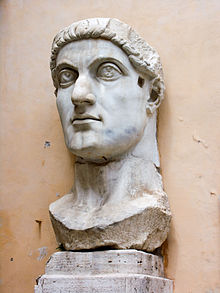
Diocletian (285-305) ended the Anarchy, but the Empire would never again come close to the stability and economic well-being it enjoyed before 235, and the history of the Late Empire was one of military autocracy alternating with periods of civil war. In 304 Diocletian launched the last anti-Christian crusade, destroying churches and sacred books and imprisoning priests, but it ended with his abdication the following year and seems to have petered out because of lack of popular support. His ultimate successor, Constantine the Great (305-337), legalized Christianity with the Edicts of Toleration (311-313), and with his conversion it became the official religion of the Roman Empire.

Valerian: "Crush 'em"

Valerian: “Crush ’em”

And then the real persecutions begin, as the government implements a continuous policy of crushing polytheism and eliminating the pagani (“rural folk”), so called because the old cults hung on the longest in the rural areas. Unlike those carried out against the Christians this persecution was moved by nothing other than simple religious intolerance.

Diocletian: "Eat 'em"

Diocletian: “Eat ’em”

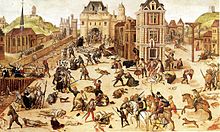
In the end Christians themselves would slaughter tens of thousands more Christians than the Roman Empire ever did.

Paris 1572 - Christians killing Christians

Paris 1572 – Christians killing Christians

Stuff from Way Back #14: The New God on the Block

(In keeping with the season I present a brief historical (leaving any deities out of it) understanding of exactly why Christianity was so damn successful.  Next week I will deal with the other question: what exactly was the reaction of the Roman government and why, a topic that has been seriously distorted because, well, the Empire no longer exists and Christianity does.)

Christianity is clearly a fusion of east and west, being a sort of religious hybrid produced by the intersection of Hebrew monotheism and the Greek mystery cult brought on by several hundred years of Greek control of Palestine. To some degree it is also a mix of oriental mysticism and Greek rationalism, inasmuch as the basic beliefs were later influenced by Stoicism and neo-Platonism. In essence, the Jews supplied the idea of the sole, ethical creator god, disconnected from the natural world, while the Greeks, through their mystery religion, contributed the notion of the dying and resurrected god. Paul and his associates made the new religion palatable for the world outside Judaea by stripping it of unappealing Jewish ritual, such as circumcision and dietary laws, and Greek rationalism then proceeded to refine the understanding of the godhead.

First of all, Christianity shared the ideas that had made the mystery cults so popular in Greece and later the Roman Empire. Traditional Greek and Roman religion was essentially civic in nature, primarily serving the community and devoid of any personal or inspirational quality. The mystery religion, which came in a variety of specific cults, did not deny the traditional gods but rather focused in on a single or tiny group of deities, providing the worshipper with a more personal and intimate relationship with divinity. The cults also involved emotional initiations and revealed knowledge, known only to the initiates, who gained in the cult at least a measure of equality with their richer and more powerful brethren. Christianity had no secrets but it rested on revealed knowledge and also offered a sense of special community within its ranks. Most all the mystery cults revolved around the central figure of a god or human who either literally or figuratively dies and is resurrected, thus providing an analogue of hope for the worshipper facing the inevitability of death. Further, the cults promised some reward, initially in this life, but by the end of the fifth century BC evidence appears suggesting the idea of judgment and reward in another life.

Christianity offered all these things but was something more than just another mystery religion. The Christian god was not just some Olympic retread, but the god of love, completely absorbed in those he had created. His death and resurrection was not simply some mythic event that had nothing to do with humanity beyond providing a message of hope. Rather, he became human and died specifically for humanity, a divine sacrifice that reveals an entirely novel concept of god. He was the god of all – rich, poor, slaves, free, men, women – something that was not always true of polytheist deities; for example, Mithraism, far and away the most popular cult in the Empire, was open only to men. And Christianity (at least until a powerful church emerged) cost nothing but commitment, while the polytheist religions required sometimes costly sacrifices, such as the bathing in bull’s blood incumbent on Mithraists.

Above all, this new god may have been open to everyone, but he definitely had a bias towards the poor and downtrodden. The rich and powerful had always had the edge in spiritual affairs, whether in the quality of their gifts or in outright control of the mechanisms of the religion. For the first time in history there was a god who favored the meek and chided the wealthy, and of course the vast majority of the in habitants of the Empire fit into the former category. This must have made for immense drawing power.

The religion also quickly developed the primitive ideas of judgment in the mystery cults into a full-blown system of reward and punishment in the next life and firmly rooted the judgment in the moral code inherited from Judaism. Obviously, promise of a better life in the next world is going to turn the heads of those whose life in this one is not that great, and while Christianity is born into an imperial society that constituted one of the more comfortable periods in history, in a few centuries life in the Roman Empire was going to become very unpleasant for most of its subjects. Now, the reward and punishment was based on the observance of a fairly strict ethical code, which might be expected to turn away potential converts. Most of us can get through life without committing homicide or adultery, but the thought crimes are very tough; “Thou shall not covet thy neighbor’s wife” is after all a rule even Jimmy Carter violated. But most people want a moral structure provided for them, and the basic rules provided by Christianity struck a favorable chord precisely because they were good rules. The Ten Commandments are the Ten Commandments because they proclaim the basic laws absolutely necessary for a stable society.

So the demanding moral code was likely also an attraction of the new religion, which was offering reward in the afterlife for behavior that virtually all normal humans consider good and proper. On the other hand, not even a Mother Teresa could keep all these rules all the time, and what made the whole system feasible for the average Joe was the loophole: forgiveness. Were it not for the mechanism of contrition and forgiveness, the new religion would be making impossible demands and simply not work.

Extremely important in the triumph of Christianity is the simple fact that it happened in history. The core event of the religion, the death and resurrection of the god, did not take place in some distant mythic past, as in the mystery cults, but right there in the Roman province of Judaea during the reign of Tiberius (14-37). The first apostles of the new god had actually been there, first hand witnesses of the essential events of the religion. They heard the sermons and saw the miracles and the crucifiction, and some claimed experience of the resurrection itself. This gave the religion an impetus unmatched by the old belief systems.

Additionally, though it may have played something of a negative role in the spread, the exclusiveness of the monotheistic religion certainly helped preserve it intact. Syncretism, the identifying and combining of gods across cultural lines, was an inevitable component of polytheism and produced religious hybrids, such as the cult of Isis and Serapis. This simply could not happen to Christianity – at least in any serious way – because there were no other gods. This would produce a religious fanaticism unknown in antiquity outside the Hebrews, and that fanaticism presumably helped a bit. These were people who were willing to die for their god, and that kind of commitment surely had to impress potential adherents.

Finally, there is the element of coincidence: the charismatic preacher was born at the height of the Roman Empire.  Without this huge area of political stability and easy communications the new religion would very likely not have been anything more than another eastern cult.  Two centruies earlier Rome was only beginning to nose into the eastern Mediterranean, and it is not all clear that the new religion, which would be perceived as a heresy by the Jews, would have survived the religiously reactionary Hasmonean kingdom.  Two centuries later and the religion would almost certainly not have the time to spread and develop its infrastructure before the western Empire collapsed.  It might survive in the east, but the conversion of the barbarian tribes becomes more problematic, and what would the history of the west be like without the Church to carry civilization through the Dark Ages?

"In hoc signo, Baby!"

“In hoc signo, Baby!”

Such are the reasons for the initial survival and spread of Christianity, but the final triumph and emergence of the new creed as the exclusive religion of the western world owed less to its nature than to political developments. Because of popular hostility and ultimately government obstruction (tune in next week), by the beginning of the fourth century Christians constituted perhaps only ten percent of the population, but for seemingly cynical political reasons Constantine the Great (sole emperor 324-337) embraced the religion. One might question the conviction of Constantine, who converted only on his deathbed, but the imperial family became Christian, and after Constantine every emperor but one (Julian the Apostate) was a member of the faith, thus making Christianity a powerful force in the government of the Empire. With the power of the sate behind it Christianity began a rapid expansion, as polytheists were subject to greater and greater persecution.

The collapse of the western Empire in the fifth century guaranteed the complete supremacy of Christianity, as the Church, now the only surviving governing structure in the west, emerged as a kind of international corporation manipulating the emerging barbarian kingdoms. The conversion of the Germanic tribes, especially the
Franks, resulted in a new warrior Christianity, which spelled doom for the surviving polytheists of Europe. The Prince of Peace had finally triumphed, albeit with a sword in his hand.

Alexander Lives! Part II

(This post is a week late because of out of town business.)

But not everyone grieved, and the new King was immediately faced with revolts from Sicily to the far east.  Philip first dealt with Syracuse and its coalition, using the force mustered for the invasion of Italy.  Late in 297 he was able to leave Antigonus’ son Demetrius to finish reestablishing control of Sicily, while old Ptolemy had arrived in the Peloponnesus to stamp out small revolts, during which the Spartan dual kingship came to an end.  Philip meanwhile moved east to deal with revolts by his governors in Media and Bactria, gathering a mixed Greek-Asiatic force, which reached the Iranian plateau in 295.  Media was easily pacified, but there he encountered Greek troops fleeing the occupation of the Indus valley by Chandragupta and learned that Seleucus had been killed.  The King made a momentous decision and sent envoys to recognize Chandragupta’s conquest and Bactrian independence, deciding to withdraw the frontiers of the empire west to a line from the Caspian Gates south along the eastern boarder of Persis.  Seleucus’ son Antiochus Philopater, was made viceroy of the entire Persian heartland.

Back in Babylon in 293 Philip decided to move the capital to Alexandria and ordered the Old Royal Road west of Babylon refurbished and a spur built south to Egypt.  With the empire momentarily at peace he turned to domestic activities, especially Hellenization, and began a program of encouraging poorer Greeks to settle in western Asia, particularly Syria-Palestine and along the route to Babylon.  Because of continued Macedonian resistance, his father’s experiment with joint Greco-Iranian units was abandoned, and Asian troops were henceforth used almost exclusively in the east.  Despite calls by his more aggressive generals to revive the Italian campaign, the King decided to postpone it in favor of more consolidation.  Then suddenly he was dead, killed when thrown from his horse in 290.

The heir, Alexander IV, was still in his early teens, and his grandfather’s old Companion Ptolemy was established as Regent.  Until his death in 283 Ptolemy continued to advise the King, even after he achieved his majority, but Alexander was not cut from the same cloth as his predecessors and fell into a life of indolence, the court filling with sycophants.  The administration of the empire fell upon the shoulders of its governors and viceroys, who began passing their power on to their own sons.  Revolts, all stirred by Greek and Macedonian adventurers, were successfully suppressed with little direction from Alexandria.  In 263 the viceroy in Macedon, Demetrius’ son Antigonus Soter, having spent the later 270s smashing Gauls on both sides of the Danube, decided to expand his power by “liberating” the Greek cities in Italy, which had by now fallen under Roman control.  Experienced only in fighting barbarians, however, his poorly led army was twice defeated by the Roman legions, and the enterprise was abandoned.  Intimidated by the Macedonian fleet, Rome was content with repelling the invasion, but was now clearly eyeing Sicily, whose garrisons were beefed up by Antigonus.

Alexander died in 258 and was succeeded by his son Perdiccas III, who after three years of incompetent rule was assassinated, perhaps by his younger brother, who succeeded him as Philip IV.  Philip is generally considered the last of the great Temenid kings, and during his long reign the empire was as united as it ever would be.  While he confirmed the position of many of the governors inherited from his brother, he attempted to regain control of the offices, fearing any long tenure of power could provide a dangerous local power base.  Unfortunately, that was already the case in Macedon and Babylonia, and for all his ruthlessness Philip hesitated plunging the empire into civil war and tolerated the powerful Antigonid and Seleucid families.  He signed a treaty with Rome delineating spheres of influence: Spain and Gaul, where the Romans already had colonies, would be off limits to the empire, and while both parties were free to send raids into the area north of the Alps and the Adriatic, neither could establish any permanent facilities.  Apart from periodic punishment of various barbarians off the northern and eastern frontiers and an expedition up the Nile, he refrained from serious military operations and oddly, patronized the arts.

Incredibly, Philip ruled until 209, dying at the age of 80, still loved and feared by his subjects.  He had outlived all his sons, and a nephew took the throne as Alexander V.  Trouble began almost immediately.  In Pella Demetrius, son of Antigonus Soter, contested the succession, asserting that the Macedonian troops did not accept Alexander, and in 208 he began moving forces into Asia Minor, replacing the local governors with his own men.  Alexander mustered what forces he could and moved north to bar the Cilician Gates, summoning Antiochus, great grandson of Philopater, from the east, where he was embroiled with the troublesome Parthians. Fortunately for the King, whose hastily collected forces would have serious trouble facing Demetrius, the Illyrians, quiet for several generations, poured into Macedon and more threatening, Syracuse was said to have appealed to Rome for liberation from the Macedonian yoke.  Leaving what forces he could, Demetrius rushed back west and sent his fleet back from the Aegean to Sicily to block any attempt by the Romans to cross to the island.

Coming west, Antiochus affirmed his loyalty to the King, if only to see the rival Antigonids crushed, and 207 was spent clearing Asia Minor and raising new troops.  The following year Alexander invaded Europe, while Antiochus returned to the east to deal with a Parthian invasion of Media through the Caspian Gates.  The Illyrians had been subdued, but now outmatched by the King, Demetrius retreated into the Macedonian highlands and offered the Gauls land in Thrace if they aided his cause.  This caused the Thracian tribes to enthusiastically support the King, and soon Demetrius’ Macedonians were deserting in ever increasing numbers.  He fled to Italy and sought asylum with the Romans.

Alexander spent two more years in the ancestral homeland and the lands to the north, repairing the damage done by Demetrius and executing every member of the Antigonid family he could get his hands on.  In early 2003 came news of a usurper in Alexandria claiming to be a surviving son of Philip and raising an army, his funds most likely supplied by Antiochus, now surnamed Parthicus.  The following year the King easily defeated the usurper, who had been unable to secure Gaza and had remained in the Delta, but he was killed in the battle under suspicious circumstances. Alexander’s youngest son, still a boy, was proclaimed King as Alexander VI by the Macedonians in the army, while his eldest brother, serving as viceroy in Pella, was elevated as Philip V by his Macedonians and immediately began collecting an army.  With a promise of autonomy he recruited Alexandria Hesperia and Numidia to his side, raised troops in Sicily and sent several delegations to the Parthians.

Antiochus collected his forces from his eastern frontier and marched toward Anatolia, while Philip secured the Ionian cities and cleared the Cilician Gates of the small Seleucid detachment there.  Remembering the destruction of Carthage, the Phoenician cities declared for Antiochus, who had reached the upper Euphrates by 200.  But the grand battle never materialized.  From east and west came the news: the Parthians were swarming into Media and the Romans had invaded Sicily.  Antiochus agreed to recognize Philip as the true King, and Philip in turn formally ceded all the territory east of the Euphrates to Antiochus and guaranteed his right to recruit from the Greek cities.  King Antiochus I returned home to face the Parthians, the Phoenician cities submitted and Philip’s boy king brother was dead by the time the small force dispatched by the King reached Alexandria.  Philip took his army back to Macedon, where he confirmed that the Romans, never very good at siege craft, were bogged down before the walls of Syracuse.  Sending his western allies home with specific instructions and more promises, he began planning the recovery of Sicily, where Syracuse was now singing a very different tune.

Sailing unopposed from Epirus in 198, he landed in Lucania and secured Tarentum and its convenient port through treachery.  At the same time Alexandria Hesperia and its Numidian and Libyan allies put ashore near Agrigentum and began moving eastward, meeting only scattered Roman resistence.  Leaving a covering force at Syracuse, the Roman consul T. Quinctius Flamininus hastened westward to intercept the invaders with his two legions and half his allied infantry, while the other consul, P. Cornelius Scipio, already on his way south from Massilia with two legions, began a forced march.  Two legions under the praetor M. Porcius Cato left Rome for the south, while one of the Spanish legions was recalled.

Despite his weakness in cavalry Flamininus was able to defeat Philip’s African allies, the remnants of which took refuge in Agrigentum, which had gone over to their side the moment they had landed.  Leaving a legion and some of his allied infantry to besiege the city, he headed towards Messana.  On the mainland Philip, despite his “liberate Italy” proclamation, had managed to attract only a few Lucanian and Bruttium tribes; the Greek cities refused to open their gates.  He decided to face Cato’s army before Scipio brought up his forces and began moving north on the Via Appia, discovering to his astonishment that Cato was already approaching Beneventum.  The armies met east of the Appenines just south of Venusia, and again to Philip’s surprise Cato’s force of perhaps 25,000 immediately offered battle though outnumbered by more than 5000.  In a drawn out struggle the Romans slaughtered Philip’s Greek infantry but could make little headway against his phalanx and finally began a withdrawal as the King’s horse began to seriously threaten their flanks.  Cato managed to get most of his retreating army into Venusia, but he had lost almost a third of his men.  Philip offered terms, which were promptly refused, and learning that Flamininus had managed to slip across the straits to Rhegium, he headed back south.  Meanwhile, Syracuse had fallen, freeing the rest of Flamininus’ army, and the African army in Agrigentum, judging the war in Sicily lost, negotiated an armistice and free passage off the island.  The invasion of Sicily, designed to draw Roman troops from the peninsula and his invasion, had failed completely, and Philip realized the whole adventure had been ill conceived.  Leaving a large garrison in Tarentum, he began shipping his forces back to Greece before the sailing season ended.

Rome refused to accept anything but unconditional surrender, and stationing his fleet in the Adriatic, the King began assembling in Macedon forces from fall over the empire.  The counterattack did not come until 196, as Rome spent the intervening year securing its position in Sicily and dealing with problems in the Po valley.  A new Roman fleet cleared the way across the Adriatic, easily handling the more experienced Greek sailors with their boarding tactics.  Four legions were shipped to Greece, while Athens and other cities revolted.  It took the Romans almost three years to break into Macedon, and there they met Philip at Dion in the biggest battle ever fought: T. Sempronius Longus and Gn. Domitius Ahenobarbus led more than 40,000 men against Philip’s 55,000.  By nightfall Philip and his Companions lay dead on the field, along with perhaps 25,000 Greeks and Romans.  The King’s eldest son, now Alexander VI, fled with his remaining troops to Anatolia, where a number of revolts had erupted.  The Romans declared the Greeks free and placed the exiled Demetrius on the Macedonian throne.  The empire had lost the homeland and all its European possessions.

The dynasty began a downward spiral.  Alexander was assassinated in 193 while on campaign in Cappadocia, to be followed by Alexander VII, Perdiccas IV and Alexander VIII in scarcely two decades.  Although the Romans kept Demetrius and his successor Antigonus on a short leash during this period, a Gallic invasion of Anatolia and internal revolts, some prompted by Rome, were chipping away at the empire.  Adding to the troubles were the Seleucids, who seized control of Syria-Palestine when they were finally driven from Mesopotamia by the Parthians.  By the middle of the century the Alexandrine empire, once stretching from Numidia to the Indus, had been reduced to Lower Egypt, Cyrene and the fortress of Gaza and under the child King Philip VI was being governed by a constantly scheming coterie of advisors.  Prematurely aged from his sybaritic life, Philip died suddenly in 142 and a nephew was elevated as Alexander XII.  Within the year he was dead, the victim of a coup launched by a Sicilian Greek mercenary, who promptly proclaimed himself Sosistratus I, ruler of Egypt.  The ancient Temenid dynasty was at an end.

In the century following the demise of Alexander the Great’s empire the Romans slowly moved into the lands of the oikumene, ending the second Antigonid dynasty in Macedon when its kings refused to stop meddling in Greece and occupying Anatolia and Syria in order to prevent the Parthians from doing so.  Thus, the Romans became rulers of the Hellenic world, and while the Alexandrine empire had disappeared, the work of the Temenid kings in Hellenizing Anatolia, Syria-Palestine and Lower Egypt remained.  The urban centers and even some of the rural populations of these regions were thoroughly Greek; even the curious and obstinate Judeans, having lost the most fanatic zealots of their invisible god in a failed revolt, were Hellenized.  The Romans would preserve this inheritance intact for another half millennium and pass the Greek legacy on to the new states that would arise in Europe.

Finally, there has long been speculation about the course of Mediterranean and Western history had Alexander the Great not died on the eve of the planned invasion of Italy.  At that time Rome had not yet crushed the Samnites or occupied the southern peninsula, and while already a formidable power, she was not the unstoppable force that she would become even a generation later.  Her victory at Dion clearly demonstrated the dreadful efficiency of the legions against the Macedonian phalanx and Greek heavy infantry, but facing those troops under the leadership of Alexander would have been a different matter altogether.  The destruction of Roman power would certainly have left Hellenism dominant in the Mediterranean, and the West might now be speaking Greek derived languages.  On the other hand, Roman will and her manpower base in central Italy would very likely have confronted Alexander with a long and exhausting campaign, something he could ill afford, given, ironically, the immense size of the empire and above all the propensity of the Greeks to dissension and revolt.  Further, there is little reason to believe, given the history of the post-Alexander III oikumene, that a Greek Mediterranean could produce the long-term stability that allowed the Roman Republic/Empire to establish classical civilization so well in western Europe that its core could survive the devastation of the barbarian migrations.  And in any case, it was essentially Hellenic civilization that was passed on by Rome.


Rome and America: A Cautionary Tale

Until recently comparisons between the United
States and ancient Rome,
at least outside the classroom, have been mostly limited to conservative
Christians railing that the moral decay that destroyed Rome
will do the same to us.  No serious
historian of course believes that Roman power collapsed because of excessive
partying or a breakdown in family values, but is there any substance to the
increasingly frequent assertion that the Roman Empire
and America in
the post-Soviet world share an identity?
Does the expanding Pax Americana, enforced across the globe by military
might, recapitulate the Pax Romana of the Mediterranean two millennia ago?  Is the United
States truly the Rome
of the twenty-first century?

Well, yes
and no.  There are in fact very
compelling similarities between the two states, but there are also profound
differences, and to a great degree it depends upon precisely what is being
compared.  The answer is also complicated
by the fact that the history of post-regal Rome
falls into two very distinct parts: the Republic (c. 507-31 BC) and the Empire
(31 BC – fifth century AD).  Not only
does Rome’s political structure
change dramatically across this divide, from a constitutional oligarchy to a
frequently hereditary military dictatorship, but the nature of and motivations
behind her imperialism also evolve.  In
many ways there were actually two Roman Empires.

Most
Americans know Rome of the
Principate (the name given the Empire up to AD 235), the Rome
of emperors, Christians, Ben Hur and the Gladiator, but America
owes far more to the Republic, wherein lie the roots of our Constitution.  As educated gentlemen of the eighteenth
century, the Founding Fathers were steeped in classical history, and their
knowledge of the Roman Republic
and the Athenian democracy, together with their suspicion of the masses, led
them to the former as the better model for stable democratic government.  The Senate-centered government of the
Republic had after all functioned well for four centuries, accommodating
economic and social changes and taking Rome from a small power in central Italy
to mistress of the Mediterranean, while the fifth century democracy of Athens
had devolved into demagoguery and civil strife and brought about the collapse
of Athenian power in less than a century.
To be sure, our debt to the political traditions of England
is immense, but the Roman Republic
was never far from the minds of the framers of the Constitution.  Take a stroll through the Senate chamber in Washington:
on either side of the podium hangs a depiction of the fasces, the bundle
of rods and axes that symbolized Roman political authority (which must have
been at least a slight embarrassment when we were fighting fascistItaly).

The
constitution of the Roman Republic
was technically democratic, with ultimate power resting in two citizen
assemblies, but in practice the state was completely dominated by the Senate,
which for a variety of reasons was a more or less exclusive club of wealthy
landowners.  The Roman
Republic was governed by an open
but very slowly changing oligarchy of wealth, and it is difficult not to
characterize the government of the United States
in the same fashion.  The nature of that
wealth is of course very different, since unlike Rome we possess a
consumer-oriented capitalist economy, and a member of the American governing
class need not actually be a wealthy individual, though most are.  But given the immense cost of election to
federal office and the consequent influence of powerful economic interests,
wealth dominates our political system as surely as it did that of the Republic,
albeit less directly.

The Roman
character, at least in its idealized form, also influenced many of the Founding
Fathers, most notably Jefferson, who saw Cincinnatus as
the model citizen, the small freeholder who leaves his plow to defend his
country and then returns to his farm, rejecting any reward or glory, the
Minuteman of ancient Italy.  An almost overwhelming sense of duty or obligation,
forged through centuries of warfare, was the strongest element in the Roman
character, and completely unlike the Greeks, the Romans were the ultimate team
players, ready to sacrifice everything for the group.  The ruling elite, the Senatorial class, of
course competed for political power and advantage, but the real prize was dignitas,
a kind of prestige associated with serving the group, that is, Rome.  Dignitas was a real though non-legal
form of power, enhancing an individual’s political authority and influence in
the Senate and assemblies, but it was also an end in itself, the ultimate goal
of any Roman statesman until the decline of the Republic.

The citizen
armies of America recapitulate those of the Republic, and to some extent the
small farmers colonizing the expanding westward frontier and fighting the
native inhabitants reflect the spirit of Cincinnatus and the yeomanry that
formed the backbone of the Roman army into the second century BC.  But despite the vast tracts of land the
continent offered, the Cincinnatus model was ultimately incompatible with a
country on the threshold of industrial revolution, and America’s fighting
forces, even in periods of mass conscription, would increasingly be drawn from
the landless and the poor, as indeed were Rome’s during the late Republic and
Principate.  Further, while educated
colonials admired the patriotism and self-sacrifice of those “noble Romans”
they read about in Plutarch, their society placed far more emphasis on the
individual, a regard that the frontier experience apparently only
deepened.  Average Americans of the
twenty-first century may well be as inclined to the group as their Roman
counterparts, but unlike them we proclaim individualism a virtue and pay at
least lip service to the individual.

For all the
differences in the cultural and economic environment, however, the rise to
prominence of Rome and the United
States display striking similarities, at
least on the surface.  The Republic was
born out of the violent overthrow of the monarchy, and the early history of Rome
was filled with conflict, as the tiny city-state on the Tiber
River fought first for her life and
then for domination of the Italian peninsula, which by the middle of the third
century BC was controlled through a system of dependent alliances.  The allies were nominally independent states,
but Romanization of the peninsula and the grudging extension of the citizenship
(the allies finally revolted to get it) had created an essentially Roman Italy
by end of the first century BC.  Drawing
from the vast pool of Italian manpower, in the years from 264-188 BC the Romans
took on and defeated every major Mediterranean power, becoming the effective
mistress of the Mediterranean world.  At
this time Rome actually directly
ruled relatively little territory outside Italy
and Sicily, since the Senate
preferred to control areas through compliant client states rather than shoulder
the financial and military burden of immediate provincial rule.  The empire at this stage was hegemonic rather
than territorial, but in the sense that there was no longer any state that
could conceivably challenge her Rome
had become the sole superpower of the Middle
Sea.

During this
crucial period of expansion the major motive behind Rome’s
foreign policy was the question of Italian security, but by the second century
the desire for personal wealth and power had begun to seriously infect
Senatorial decision-making, resulting in a governing class increasingly
inclined towards furthering its own interests rather than those of the state.  This growing corruption of the Senatorial
class led to the Revolution, the century-long collapse of the Republic that
began in 133 BC when a Senate now interested chiefly in defending its power and
prerogatives resisted needed reform and soon employed state-sanctioned violence
to further its ends.  Political activity
became more and more extreme, foreign policy became little more than a
reflection of domestic politics, and ultimately the army was drawn into the
fray, leading to civil war and the rise of military dictators like Caesar and
Augustus, the first emperor.  Because of
the absence of any serious external threats, the empire and Roman power
survived this turmoil, but constitutional government did not.

Much of
this history has a hauntingly familiar ring to the American ear.  Our republic was born in the violent
rejection of a king, and constant low intensity conflict accompanied our
occupation of North America.  It is true of course that our conquest of
this continent was relatively peaceful when contrasted with the Roman capture
of Italy, and
until the emergence of nuclear weapons we did not, as did the Romans, face foes
who could seriously threaten our national existence.  Yet, for all the differences, especially in
intensity, violence is a shared theme in the forging and growth of both
nations, and an inclination to violence as a legitimate problem solving
mechanism seems embedded in our national character.  We may not permit gladiatorial contests or
proclaim war a good and ennobling activity, but in many areas of American
culture, from our tastes in entertainment to our love affair with guns, there
is almost a celebration of violence.
With their bloody spectacles and unabashed acceptance of martial glory
the Romans were perhaps just a bit more honest about it.

As they
expanded their authority over Italy
and out into the Mediterranean, the Romans developed the
notion that it was in fact their destiny to rule, that their national gods had
granted them this dominion in the days of the founder-hero Aeneas, centuries
before Rome even existed.  In similar fashion the American tide of
expansion, washing rapidly westward over Mexicans and Indians, was quickly seen
as a “manifest destiny,” granted us by our own national god.  In both instances success was seen as ample
evidence of the favor of heaven, and that material success and perceived divine
favor amplified an arrogance and sense of superiority already present in both
societies, though in the case of the Romans the racial element important to
white Protestant America was missing.  Less
pernicious perhaps than the race-connected attitude of Americans, Roman
arrogance was more equal opportunity, and contempt for other peoples was
essentially based on their not being Roman and thus the products of soft (e.g.,
Greeks) or barbarous (e.g., Gauls) societies.
During the Principate, when the imperial focus was more on the barbarian
lands of central and western Europe and Stoic ideas were affecting the ruling
elite, some idea of a civilizing mission emerged, but it never reached the
intensity of American paternalism towards the Indian tribes (and now the rest
of the planet) and was never government policy.

With the end
of the Revolution and the establishment of the autocracy or Principate the
nature of Roman imperialism changed.
While there would be the odd burst of aggressiveness, as under Trajan (AD
98-117), imperial policy became essentially defensive, guarding the frontiers
established under Augustus (27 BC – AD 14) and gradually transforming Rome’s
clients/allies into provinces directly ruled from Rome.  Until the empire began to come apart during
the Anarchy (AD 235-285) this policy was generally rational and based on
strategic interests, though domestic concerns sometimes intruded: Claudius’ (AD
41-54) invasion of Britain
in AD 43, for example, was mainly motivated by his need for a military
reputation.  And of course, since the
empire was governed by a generally hereditary autocracy, imperial affairs
occasionally suffered from interference by an incompetent (e.g., Commodus [AD 180-192])
or unbalanced (e.g., Caligula [AD 37-41]) head of state.  Further, though incredibly disciplined and
loyal to the state, at least until the Anarchy, the Roman military was not
always inclined to passively accept whatever loser might gain the imperial
purple, and on two occasions prior to the Anarchy – under Nero (AD 54-68) in AD
68 and again under Commodus in AD 193 – the army revolted and fought brief
civil wars, after which the troops returned to their camps and allegiance to
the state.  Actually, given the potential
political power of the legions, which were the ultimate basis of the autocracy,
it is amazing how quiet the army was over the two and a half centuries of
Principate.

Rome
could in fact occasionally indulge in bad government and even civil war without
serious risk of losing the empire because she was something of a superpower in
the Mediterranean-European world.  During
the Principate Rome faced only two real threats on her frontiers: the Germanic
barbarians beyond the Rhine-Danube frontier and the Parthian Empire (and its
successor after AD 226, the Sassanid Persian Empire), centered in Iraq.  Neither could come even close to challenging
Roman power, and both were no more than a nuisance, easily repulsed when they
took advantage of a lunatic emperor or a civil war to violate the imperial frontiers.  Further securing the empire was the fact that
until the Anarchy Rome did not overly need to concern itself with the revolt of
subject peoples.  With the exception of Judea
once Roman rule was established, it was generally accepted within a generation
or so, as the provincials realized the value of the Roman peace and other
benefits of the empire.  The Jews were
the exception because their monotheism and divine promise of a national state
prevented them from being easily assimilated into the Greco-Roman, polytheist
culture of the empire, as were the other provincials.

The Roman government did not consciously export its
culture, but Latin and Greco-Roman ideas nevertheless spread among the urban
populations of the empire, and the townsfolk at least came to think of
themselves as Romans, regardless of their ethnic backgrounds.  And as Roman culture and Romans streamed out
into the provinces, provincial influences and provincials flowed back to Rome.  The emperors Trajan and Hadrian (AD 117-138),
for example, were ultimately Iberian in their bloodlines, the thoroughly
Romanized products of the Spanish provinces.
In a very real sense the Roman Empire was a
multicultural melting pot, and in AD 212 the emperor Caracalla granted the
Roman citizenship to virtually every free male in the empire.  He did it for economic reasons and the
citizenship was by then politically meaningless, but the fact remains that a
Briton whose ancestors had painted themselves blue and killed invading legionaries
now possessed the same legal status as an Italian who could trace his roots
back to the birth of the Republic.  This
cosmopolitanism was one of the greatest triumphs of theRoman Empire.

It is tempting to compare the post-Soviet United
States to Rome
of the Principate.  Both enjoy the status
of a superpower, hassled but not seriously militarily challenged by their
neighbors (at least in the conventional sense – nuclear weapons have changed
the rules); one might even compare the Parthian Empire to Russia and China and
the lower intensity threat of the barbarian tribes to terrorists.  As Latin and Roman culture seeped out into
the empire, so also is English and American culture spreading about the globe,
and as provincials gradually appreciated the benefits of the Pax Romana,
so, we confidently expect, will the rest of humanity appreciate those of the Pax
Americana
.  And like Rome,
America is so powerful,
possesses such a loyal military and has such an excellent bureaucratic
structure that it can periodically suffer an incompetent head of state without
losing the ball game.

Despite these points of contact, however,
twenty-first century America
is more aptly compared to Rome of
the Republic, especially its last century and a half of existence.  The empire was then primarily hegemonic,
relying, as do we, on clients and allies as the preferred mechanism for
exerting influence.  Further, for all
that American Presidents, especially a recent one, might occasionally remind us
of less attractive Roman emperors, the constitutional government of the
Republic is far more akin to our own than is the military based dictatorship of
the Principate.  The Senate-centered
oligarchy of wealth that dominated the Republic in fact has a great deal in
common with our own national political oligarchy, whose members are utterly
dependent upon and typically beholden to those interests that possess the
financial resources necessary to get elected.
Even more to the point, as Roman foreign policy became little more than
an extension of domestic affairs during the Revolution, so also is American
foreign policy, especially with the end of the Cold War and most especially in
the case of Israel, increasingly a reflection of domestic politics and personal
interests rather than of strategic concerns and the national interest.

The growing political ambition and self-centered
attitude of the Roman ruling elite led in the first century BC to civil war and
the emergence of autocratic government, but while our own governing class is no
less venal and preoccupied with retaining power, our republic seems unlikely to
collapse in the near future.  Unlike the
Romans we have a written constitution that is very difficult to circumvent in
any serious ways, and our military has traditionally held a strong aversion to
political involvement, at least as soldiers, if not as lobbyists.  The Constitution also provides for a
government of three independent branches, each in theory independent and able
to check the others from any abuse of power, while the Roman Senate had a four
hundred year tradition of completely dominating every aspect of the national
government, which fact led to an almost overnight collapse of political
stability when that authority was challenged during the Revolution.  Finally, the American people have the
constitutionally guaranteed power to change the entire governing elite ever few
years, whereas our Roman counterparts could not touch their Senate, whose
members held their positions for life.

On the other hand, because of the power of
incumbency and the passivity, growing ignorance and lack of interest of many
Americans, our elected national leaders (excepting the President and Vice
President) enjoy potentially unlimited terms of office and constitute almost as
much a permanent political oligarchy as did the Roman Senatorial class.  And that oligarchy, the American Congress,
has recently demonstrated a disturbing willingness to take measures of dubious
constitutionality and grant very broad war making authority to a single
individual, the President.  Americans
citizens, moreover, have demonstrated an equally disturbing willingness and
quickness to surrender civil liberties in the face of vaguely defined threats
and in return for security measures of questionable value and
effectiveness.  Every politician worth
his salt, be it Gaius Julius Caesar or George W. Bush, recognizes the domestic
political capital that can be squeezed from national security issues, even if,
as in the case of the Gauls and now Iraq, the threats need to some degree be
manufactured.  The American President may
not, like Caesar, be seeking a loyal military following, but he certainly knows
as well as the Roman dictator that war is a wonderful distraction from domestic
ills and that cheap gasoline, like cheap grain in the dying Republic, will keep
and buy political support.

Twenty-first century America
is certainly not ancient Rome, even
Rome of the Republic: for all the
imperial points of contact the economic, political and technological
differences are simply too great.  Yet,
while the ultimate fate of the Roman Empire should not
overly concern us, being the result of internal conditions that are utterly
alien to this society  – at least for the
foreseeable future – the fate of the Republic may well be instructive.  The Senatorial government functioned in many
ways similar to ours, and after a long run of success an increasingly
self-interested governing elite, more concerned with its own prerogatives than
the national interest, resisted needed reform and found itself less and less
able to deal with the country’s problems or even to maintain political and
social stability.  And in the end that
instability called forth the perhaps inevitable recourse to autocratic
government, and Roman liberty was traded away for security and the trappings of
imperial glory.  At least the Romans got
that: because of economic problems Americans have little security and imperial
glory went out with theBritish Empire.

The Terrorist Nuisance

Sending more troops to Afghanistan
was madness.  Punishing the Taliban was
righteous, but in a fit of seeming ignorance and democratic hubris we
determined to erect not just a stable national government, but a democratic
one.  Any understanding of the history of
Afghanistan reveals
foreign nation building in that country to be an exercise in wasted lives and
treasure.

Afghanistan
is even less of a nation state than Iraq,
being essentially a collection of tribal areas, most notably Pushtunistan, and constitutes
a “country” by virtue only of the frontiers drawn by the surrounding
nations.  In the last two hundred years Kabul
has rarely ruled all Afghanistan
for very long and has only done so under a strong authoritarian leader who
could press alliances on tribal leaders.
Even then political stability was typically a thin veneer, ready to
collapse from infighting in the capital or challenges from the periphery.  And corruption and cronyism has for centuries
been a way of life for government officials at every level.

The Afghans are a hospitable people, but wary of foreigners, especially foreign soldiers, and the constant possibility of death from the air has only strengthened that wariness.  There may be a sort of crude democracy in the
villages, but the country has virtually no experience of democracy, and the
election and escapades of the Karzai government hardly inspire optimism.  And here we are in a seemingly endless and
very real war that seems to have less and less to do with terrorism.

Calling the
fight against international terrorism the “war” on terror was a major mistake.   In many
ways this does a disservice to our country and further confuses the meaning of
“war,” a term already abused by the “war on poverty” and the “war on drugs,”
two singular failures on the part of our government.  This is not to say that the military should
not be involved when necessary (such as dealing with the Taliban), but that the
struggle should be considered an operation against a criminal enterprise,
albeit on a large scale.  This is after
all not a war declared by Congress and thus like the Korean and Vietnamese
conflicts is more appropriately called a “police action.”

Terrorists
are certainly a threat to Americans, but they are not a direct threat to America.  Like the Germanic tribes during the height of
the Roman Empire they are a nuisance, and terrorist
organizations threaten the security of our country no more than a band of
Dacians marauding across the Danube threatened the
existence of the Empire.  They can
certainly destroy people and property, but they cannot in any way seriously
injure the country, as could China
or Russia or
our mismanagement of our economy.  Even
the casualties of the 9/11 attack, which simply could not happen again,
represent a relatively slow month on our nation’s highways, and while
terrorists with a nuclear weapon could devastate a city and perhaps slaughter
millions, they could not come as close to destroying the country as an
unregulated financial industry could.

Declaring,
at least unofficially, a war against terrorists can only enhance their status,
suggesting they have a position akin to that of a legitimate state, and creates
substantial problems with domestic and international law regarding the legal
position of captives.  The government can
argue, as it has, that because they are not the uniformed soldiers of an
established state, prisoners in this war are not protected by the Geneva
Conventions and other international covenants of which we are signatories, but
because this is considered a “war” and not an anti-criminal operation, neither
are they subject to the jurisdiction of American courts.  This results in prisoners of war in this
struggle being in a legal limbo, declared to be “enemy combatants” rather than
POWs yet like POWs being held for the duration of the conflict, which unlike a
declared war may have no end.

Most
pernicious, waging a “war” against terror allows the government, especially the
executive branch, to claim wartime powers, endangering civil liberties and he
freedom of the press.  Governments,
whatever their nature, constantly seek to expand their power, and a threat to
national security has traditionally provided a justification for such an
expansion, which in the case of the United States inevitably means a conflict
with our Constitution.  Proclaiming
terrorists a “threat to national security” and the struggle against them a
“war” allows the President to take up the mantle of Lincoln and Roosevelt and
claim emergency powers seemingly at odds with the Constitution.  Such claims are always dangerous to a free
society, but the Civil War and World War II, unlike the fight against
terrorism, were a threat to our nation.

Declaring a
“war” against terror has also facilitated an overly simplistic approach to
the problem.  The fact is that not all
terrorists are alike and many terrorist organizations have nothing to do with
the United States.  Chechens are fighting Russia
and Kashmiris fighting India
for independence, Palestinians are seeking to rid themselves of the Israelis
and Hezbollah guards south Lebanon.  Unlike Al Qaeda these particular terrorists
attack Americans only when the United States
interferes in their local areas of interest, as when Hezbollah attacked the
Marine barracks in Beirut.  Al Qaeda, once focused on the Saudi royal
family and Saddam Hussein, has declared a jihad against the United
States and directly attacked America
and other western states.  Lumping all
these groups together is counterproductive and blurs our focus in the struggle
against our real enemies, Al Qaeda and other Islamicist groups dedicated to the
destruction of the West.

Meanwhile,
the United States, ostensibly fighting against all terrorists and declaring
that anyone who harbors them is a terrorist, has backed itself into a
hypocritical corner.  We are providing a
haven for anti-Castro elements, who might legitimately be described as
terrorists, and we supported secular Somali warlords, who are as terrorist in
their tactics as the Islamicists they oppose.
Such of course undermines the already reeling moral credibility ofAmerica.

Like crime
in our country terrorism is a nuisance, though a more serious one, since
without even acting the terrorists cause us injury by enabling the government
to use fear to expand its power and threaten our civil liberties in the
interest of “national security.”
Fighting a “war” on terror also obscures the causes behind anti-American
terrorism and tends to smother diplomacy and other approaches to the problem,
favoring endless violence over more permanent solutions.  Killing terrorists is necessary, but getting
serious about the Palestinian problem and communicating with Iran,
which has the most pro-Western population in the Middle East,
would provide more lasting results in the struggle.

Unfortunately,
we appear to have a penchant for violence as an immediate solution to our
problems.  One need only compare the
Pentagon budget to that of the State Department.


Stuff from Way Back #1: Happy New Year, Q. Fulvius Nobilior

Ever wonder why the year
begins on January 1?  Probably not.  But consider: why should we begin our year in
the middle of the winter, rather than in the spring, when the seasonal year begins?  In fact, in antiquity states typically began
their calendar years in the spring or in the fall with the harvest.  Well, it’s the Romans.

Part of Rome’s booty in the Second Punic War (218-201 BC) was the
Mediterranean coast of Spain, formerly territory of the now defunct Carthaginian
empire.  The Romans of course had no
intention of allowing this area to go free, but neither were they yet moved to
any campaign of conquest in the Iberian
peninsula.  Italian capital and manpower were exhausted
by  the Hannibalic War,  and the first half of the second century was
filled with major conflicts in the Greek east.
The result was that the Roman conquest of Spain was haphazard and slow, driven by the desire to exploit
the natural resources and to protect the coastal communities from the natives
of the interior.

The Spanish possessions were organized into two provinces
in 197, and poor Roman administration led in that same year to the first
serious insurrection, the crushing of which triggered the First Celtiberian War
(181-179).  Relative peace then lasted
until the outbreak of the Lusitanian War (154-138), during which occurred also
the Second Celtiberian War (153-151) and the Third Celtiberian (or Numantine)
War (143-133).  Three quarters of a
century of cruel and bloody counterinsurgency warfare were necessary to pacify
the peninsula, and the job was not actually completed until the reign of
Augustus at the end of the first century, after which the Spanish provinces
became the most peaceful and Romanized in the empire.

When in late 154 a number of Celtiberian tribes, encouraged
by the Lusitanians, revolted, Rome appointed Q. Fulvius Nobilior commander of four legions
about to be sent to quell the
revolt.  Nobilior had just been
elected consul, one of the two annual magistrates who were the executive heads
of the Roman state.  The consulship, like
the subordinate praetorship, conferred upon its holder imperium, the
superior form of official power, one facet of which was the all-important power
to command troops.  The consuls (and to a
lesser degree the praetors) were thus Rome’s generals.

The consuls and most of the other important magistrates
began their terms of office on 15  March,
thus placing the beginning of the Roman civil year at roughly the vernal equinox
(21  March) and the beginning of the
seasonal year.  The Senate was anxious to
get Nobilior to Spain as early as possible in order to extend his campaigning season, but
until he actually took office some three months hence the consul-elect had no
authority to command troops.  Preeminently
pragmatic, the Romans solved the problem and avoided any constitutional crisis by
simply moving the beginning of the civil year, and thus Nobilior’s term, to 1
January.

When the new year began had
never been of much importance in the generally sloppy and conflicting calendars
of the ancient Mediterranean, and the Romans, seeing no compelling reason to
move the beginning of the civil year back again, left it on 1 January.  This day was thus enshrined as the beginning
of the year in the Julian calendar, which was passed on to Europe and
much of the rest of the world.  Because
of the Roman Senate and an obscure Iberian war, the vast majority of the human
race celebrates New Year’s in the middle of the winter.