Reports from the Front #2: the East – August 1914 to May 1915

(Yes, the maps are hard to read because of the small size, but I have no idea how to make them bigger or create a link to the original.  But I will continue to include them – I like maps.)


While the men on the Western Front were quickly learning about industrialized warfare, in the east, where the front ran for almost a thousand miles from the Baltic to the Black Sea, things were a bit different.  Because of the difficulty of fortifying and manning such a long line, the war was more fluid, with impressive breakthroughs that the generals in the west kept spending men on but could not achieve.  On the other hand, the Russian and Austro-Hungarian armies were far inferior in quality and their communications more primitive, which meant that while penetrating enemy lines was much easier, sustaining any advance was more difficult.  Austrian troops would need constant help from the Germans.WWOne24[1]

On 12 August Austria invaded Serbia with 270,000 troops, a fraction of their total operational force of some two million, and they faced a poorly equipped Serbian army, whose entire operational strength at the time was about 250,000 men.  Nevertheless, despite two more Austrian invasions, by the middle of December virtually nothing had changed – except the loss of men: 170,000 for Serbia, 230,000 for Austria.  Even without a static front industrialized warfare did not come cheap.

Russian infantry

Russian infantry

Serbian infantry

Serbian infantry

Austrian infantry

Austrian infantry

Meanwhile, on 17 August the Russians invaded East Prussia, but the Russian Second Army was annihilated by Field Marshall Paul von Hindenburg at the Battle of Tannenberg from 26 to 30 August; the Russian commander, Alexander Samsonov, shot himself.  The engagement actually took place near Allenstein, 19 miles to the east, but as a symbol of revenge for the Polish-Lithuanian defeat of the Teutonic Knights in 1410 it was named after Tannenberg.  Hindenburg and his chief of staff, Erich von Ludendorff (who would become virtual dictator of Germany in 1918), then took the Eighth Army east and in the First Battle of the Masurian Lakes from 7 to 14 September destroyed the Russian First Army as well,

Hindenburg and Ludendorff

Hindenburg and Ludendorff

despite being heavily outnumbered.  Russian troops were driven from German soil and would not return again until late 1944.
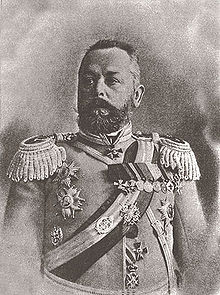
Alexander Samsonov

Alexander Samsonov

Battle of Tannenberg

Battle of Tannenberg


The major problem for the Russian army was incompetent and corrupt officers.  The individual soldier was tough and at least initially willing to fight for his country, despite its oppressive and brutal government, but he was very badly led and constantly short of supplies.  Not only were Russian industry and transportation far less developed than that of her allies and Germany, but selling army supplies was a thriving practice among senior officials and army officers.  (One is perhaps reminded of the current Iraqi army.)  Further complicating any advance into Germany – and vice versa – was the broader Russian railway gauge, which would plague the Wehrmacht in the next war.

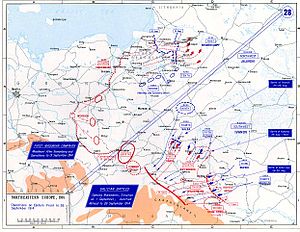
On the other hand, as the Serbian campaigns demonstrate the Austro-Hungarian army was nothing much to write home about either.  On 23 August the Austrian First Army met the Russian Fourth Army near Lublin on the border between Russian Poland and Austrian Galicia (parts of modern Poland and Ukraine), inaugurating the Battle of Galicia.  The Fourth Army was driven back, as was the Fifth Army immediately to the southeast, but unfortunately for old Franz Joseph, in the southernmost sector of the front the Russians actually had an able commander, Aleksei Brusilov, who broke the Austrian advance.  Defeat turned to flight, making the Austrian gains in the north untenable, and when the battle ended on 11 September, the Russian front had advanced a hundred miles to the Carpathian Mountains.  The heart of the Austrian army had been ripped out, and the Germans were forced to send troops to Austria’s defense and thus limit their advance into Russian Poland.
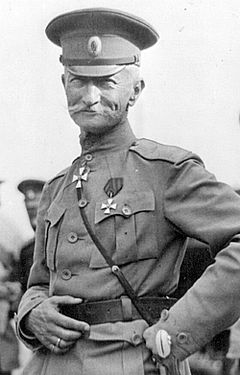
Aleksei Brusilov
Aleksei Brusilov

Battle of Galicia

Battle of Galicia

A month and a half of war in the east demonstrated what everyone had already suspected: the Germans were good and the Austrians and Russians were not.  The Germans had lost 24,000 men, including captured, the Austrians 684,000 and the Russians a 605,000.  But the Russians now occupied Galicia, balancing the disaster in the north and perhaps keeping Nicky on his throne a bit longer.

The Russian supreme command was in fact contemplating an invasion of Silesia, which would expose the flanks of the Germans in the north and the Austrians in the south.  The Germans got wind of this, and Hindenburg, now supreme commander in the east, sent the Ninth Army under August von Mackensen southeast to forestall the invasion.  The Russians countered by ordering the Fifth Army to forget about Silesia and withdraw to the area of Łódź to deal with the threat from von Mackensen, who struck Paul von Rennenkampf’s First Army (yes, he is a Russian) on 11 November.  Thus began the Battle of Łódź, which went on until 6 December, when the Germans finally gave up trying to capture the city.  The Russians then nevertheless moved east towards Warsaw to establish a new defense line, and Rennenkampf, who had already been accused of incompetence at Tannenberg, was canned.  Another 35,000 Germans and 90,000 Russians down the tubes.
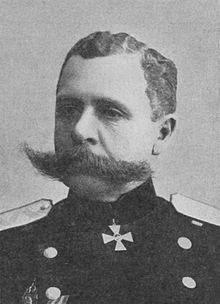
Paul von Rennenkampf
Paul von Rennenkampf

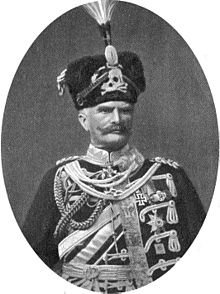
August von Mackensen

August von Mackensen

Battle of Lodz

Battle of Lodz

On 7 February Hindenburg resumed the offensive with a surprise attack in the midst of a snowstorm and drove the Russians back some seventy miles, inflicting heavy casualties and accepting the surrender of an entire Russian corps.  But a Russian counterattack halted the advance, and the Second Battle of the Masurian Lakes ended on 22 February with the Germans down 16,200 men and the Russians 200,000.  Well, one death is a tragedy, 50,000 is a statistic.  More uplifting (if you happened to be a German or an Austrian), on 2 May von Mackensen, now commanding Austrian forces, began an offensive near Gorlice and Tarnów (southeast of Krakow); this was the beginning of a push that would ultimately become known from the Russian point of view as the Great Retreat of 1915.

In other news from the east during the first ten months of the war, on 29 October the weakling Ottoman Empire, seeking to regain territory lost in the Russo-Turkish War of 1877-1878, shelled the Black Sea ports of Sevastopol and Theodosia.  There had been no declaration of war, and the two warships, recently acquired from Germany, were under the command of German officers, who may have acted on their own.  Seeking another front against Russia, the Germans had been putting pressure on Turkey to enter the war and found a willing accomplice in the most powerful man in the Empire, War Minister Ismail Enver, better known as Enver Pasha, who admired the German army.  In any case, Russia declared war on 1 November, promptly followed by Serbia and Montenegro, and before the Turks could negotiate Britain and France also declared war on 5 November.  In response the titular head of government, Sultan Mehmed V, declared war on Britain, France and Russia, and on 14 November the head sky-pilot of the Empire, the Sheikh ul-Islam, issued a series of fatwas that declared this to be a jihad, a holy war against the infidel enemies.  Now the Turks were in on the fun.  Only the Italians were missing.

Sultan Mehmed V
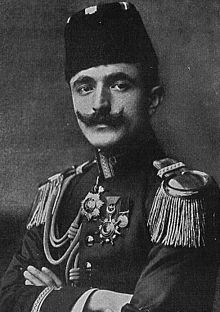
Sultan Mehmed V

Enver Pasha

Enver Pasha

 Der Drei Kaiser Bund
Der Drei Kaiser Bund

Is Everything a Threat to National Security?

I was recently sent a gun camera video clip of an American aircraft, presumably a helicopter, “degrading” (what a wonderful euphemism for slaughtering) a unit of ISIS troops after dark.  The fighters, who seemed confused, were mostly taken out by canon fire from the helicopter, though a few guided weapons were called in, a seemingly pricey way to kill one man.  Though I understand that dehumanizing the enemy is valuable to any military, I am normally uncomfortable with this video game warfare, but not this time.  The victims in this case have in effect dehumanized themselves, making traditional bad guys, like the Huns or Mongols or Waffen SS, look relatively benign.  Evil exists in the world, and this is it.

Guys with small dicks

Guys with small dicks

Consequently, I am delighted to see my country participate in blowing these guys up, even if it means the military will clamor for more money.  After all, we bear some considerable responsibility by taking out Saddam Hussein, who for all that he was a thug did maintain a seemingly stable and secular state.  All we did was leave another thug, this one of the Shia persuasion, and a sham Iraqi army equipped with American weaponry just asking to be stolen.

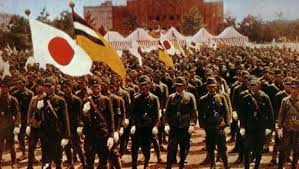
Threat to national security

Threat to national security

Threat to national security

Threat to national security

But is ISIS really a threat to American national security?  They are definitely a threat to Turkey because of its long frontier with Syria and Iraq, and Turkey seems finally to be waking up to the danger and has announced it will respond if ISIS destroys the Suleyman Shah Shrine commemorating the grandfather of the founder of the Ottoman Empire. Oddly enough, though this shrine is in Syria, it is legally part of Turkey and technically would trigger a NATO response if attacked, which of course would involve the US.  They are obviously a threat to Iraq, but it has never been clear to me why this jury-rigged and now collapsing state is a major concern to the security of American citizens.  They could threaten Saudi Arabia and the other Gulf states, which because of oil do involve American interests, but most of these places have serious if small military forces and immense amounts of money.  Lebanon, the new Kurdistan and Jordan are friends and already swamped with refugees, but what they have to with the security of the American homeland is not immediately apparent.

Ottoman tomb in Syria

Ottoman tomb in Syria

ISIS is theoretically a threat to Israeli security, but the opinion of the American Congress notwithstanding, Israel is not the United States and to my mind is an ally of questionable value.  She also has perhaps the strongest military in the region and is clearly willing to employ it, regardless of civilian casualties inflicted on the Arab populations.  The Israelis in fact seem disinterested, knowing that Washington cannot call upon them because of the bad publicity, and Tel Aviv had never shown much concern over Muslims killing one another.  As Prime Minister Netanyahu just demonstrated in a speech to the UN, they have their own interests, Iran and Hamas.  The possibility that Iran might obtain a nuclear weapon and then be so inconceivably stupid as to use it on Israel was clearly a much bigger concern for Bibi.  And while Hamas, an organization midwifed by Israeli security services, is a loathsome group, comparing them to ISIS as he did is like comparing a Brown Bess musket to a Kalashnikov.

Threat to national security

Threat to national security

Threat to national security

Threat to national security

Of course Washington has not claimed that we risk seeing an ISIS expeditionary force landing on American shores; the threat is the export of jihadists from the so-called Caliphate, trained terrorists who will kill Americans.  There is no denying this, but unless they are able to kill large numbers of citizens this would appear a rather expansive definition of “national security.”  Domestic security in the wake of 9/11 is such that it is now extremely unlikely that any attack even remotely close to that scale could take place, and in any case if the deaths of thousands of Americans is a national security question, we have far more compelling issues.  According to the FBI, in a five year period – 2008 to 2012 – 45,105 Americans were murdered with firearms, yet the government seems disinclined to take any real action on this issue.  In the same period 52,793 Americans died from drunk driving, but this is never mentioned as a threat to national security.  Apparently it only counts if some foreign ideology is involved.

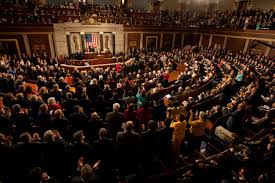
One would suppose that the people who are directly threatened by ISIS, the Turks and sundry Arab states, would be the ones most concerned about stopping these sociopaths, but ancient tribal hostilities prevent that.  Turkey – or at least Recep Erdoğan – would like to see ISIS destroy the Kurds, even though the jihadists are the greater danger and new oil-rich Kurdistan offers an unprecedented opportunity for cooperation.  The Gulf states, medieval kingdoms with 21st century weaponry, are reluctant to attack fellow Sunnis, who are in fact attacking the Alawites (a Shia group) in Damascus, and are afraid of Shiite and non-Arab Iran.  Iran, which has no qualms about killing ISIS Sunnis, is reluctant to cooperate with the Gulf states and especially the United States.  The government in Baghdad seems more interested in maintaining its sectarian-based political power than protecting their rump state, which actually makes them more like the American Congress than their medieval friends.

Threat to national security

Threat to national security

Threat to national security

Threat to national security

Well, ISIS may not be a threat to American national security, but for once my government is bombing people who seriously need killing.  The Taliban are medieval creeps and al-Qaeda are anti-American jerks, but ISIS is truly evil and an offense to civilization.

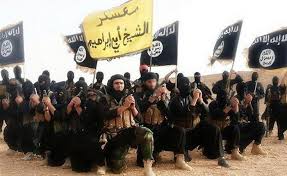
This is ISIS

This is ISIS


I Fought in Iraq and All I got Was This (Bloody) T-Shirt?

On December 12 President Obama and Iraqi Prime Minister Nouri al-Maliki announced the end of the war in Iraq.  Those eight years of war came at a stiff price.  Approximately 4500 American troops were killed, and some 33,000 received significant wounds; how many thousands will suffer psychological problems in the future can only be guessed at.  The war cost taxpayers a trillion dollars, and the expenses continue despite the departure of our military.  The war quickly eliminated the world-wide support for America in the wake of 9/11, fomented more anti-American feelings in the Muslim world and distracted the US from operations against al-Qaeda.

The bill for Iraq is far greater.  Saddam is dead, but so are more than 100,000 (perhaps many more) Iraqis, and 1.6 million are still refugees abroad.  Over one million internal refugees were also created.  What little functioning infrastructure the country possessed before the invasion has been mostly destroyed, and 23% of Iraqis live in utter poverty, earning $2 or less a day.

And what do we all get in return for this massive expenditure by the American and Iraqi people?

It is clear now, as it was to many then, that Saddam was absolutely no threat to anyone except his own people, and rather than “protecting” America the conflict has only exacerbated the terrorist problem and immensely strengthened the position of Iran, beckoning the US into another armed conflict.  That the new democratic Iraq would be a beacon of freedom and hope in the region has not played out, and the present toppling of authoritarian governments in the Arab world owes absolutely nothing to American efforts.

Whether or not Iraq now has a functioning democracy remains to be seen, and in any case the current government is unable to provide even basic services for its people, who are still being blown up on a regular basis.  Unfortunately for the US, Iraq has also failed to become a compliant “ally” and serve American interests in the region.  Quite understandably, the Iraqis refused to continue granting the American forces immunity from Iraqi law and prosecution, which with the war officially ended would go a long way to marking the American military as an occupying force.  Predictably, Obama took credit for removing our troops, though he actually had no say in the matter, and the Republicans, seemingly unaware of the meaning of “national sovereignty,” complained that we were leaving without having finished the job.

It is not even clear if Iraq can succeed as a country, whatever the nature of its government.  The Kurdish north is already on the brink of becoming a separate state and is increasingly under the influence of Turkey.  Iraqi Sunnis are somewhat less than enthusiastic about the Shiite dominated government and its ties to Iran, and Sunni insurgent activity threatens to turn into an outright civil war, especially if the government proves unable to alleviate the miserable conditions in which most Iraqis live.  Being a province carved by the Ottomans out of a multi-ethnic and multi-religious area is hardly a strong foundation for a nation state.

And for all our blood and treasure and newly enhanced imperial reputation?  Iraq, once a bulwark against Iran (remember Rumsfeld shaking hands with Saddam?) is already falling rapidly under Iranian influence.  Only two states in the region have refused to go along with the Arab League and condemn the bloody Syrian government: Iran and Iraq.  Under the guise of a program of reconciliation Baghdad is even releasing prisoners accused or convicted of murdering Americans, and as the economic frosting on this ineptly baked cake, it is primarily non-American companies that are signing up to exploit Iraqi resources, should that ever be possible.  Few outside Washington would consider this a successful foreign policy outcome.

Meanwhile, American diplomatic personnel will be hiding out in the biggest and most heavily fortified embassy on the planet, a target so protected that even American journalists are not allowed to see it.  Bereft of troops, we will be hiring 5000 mercenaries to protect these people, further enhancing our wonderful image in the region.  We get to look like an imperial power without enjoying any of the benefits associated with such a status.

On the other hand, this ill-advised and ineptly conducted war of aggression appears almost sensible compared to our current hemorrhaging of lives and money for an unbelievably corrupt and ineffective government of an area that is even less of a country than the one time Turkish province: Afghanistan.