Stuff from Way Back #34a: We Had to Destroy the Empire to Save It


(This essay follows Stuff from Way Back #33: Roma, We Have a Problem.  A note on Roman names: Romans – at least the elites – traditionally had a base of three names, the praenomen, nomen and cognomen, as in Gaius Julius Caesar.  The praenomen was the personal name, usually abbreviated, and by the time of the Principate there were only about a dozen in common use.  The nomen was the gens or clan name, and the cognomen was originally a modifier of the nomen, but could become hereditary, in which case it indicated the particular family in that clan.  Other cognomina might be added to express some achievement, such as P. Cornelius Scipio Africanus.  This arrangement crumbled during the Anarchy, and in the Dominate nomina [or a modified form of them] were frequently employed in the place of a traditional praenomen.)


Against all odds the Roman Empire had survived the Anarchy, but the Late Empire or Dominate bore little resemblance to the autocracy that Augustus had established three centuries earlier.  Most important, the political stability that characterized most of the history of the Principate was gone forever, washed away by the civil wars of the Anarchy and the corruption of the military.  The Empire was now facing continually growing barbarian pressure on the northern frontiers as the great German migrations to the west and the south got underway, while the effectiveness of the army had plummeted, allowing incursion after incursion into the provinces.  Economically, the Empire was in ruins, as the tax base shrank from devastated farmlands and declining commerce, while the state resources consumed by the army continued to rise.  The Empire had become an unpleasant place in which to live, and it may be assumed that any sense of loyalty to the state, which was now seen as an oppressor, had disappeared.

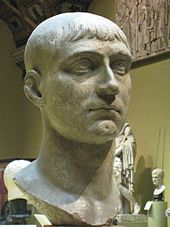
Maximian

Maximian

Diocletian

Diocletian

But Diocletian did bring a measure of stability, and the empire was relatively free of internal strife for the next two decades.  Having assumed the purple in 284, two years later he made another Illyrian, M. Aurelius Valerius Maximianus, his co-ruler, who would look after the west while he took up residence in Nicomedia in the east.  Diocletian had determined that because of internal troubles and barbarian invasions the Empire was now too big for one man to govern, and in 293 he established the Tetrarchy.  Each Augustus appointed a Caesar, Galerius Valerius Maximianus for Diocletian and Flavius Valerius Constantius Chlorus for Maximian, the idea being that each Caesar would succeed his Augustus in an orderly fashion.

In a way the Tetrarchy was a return to Augustus’ original plan for succession – the Princeps would train his successor and associate him in power – but it is doubtful that this complex structure of four rulers could have worked even in the halcyon days of the early Principate.  It certainly did not in the wake of the Anarchy.  The type of man likely to be an effective ruler of the problem-plagued Late Empire was likely also to be ambitious and reluctant to share the ultimate power.  Further, the natural son of an Emperor was not likely to be amused if someone else was named his father’s Caesar.
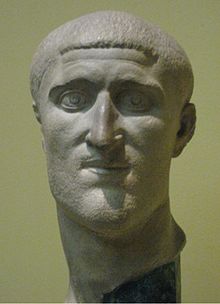
Constantine Chlorus

Constantine Chlorus

Galerius

Galerius

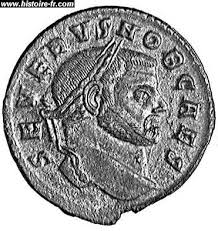
When Diocletian abdicated in 305 and compelled a reluctant Maximian to do the same, the Second Tetrarchy quickly collapsed into a new civil war.  For a variety of reasons Diocletian decided to pass over the sons of Galerius and Chlorus as the new Caesars, naming Flavius Valerius Severus and Galerius Valerius Maximinus Daia.  In 306 Chlorus died after crushing an invasion of Picts in Britain, and while Severus succeeded him as Augustus in Rome, the army elevated Chlorus’ illegitimate son, Flavius Valerius Constantinus, to Augustus, thus opening the floodgates.  Maximian came out of retirement, and he and his son, M. Aurelius Valerius Maxentius, became Augusti in 306, turning out Severus and causing Galerius to invade Italy, unsuccessfully.  Diocletian himself attempted to negotiate a settlement in 308, retiring Maximian again, outlawing Maxentius and naming Valrerius Licinianus Licinius Augustus.  There were now six Augusti: Galerius, Constantine, Maximinus Daia, Maximian, who refused to stay retired, Maxentius, who refused to go quietly, and Licinius.  It was now necessary to have a program to keep track of the players.
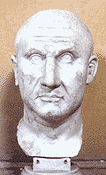
Licinius

Licinius

Maximinus Daia

Maximinus Daia

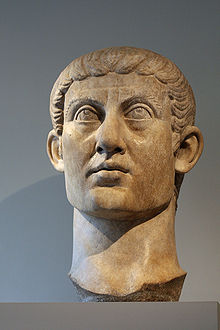
Constantine

Constantine

Maxentius

Maxentius

Severus

Severus

It got simpler.  Maximian was murdered, and in 311 Galerius finally died, removing the major player from the game.  The following year Constantine formed an alliance with Licinius in the east and invaded Italy to take out Maxentius, who was allied to Maximinus Daia.  At the battle of the Milvan Bridge outside Rome, Constantine, a better general with a better though smaller army, crushed Maxentius, having sought the aid of the Christian god by having the Chi Rho (the first two letters of Christos in Greek) painted on his men’s shields.  For the first time a Roman ruler had appealed to the new god.

Chi Rho

Chi Rho

Now there were three, and in 313 Maximinus Daia, who had received no cut of Maxentius’ territory, attacked Licinius, was defeated and died of sickness.  Licinius began to intrigue against Constantine, but in the wake of inconclusive military action they reconciled and in 317 named their sons as their Caesars.  The showdown came in 323, when Constantine chased raiding Goths into Thrace, Licinius’ territory, and the eastern Augustus responded by launching a war, which ended the following year in Licinius’ defeat and later execution.

Constantine was now sole Emperor and would remain so until his death in 337.  During this period he continued and in some cases completed developments that had been underway since the Anarchy and especially since Diocletian.  The exclusion of the civil authorities from involvement in the military, begun in earnest by Gallerius during the Anarchy, was now complete, and the Senate had essentially become little more than a municipal council and a ceremonial and honorary association.  The autocracy had become an absolute despotism, and Constantine ruled by the grace of god.  He adopted the diadem and an oriental style court, replete with ceremonial procedures, titles and orders of preference, and what had originally been an unequal partnership between the Princeps and Senate was now a traditional Near Eastern kingship.
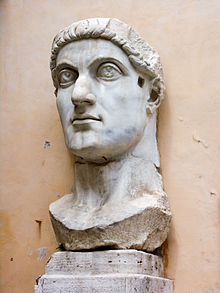
Constantine the Great

Constantine the Great

The Imperial bureaucracy continued its rapid growth, as the state attempted to control every aspect of the lives of the Empire’s inhabitants, and as much as was possible for a pre-industrial society, the Roman Empire became more and more totalitarian.  In order to prevent land from going out of cultivation, farmers were legally tied to their farms, unable to escape the increasingly oppressive taxation.  These bound farmers, the coloni, would form the basis of medieval serfdom.  Occupations, especially farming, were made hereditary, turning the Empire into a vast social prison and creating a highly stratified society, in which inequality was institutionalized in the law.  The elites, state and municipal officials, soldiers and veterans, were the honestiores; virtually all the rest of the population constituted the humiliores, who were subject to more restrictive laws and more brutal punishments.

These arrangements of course seriously injured agricultural productivity and especially commerce, and while Constantine reformed the currency, there simply was not enough revenue to support the military without crushing taxation, which further injured the economy.  The Empire was running out of silver and gold, and Diocletian’s attempt in 301 to freeze prices was, as one might expect, a complete failure.  Constantine had to accept taxes in kind, laying another foundation for medieval society.  Further, the maintenance of the Imperial infrastructure had traditionally relied upon liturgies, the voluntary contributions of the municipal elites, but these men were being now squeezed by the increasing taxation, which compelled the state to make such contributions mandatory.  The result was the deterioration of the middle income class, especially businessmen, who were at the heart of the non-agricultural economy, and it became harder and harder to find individuals willing to serve in the municipal offices.

Major changes were taking place in the military sphere.  Constantine created a Field Army that could be rushed to any crisis in the Empire, further emphasizing cavalry, which formed the core of the new army, while for the first time in Roman history infantry took second place.  The prominence of horse was not just a response to the Persians, who had excellent cavalry, but also because of its mobility in dealing with threats.  Meanwhile, the frontiers were increasingly dependent upon fortifications and border troops that were little more than local poorly trained militias.  From the point defense of the Principate and the elastic defense of the Anarchy the Empire moved to a defense in depth, in which multiple lines of fortified points would slow any barbarian invasion, providing the Field Army the time to move to confront the danger.  Finally, more and more barbarians were being recruited into the military, especially the frontier units, and entire tribes were being given land within the Empire in return for their military services.  This development was to a great degree a response to the declining population of the Empire, who were desperately needed in agriculture, but it nevertheless boded ill for the future.
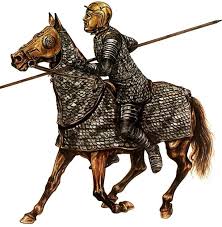
Late Roman "Heavy" Cavalry

Late Roman “Heavy” Cavalry

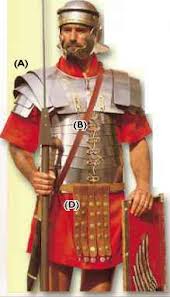
Traditional Roman Infantry
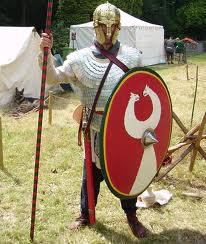
Traditional Roman Infantry

Late Roman Infantry

Late Roman Infantry

Regarding that future, two of Constantine’s achievements were momentous enough to mark major turning points in Roman history – and that of the West in general.  Because of the Persian threat and the fact that the major barbarian pressure was along the lower Danube, he perceived a need for a “capital” in the east, and consequently the ancient Greek city of Byzantium on the Bosporus was rebuilt in 324 as Constantinople, the “city of Constantine.”  Constantine could hardly know it, of course, but the existence of a “New Rome” would certainly help facilitate the later separation of the Empire into two states and the emergence of the Byzantine Empire, which would carry on a Greek version of the Roman tradition for another millennium.

The other was even more world shaking, the establishment of Christianity as the favored and then official religion of the Empire.  I have tended to be cynical about Constantine’s conversion (which took place on his death bed, a not uncommon occurrence), but the more I look into this (I have always found studying the Late Empire depressing.) the more I think his commitment to the Church was genuine.  Most of the army was after all polytheist, and it is estimated that by the fourth century Christians only comprised about ten percent of the population, a weak base upon which to establish a new imperial policy simply for political reasons.  The stories of visions in the sky and dreams may be discounted, but it may well be that the success of his somewhat desperate invasion of Italy and the victory at the Milvan Bridge convinced him of the power of the Christian god.  His various efforts to preserve the unity of the religion, particularly the First Council of Nicaea in 325, which officially defined the Church’s understanding of the Trinity, strongly suggests a man who is personally concerned about the faith.

Whatever his motives, his conversion resulted in every succeeding Emperor but one being Christian, and Christianity thus rapidly became identified with the state and emerged as the official religion under Theodosius (379-395).  Constantine himself was generally respectful of the rights of non-Christians, but given the exclusive nature of monotheism and growing power of the Church, it was only inevitable that future rulers would become more repressive.  The persecution of the pagani would in fact begin under Constantine’s sons.  (See also Stuff from Way Back #14: The New God on the Block and Stuff from Way Back #15: These Christians Are Really Annoying.)

Constantine gained the appellation “the Great,” certainly deserved, for like Augustus he was one of the few individuals in history who single-handedly and dramatically affected the course of events.


285-337 Dominate I

284-305 C. Aurelius Valerius Diocletianus (abdicated)

286-305 M. Aurelius Valerius Maximianus (abdicated)

286 Peasant revolt in Gaul

297-298 Persian War

301 Edict on Prices

303-304 Edicts against Christians

305-306 Flavius Valerius Constantius Chlorus

305-311 Galerius Valerius Maximianus 

306-337 Flavius Valerius Constantinus 

306-307 Flavius Valerus Severus 

306-308 M. Aurelius Valerius Maximianus

                           M. Aurelius Valerius Maxentius 

308-324 Valerius Licinianus Licinius 

310-313 Galerius Valerius Maximinus Daia 

                   312 Battle of the Milvan Bridge

313 Edict of Milan/Toleration

324-330 Foundation of Constantinople

325 First Council of Nicaea; Constantine adopts the diadem


A World War I Christmas from the Winter War

SAMSUNG DIGIMAX A503


For those of you who might be into such things: this is a Model 1910 Maxim heavy machine gun used by the Russian Imperial Army and subsequently by the Red Army until it was replaced in 1943.  The gun is water cooled (hence the metal tube surrounding the barrel), takes the 7.62x54mmR rifle cartridge used in the Imperial/Soviet Mosin-Nagant service rifle and is affixed to a wheeled Sokolov mount.  The weapon generally also has a shield mounted between the barrel and the receiver, but I have been unable to get the damned thing on.  This example was probably manufactured in the twenties or thirties and was captured by the Finns during either the Winter War (1939-1940) or the Continuation War (1941-1944).  The Continuation War was of course the Finnish participation in the German invasion of the USSR in 1941; the Winter War is more obscure.

In 1939 the Soviets demanded territory from Finland, most importantly, the Karelian Peninsula and the eastern part of South Karelia, which they felt threatened Leningrad.  The Finns, who would lose their border defenses and a substantial chunk of their economy, refused, and in November 1939 the Red Army invaded, expecting an easy victory.  That was not to be.  The Red Army had been devastated by Stalin’s purge of the officer corps, and the Finns knew the terrain and fighting conditions.  I suspect the origins of the Olympic Biathelon are found in the  winter War: ski through the woods, shoot a Russian, ski through the woods, shoot another Russian.  The Soviets suffered huge casualties (convincing Hitler the Red Army was weaker than it actually was), but in the end overwhelmed the Finns with their superior manpower and got what they had demanded.  The costly resistance of Finland probably contributed to Stalin’s decision not to attempt to incorporate the country into the USSR after the defeat of Germany.

The Finns captured large amounts of Soviet equipment, including the Maxim pictured above, and thus this weapon has traveled from the snows of Karelia to the sands of New Mexico.

Finns with a captured Soviet Maxim

Finns with a captured Soviet Maxim

Why There is Stuff from Way Back

I have been posting snippets of history on this site, which is hardly surprising given that I am in fact an historian (though a poor academic).  It occurs to me that I should say a few things about history, to wit, what exactly is it and more important, why bother with it?  After all, according to Henry Ford, a clever if nasty man, “History is bunk.”  And several generations of freshmen students in my Western Civilization classes clearly had no idea why they should be wasting their time on something that was hardly likely to get them a job or a date.
History is bunk.

History is bunk.

Obviously, if you read this blog, you have presumably already found good reasons to bother with this history, but read on if you have ever wondered about the need to study history and want the historian’s pitch.  Curiosity and interest likely prompted you to tune in to my pieces, and these are perfectly valid motivations.  It was curiosity and interest that drew me to the study of ancient history, and I actually made a living off this stuff (which means of course that I have a vested interest in selling you the goods).  But there must be more to it than that, you think, or else this guy and people like him would not have jobs.  True enough.  There is something more, and that something more involves the search for truth.


History, like fiction, is interesting and amusing because it is vicarious experience, filled with sex and violence, and it is as vicarious experience that history is ultimately valuable to us.  Experience is how we learn.  Through experience we add to the stock of knowledge upon which we base our judgments and decisions.  The child sticks his hand in the fire and has an exciting experience, from which he may conclude certain things about the nature of fire and its relationship to human flesh.  Learning is the natural issue of experience, of finding out what’s behind Door No. 1, Door No. 2 and Door No. 3.


But our direct experience of the world is sorely limited by the brief span of our lives and the narrowness of our physical and cultural environments.  Three score and ten is not a hell of a lot of time to do that many things, especially when you must spend a large part of it making a living, and until recently most of the human race never got beyond a few miles of their birthplace.  Even today most people never directly experience a seriously different culture, and as far as I know no one has ever personally experienced a different time.


Here is where the study of history comes in.  It allows us to break out of these limits.  In the words of Lord Acton “It liberates us from the tyranny of our environment.”  Through history we can step outside of our time and place and learn indirectly, through the experiences of other peoples in other times and other places.  This is hardly something strange; most of our learning is founded on vicarious experience.  The child generally avoids the painful encounter with fire because his mother presents him with the experience indirectly by describing what happens.

Lord Acton

Lord Acton

Fine, but how valid are these experiences to twenty-first century man, you may be wondering.  After all, the Greeks did not have to worry about nuclear weapons or the price of gas or global warming.  Or to put it in the words so feared by academics in the sixties: “Is this stuff relevant?”


It sure is.  Because while the shape of society and its technology and values may change, men and women remain men and women.  The basic motivations and emotions of human beings are constants, and ancient Greeks and medieval Japanese and modern Americans are all driven by essentially the same needs, desires and fears.  The Athenian man in the street basically wanted the same things as his American counterpart – a good job, security for himself and his family, the respect of his fellows and so on.  The details may change, but the basics do not.  We are all, whatever time and place we may be born into, faced with a similar set of problems, questions that are an immutable part of the human condition.  How do I stay alive and provide for my offspring?  How do I order my society and relate to my fellow humans?  How do I relate to the universe as a whole?  Every society in the history of the planet has had to find answers to these questions.


There are also the unchanging impersonal forces of history, the general social and economic laws that have held true throughout time.  For example, you can’t fool Mother Marketplace: debase your currency and inflation will result.  This will happen whether the context is Late Imperial Rome or contemporary America, whether the mechanism is the reduction of precious metal in the coins or spending financed by big deficits.  But such forces are in a sense “human,” since they do not exist apart from human beings and thus by their constancy demonstrate the constancy of humans.  Inflation results because the man selling his goods wants his due or more, a human trait that has never changed and that has in our century contributed to the collapse of the Marxist societies.


All societies, no matter how seemingly bizarre, have a basic relevance to us, but some are more meaningful than others, and Greece may be counted among these.  Why the Greeks in particular are an important source of vicarious experience and a valid field of study should be fairly obvious.  The roots of our western civilization lie deep in the society of ancient Greece, which has contributed countless important ideas and institutions to the development of our society.  Indeed, the most important and distinctive elements of western civilization were born in Greece:  constitutionalism, rationalism, humanism, the idea of the individual.


The result of all this vicarious experience picked up through history?  Very simply, a better understanding of man and society and thus of ourselves and our society.  The past can illustrate the present (and the reverse).  Of course history cannot supply any pat solutions or blueprints for the future, but the more you know about other societies, the better you can understand your own, and the better you understand your own, the greater the chance of solving its problems and wisely determining its policies.  Unfortunately, human beings have not shown themselves to be very good at this sort of thing.  We seem to be doomed to make the same mistakes and do the same silly things over and over.


Part of the problem, as Plato discerned, is that the best and most educated elements in society are rarely in positions of power, whatever the nature of the state in question.  This includes democracy, as the government of the United States vividly illustrates: an uneducated and ignorant electorate will tend to elect ignorant people.  This America is now doing in a way unparalleled in our history.  On the other hand, after three decades in the Alice-in-Wonderland environment of the American university I am not sure I want to see academics run my society.  In fact I often find it hard to see why successful revolutionaries bother to shoot the intellectuals.


So, history is important.  But what exactly is it?  Most broadly and simply it is everything that has happened, all the facts.  This is obviously an unworkable definition, however, since it includes an overwhelming amount of totally trivial and unimportant information.  The fact that the President brushed his teeth this morning is technically history, but who cares?  Now, if in the course of that dental routine the tooth paste tube exploded, removing him from office, we could all agree that we had an historical event on our hands.  Clearly, it is necessary to consider the impact of the event upon its environment in order to determine its historical importance.  What kind of ripple does it produce in the space-time continuum?


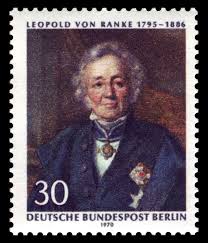
Enter the historian.  It is his task to weigh the facts and consider their importance in the scheme of things.  It is not only his task, but also something he can hardly avoid.  In the nineteenth century there emerged in reaction to the romantic excesses of the previous age a school of “scientific” history, which maintained that the historian, like the scientist, must detach himself from his work and be totally objective.  No more coloring the facts to fit or create your own vision of the past, just the straight poop.  The goal of the historian was to record history, in the words of Leopold Ranke, “wie es eigentlich gewesen ist” – “as it actually was.”

Leopold von Ranke

Leopold von Ranke

Well, objectivity is an admirable goal, but total objectivity is impossible.  The simple selection of a topic and relevant facts is an injection of oneself into the material, a statement that you consider that bit of history important enough to examine.  If one wanted to write a totally “objective” history of Greece, it would need to run to hundreds of volumes in order to accommodate all the information we have on the Greeks.  One has to pick and choose to produce an history of any meaning or utility, and that involves a measure of subjectivity: you are deciding what information is important enough to include.  Further, the mere listing of events, the bare recording of data, is really the work of a chronicler, not an historian.  (And it is boring, which I suspect is why the average high school student sees no point in studying history.)  The historian’s job requires a dose of subjectivity.


Now, I am not espousing the outright distortion of facts and the Joe Stalin school of history.  The data must be presented as accurately and objectively as possible, but there must be something more.  The historian must make some attempt at interpretation of his material, at understanding what he records.  There must be an evaluation of events, an examination of causes, a delineation of trends and so forth; this is what makes Thucydides the only truly modern historian in antiquity.  History must be something more than recording what happened; it must be, as E.H. Carr puts it, “an interaction between the historian and his facts, an unending dialogue between the present and the past.”  And that is, I hope, what you have been receiving in my posts.

E.H. Carr

E.H. Carr


Stuff from Way Back #29b: Roma Aeterna

The last and most critical reason depends upon how one understands life in the Roman Empire, and there is much we do not know about life in the rural areas of the provinces. I am, however, convinced that it was basically good, convinced especially by the belief that the Empire could not have been generally so stable and last so long were its inhabitants generally oppressed. This of course comes close to making a circular argument, but the evidence appears to support the contention that at least until the Anarchy life in the Empire for the average free person was relatively comfortable or at least acceptable. Imperial structures based entirely on fear are simply not stable over the longer run – consider the Assyrian Empire.

 
Strong evidence that the Roman Empire was not such a bad place to live lies in the fact that apart from the Jews the Romans essentially did not have to concern themselves with the revolt of subject peoples. This strikes me as an impossibility were the Empire held together only by fear. There were of course revolts, which were suppressed with great brutality, but they all occur in areas that were recently or incompletely pacified: Gaul in the 50s BC, Illyricum in AD 6, Germany in AD 9, Boudicca in AD 59, Civilis in AD 69, Mesopotamia in AD 116. Once an area had been controlled for perhaps a generation Roman rule was accepted.

 
The one exception was the Jews, who undertook two disastrous revolts against Rome, the results of which were to forever change (and improve) the nature of Judaism by ridding the religion of the temple and all the rituals and sacrifices characteristic of polytheism and allowing it to become more introspective and spiritual. The Jews were a special case inasmuch as their monotheism prevented them from being assimilated into the polytheist Greco-Roman culture of the Empire as were all the other subject peoples. Understanding this, the Romans granted the Jews special exemptions from such things as any obligation to the imperial cult and allowed them more local autonomy, but friction was impossible to avoid. It was not just the religion, which affected every aspect of their society, but also the fact that this religion was inextricably entwined with the idea of a national state, given them by god. This was one thing Rome could not grant, given the strategic importance of Syria-Palestine.

It didn't work out

It didn’t work out

Generally Roman rule appears to have been accepted, certainly once the generation of the conquest had passed. The provincials, a least in the towns and cities, were easily assimilated and ultimately Romanized. The highly urbanized and Hellenized east fit readily into the urban Greco-Roman culture of the Empire; though Latin was the official language, Greek was the real lingua franca of the eastern provinces. In the west Roman civilization was simply at a much higher level of development than that of the Celtic and German tribes and naturally dominated, once again at least in the municipalities.

 
I believe that up until the Anarchy Rome gave more than she took. She obviously robbed the provincials of their nominal independence, but for many, especially in the Greek east, this was meaningless since they had already been under the control of someone else. Self-determination for the Greek states had essentially disappeared with the conquests of Alexander, but Rome had no problem allowing the Greeks and everyone else to run their own cities and communities. In fact, she had little choice but to allow a great deal of local autonomy, since administering the Empire at the grassroots level was beyond the manpower and financial resources of the state. Rome followed a traditional imperial pattern by making alliances with the local elites and drawing upon their experience by allowing them to govern locally under the auspices of the Roman officials at the province level. Such had the additional benefit of shrinking the imperial presence in the lives of the Empire’s subjects.

 
Rome of course also collected taxes. There is a great deal of dispute over what the tax burden was like for the average inhabitant of the Empire, but my estimation is that from the end of the Republic to the Anarchy that burden was not particularly onerous – in general. The civil wars in the first century BC saw the financial rape of the wealthy eastern provinces, but the return to stability and the systemization of provincial administration and tax collection seems to have produced a tolerable level of taxation. In any case, the Empire certainly prospered in the next two and a half centuries, suggesting relatively comfortable or at least livable economic circumstances for most inhabitants. With the Anarchy this changes rapidly, as continual civil war and barbarian invasion drives the government to extremes of revenue collection, which in turn begins to strangle the productive classes of the Empire.
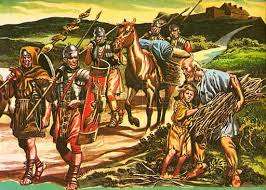
In return the imperial subject received a number of things, the most important of which was peace and security. We tend to underestimate the value of peace because no wars have rumbled through the United States for a century and a half and we are used to it. For most human beings decades, let alone centuries, of peace is a highly compelling commodity. It is clear in the modern world that most people, even in places like America, would gladly trade some of their freedom and civil rights for security and comfort. So, that Gaul who fought against Caesar probably hated Rome, but his grandson would likely think more about the eight legions on the Rhine that prevented the Germans from trashing his farm every summer.

Better than Germans

Better than Germans

The Empire meant more uniform laws and more efficient mechanisms of justice. This is not to say that the average person was guaranteed justice – as today, money and social standing played a large role – but he certainly had a better shot at it. There were material benefits of course. Those military roads that knitted the Empire together could be used by anyone, dramatically enhancing communications and consequently commerce. In fact, take an area the size of the Roman Empire and guarantee more or less continuous peace for a couple of centuries, and the economy can hardly fail to prosper, assuming reasonable levels of taxation.

 
But far more important, second only to peace, was that the Roman Empire was an open society and became more so as it aged. Rome exported Romanitas, that is, her culture and language, though not through any state directed policy. In the east Romanitas dovetailed perfectly with the Hellenism that had helped shape it, while in the west it naturally overwhelmed the less sophisticated native cultures, at least in the municipalities, which were focal points of Romanitas. Speak Latin and act like a Roman, and few will worry about your Celtic blood.

 
Even the once precious citizenship was available to non-Romans. By the time of the Principate citizenship was politically meaningless on the national level, but municipal politics remained vibrant, and in any case the citizenship brought enhanced social status and some economic advantages. During the Republic, Rome was loathe to extend citizenship to non-Romans – the Italian allies had to revolt to get it – but this hesitation broke down rapidly with the advent of the autocracy. In AD 212 the emperor Caracalla granted the Roman citizenship to virtually every free male in the Empire. Now, he did it as a way to raise more revenues, and being a Roman citizen pretty much lost all its value when everyone was one, but the act is symbolic of the character of the Empire. Henceforth, a Roman who could trace his ancestry back to the early Republic had the same legal status as someone whose ancestors had painted themselves blue and fought Caesar. The conquerors had lost their special status in an increasingly cosmopolitan world. This points the way to the Late Empire, when Italy will simply be another set of provinces.

 
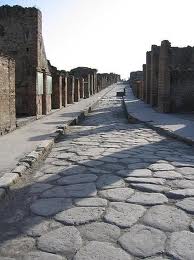
The city was one of the two primary mechanisms for the Romanizing of the Empire. They were the bastions of Romanitas, settled originally by Italians and bringing the trappings of Roman civilization to the provinces. And Rome had an unofficial policy of encouraging urbanization: the more urbanized a province was the more economically active it was and the easier it was to secure. Cities and towns of course also helped spread Romanitas, and they provided higher quality recruits for the provincial military units, who, incidentally, received the citizenship upon discharge.

A nice place to raise a family

A nice place to raise a family

The other major Romanizing element was the army, an irony considering that one rarely sees soldiers as a civilizing force. But half the Roman military establishment was composed of the provincial auxiliaries, for whom the army was a factory creating new Romans. One was not going to pick up the finer points of Roman culture in a legionary camp on the Danube, but the recruit learned basic Latin, the essentials of being Roman and came to think of himself as a Roman. It is estimated that during the first two centuries of the Principate the auxiliaries supplied a stream of about 15,000 Romanized provincials a year.

The Empire wants you!

The Empire wants you!

There was a two-way street connecting Rome to the provinces. As she exported Romanitas, she was also importing provincial talent, products of the Romanizing of the Empire. These were people whose bloodlines were not at all Italian but who did not for a minute consider themselves anything other than Roman. The emperors Trajan and Hadrian came originally from Spain, completely Roman but descended at least in part from Iberians. The emperor Septimius Severus hailed from North Africa, and during the Anarchy emperors came all over the Empire.

 
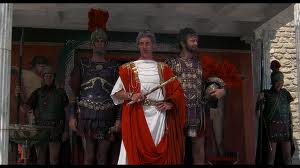
Despite Monty Python’s Life of Brian (the best and truest film ever made about Rome) most people think of the Roman Empire in negative terms – slaughtering Gauls, scattering Jews, oppressing Christians – but to my mind the Empire was perhaps the finest imperial structure ever, which accounts in part for its longevity. This was an incredibly cosmopolitan entity, a rare and seemingly successful multicultural state. The British Empire turned subjects into quasi-Englishmen, but Britain never relinquished its status as imperial master; one was not about to find an African or Indian in Parliament. Rome civilized western Europe and did it without the snottiness and hypocrisy of the British.

Welease Bwian!

Welease Bwian!

What have the Romans ever done for us?” Plenty.

American Exceptionalism #2: College Athletics

Other countries of course have intercollegiate athletics, but nowhere are they as popular, important and corrupting as in the United States.  It is not at all clear how athletics became so ensconced in the American university, but certainly a major factor is the fact that American schools are essentially businesses.  Even state institutions, which receive part of their funding from the state government, are dependent upon tuition and donations, and there is a belief that a high profile sports program will attract more students and contributions.  That the average student is moved by this is very questionable, but alumni donors are clearly influenced by athletic success.  In fact, to many in the community the university is nothing more than its football and basketball teams.  Further, because of television revenues, successful football and basketball programs can earn huge amounts of money, particularly in the post-season.  In 2013 March Madness, the college basketball playoffs, earned $1.15 billion in ad revenue, and $200 million was divided up among the participating schools.  And the general economic impact is mind boggling: it is estimated that the 2014 March Madness generated $13 billion in revenues.


The National Football League and the National Basketball Association are also driving forces, since it is the universities that feed new players into the professional teams.  The other major American sport, baseball, also draws players, but college level baseball is virtually a minor sport compared to football and basketball, and professional baseball has a system of minor league teams as a feeder system.  For the NFL and the NBA American universities are the minor leagues, the farm clubs, and they cost the professional teams nothing.  They cost the schools a lot.

The real face of the American university

The real face of the American university

Basketball and especially football programs are expensive.  Equipment, travel and facility costs are huge, and because of their popularity, even in the case of low profile and losing teams, there is constant pressure to upgrade those facilities.  Then there are the coaches, who are becoming more and more expensive, often regardless of success.   Consider the state schools.  Last year the highest paid state employee in 47 of the 50 states was with either a football or a basketball coach.  At my former institution, the University of New Mexico, a low quality school in a very poor state, the 2014 base salary (not including bonuses and perks) of the basketball coach, Craig Neal, is roughly $750,000.  The football coach for 2009 and 2010, Mike Locksley, also earned $750,000 a year and won exactly two games.  He was fired early in the 2011 season, despite the huge buyouts that are typically part of coaching contracts.  Coincidentally, as a successful faculty member for thirty-one years, I earned a grand total of approximately $750,000.


Very few schools, even in the high-profile conferences, earn a profit from athletics, and those that do pump it back into their athletic programs.  Meanwhile, the vast majority of college football and basketball programs do not earn enough revenue to even support themselves, and since the money spent on minor sports – and to a degree women’s sports – is miniscule, those dollars must come from the general fund of the university.  This is one part of the corrupting influence.  Resources that would have been used in support of what one might suppose is the essential mission of the university, education, are drained off by football and basketball.  And this is ultimately to the benefit the multi-billion dollar NFL and NBA, who contribute absolutely nothing.  Incidentally, while the thirty-two teams in the NFL are taxpaying businesses, the NFL itself is a non-profit tax exempt organization, yet one that paid commissioner Roger Goodell $44.2 million.


Because American schools require students to pay tuition and sundry fees, promising “student” athletes can be paid with scholarships, which represent considerable sums, given the skyrocketing cost to attend an American university, especially the private institutions.  Adding equipment, travel and other expenses dramatically raises the cost to the school.  Consider these expenditures in the six most important football conferences: the cost per student is $10,000 to $20,000; the cost per athlete is $42,000 to $164,000.  And insult is added to injury inasmuch as most of the “student” athletes are students in name only, only going through the motions of attending classes and supported by teams of personal tutors.  Football and basketball stars also get preferential treatment, often engaging in behaviors that would get actual students thrown out of the institution.  One frequently hears coaches explaining such things as shoplifting and drunken driving with phrases such as “blowing off steam,” as if outright criminality was normal for a twenty year old.


Then there are the athletes themselves, who are exploited by the universities to a degree not seen since the early days of the industrial revolution.  They do get a free ride at increasingly expensive schools, but inasmuch as very few acquire a real education (the graduation rate for football and basketball players is inevitably well below that of students and frequently below 50%) this is a benefit of questionable value.  Meanwhile, they are spending huge amounts of their time earning money for their institutions, most particularly to pay the generally fat salaries of athletic personnel, especially coaches, who may be making in one year more money than most of them will see in a lifetime.  Playing for an NFL or NBA team of course means earning millions, but only a tiny percentage of college players will be drafted into the professional ranks.  It is estimated that the average market value of top level college football and basketball players is well over $100,000, which means the schools are getting an incredible deal.  Further, with the merchandising of such things as jerseys a university can make huge amounts of money off an individual player, who is barred from receiving any of it.


The universities are obviously quite pleased with the system and have resisted all attempts to provide actual compensation to their athletes, insisting that they are not workers but students.  In fact they are workers, employed in programs that can generate millions in revenues and are every bit as professional as the teams they aspire to join.  The University of Alabama football team, for example, is considered to have a market value greater than any of the teams in the National Hockey League.  And the National Collegiate Athletic Association is losing its grip, especially in football, as schools are acting on their own to rearrange conferences in order generate more money.

Alabama - the most important school in America

Alabama – the most important school in America


The whole sham edifice of college athletics is beginning to crumble, however.  Last month the National Labor Relations Board agreed with football players at Northwestern University that they are indeed employees and entitled to engage in collective bargaining.  This decision applies only to private schools, but state schools are almost certain to follow, particularly since the major football powers are state institutions, and the issue may well go to the Supreme Court.  But while this development may clear away the obvious nonsense of amateur athletics and student athletes, it is likely to only further injure the American university.  Football and basketball will become an even more important facet of the university and suck up even more resources, as schools compete for good players by offering them more money.


College sports may have once had some vague relationship to higher education – sportsmanship and all that – but that is gone forever.  In an institution that is already a business, unlike higher education in the rest of the industrial democracies, sports have become another and growing aspect of that business, one that has absolutely nothing to do with education.  The American university is already pricing itself beyond the reach of most young Americans, supporting ever larger and more expensive administrative structures, and football and basketball are another growing and irrelevant drain on resources.  On the other hand, the American public school system is failing so dramatically that perhaps we no longer need higher education.


Stuff from Way Back #28: Hey, Buddy, Can You Spare a Myth?

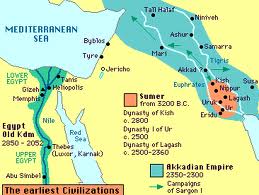
The early parts of the Biblical book of Genesis involve a great deal of water, which might seem odd in the mythic tradition of a society that emerged and evolved in the relatively arid environs of Palestine. There is of course the Mediterranean Sea, but the land itself is very dry, depending for the most part on rainfall for agriculture. The local rivers are mere rivulets compared to the Tigris and Euphrates and the Nile, which river systems witnessed the birth of the first urban civilizations, Sumer and Old Kingdom Egypt. Yet the creation story in Genesis begins with a watery chaos, and later the first human society is destroyed in a world-wide flood, a somewhat unlikely proposition in a land that experienced only the very ephemeral flash floods common to desert regions. Such stories would make much more sense in the hydraulic societies of Mesopotamia and Egypt.


And indeed in the creation myths of these areas the emergence of the familiar universe involved aquatic beginnings. For the Egyptians the process was peaceful, reflecting the confidence of a culture whose world-view was shaped by an isolated, secure, bountiful and essentially unchanging environment. The primeval hill arose from the waters, and there Atum (or Ptah), a self-created god, generated other deities by spitting out or ejaculating them or in a later more sophisticated account simply speaking their names. They in turn produced more gods and ultimately men in an ordered world without end.

Atum

Atum

The Sumerians, on the other hand, lived in a far less hospitable environment: the Tigris and the Euphrates, unlike the Nile, were wild unpredictable rivers, there were extremes of weather and life was very insecure because of the constant warfare among the city-states and the periodic incursions of barbarians. Consequently, in their view (and that of subsequent societies in the region) creation was a struggle, and the forces of order under Enlil (later Marduk) had to wage an epic battle against Tiamat, the chaotic salt waters. Further, creation was not necessarily permanent and could collapse back into chaos, just as the Sumero-Babylonian societies were continually threatened with natural and man-made catastrophe.

Water world

Sumer


Enlil

Enlil

The Sumero-Babylonian tradition also features a global flood, a tale so ubiquitous that some actually hold the utterly nonsensical idea that there was indeed a planetary deluge. Southern Iraq, the location of Sumer, was frequently flooded by the Tigris and Euphrates overflowing their banks and the sea driven in by storms, natural disasters that early on gave rise to the tradition of a universal flood. Significantly, the Egyptians did not produce such a story, since while the Nile did flood, it did so on a regular annual basis, rejuvenating the farmland rather than creating havoc. Sumer was a land of natural and human conflict; Egypt was not.


Here then is the source of all that Biblical water. With the rise of empires, such as the Babylonian and Assyrian, communications between the Land of the Two Rivers and Syria and Palestine on the Mediterranean coast were greatly enhanced, and along with goods and people ideas and tales traveled eat and west. The story of Abraham coming from Ur, the most important of the Sumerian cities, is a reflection of this. As the Yahwists, the future Hebrews, absorbed Canaanite groups, many of the local traditions of these peoples were woven into the evolving tapestry of early Hebrew history. Very probably a group that had come from the east preserved a memory of its origins, and the birthplace of Abraham, himself a local cult figure from Hebron, was transferred to Ur. Thus the watery story from the Sumero-Babylonian creation epic, Enuma elish, traveled west to become, with many alterations, part of the mythic tradition of a distinctly non-watery people.


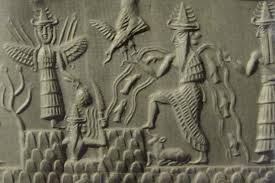
So also did the flood story make its way to the Hebrews. The tale is most fully recounted in the epic of Gilgamesh, the tablets of which date from the reign of the Assyrian king Ashurbanipal in the seventh century BC, but there is a Sumerian version from about 1700 BC, and it undoubtedly draws upon even earlier accounts. Long ago the gods sent a flood to destroy mankind, but the god Ea (Enki) took pity and warned Utnapishtim (Ziusudra in the Sumerian version) of Shuruppak to build a huge boat. He did so, and when the flood came, he boarded with his family and clan and “the beasts and the birds.” But the gods relented and the deluge ended, and the ark came to rest on Mt. Nimush. Utnapishtim released a “watch-bird,” which returned, then a swallow, which also returned, and finally a raven, which did not. Humanity was saved, and Utnapishtim was given the gift of eternal life.


Utnapishtim

Utnapishtim

Ea/Enki

Ea/Enki

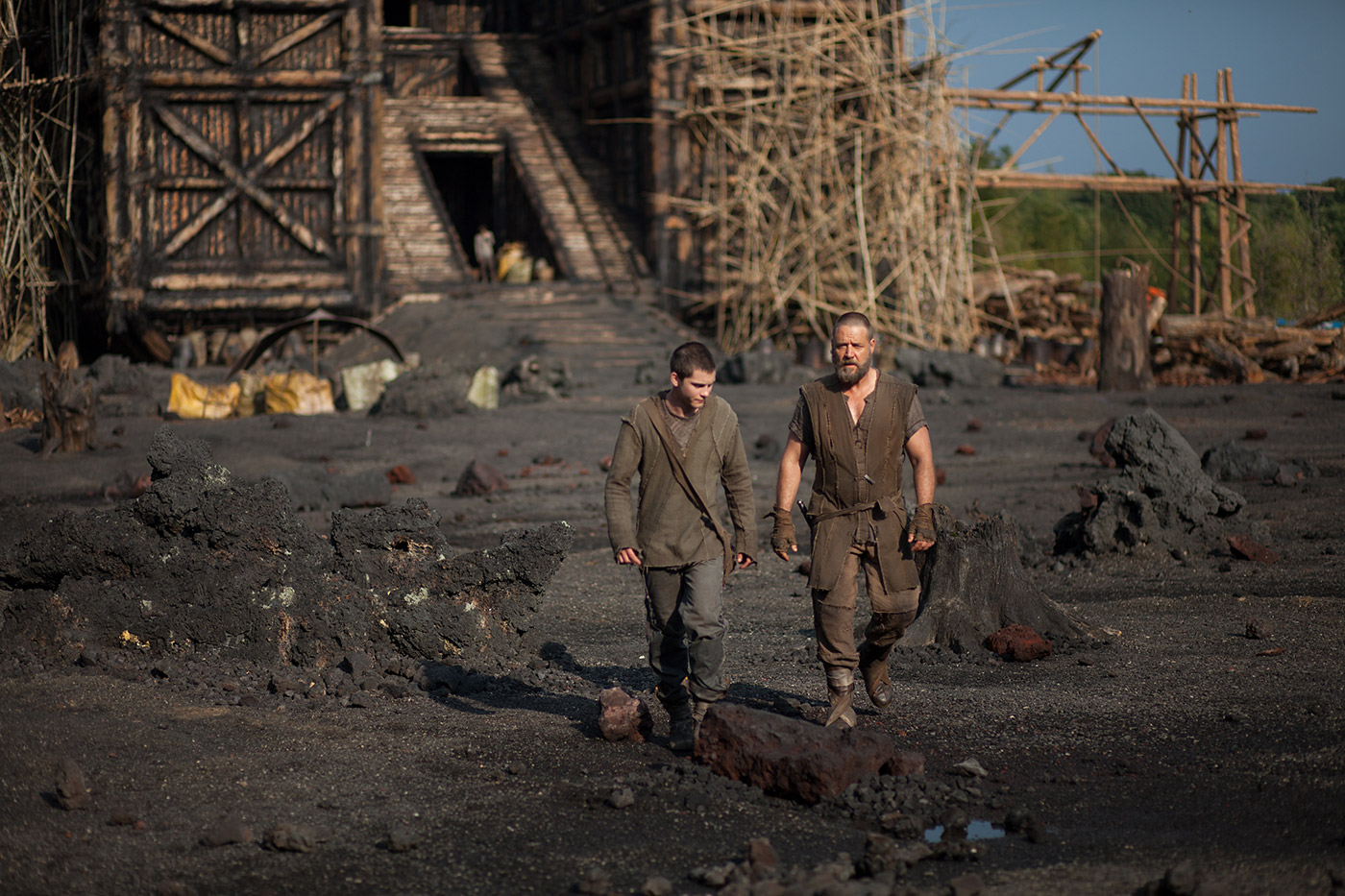
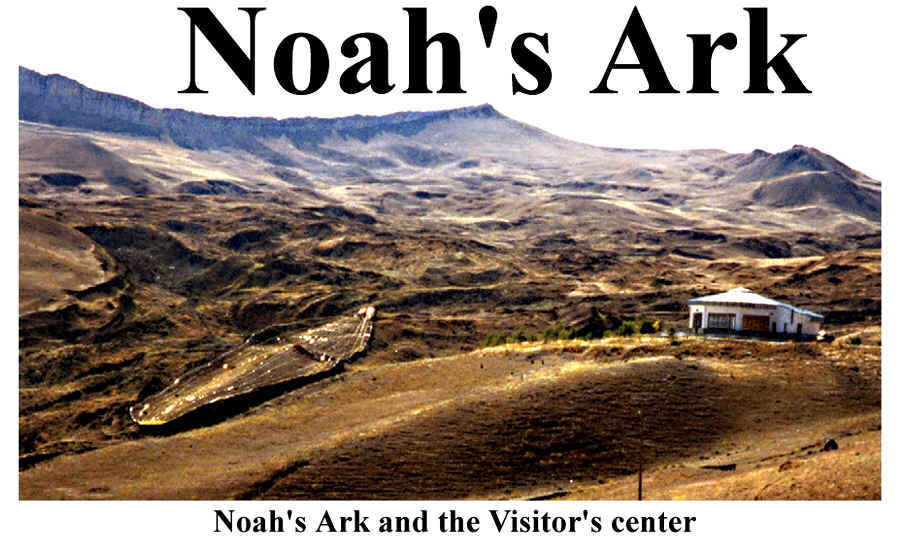
And so a group of people in Palestine, who would never have seen any real flood, came to accept a universal deluge as part of their mythic history. That oral tradition was ultimately recorded and became part of the Hebrew testament, later accepted as valid by Christianity and Islam. As a result for almost two millennia half the population of the planet believed in the literal truth of a story created by a “pagan” people they had never heard of and would despise as unbelievers if they had. Even today there are those who ignore the overwhelming and obvious evidence of science, Biblical analysis and common sense and insist on the historicity of a flood, diligently searching the mountainous interior of Anatolia for traces of the ark of Ziusudra/Utnapishtim/Noah.

Rare photo of Noah

Rare photo of Noah

A sucker born every minute

A sucker born every minute

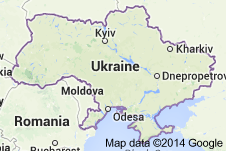
If You Had the Luck of Ukraine, You’d Wish you Were Russian Instead

In 1938 Adolf Hitler prepared to send troops into the Sudentenland, the western predominantly German-speaking region of Czechoslovakia, on the grounds that the ethnic Germans there were being mistreated.  At the infamous meeting in Munich, to which the Czechs were not invited, France and Britain agreed to German annexation of the area, easing Europe a bit further down the road to war, which broke out a year later when the western powers refused accept the same justification for Hitler’s claim on Danzig and the Polish Corridor.  Vladimir Putin, czar of the reborn Russian empire, has now done the same in Ukraine, occupying the Crimea and threatening the Russian-speaking areas of eastern Ukraine.  Unlike Hitler, however, he did not wait for permission from the west.

the Black Earth

the Black Earth


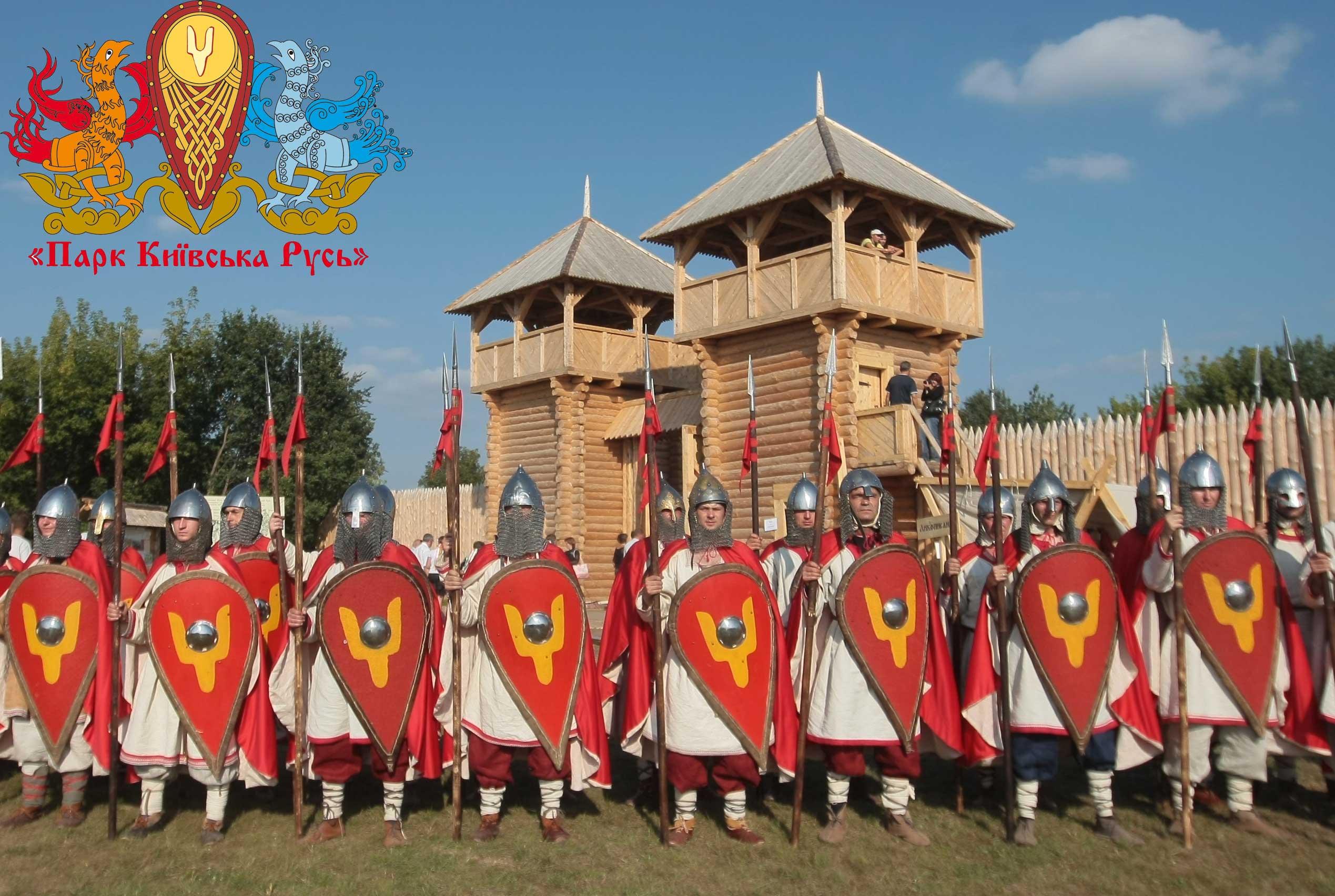
The history of Ukraine is to a large extent the history of Russia, and both groups trace their origins to the Kievan Rus’, the first great Slavic state, which took shape in the late ninth century.  Ironically, the initial ruling elite was not Slavic but Scandinavian, the Varangians, a Viking group that had settled the region via the great rivers from the north.  They quickly disappeared into the Slavic majority, but it was under their leadership that Kievan Rus’ was established, and under the Rurik dynasty it became in the tenth and eleventh centuries easily the most powerful state in Europe, controlling territory from the Baltic to the Black Sea.  The state began to disintegrate in the twelfth century, and in the thirteenth the Mongols showed up, devastating the land and destroying Kiev itself in 1240.  Kievan Rus’ fragmented into separate principalities, the most powerful of which was the kingdom of Galicia-Volhynia, which in the fourteenth century fell under the control of the grand Duchy of Lithuania and the kingdom of Poland.  This complicated matters inasmuch as the new rulers were Catholics, and in 1596 they introduced the Uniate Church, which employed eastern rituals but was under the Pope, thus creating a sectarian divide.

Where it all began

Where it all began

The southern area, along the Black Sea, became the Crimean Khanate, ruled by the Crimean Tatars, descendants of the Mongols.  At the same time a principality on the northeastern periphery of Kievan Rus’, Vladimir-Suzdal, grew into the Grand Duchy of Moscow, which would become Russia.  And there was of course the growing power of the Cossacks on the Dnieper and the Don, leading to the emergence of the Cossack Hetmanate, which dominated much of southern Ukraine.


In the seventeenth century the Ukraine experienced its own Thirty Years War, when from 1657-1686 the Poles, Russians, Cossacks and Turks (and a dash of Tatars) fought for control of the area.  The result was the “Eternal Peace,” which gave the land west of the Dnieper to Poland and the land east to Russia.   This divided the Cossacks, who nevertheless remained a powerful force in Ukraine, and in the early eighteenth century they joined Poland and Sweden in a war against Russia.  They were crushed, and the Hetmanate was abolished by Catherine the Great in 1764.  The last Hetman, Kirill Razumovsky, declared Ukraine a sovereign state in 1763, the first to do so.  When Poland was partitioned at the end of the eighteenth century, Russia and Austria divided Ukrainian territory west of the Dnieper.  The Crimean Khanate was annexed by Russia in 1783.


A relatively backward agricultural area, Ukraine was of little concern to St. Petersburg and Vienna in the nineteenth century.  The western half, Galicia, enjoyed a greater degree of freedom under the Hapsburgs, producing a nationalist movement, while the eastern half suffered under a program of Russification, which attempted to eradicate Ukrainian culture and literature and even language.  Ukrainians fought on both sides in World War I, and the entire nation was swept into the chaos and violence following the Bolshevik Revolution in Russia.  In the period 1917-1921 several Ukrainian “states” came and went, and while the bulk of the territory became the Ukrainian Soviet Socialist Republic in 1922, parts of the west went to Poland, Belarus and the new republic of Moldava.


Then came suffering not seen since the days of the Mongols.  Some million and a half Ukrainians died during the Russian Civil War and the War with Poland, and an unknown number followed them into the grave during the famine of 1921.  During the twenties the Soviet government actually encouraged a revival of Ukrainian culture and language, but that changed with the triumph of Stalin at the end of the decade.  As a result of the forced collectivisation millions died of starvation in the early thirties, and during the purges more than a half million people were murdered, eliminating 80% of the Ukrainian cultural elite.  In the wake of this horror many Ukrainians in the west welcomed the Nazis as liberators, but German atrocities turned most to the unpleasant course of supporting the USSR, and during the war Ukraine actually regained territory previously ceded to others.


To the destruction caused by the war was added the deaths of tens of thousands during the famine of 1946-1947 and the deportation of hundreds of thousands prior to Stalin’s death in 1953.  Familiar with Ukraine and interested in establishing better relations, in 1954 Khrushchev transferred the Crimea to the Ukrainian Soviet Socialist Republic, thus establishing the circumstances for the present crisis.  During the post-war period Ukraine enjoyed tremendous economic growth and influence, producing many prominent figures, including Leonid Brezhnev.


On 24 August 1991 Ukraine declared itself to be an independent democratic state, freeing itself from foreign control for essentially the first time in almost a millennium, and in December Ukraine, Belarus and Russia formally dissolved the USSR.  The Ukrainian economy suffered massively during the wild days of the nineties, but by 2000 real economic growth had been established.  Unfortunately, as with virtually all the former members of the Soviet Empire democracy did not come easy, and increasing fraud, corruption, concentration of power and the plundering of the national wealth led to the Orange Revolution in 2004.  Viktor Yanukovych, winner of rigged elections, was thrown out by Viktor Yushchenko and Yulia Tymoshenko.  Two years later Yanukovych was back in power only to be replaced by Tymoshenko the following year.  In 2010 Yanukovych was elected president in a questionable election and had Tymoshenko thrown in prison.

Ukrainian military

Ukrainian military

the stooge

the stooge

Ukrainian Evita

Ukrainian Evita

Corruption was rampant under Yanukovych, who established a kleptocracy supported by the country’s oligarchs and became a puppet of Vladimir Putin, who, as is perfectly clear, wanted Ukraine in the new Russian empire.  This led to the current revolution and Yanukovych’s flight to Russia.  Having lost his stooge, Putin stirred up trouble among the majority Russians in the Crimea and sent in troops (with no insignia) to “protect” them and the Russian naval base leased from Ukraine.  This was a blatant violation of the 1994 Budapest Memorandum on Security Assurances, signed by Ukraine, the United States, Russia, and the United Kingdom, which guaranteed the territorial integrity of the Ukrainian state.


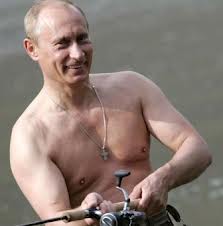
Vladimir Putin in not just the latest autocrat of all the Russias, he also a thug, nurtured in the bosom of the KGB.  Knowing that German Chancellor Angela Merkel was terrified of dogs, he deliberately had his large dog present when they met for the first time in Moscow.  He may be the most buff ruler of Russia in centuries, but he is a thug, with a Mussolini-like propensity to bare his chest.  But then, he is the ruler of Russia, a country filled with a greater than average number of vulgar and cruel people.  He is also a liar and a hypocrite, but what national leader is not?  He constantly touts national sovereignty (“stay out of Syria”) and then promptly invades Ukraine.  Of course US protests about violating sovereignty also ring a bit hollow, since we do it constantly, especially in Pakistan, and give unqualified support to a state, Israel, which seems to have no concept of national sovereignty beyond its own.

macho czar

macho czar

So what can the west do?  Western leaders are of course “closely monitoring” the situation, expressing “grave concerns” and calling for calm, all while wondering what the hell they can do.  Who actually controls the Crimea is hardly a major security interest for the west (good luck with all those Tatars, Vlad!) and places like Germany are far more concerned about Russian natural gas supplies, but from the beginning of time major powers have been concerned about losing face.  And there is substance to the notion that if aggression is not countered, the aggressor will seek more.


Still, we hardly want an actual war with the Russians, despite the fact that their military is a shadow of its former self.  It is mighty risky policy to get into a shooting contest with someone who has nuclear weapons, and if Hungary was not worth getting nuked for in 1956, the Crimea certainly is not in 2014.  Of course there is John “Why Are We Not Still in Vietnam” McCain advocating activating NATO junior partner status for Ukraine and Georgia, failing completely to understand that this is exactly the sort of thing that drives paranoid dictators over the edge.  Look at the virtual wall of American bases encircling Iran, and one gets a better idea of why they are belligerent.


On the other hand, Barack “Everything Is Secret” Obama has hardly been inspiring in his relatively placid response to the crisis.  It certainly does not take an expert in foreign affairs to see the only options available and to begin to implement them.  Immediately pump money into Ukraine to stabilize the economy and provide relief if Putin turns off the gas.  Ratchet up the diplomatic and economic pressure on Russia.  Prince Vlad probably does not care that much about world opinion, despite the big Olympic splash, but his country is a relative economic wimp and might have serious trouble enduring major sanctions, although his people are well accustomed to enjoying a low standard of living.  Throw Russia of the G8, freeze her foreign assets, place a travel ban on her leaders and surround the country with a fence of economic sanctions.  The problem here of course is those trading with Russia are likely to be far more concerned with the money to be made trading with Russia than who controls the Crimea.


And how did this crisis take the US by such surprise?  We are able to monitor every phone call on the planet – to little apparent end – yet our intelligence agencies could not catch troops and equipment being slipped into the Crimean peninsula?  Once the revolution against Yanukovych began last year did no one in the government consider what might happen if he fell from power?  Is that not basic foreign policy planning?  Are we not supposed to mistrust characters like Putin and expect the unexpected?  And this in a country where the Pentagon is rumored to have gamed wars against zombies?  Perhaps the President and Congress were too busy raising money?  I’ll bet there are contingency plans to invade the Russian Commonwealth if they injure Israeli interests.


Well, too bad there is a nuclear component.   A naval battle in the Black Sea would be very cool.  Where is the Wehrmacht when you need them?


Sheol Welcomes Ariel Sharon

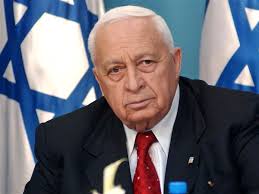
After eight years in a coma Ariel Sharon (1928-2014), Israeli military leader, Prime Minister and war criminal, died on 11 January. Ironically, but quite understandably, he was lauded as a man of peace by western leaders. American Secretary of State John Kerry asserted that Sharon was a man who attempted to “bend the course of history toward peace,” a truly ludicrous proposition that demonstrates the stranglehold Israel has on US politicians. Among Israelis he was more honestly known as the “Bulldozer,” while for Palestinians he was the “Butcher,” a recognition of his complete disregard for non-Jewish lives. Apart from his Jewishness Sharon was an individual who would have been quite comfortable in the Hitler administration, something that may be said about a disturbing number of Israeli politicians these days.

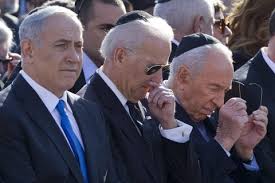
Joe  Biden is Jewish?

Joe
Biden is Jewish?

the world remembers the man of peace

the world remembers the man of peace

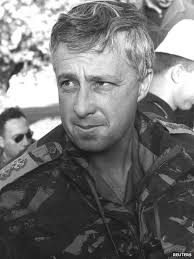
Sharon was a sabra, that is, he was actually born in Palestine, giving him marginally more credibility in his claim to the land than someone who had recently arrived from Brooklyn. To his credit he was not involved in terrorism against the British, as were two other Israeli Prime Ministers, Menachim Begin and Yitzhak Shamir, but this may simply be because of his youth. He fought as part of the Haganah in the War of Independence in 1947-48 and after the armistice in 1949 he remained in the Israeli military for the next quarter century. During this long tenure he showed himself to be a brilliant military commander, but he was also insubordinate and extremely aggressive, often losing more men than his superiors thought was necessary.

the young warrior

the young warrior

From the beginning of his career he also demonstrated a ruthlessness and complete lack of morality when dealing with his country’s enemies. Shortly after the armistice he organized Unit 101, a sort of special operations squad that conducted raids across the armistice lines in retaliation for Arab attacks, to some degree setting the standard for the Israeli military. Collateral damage among Arab civilians was not a concern, and responding in 1953 to an Arab raid into Israel, his unit attacked the West Bank (then controlled by Jordan) village of Qibya, which had been used by the Arab force. His men blew up 45 houses, a school and a mosque, killing between 65 and 70 civilians, at least half of them women and children. The operation was disavowed by the Israeli government.

the old politician

the old politician

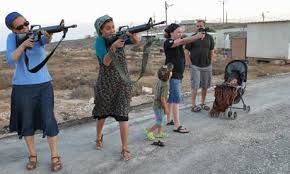
Sharon performed brilliantly during the 1956 Suez crisis, the 1967 Six Day War and the 1973 Yom Kippur War, but controversial political views led to his dismissal in 1974. His political career began the following year, and despite his lack of experience he was made Minister of Agriculture when Menachim Begin became Prime Minister in 1977. During this period Sharon became the major supporter of the settlement movement, which began in 1974 with the creation of Gush Emunim (Block of the Faithful), whose members wished to see the West Bank annexed by Israel. Sharon’s policy: “Everybody has to move, run and grab as many (Judean) hilltops as they can to enlarge the (Jewish) settlements because everything we take now will stay ours. … Everything we don’t grab will go to them.” The Jewish settlement of Palestinian territory would be Sharon’s greatest achievement and his lasting legacy.

defenders of Greater Israel

defenders of Greater Israel

the legacy

the legacy

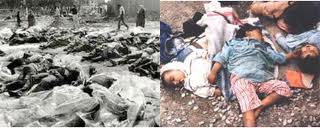
In 1981 Begin appointed Sharon Minister of Defense, and a year later Israel invaded Lebanon, providing the opportunity for Sharon to become an actual war criminal. On 15 September 1982 in response to the assassination of Lebanese president and Israeli ally Bashir Gemayel Sharon, Begin, chief of staff Rafael Eitan and foreign Minister Yitzhak Shamir decided to reoccupy West Beirut, violating their agreement with the United States. The Israeli army surrounded the Sabra neighborhood and Shatila refugee camp, where thousands of Palestinians, mostly women, children and old men, lived, and the following day Sharon and Eitan invited the Christian Phalange militias (See Ironies from Israel #2) to “mop up” the refugee camps, providing Israeli jeeps to transport them. The Phalange, originally modeled on the Nazi SA, entered the camps and began raping, mutilating and butchering the inhabitants, all of this being observed by Israeli officers stationed in buildings around the area. When darkness fell, the Israeli army continuously fired flares, illuminating the camps. The following morning the army ordered the Phalange to stop. By that time more than a thousand Palestinians, including small children, had been killed.

"personally responsible"

“personally responsible”

The United Nations condemned the massacre as “genocide,” with which term the US and other nations disagreed. An independent commission headed by Seán MacBride concluded that Israeli authorities or forces were indirectly or directly responsible for the slaughter, while the Israeli Kahan Commission, created only after 400,000 protestors gathered in Tel Aviv, concluded that Israel was only indirectly responsible. Sharon, Eitan and some intelligence officials were found to “bear personal responsibility,” and it was recommended that Sharon be dismissed. He refused to resign and Begin refused to fire him until massive protests forced a compromise whereby Sharon would cease to be Minister of Defense but remain in the cabinet. He also acquired the name “Butcher of Beirut.”

 
International outrage subsided, and Sharon remained part of the cabinet for the next eighteen years, serving as Minister Without Portfolio, Minister for Trade and Industry, Minister of Housing and Construction, Minister of Energy and Water Resources and Minister of Foreign Affairs. He became Prime Minister in 2001 and served until his stroke in 2006. As a cabinet minister he vigorously pushed the settlement of the
West Bank, but in 2005 he “disengaged” from Gaza, forcibly removing some 7000 Jewish settlers. For this he was lauded as a “man of peace,” taking the first bold step towards ending the occupation and creating a Palestinian state. What nonsense. Unlike the West Bank, which is essentially Judea, Gaza was never part of ancient Israel and consequently expendable in the creation of Greater Israel, and the move took some of the attention away from the massive settlement program in the West Bank. “Disengagement” meant turning Gaza into a huge prison camp, its frontiers, territorial waters and air space controlled by the Israelis, who periodically bomb its fading infrastructure.

 
In an attempt to end terrorist attacks and suicide bombings in 2002 he launched Operation Defensive Shield, the largest military operation in the West Bank since the Six Day War. Various international organizations concluded that both sides could be faulted for their behavior and that Israeli use of heavy weapons in urban areas resulted in civilian casualties. More critically, the Israelis purposefully destroyed much of the Palestinian infrastructure, including private property belonging to a number of NGOs. By deliberately debilitating the Palestinian Administration and weakening the economic infrastructure Defensive Shield dramatically aided the settlement program.

 
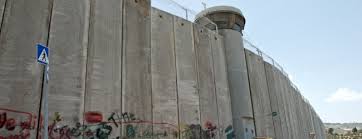
In 2002 private groups began the construction of the “separation barrier,” which after some hesitation Sharon’s government embraced, pouring in funds. The concrete wall, generally more than twenty feet high, and other obstacles, including exclusion zones, are designed to protect Israel, but it also allows the Israelis to begin transferring Palestinian land to Israel by running the wall east of the 1967 cease fire line. More than 8% of the West Bank has now been in effect turned into Israel.


passing the baton

passing the baton

a new crusader castle

a new crusader castle

Many Israelis see Ariel Sharon as an embarrassment and even a war criminal, but generally he is remembered for his heroic and brilliant exploits during Israel’s major wars. His lasting legacy, though, is the settlement of the West Bank, where more than a half million Israelis now live and enjoy rights and resources denied the Palestinians. Israel now directly controls about two thirds of the proposed Palestinian homeland, while the remainder is cut up by Israeli-only roads and military enclaves. In complete conflict with international law Israel is gradually annexing the West Bank and painting herself into a corner. If the Palestinians are granted citizenship in Greater Israel, it will no longer be a Jewish state, which is unthinkable. The only alternative is apartheid, a system that is slowly being established. And through inaction and political cowardice my country is abetting this loathsome development.

honesty!

honesty!

Stuff from Way Back #1 Redux: Happy New Year, Q. Fulvius Nobilior

(A slightly different version of this piece was published more than two years ago, my first Stuff from Way Back.  It is perhaps my favorite anecdote from antiquity.  I am reposting it for the New Year and because I am a bit short of time.  It makes an excellent New Year’s Eve party anecdote, at least before everyone is gasolinoed.  Happy New Year, though I expect it will just see our country slide further into silliness and stupidity.)


Ever wonder why the year begins on January 1?  Probably not.  It is the sort of thing that is such an established facet of life that it never occurs to one to ask why:  “Because that’s when the calendar begins,” which is of course not much of an explanation.  That’s akin to saying because the previous year ends on December 31.  But consider: why should we begin our year in the middle of the winter and on a day that has absolutely no significance, except that somehow it has become the first day of the year.  Why not on a day that has some significance in nature, such as the equinoxes and solstices.  Or considering the importance of agriculture, why not in the spring, when life returns, or fall, when the harvest is in?


In fact, in antiquity states typically began their calendar years in the spring or in the fall with the harvest.  So, what happened?  Well, it’s because of the Romans and an otherwise relatively trivial event in their history.  It begins with the defeat of Hannibal.


Part of Rome’s booty in the Second Punic War (218-201 BC) was the Mediterranean coast of Spain, formerly territory of the now defunct Carthaginian empire.  The Romans of course had no intention of allowing this area to go free, but neither were they moved to any campaign of conquest in the Iberian peninsula.  Italian capital and manpower were exhausted by  the long and costly struggle against Carthage,  and the first half of the second century BC was filled with major conflicts in the Greek east.  The result was that the Roman occupation of Spain was haphazard and slow, driven by the desire to exploit the natural resources and to protect the coastal communities from the natives of the interior.


The Roman Senate was loathe to create provinces; they had to be administered and garrisoned, which was expensive.  Nevertheless, there were in Spain no potential client kingdoms ready at hand, and consequently the Spanish possessions were organized into two provinces in 197 BC.  But poor Roman administration led in that same year to the first serious insurrection, and crushing it triggered the First Celtiberian War (181-179 BC).  Relative peace then lasted until the outbreak of the Lusitanian War (154-138 BC), during which occurred also the Second Celtiberian War (153-151 BC) and the Third Celtiberian (or Numantine) War (143-133 BC).  Thus it was that three quarters of a century of cruel and bloody counterinsurgency warfare were necessary to pacify the peninsula, and the job was not actually completed until the reign of Augustus, the first emperor, at the end of the first century BC.  The Spanish provinces then went on to become the most peaceful and Romanized in the empire.


When in late 154 BC a number of Celtiberian tribes, encouraged by the Lusitanians, revolted, Rome appointed Q. Fulvius Nobilior commander of four legions about to be sent to quell the revolt.  Nobilior had just been elected consul, one of the two annual magistrates who were the executive heads of the Roman state.  The consulship, like the subordinate praetorship, conferred upon its holder imperium, the superior form of official power, one element of which was the all-important power to command troops.  The consuls (and to a lesser degree the praetors) were thus Rome’s generals.


The consuls and most of the other important magistrates began their terms of office on  the Ides of Martius, that is, March 15, which consequently placed the beginning of the Roman civil year at roughly the vernal equinox (March 21) and the beginning of the seasonal year.  The Senate was anxious to get Nobilior to Spain as early as possible in order to extend his campaigning season, but until he actually took office some three months hence the consul-elect had no authority to command troops.  Preeminently pragmatic, the Romans solved the problem and avoided any constitutional crisis by simply moving the beginning of the civil year, and thus Nobilior’s term, to the Kalends of Januarius, that is January 1.


When the new year began had never been of much importance in the generally sloppy and conflicting calendars of the ancient Mediterranean, and the Romans, seeing no compelling reason to move the beginning of the civil year back again, left it on 1 January.  (Coincidentally, Januarius was named after the god Janus, who as the god of gateways and transitions looked both ways, making the month of January very apt as the first of the year.)  This day was thus enshrined as the beginning of the year in the Julian calendar, which was passed on to Europe and much of the rest of the world.  Because of the Roman Senate and an obscure Iberian war, the vast majority of the human race celebrates New Year’s in the middle of the winter.


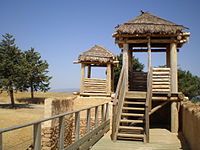
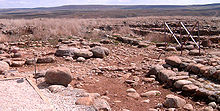
Reconstruction of Numantia's fortifications

Reconstruction of Numantia’s fortifications

Ruins of Numantia

Ruins of Numantia

Incidentally, in August Nobilior’s army was ambushed by the Belli and Arevaci on its way to capture the city of Numantia in north central Spain and lost 6000 men, and it was only saved from complete annihilation by his Roman cavalry.  He never did take the city and was replaced the following year.  The war went on.

Stuff from Way Back #13: They Were All Good Samaritans

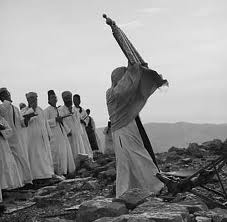
Mount Gerizim

Mount Gerizim

Christians are familiar with the story of the good Samaritan (Luke 10:25-37), the clear implication of which is that most Samaritans were not good. Indeed, the Old Testament is invariably hostile to these people, who once constituted the inhabitants of Samaria, the northern half of the original Jewish kingdom. When the kingdom split in two, Samaria became known as Israel, while the southern area, centered on Jerusalem, took the name Judah. According to the Bible, Israel was a hotbed of polytheism and idol worship, in contrast to the ever pious Judah, and when Israel was overrun by the Assyrians in 732 BC, it was considered no great loss to the Chosen People. In fact, Samaritan refugees poured south, swelling the population of Judah, and a short time later King Hezekiah invited surviving Samaritans (the Assyrians were not exactly mellow in their occupation of foreign lands) to join the true Jewish state. Thus did the number of Samaritans shrink to a handful of loathesome characters by the time Jesus.

Well, as in a growing number of cases, archaeology has shown the Old Testament to be wrong, so wrong in fact that only deliberate falsification can explain the discrepancies. On the one hand, if there ever actually was an “empire” under David and Solomon, it consisted only of a few crude hilltop forts, and there is zero evidence outside the Bible itself that there ever was a Temple of Solomon. On the other hand, excavation on the summit of Mount Gerizim, near Nablus (ancient Shechem), has revealed a large enclosure (315 by 321 feet) dating to the sixth or fifth century BC. Huge deposits of animal bones and numerous inscriptions and artifacts clearly mark this as a sanctuary of Yahweh, flourishing at a time when any temple in Jerusalem would have been a small, simple building. This Samaritan temple was destroyed in 128 BC by the Hasmonean Jewish king John Hyrcanus, but the mountain remained sacred to the Samaritan sect of Judaism.

It would appear that until its destruction Gerizim, already a holy spot for Abraham, Jacob and Moses, was the actual center of Judaism, at least in terms of antiquity, magnificence and numbers of pilgrims. Archaeology had already revealed that most of what the Bible says about the state of Israel is blatantly false and clearly self-serving for Judah, and the discoveries on Gerizim reveal just how far the smear campaign against Samaria went and how much history was consciously distorted by the Jerusalem priests editing the Testament. The surviving Samaritan Torah in fact tells a very different story from the accepted Jewish canon, one suggesting that Judah was the real backwater of Judaism. But the survivors get to write the history.

So already in antiquity the Samaritan Jews were ill-treated, and time has not been kind to them, primarily because of their own doctrine: the Lord told them, “None of you may settle outside the promised land.” Consequently, while the Jews escaped various conquerors and catastrophes by spreading across the Middle East and Europe, the Samaritans were ground away by a variety of occupiers, especially the Byzantine and Turkish empires. And a traditional ban on intermarriage with others certainly did not help. The result was that by 1918 there were precisely 146 of them, but with the importation in 2004 of five Jewish women from the Ukraine and Siberia the group has since grown to about 700. Incredibly conservative, the Samaritans practice a sort of Judaism that essentially disappeared with the destruction of the Second Temple by the Romans, actually sacrificing hundreds of animals on Mount Gerizim to celebrate Passover.

We will never know how Judaism might have developed had the Assyrians not occupied Israel, but since the Samaritans were apparently in the majority, Shechem might have taken the place of Jerusalem as the epicenter of the religion. Certainly, all these discoveries have vividly demonstrated the utter unreliability of the Old Testament as an historical source, and in fact excavations in the West Bank (the only positive aspect of the modern Israeli occupation) and Jordan are undermining the historicity of the core event of the Torah and indeed Jewish belief – the Exodus. All the emerging archaeological evidence supports the idea that the people who became the Hebrews were indigenous to the area, a positive supplement to the complete absence of any inscriptional (the Egyptians were fanatic record keepers) or archaeological evidence that a group of proto-Jews came out of Egypt in the late second millennium. More and more Moses and company appear to be have been manufactured, like the slanders against Samaria.

Samaritans

Samaritans

And the amazing thing is that on the basis of these stories – at least in theory – a modern Jewish state was carved out of territory belonging to other people for the last two millennia. It apparently helps to have more than a billion Christians believing in your stories.