Stuff from Way Back #24: Jesus, Jews and Romans

Christmas, celebrating the birth of Jesus, falls of course on December 25, but this is simply a tradition, inasmuch as no one has the vaguest idea on what day of the year he actually first saw the light – or in exactly what year for that matter. From the meager evidence in the New Testament the year of his birth most likely fell in the period 6 to 4 BC. Dionysius Exiguus was apparently the first to date from the birth of Christ in 525, though the practice did not become widespread until the eighth century. The Romans traditionally dated from the presumed founding of the city (753 BC in our system), while the Greeks dated in four year Olympiads from the presumed first Olympic games (776 BC), and it may be that confusion with the latter resulted in a four year error. So it is currently between 2017 and 2019.

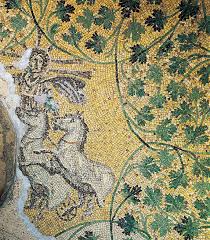
Sol Invictus on a date

Sol Invictus on a date

The birth date in December might be calculated as nine months from the spring equinox, when Jesus was believed to have been conceived, but there is no way to confirm the date of conception. Astronomy does not help since the star of Bethlehem, like the three kings, was clearly later added, in this case to fulfill a prophecy. More likely the December date was determined by two Roman holidays, the Saturnalia and celebration of Sol Invictus, both of which occurred around the winter solstice. Placing the birth at this time would provide Christians with an alternative to the pagan holidays, especially as a contrast to the celebration of the birth of the “unconquered sun god.” This latter idea dates back to a 12th century bishop but is challenged by many scholars. If he was born in December, it would have been mighty cold in that manger.

 
Despite the fact that all our knowledge of Jesus comes from the New Testament and sources derived from it, there is little question that he actually existed. It is simply impossible to believe that the religion could possibly have the impact and ultimate success it enjoyed were it all based on an elaborate hoax. On the other hand, we can be certain of very little of his life: he was an immensely charismatic and successful preacher, probably in the Galilee, almost certainly challenged the authority of the Temple and priesthood and was executed as a criminal. All other details of his life preserved in the Christian testament are at the very best suspicious and in most cases clearly false, added by his disciples and later writers to enhance the story. Religion works like that.


Jesus as Sol Invictus

Jesus as Sol Invictus

the Aryan Jesus

the Aryan Jesus

Regarding Christmas, for example, the Roman census for taxation was based on residence, not place of birth, which would be an incredibly stupid way to do it. Jesus’ birthplace was probably Nazareth in the Galilee, where his ministry was, certainly not in Bethlehem, which as the birthplace of David (whose own existence is now doubted) conveniently fulfills a number of Hebrew prophecies. The value of associating Jesus with predictions in Hebrew sacred writings regarding the coming of the messiah/king is obvious, since such supports his status as the chosen of the one god, the anointed one. In the gospels he enters Jerusalem seated on an ass, exactly as had been prophesied in Zechariah.

 
Jesus follows a pattern typical of the Hebrew prophets. Communing with god, the man realizes the corruption of the ancestral religion by the authority in the state, the king and/or priests (the fusion of secular and religious authority is a commonplace), and challenges it. He usually comes to a sad end but is remembered as a holy man and an agent of god. The difference in the case of Jesus is that this sad end will become part of the core belief of an entirely new religion, one which will bring a new understanding of the one god. That core belief, incidentally, the death and resurrection that serves as a beacon of hope for man, derives to a great degree from the Greek mystery cult. Christianity might in fact be considered something of a product of the encounter of Judaism and Hellenism.
We of course will never know, but it seems highly unlikely that Jesus believed himself to be the son of god. He was after all a Jew, and the rigorous monotheism of his inherited religion would not likely allow him to consider a divisible deity, a Yahweh with offspring, or for that matter the triune god of the religion he gave birth to. He might in his last years, swayed by the adoring crowds, have thought himself the promised messiah, the man sent by god, but it is difficult to believe that even on the cross he thought himself actually divine.

 
Jesus died because he was in the eyes of the priesthood a heretic and thus a threat to the established order and their authority. In the same way more than a millennium later the Church felt compelled to take action to suppress the Albigensian and Waldensian heresies not just because they were an affront to god but also a challenge to the authority of the Church. The story of Jesus scourging the moneychangers in the Temple is a vivid demonstration of his challenge.
In the interest of ecumenical harmony the Catholic Church has in the last century declared that the Romans and not the Jews were responsible for the death of the Christ, there of course being no advocacy group for the Romans. The Roman procurator of Judea did in fact have to sign off on the execution and was thus complicit, but his motivations would have nothing to do with the religious mission of Jesus. While the Romans found the exclusiveness of Hebrew monotheism offensive, imperial provincial policy was generally tolerant of local customs, so long as the taxes were paid and order was maintained; the Druids were a focal point of Gallic nationalism and resistance to Rome and thus had to go.

 
The issue in Judea was maintaining order. The priesthood was telling Pilate that with his growing mobs of followers and more important, his threat to the established Jewish authority Jesus was leading the province into disorder. The empire was maintained by alliances with the local elites, who with Roman support actually governed at the grassroots level. Pilate would certainly have been more than willing to sacrifice a seeming rabble-rousing preacher in order to placate the real power in Judea. And if indeed the crowds began calling Jesus “King of the Jews,” the procurator’s attention would certainly be caught, since that sounded like a nationalist movement and a direct threat to Roman rule.

 
So Jesus died, and for two millennia the Jews were blamed, further stoking the flames of anti-Semitism in Europe. What was forgotten was that he had to die. That was the whole point of his stay on earth, to die and be resurrected, to carry away the sins of man and provide hope for rebirth. As Bobby Zimmerman astutely observed: “Even Judas Iscariot had god on his side.”

 
A final element in the story, Paul. Were it not for Saul of Tarsus, the new religion would certainly have died, just another Jewish heresy. Stripping the new beliefs of their encrustation of Jewish ritual practices, he made Christianity palatable for the gentile world, and the easy movement of people and ideas facilitated by the Roman Empire allowed it to spread across the Mediterranean and European world. Paul was, after Jesus himself, far and away the most important figure in the history of Christianity.

photo of the conversion of Saul

photo of the conversion of Saul

Whatever one thinks of the historicity of his life, the message of the Galilean preacher is a good one, urging humans to eschew anger and violence and treat one another with compassion.  Unfortunately, it seems the inevitable fate of a successful ideology is to betray its principles, and Christianity triumphant would become an instrument of intolerance and violence and bring centuries of suffering to the human race.  Nevertheless, Jesus had given the ancient god of the Hebrews now a smiling face.  And Mohammed would wipe off that smile and resurrect the Lord of Hosts.

…And Equal Justice for All

(I normally do not write pieces like this, and I expect most Americans will have heard about this case, but it is such an outrage that I must say something.)


That money can buy one better justice is a commonplace in our society.  If you are poor and accused of a crime, you will be assigned a public defender, who is almost by definition not a top notch attorney and is probably overwhelmed by his case load.  Even a middle income defendant can find his family bankrupted by attorney’s fees in a long or complex trial.  But if you are wealthy, you can hire teams of high profile lawyers and pay for exhaustive research and expert witnesses.  The Simpson trial immediately springs to mind, though the incompetence of the chief prosecutor played a role in his acquittal.

affluenza victim

affluenza victim

But the case of Ethan Couch is simply beyond belief in its mobilization of wealth.  Couch is a sixteen year old (fifteen at the time of the crime, I believe) directly responsible for the deaths of four people.  He and some friends stole beer from a convenience store and took off in a pickup truck for a drunken joy ride.  Speeding along a road in what can only be called a drunken stupor, Couch smashed into a disabled car on the shoulder.   The car owner, Breanna Mitchell, Hollie Boyles and her daughter Shelby, who had come to help, and Brian Jennings, a passerby who had stopped, were instantly killed.  The parked car was driven into another vehicle, injuring more people, and two drunken friends were thrown from the truck bed and severely injured.

Brian Jennings

Brian Jennings

Couch’s family is wealthy, which meant they could hire a high powered legal team, which is hardly atypical.  What is certainly not typical is the argument offered by the defense, which could not deny that their client was an underage thief with three times the legal limit of alcohol in his bloodstream and the blood of four innocents on his hands.  They argued that the boy’s parents were in fact to blame because they had indulged their son and never set any limits on his behavior, and raised in such an environment he could not really be held responsible for his behavior.  A psychiatrist, the sort of expert witness money could find and purchase, supported this incredible idea, even supplying a cute little name: “affluenza.”

Hollie and Shelby Boyles

Hollie and Shelby Boyles

Desperate attorneys are known for coming up with outlandish defenses, but this one boggles the mind.  But even more mind boggling is the fact that juvenile court judge Jean Boyd accepted this nonsense.  Couch was of course found guilty, but the judge sentenced him to ten years of probation and rehabilitation for alcohol abuse.  He would be kept from his family and thus treated for affluenza, and she was careful to point out that the probation would be very strict and any misstep would lead to jail time.  I expect she is already getting death threats.

Breanna Mitchel

Breanna Mitchel

What a beginning to his cure!  He has now learned in the most dramatic way imaginable that there are indeed no limits, and he is free to kill people with no meaningful consequences.  Society of course learns nothing new, but we are reminded that money can in fact buy almost anything and that you had better pray that your wife and daughter are killed by a poor drunk.  Poor people of course have a natural immunity to affluenza.  If there ever was an occasion to use the word “travesty” in connection with our justice system, this is certainly it.


I abhor vigilantism, but were the victims my family members, I would seriously consider finding the little creep and causing him a great deal of pain.  I would then be sentenced to jail time.  That’s how justice is supposed to work.

Apartheid Old and New

A great man has died.

 
Nelson Mandela towered over his contemporaries, not just in South Africa but across a continent filled with brutal dictators, power-hungry rebels and religious fanatics. Mandela was the very rare successful revolutionary leader who was able to make the transition to peaceful democratic politics and lead his nation rather than dominate it. He participated in the peaceful dismantling of the worst racist structure of the second half of the twentieth century, urging reconciliation rather than revenge, astonishing for a man who had been imprisoned by the previous regime for 27 years. That Mandela was something less than a saint at times in his career does not detract from his accomplishments, and the failures of the current government of South Africa serve to increase his stature.

 
The celebration of his life and struggle against apartheid may also serve as a reminder that apartheid is still with us, though perhaps not on the grand scale of the Afrikaners, who relegated the entire native population of southern Africa to a second class status institutionalized by the state. This apartheid of the twenty-first century is not yet formally institutionalized nor so blatantly racist, but it is just as real and oppressive for those living under it. The new Afrikaners in fact cooperated in the 1970s with a virtually completely isolated South Africa in the development of nuclear weapons.

old apartheid

old apartheid

old apartheid

old apartheid

 
The new apartheid is being established of course by Israel in the West Bank, that is, occupied Palestine. Growing discrimination in the state of Israel against the 20% of the citizen body that is Palestinian is easily documented, but the discriminatory laws, the unofficial segregation and the sporadic violence are not part of any organized government instituted system. Instead, the developing official system of exclusion and imposed economic and social inferiority is found in what is internationally recognized as Palestinian land, making the Israelis more like the Nazis than the Afrikaners, surely an ironic turn. That this is all done in the name of military necessity makes it no less apartheid, especially considering that virtually none of the measures have anything at all to do with real security demands.

 
With seemingly randomly chosen exclusionary zones, Jewish only roads and residential enclaves and the total absence of any civic rights on the part of the Palestinians the Israeli occupation certainly looks like pre-liberation South Africa. The only real difference is that the land suffering under this system is not actually part of the state of Israel. It appears, however, that this is changing, inasmuch as there are now a half million Israeli colonists settled in Palestine, and there is not the slightest sign that they will ever leave. Rather, more and more Israelis are pouring in, despite the blatant violation of basic and well established international law and the opposition of almost all the international community. Israel is rapidly becoming the international pariah that South Africa once was.

new apartheid

new apartheid

new apartheid

new apartheid

 
Unfortunately, the Palestinians have no Nelson Mandela. Their iconic leader, Yasser Arafat, was a more typical revolutionary, excessively violent and utterly inept as a head of state. Not that it would make any difference. South Africa faced worldwide condemnation and sanctions, which played a major role in bringing down the apartheid regime. Israel has the virtually unqualified support of the United States, despite its constant violation of international covenants this country has pledged to uphold. There will be no international sanctions.

 
The colonization and the oppression must go on because there is no obvious way out. What Israeli government would attempt to evacuate five hundred thousand settlers when many of them would need to be forced, as was the case with the handful removed from Gaza. Will the Israeli army fight Israelis? Would these people ever agree to become a Jewish minority in a Palestinian state? And if Israel decides to annex “Judea and Samaria,” as many extremists desire, would it grant citizenship to the Palestinians, thus making Jews a minority in the Jewish state? The only answer is continuing apartheid.

 
The only hope is that the situation will become so unpleasant and injurious to American interests that it must act. One would think that even the American Congress could not stomach the forcible annexation of a conquered country. On the other hand, America no longer seems to care at all what the rest of the world thinks or how hypocritical it appears. The Palestinians can hope for nothing from the one time light of liberty to the world.

Stuff from Way Back #23: Seleucids, Jews and the Birth of Hanukkah

The historian got a bit carried away on this one.)


The Jewish festival of Hanukkah, the Festival of Lights, began on November 27. Until the 19th century Hanukkah was a relatively minor holiday on the Jewish calendar, nowhere near as important as Passover and Purim, but this began to change rapidly with the growing emphasis on Christmas in the same century. The movement began in Germany, where Jews were more assimilated and secure than in Eastern Europe, when Jewish families began displaying Christmas trees, though usually not referring to them as such. The dates of Jewish religious holidays are determined by a lunisolar calendar, which means that Hanukkah, which begins on the 25th of Kislev, may fall anywhere from late November to late December. This dating consequently helped facilitate the association with Christmas.


Further connecting the two celebrations is the tradition of gift-giving. In Christianity the practice probably derives from the Roman holiday of Saturnalia, which occurred around the winter solstice (probably why the feast of Christmas was placed at that time) and included a day of gift-giving. The tradition also has Biblical support in the gifts presented to the infant Jesus by the three wise men. In Judaism the custom dates back to 17th century Poland, where children were given small amounts of money (Hanukkah gelt) to present to their yeshiva teachers. Hanukkah could thus serve as a kind of alternate Christmas, when Jewish children could receive gifts like their gentile friends.


Because of these factors, as Christmas became an ever more important holiday, supplanting Easter, the importance of Hanukkah also grew. In the 20th century Christmas was rapidly commercialized in the United States, as business realized the profit potential of the holiday, and American marketing ultimately turned it into the major retail occasion of the year, vital to the American economy. So lucrative has it become that countries with only tiny Christian populations are now celebrating it as a major holiday. With its far smaller consumer base Hanukkah has lagged in this development, but by the 21th century it is every bit as commercialized as Christmas.


The Hanukkah celebration lasts for eight days and nights, during which period a nine branched candelabrum, the Menorah, is used to mark the passage of the nights. The ninth candle is actually not part of the ritual apparatus but originally served as a simple source of light. The eight candles are at the core of the holiday, since they reflect the miracle that gave rise to the festival. And that miracle is way back.


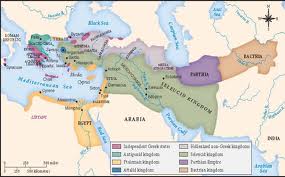
Judea, the southern Jewish state, fell under Greek control with the dismantling of the Persian empire by Alexander, and after his death in 323 BC it ultimately became part of the Ptolemaic empire. It remained under Ptolemaic control until 200 BC, when the weakness of the Ptolemaic state allowed Antiochus III, ruler of the vast Seleucid empire to the north and east, to seize all of Palestine. This exchange of Greek masters probably had little effect on the Jews beyond elevating the pro-Seleucid faction in the aristocracy and priesthood over the pro-Ptolemaic. The tiny Jewish state was, however, of particular concern to its new ruler inasmuch as it was near the frontier between the two kingdoms and covered the main road between Syria and Egypt.

The Seleucid Empire

The Seleucid Empire

The Greek policy towards the Jews was one of tolerance, an important facet of their increasingly cosmopolitan culture. Greek polytheism, like virtually all religions outside the Abrahamic tradition (Judaism, Christianity and Islam), had no impulse to holy war and could easily accept new gods, which were frequently identified with their own. Greek philosophy, which had been steadily moving away from the old Olympic deities towards more abstract conceptions of god, could in fact see something positive in the invisible, non-mythic god of the Jews, though many of the traditional practices of the Temple were considered barbaric superstition. Many polytheists found the aggressive exclusiveness of the monotheists to be offensive, but the Greek rulers, like the Romans later, had no problem so long as order was kept and the taxes were paid.


There was, however, a potential problem lurking in the confrontation of Hellenic (Greek) and Hebrew culture. Not only was Hellenization an important tool in the attempt to unify the Greek empires, but many of the economic and political elites in the non-Greek cities were inclined to go Greek, whether to gain advantage or because Greek civilization was simply more sophisticated and attractive. This had an impact even upon the traditionally aloof monotheists, many of whom saw this as a natural development of their religion, that is, maintaining Yahweh but forgoing the ritual and cultic practices. Moreover, since the Greeks accepted the notion of divine inspiration the Torah and the Law would still have a place.


The Hellenizing Jews of course stirred a reaction from the traditionalists, who saw their ancestral religion being assaulted and certainly resented such outrages as Greek gymnasia and nude exercise in the holy city of Jerusalem. Further, a candidate for the office of High Priest required the approval of the Seleucid monarch, which inevitably led to political intrigue and corruption. These problems were exacerbated by the existence of the pro-Seleucid and pro-Ptolemaic factions and the constant squabbling of two powerful Jewish families, the Hellenizing Tobiads and conservative Oniads. These conflicts would lead to the emergence of an independent Judea.


The sequence of events that preceded the Maccabean revolt is a hotly debated topic, but the following account, while not absolutely certain, is one that makes excellent sense of the information presented in the ancient sources.


The 170s BC saw increasing strife over the position of High Priest, during which conflict the Seleucid government played no real role. Matters came to a head in 169 BC, when Antiochus IV invaded weakling Egypt. On the way back north he visited Jerusalem, and always in need of money, while there he looted some of the gold and silver in the Temple, outraging Jews more by his entry into the Holy of Holies than by the theft. This obviously increased the tensions and aided the anti-Hellenizers, but the affair might have passed were it not for developments in Egypt.


The Second Temple?

The Second Temple?

Antiochus IV Epiphanes (and friend)

Antiochus IV Epiphanes (and friend)

In 169 BC Antiochus had left Egypt paralyzed by leaving behind two rival claimants to the Ptolemaic throne, one in Memphis and one in Alexandria. But during the winter the rivals reconciled and agreed to rule jointly, causing Antiochus to return in the spring of 168 BC. While he was there, a rumor of his death led the anti-Hellenizers to see Egypt as their savior, and a group led by the deposed High Priest Jason attempted to seize control of Jerusalem. They failed to take the citadel, where the current High Priest, Menelaus, had taken refuge with the Seleucid garrison, but they controlled the rest of the city, and the affair had ignited a virtual civil war among the Jews.


Meanwhile, in Egypt Antiochus had been thwarted from ending the Ptolemaic dynasty and compelled to leave Egypt by the Romans (see Stuff from Way Back #10: A Circle in the Sand), making Jerusalem all that more important to his defenses. With Jerusalem in open revolt Antiochus had little choice but to capture the city, free Menelaus and punish the rebels. When he left, the rebels reappeared and captured the city once again, and the king sent his minister Apollonius to crush the revolt and settle veterans in the city, enhancing its character as a gentile and Greek city. The “Macedonian” veterans were Syrians, who promptly established their own shrines and cultic practices on the Temple hill, and Jews felt that their traditional religion was threatened with extinction. Most fled the city and spread the fire of revolt across Judea. Playing an instrumental role in the rebellion were the Hasidim, the scribes and interpreters of the Law, whose livelihood was threatened along with their religion.


The revolt was perceived by Antiochus as essentially a political act, compromising the security of his kingdom, but it certainly had a religious content, especially with the leadership of the Hasidim. Antiochus consequently targeted the religion, not because he objected to the faith per se and wanted a holy war – such was a virtual impossibility for a Greek monarch – but because the religion was an integral part of a movement that threatened the state. The result in late 167 BC was the prohibition of traditional practices, such as circumcision (always despised by the Greeks as an assault on the body) and honoring the stipulations of the Law, and the notorious “abomination of desolation,” the establishment of a cult of Zeus Olympios in the Temple. Destroy the religion, the barbara superstitio, and thus destroy the rebellion.


But the religion was not destroyed. Rather, Seleucid rule in Judea was. In 166/5 BC scattered opposition to the decrees coalesced into an organized revolt under the leadership of the five brothers of the Hasmonean house, particularly Judas, called Maccabeus. Fortunately for the rebels, the Seleucid empire was in decline and with troubles elsewhere could not spare adequate forces for Judea, and in 164 BC peace was bought by rescinding the offensive decrees. Judas ordered the cleansing of the Temple, and in the process it was discovered that there was only enough purified oil to burn in the Temple for one night. Miraculously, the oil lasted for eight nights, which was long enough for more purified oil to be produced. And thus the festival of Hanukkah was born.


Potatohead Maccabeus

Potatohead Maccabeus

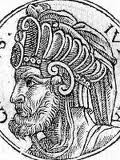
Judas Maccabeus

Judas Maccabeus

The truce did not last, and more warfare resulted, ending with the defeat and death of Judas in 160 BC. Seleucid rule in Judea was seemingly restored, but in 150 BC a civil war erupted in the empire, allowing the Hasmoneans to reassert their independence and ultimately extend their power north into the former state of Israel and south to the Egyptian frontier. The Jewish kingdom lasted almost a century. In 64 BC Pompey the Great ended the Seleucid empire, which by then was limited to the city of Antioch, and when in the following year the king of Judea reneged on a deal with Rome, he captured Jerusalem. Judea became a Roman dependency and ultimately a province.


One might wonder what might have developed had there been no troubles with Antiochus and thus no desecration and Jewish revolt. The success of the Hasmoneans marked the resurgence of the traditional form of Judaism, and without it the Hellenization of the Jews might well have ultimately resulted in the disappearance of the old religion. And the world would have been spared Christianity and Islam.

JFK and another lost poem of Lord Byron

It was fifty years ago this week that President John F. Kennedy was assassinated, and this anniversary has naturally spawned a host of articles and television programs on the Kennedy administration, many gushing about lost Camelot.  America was the shining city on the hill, filled with hope and a beacon to peoples everywhere, and then an assassin’s bullet ushered in a time of despair, the age of Vietnam, social upheaval, violence, burning cities and rampant cynicism.  The golden age of America had abruptly ended when it had hardly begun.

Kennedy’s administration does seem a watershed, and indeed, a national feeling of pride and hope did give way to seemingly endless troubles.  But this is of course not only too simplistic (being Black in the forties and fifties would hardly fill one with hope), but also to a great extent Camelot was a sham.  Only after his death was the metaphor of Camelot applied to JFK’s brief time in office – by his widow.  A half century later historians have exposed the reality of the Kennedy administration, but Camelot has nevertheless become a compelling American myth, evoked by the likes of Clinton and Obama.

President Kennedy

President Kennedy

The two beautiful people, Arthur and Guinevere, with their equally beautiful children bringing a new sense of culture and class to the White House, especially in the wake of the far less colorful Eisenhower, this was the image.  They listened to string quartets rather than pop, and Jackie was the paragon of style, once again especially when compared with the former First Lady.  This was not just the First Family, but the family every American dreamed of being.

The First Lady

The First Lady

In reality Jackie was more often found shopping than enjoying Beethoven and five years after Jack’s death married one of the richest men on the planet, better to serve that retail habit.  Her husband, meanwhile, was screwing every upscale woman he could get his presidential hands on, enjoying a freedom from media attention that Clinton must have envied.  His bad back was famously known and evoked sympathy, but few seemed to understand this meant he was constantly pumped up on painkillers, even when making critical decisions, such as going to war the USSR.  He appointed his brother Attorney General, a questionable act in itself, and ordered surveillance and wire-taps on any number of politicians, businessmen and journalists.  For all his grand rhetoric about equality he only took action in the South when increasing violence made the problem impossible to ignore.

He has a noteworthy achievement, the Nuclear Test Ban Treaty, and the Peace Corps was a wonderful idea.  He may have been a calming influence during the Bay of Pigs crisis, but he could have derailed the whole stupid affair from the start.  The pledge to go to the moon was stirring, but given the state of technology at the time, it was as hollow as Bush’s pledge to go to Mars, though Kennedy may have actually believed in what he said.  And like Ronald Regan, he made America feel good.

No, Kennedy’s real legacy was becoming a martyr and a myth, an object of veneration.  Beyond that he was an insignificant President.

But what if he had lived?  No Vietnam, no violence in the streets, no counter-culture and a better America?  Hardly.  He fell for the domino theory, and Eisenhower’s 600 American advisors became 17,000 troops.  And Johnson inherited Kennedy’s advisors, the “best and brightest,” who would play him like a violin when it came to increasing the American presence in Vietnam.  More important, there is absolutely no reason to believe that Kennedy could have been anywhere near as successful as LBJ in getting civil rights legislation through the Congress.

Getting shot made JFK, at least for a while, one of the greatest Presidents, and it has been suggested that the same happened to Lincoln.  What nonsense.  Lincoln dealt with the greatest crisis facing America since the Revolution, ended slavery and enfranchised Blacks.  Ironically, this week is also the 150th anniversary of the Gettysburg Address, words that have achieved a statue second only to the preamble of the Declaration of Independence.  This is why no one remembers Garfield and McKinley.  Lincoln was great; Kennedy looked great.

A final thought.  The people around JFK would refer to excellent weather as “Kennedy weather.”  Well, in the Second Reich they called it “Kaiser weather” and in the Third Reich “Führer weather.”

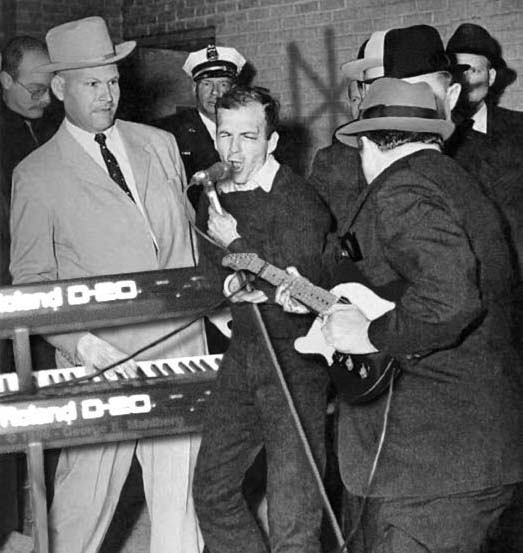
The last performance of the Lee Harvey Oswald Band

The last performance of the Lee Harvey Oswald Band

The Destruction of Kennedy

Lord Byron

The assassin came down like the wolf on the fold,

With his Carcano all loaded and ready to hold;

And the hate in his heart burned deadly and hot,

As he stationed himself for the ultimate shot. 

Like the leaves of the forest when summer is green,

The car with his target was suddenly seen:

Like the leaves of the forest when fall turns them red,

The man from the White House would so soon be dead.

For the Agent of Death  braced his gun on the sill,

And looked in the face of the man he would kill;

And the rifle spat fire, one shot then two,

And the life of a President is just about through.

And there lay the victim, America’s pride,

While the eyes of his agents, they looked far and wide,

But too late to stop now the bark of the gun,

And thus in an instant was Camelot done.

And the cameras were rolling, the images bleak,

And the hope of the nation was no more to speak;

And the crowds were all silent, the cheers gone away,

And shocked were the people in Dallas that day.

 And the lovers of John Boy are loud in their wail,

And there stands the widow, all bloody and pale;

And the man from Hyannis, by destiny called,

Hath melted like snow in the glance of Oswald.

Stuff from Way Back #22: Power Corrupts

(This piece must serve for two weeks since I will be out of town. All dates are BC and translations of Thucydides are by Rex Warner. My thanks to Donald Kagan, who taught me this long, long ago.)


Defending the ludicrous attempts to establish democratic governments in Iraq and Afghanistan, a number of US politicians have stated that apart from being the right thing to do (regardless of what the locals think), this policy enhances the prospects for peace because “democracies do not attack their neighbors.” One need not look further than our own recent history to see what nonsense this is: Grenada, Panama, Iraq and drone strikes, which are in fact acts of war. Israel has begun numerous conflicts not entirely justified by a credible threat. And democratic states in classical Greece, including the granddaddy of all democracies, Athens, continually attacked their neighbors.

 
Indeed, Athens (along with the US) provides a shining example of democracy acting badly. That power is corrupting is a commonplace, and the presidency of Barack Obama appears to be a demonstration of this notion. Prior to being elected President Obama was a progressive, espousing more open government, dismantling the war and terror apparatus of the Bush administration and promising peace. Instead, he is pursuing a concentrated assault on journalists, defending the Constitutionally dubious powers of the Patriot act, aggressively spying on the American people and our allies and killing innocents by the hundreds with his drones. He underlines the idea that no government, whatever its nature, will voluntarily surrender any power. And if subordinating everything to the quest for reelection and trading favors for campaign funds is corruption, the Congress is a cesspool.

 
In antiquity the ruling elite of the Roman Republic provide a classic example of corruption. Having served the best interests of the state and the Roman people for almost four hundred years, the Senatorial class was corrupted by the powers accumulated in Rome’s wars and especially by the flood of wealth that came in the wake of the conquest of the Greek east. The result was an utterly self-interested Senate and the ultimate collapse of the Republic into military autocracy.

 
But it is Athens that provides a compelling study in the corrupting influence of power, especially in the pressure cooker of war. The moral collapse of the Athenian people, the real rulers in the radical democracy of the later fifth century, is beautifully detailed by Thucydides in his account of the Peloponnesian War (431-404), the showdown between the Athenian Empire and the Spartan controlled Peloponnesian League. Thucydides is the first modern historian, not only because of his attempt to provide an entirely factual narrative, but also because of his analysis of the broad currents flowing through that narrative. He was himself an Athenian and was present in Athens during the events examined below, giving credibility to the substance of the statements he records.

 
Athens emerged from the Persian Wars (490, 480-479) immensely powerful, particularly at sea, where her fleet was larger than all the other Greek navies combined. Liberating the Greek cities on the Anatolian coast and preventing a resurgence of Persian power required a permanent Aegean alliance, and in 478 Athens organized the Delian League, a voluntary association of most of the island and coastal cities. Recognizing Athens’ huge military contribution, the member states granted her a dominant role in the League, almost guaranteeing the emergence of Athenian supremacy. The evolution from league to empire began with Athens taking military action to prevent members from leaving the alliance, an understandable measure, and gradually the ship-contributing allies were transformed into tribute paying allies. Within a generation of the creation of the League there were besides Athens only three ship contributing allies left – the wealthy islands of Chios, Lesbos and Samos. The remaining allies all paid tribute and supplied troops, and of these a large number were subject and so more directly controlled. By the fifties Athens had suspended meetings of the League assembly, and in 454 the League treasury was moved from Delos to the Athenian acropolis, where Athena henceforth received a rake of one sixtieth.

 
The Athenian organization was a light touch compared to the average empire, at least until the pressures of the great war with Sparta. The tribute was reassessed every four years, and the allied state could appeal if it thought the amount was too high. In return for their money the allies got the Athenian fleet, which not only protected them from the Persians and from their own neighbors, but also suppressed the normally endemic piracy, probably the most appreciated benefit of the empire. The obligation to supply troops was a burden, but perhaps better the allied hoplites should be defending and expanding the empire than fighting one another, which is what they would otherwise be doing. Because of the strong feelings the Greeks had about the autonomy of the polis, however, the empire was probably generally resented and Athenian meddling in the internal affairs of the subject allies certainly was, but it could have been worse. After all, Athenian interference was primarily concerned with maintaining democratic governments, which by definition involved the majority of the locals ruling themselves. (At least by the Greek definition, which required direct participation; representative government readily allows the creation of sham democracies.) And in fact, it would be worse: when Sparta took over the empire after Athens’ defeat in 404, she ruled it through oppressive little ten man oligarchies.

 
Athens had her ups and downs with her allies, but it was the Peloponnesian War of 431-404 that really turned the empire sour. Initially there was little problem, since Pericles pursued a purely defensive strategy, which made very small demands upon the allies, especially in terms of troops. But old Squill Head died in 429, and Athenian policy became increasingly aggressive and expansionist, putting heavier and heavier demands on the allies. For example, in 425, the seventh year of the war, Athens more than doubled the tribute demanded of the allies. The empire became an increasing burden on the allies, wasting their resources and lives in dubious operations and providing no discernible benefits in return. In 412, prompted by Athenian losses in Sicily and Spartan promises of aid, almost all the allies revolted and went over to the enemy camp. In the next few years the energetic Athenians would reconquer most of their former dependents, but a few years after that they would lose the war and with it the empire. Then the allies would get a taste of empire Spartan style.

 
War brutalizes a society, and Athens’ decaying relationship with her allies in the course of the war fully demonstrates this moral decline, which is neatly reflected in her own changing view of the empire and foreign relations in general. In the famous Funeral Oration given at the end of the first year of the war Pericles alludes to the relatively benign imperialism practiced by Athens: “We make friends by doing good to others, not by receiving good from them…When we do kindnesses to others, we do not do them out of calculations of profit or loss: we do them without afterthought, relying on free liberality.” (Thucydides 2.40.4-5) Well, the reality of the empire was of course far from this ideal, but Athenian imperialism was almost a gentle presence compared to the heavy-handed Spartan brand, which had virtually enslaved the southern part of the Peloponnesus. In any case, it is the ideal we are interested in, how Athens viewed herself and her relations with other states.

 
Only one year later the tone has already changed. In a speech given by Pericles at the end of the second year of the war the will to power is now clearly apparent:
“The whole world before our eyes can be divided into two parts, the land and the sea, each of which is valuable and useful to man. Of the whole of one of these parts you are in control – not only of the area at present in your power, but elsewhere too, if you want to go further. With your navy as it is today there is no power on earth –not the King of Persia nor any people under the sun – which can stop you from sailing where you wish…And do not imagine that what we are fighting for is simply the question of freedom or slavery; there is also involved the loss of our empire and the dangers arising from the hatred we have incurred while administering it…In fact you now hold your empire down by force: it may have been wrong to take it; it is certainly dangerous to let it go.” (Thucydides 2.62.2, 63.1-2)
After only two years of war the friendly, mutual aid concept of empire expressed in the Funeral Oration has given way to a more realistic appraisal of the empire as a kind of tyranny. But the empire cannot be given up now, and justification of it can be found in the mere fact that it exists. Further, in his description of Athenian naval strength Pericles defines a power that has no limit and suggests that Athenian ambitions might not be contained within the confines of the present empire.

 
In 428 Mytilene, the chief city on the island of Lesbos, revolted from Athens and was crushed the following year. In a fit of emotion the Athenian assembly voted to put to death the entire male population and enslave the women and children, a rare and extreme form of punishment that was unfortunately becoming less rare as the war progressed. The harshness of the reaction is a vivid sign of the brutalizing effects of the war, but what happened next is also revealing of the changing Athenian attitude towards the empire. The day after the decision was made cooler heads prevailed, and an extraordinary second meeting of the assembly was called to debate the issue again. The demagogue and radical imperialist Cleon (d. 422) argued that the heavy punishment was necessary to set an example and that policy could not take a back seat to irrelevant humanitarian concerns. The opposition, led by the moderate Diodotus, countered with the argument that the slaughter would not serve as a deterrent, but rather would cause those who did revolt to fight to the death, since that would be all they could expect anyway. Moreover, Mytilene was an oligarchy and the people had been compelled to go along with the revolt, so punishing them would only disaffect the democratic factions in other states.

 
The penalty was repealed and the Mytilenians were saved at the last minute, but look at the arguments delivered in their defense. Nowhere does Diodotus say anything about justice or what is right or what Mytilene deserves. His arguments are based entirely on expediency, on what course of action would be best for imperial Athens, and he comes right out and says so: “But this is not a law court, where we have to consider what is fit and just; it is a political assembly, and the question is how Mytilene can be most useful to Athens.” (Thucydides 3.44.4) Whatever Diodotus may have felt about the inhumanity of the punishment and the plight of the Mytilenians, he understood that the Athenian people would only be moved by a cold appeal to their imperial self-interest. As the war dragged on, Athens’ concept of empire was clearly growing harsher. And Athens was not alone in the growing brutality. In 427 Plataea surrendered to the Spartans after a two year siege, and despite the city’s role in the Hellenic victory of 479, it was razed to the ground. Prompted by the Thebans, the Spartans acted in a particularly nasty fashion. Each defender was asked if had done anything of service to the Spartans and their allies in the war, and when each answered no (what else?), he was executed.

 
The moral rock bottom came in 416, when the Athenians attacked the tiny island of Melos in the southern Aegean. The Melians had not joined the original Delian League and had managed to escape the attention of the Athenians in the following years. At the outbreak of the war the island was neutral, although her sympathies were with Sparta, since she had been colonized from there. She resisted an Athenian invitation to join the empire and because of this uncooperative stance was in 426 the object of an unsuccessful Athenian attack. Now, ten years later the Athenians extended their invitation again, and once again the Melians refused. This time, however, the Athenians captured the city and killed all the males and enslaved the women and children. Actually, this was the second occasion that such drastic measures were taken; Athens had already inflicted this same terrible fate upon her ally Scione after an unsuccessful revolt in 421. But in the case of Scione the Athenians could at least claim, rightly or wrongly, just desserts for an ingrate ally, whereas Melos quite obviously involved nothing more than naked and brutal aggression.

 
And indeed the Athenians made no claim that there was anything more. In their dialogue with the Melians before investing the city they boldly state their reasons for pressuring the island: “If we were on friendly terms with you, our subjects would regard that as a sign of weakness in us, whereas your hatred is evidence of our power…So that by conquering you we shall increase not only the size but the security of our empire. We rule the sea and you are islanders, and weaker islanders too than the others; it is therefore particularly important that you should not escape.” (Thucydides 5.95, 97) When the Melians protest that what is happening to them is hardly just, the Athenians reply with one of the most cynical statements of foreign policy principles in history:
“You know as well as we do that, when matters are discussed by practical people, the standard of justice depends on the equality of power to compel and that in fact the strong do what they have the power to do and the weak accept what they have to accept…Our opinion of the gods and our knowledge of men lead us to conclude that it a general and necessary law of nature (physis) to rule wherever one can. This is not a law we made ourselves, nor were we the first to act upon it when it was made. We found it already in existence, and we shall leave it to exist for ever among those who come after us. We are merely acting in accordance with it, and we know that you or anybody else with the same power as ours would be acting in precisely the same way.” (Thucydides 5.89, 105.2)
Such honesty in foreign affairs is certainly refreshing, but it cannot obscure the total moral bankruptcy of Athenian policy. It has come to this for the Athenians – might makes right. They have abandoned the normal standards of civilized behavior and justified their violation of accepted standards of international law (nomos or man made law) by appealing to a brutally defined “natural law” (or god’s law, law of the gods, conscience, higher law), as many a great power would do in the twentieth and now the twenty-first century, precisely as Thucydides predicted.

 
America of course officially justifies her increasingly abominable behavior on the world stage with an appeal to national security rather than some law of nature, but so pervasive has the security argument become that it takes on the character of a natural law. And there are many conservative Christians who in fact do believe our actions are supported by natural law, in this case the Christian god, who had earlier justified our conquest of the North America. The “war” on terror touches ordinary Americans in only the most peripheral way, yet we are still being brutalized, accepting lower standards of international conduct as acceptable and even normal. Besides, as our leaders say regarding America’s pervasive snooping, everyone does it. No, only the powerful do what they can, while the weak suffer what they must – at least until they become the powerful.

Grief: Alfred

(This might appear self-indulgent, but it is something I need to do.)

Alfred the dog, our companion for twelve years, reached the end of the line yesterday. He was a mix of terrier, bouvier and god knows what else, rescued from a shelter as a pup. He was having increasing difficulty using his hind legs to get up and did not seem to be enjoying life anymore, so we allowed him to leave us gently, falling into a sleep from which he would never wake. Fortunately, he did not have to suffer, as we compel humans to do. His ashes will be placed by a tree planted for him. (This is not at all easy to write this.)

   Alfred 2001-2013

Alfred
2001-2013

People who have no pets cannot understand how dear a cat and dog will become. They are not “just animals,” but rather members of the family, especially for those whose children have grown up and moved away. They offer unquestioning love, yes, even the cats, who will respond to attention and affection no less than the more domesticated dog. And time and again dogs, albeit unknowingly, have risked or sacrificed their lives to rescue an endangered family member.

Death is inevitable and as much a part of life as birth, but it is very difficult to entertain that thought when actually confronted with it. We keep telling ourselves that Alfred lived a very long life (a dozen years is ancient for a dog of some eighty pounds) in a wonderful home, playing with his life-long comrade, Lucy the dog, but it hardly helps. The grief is still just as real and no less crushing than had a human family member died. And we know that little things – his favorite spot empty, the extra leash, only one food bowl at dinner time – will sustain that grief for a considerable time. Distraction eases the pain, but you suddenly remember and feel guilty that you are doing something other than grieving. In the quiet moment you remember and try to fight replaying the whole event over in your mind. But we also know from experience that in time the grief will subside, replaced by a sweet memory, tinged with sadness.

We have buried a dozen cats in the last forty years, and every death was a blow, especially since virtually all lived into their middle and late teens. But Alfred was our first dog, and his death has hit particularly hard. Cats can be very affectionate, but they are independent creatures, whereas a dog is completely and absolutely devoted, and the loss is consequently greater.

We knew this was coming, but it was only yesterday that we had to face it and make the dreadful decision, when it was clear that Alfred had crossed a line in the night and was no longer comfortable. But the day before he was still in good enough shape to have one last walk and enjoy reading the doggy pee-mail and sniffing a neighbor dog with Lucy. We have a vet who makes house calls, so Alfred could quietly expire in his home, surrounded by his family, including the cats. Lucy could not of course understand what was happening, but she certainly sensed something was wrong.

Lucy is also an old big dog, perhaps even older than Alfred, and she is arthritic and walks with some difficulty. But with pain medication and shorter walks she is obviously enjoying life, even if it is more limited. Her time is also growing short, and we will have to face this unpleasantness again, but the grief is a small price to pay for years of joy and unquestioning, undying love.

Lucy

Lucy

Alfred lives on in our memory, and that memory will last as long as Denise and I live.

Stuff from Way Back # 21: Antony, Cleopatra and Who?

tony and Cleopatra are perhaps the most famous romantic couple in history, thanks to Augustan propaganda, Shakespeare and Hollywood, and consequently the actual people and their lives have been seriously distorted.  At the same time, Octavian, the winner of the civil war and first emperor, who was in fact far more important to history than the happy couple, has been relegated to relative obscurity and a distinctly unromantic role.  Richard Burton and Elizabeth Taylor played Antony and Cleopatra; Octavian was portrayed by Roddy McDowall.

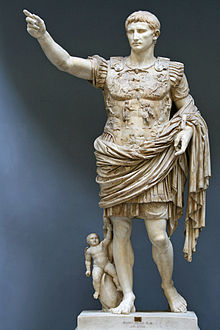
Octavian/Augustus

Octavian/Augustus

Marc Antony

Marc Antony

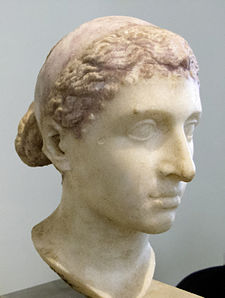
Cleopatra VII

Cleopatra VII

Marcus Antonius was born into as noble family, most likely in 83, (all dates are BC) and was said to have spent his youth in dissipation.  He grew up in the later stages of the Roman Revolution (133-30), the hundred year descent of the Republic into political instability and ultimately civil war.  In 54 he joined the military staff of one of the major contenders for sole power, his mother’s cousin Gaius Julius Caesar (100-44), and quickly demonstrated his military talents during the course of the Gallic wars.  The two men became fast friends, and Caesar supported Antony in his political career, the younger man becoming the proconsul’s right hand man in Rome.  In 49 Caesar crossed the Rubicon River, initiating a civil war between him and Pompey the Great (106-48), who was defeated in 48 and fled to Egypt, where he was assassinated by an officer of the boy king Ptolemy XIII (62-47).

Pursuing Pompey, Caesar arrived in Alexandria and supported Cleopatra VII (69-30) in the civil war between her and her younger brother.  Ptolemy was killed, and Caesar installed Cleopatra as co-ruler with another brother, Ptolemy XIV (60-44).  He dallied a while with the queen and had an illegitimate son, Caesarion.  He then went off to defeat the remaining Pompeian forces and return to Rome, where he was joined by Cleopatra, Ptolemy and Caesarion in 46.  Two years later Caesar fell to the knives of the assassins, and Cleopatra, who was not popular with the Roman crowd, returned to Egypt, where she killed Ptolemy and made Caesarion her co-ruler.

Meanwhile, back in Rome Antony was primed to step into Caesar’s sandals, rousing the mob against the conspirators, who ultimately fled to Greece and began raising an army.  Unfortunately for Antony, Caesar had in his will posthumously adopted as his son his closest legitimate male heir, his grandnephew Octavian, to whom he left his considerable personal fortune.  But Octavian was only eighteen, in Greece and completely unknown to the Roman public, and Antony began spending the inheritance and public funds to raise troops.  Octavian was dismissed as the “boy,” about whom Cicero said “the boy is to be praised, to be honored, to be set aside.”  But the boy had two assets: he had a political talent completely unmatched by his opponents and he had the name of Caesar, something with which he could conjure.  Very quickly Caesarian legions and veterans were flocking to his side, to Gaius Julius Caesar Octavianus, the son of the soon to be deified Caesar.  He was not to be set aside.

the boy

the boy

the chick magnet

the chick magnet

For the moment Antony and Octavian needed each other, and in 43 the Second Triumvirate was formed with another of Caesar’s officers, Marcus Aemilius Lepidus.  Lepidus was, however, a lightweight, and he would be retired by Octavian in 36, when he tried to assert his independence.  Essentially, Octavian ruled over the western half of the Empire, while Antony went off to the wealthier, though now drained, east to launch an invasion of Parthia, the kingdom currently occupying Mesopotamia and Persia.  He was looking for glory, money and most important, a veteran and loyal army to use in the inevitable showdown with Octavian.  All Octavian got was an Italy that was financially exhausted and in social turmoil and a surviving son of Pompey who seized Sicily and threatened Rome with starvation.  On the other hand, though Gaul had been assigned to Antony, he had the immediate access the legions stationed there, and he surely realized that for all its current problems Italy was the key in the struggle inasmuch as it was the source of men for the legions.

Antony had met Cleopatra after the defeat of the conspirators in 42 at Philippi in Greece and confirmed her position as queen of Egypt, but he had to immediately hasten back to Rome.  When he returned to the east, he rejoined Cleopatra and possibly married her in 36, creating an awkward situation since he was already married to Octavian’s sister Octavia.  But this made him king of Egypt and provided access to the bulging treasuries of the kingdom, which money he certainly needed.  In 36 he began his assault on Parthia, but his ally the Armenian king deserted him, and he was forced to retire to Syria, his military reputation undermined rather than enhanced.  A successful expedition to punish Armenia in 34 restored his prestige and was followed by what was the biggest news to come out of the east: the Donations of Alexandria.  By virtue of the proconsular power he possessed as a Triumvir Antony gave to Cleopatra and her children Cyprus, Cyrene, Syria-Palestine, Cilicia and Armenia, all but the last being Roman controlled areas.

The Donations provoked a crisis, and in 32 Antony’s supporters fled east and in the following year Octavian obtained a declaration of war against Cleopatra.  Antony divorced Octavia, collected his scattered troop and began shipping them to Greece.  The two forces met near Actium on the east coast of Greece, and after a long delay Antony engaged Octavian’s fleet, only to flee with Cleopatra to Egypt when his men began to mutiny.  By the middle of 30 Antony finally accepted that the game was over and committed suicide, while Cleopatra awaited Octavian and the chance to beguile the new ruler of the Roman world.  But the future emperor had other plans, and Cleopatra took the noble way out (the asp is a fiction).  Rome appropriated Egypt.

The age-old story that Antony fell head over heels in love with the incredibly beautiful Cleopatra and was seduced into betraying Rome and his own interests is essentially the creation of Octavian’s propaganda.  The “boy” turned out to be a master of public relations and in his struggle with Antony launched the first national propaganda campaign in history.  The conflict was not with Antony, who was a good Roman, but with the foreign queen who had seduced him, just as Dido had captivated Aeneas.  So this was not a civil war but a war against the seductress, who with poor Antony’s help was going to seize the Roman Empire and rule it from Alexandria.  The Donations of Alexandria of course played right into Octavian’s hands.  This traditional tale is mostly rubbish.

the real queen

the real queen

idealized portrait?

idealized portrait?

Antony’s relationship with Cleopatra was certainly not based on her looks.  As the coin portraits and statuary reveal, she was at best a plain woman and may have had a sizable honker.  And after all, Caesar and Antony could have any pretty face they desired, if that was their game.  No, it was her mind that attracted these powerful men.  She was a full-blooded Macedonia Greek, well educated, charming and possessing a formidable wit; she was the only Ptolemaic ruler to learn Egyptian.  To be sure, they produced three children, but the relationship was founded on the fact each had something the other desperately wanted.  Antony needed money, lots of it, to pay his troops, and Ptolemaic Egypt was extremely wealthy.  He could of course march in and simply take it, but even though Cleopatra’s mercenary army would have no chance whatsoever, there might be complications that Octavian could take advantage of.  Better to have the queen give it to him, which for her own reasons she was willing to do.

the last Ptolemy

the last Ptolemy


Cleo tetradrachm

Cleo tetradrachm

What Cleopatra wanted and what Antony could supply was to recreate the Ptolemaic empire and return to her control territories from which she could recruit the all-important Greek soldiers.  She was shrewd enough to realize her kingdom could only continue to exist through the sufferance of Rome, and first Caesar, then Antony were the tickets to that sufferance.  What Antony required – we will never know exactly how he felt about Cleopatra – was Egypt’s treasury, and the idea that he intended to rule Rome from Alexandria with his Ptolemaic queen is nonsense.  Not only was Italy the only source of recruits for the legions, but more compelling, Antony was a Roman.  He would accept nothing less than ruling Rome, and he knew the Roman people would accept nothing else.  His fatal mistake was allowing Cleopatra, who was probably afraid of losing him, to accompany him to Actium, since she was very unpopular with his troops, who began to believe Octavian’s propaganda.

In the end, if Plutarch and Cassius Dio are to be believed, Cleopatra showed her true feelings.  When it was clear that Antony’s remaining troops were deserting and his position was hopeless, she had word sent to him that she had committed suicide, and he fell on his sword.  With the loser gone, she awaited the winner.

Cleopatra VII was a fitting end to the Ptolemaic dynasty, its finest ruler since the first three kings.  Finally, though Antony was the far more colorful and romantic character, there is no reason to believe that he – or anyone else – could have had anywhere near the success that Octavian would have in facilitating Rome’s transition from republic to military autocracy.  If Antony was romance, Octavian/Augustus was history.

the winner and new emperor

the winner and new emperor

The NSA Goes Kosher

Thanks to Edward Snowden, the entire world now knows that it is being watched, or at least listened to, by the US National Security Agency, which along with some of our allies, such as the United Kingdom, is monitoring an ever increasing amount of electronic communications.  This includes collecting information on Americans, which activity constitutes the most blatant and extensive violation of the Fourth Amendment ever witnessed in this country.  The “oversight” of the Foreign Intelligence Surveillance Court is a clear sham, since virtually every aspect of this mechanism is classified and there is no provision for advocates arguing against the NSA.  That the court is simply a rubber stamp is strongly suggested by the statistics: over the entire 33-year period of its existence the FISA court has granted 33,942 warrants and denied 11.  One would have to believe that America is filled with terrorists, spies and wreckers, like the USSR under Stalin.

"Crush the spies  and counterrevolutionaries."

“Crush the spies and counterrevolutionaries.”

whistleblower

whistleblower

In addition to compelling communications companies by secret warrants to turn over their data and say nothing about it, the NSA has also been bugging foreign embassies and offices of the European Union, acts which can hardly be justified by the eternal war on terrorism.  Unfortunately, many foreign governments, such as Germany, whose privacy laws are certainly being violated, are loathe to offend the United States.  Governments inevitably like other governments, especially when it comes to angry citizens in the streets.

Snowden is quite clearly a whistleblower, but as an embarrassment to the government, even a government touted, ironically, to be the most transparent ever, he must be punished, for which President Obama has been using with great enthusiasm the Espionage Act of 1917.  Odd, I thought that espionage involved an enemy, a foreign government to whom the secrets are given, though I imagine every government considers the press to be an enemy.  Even more odd, all this raw data being collected by the NSA is in fact being turned over to a foreign government – by the NSA itself.  Would that not make the NSA more open to a charge of espionage than Snowden, who leaked no information to any foreign government, made no money and is now seriously in danger of losing his freedom and perhaps his life?

The foreign country so privileged to receive all this information, including masses of data about American citizens?  Why, Israel of course.  Our “special relationship” with Israel has cost the American taxpayer billions, has injured our national interests and embarrassed us before the world for decades, and now we discover that Israeli intelligence agencies are in possession of huge amounts of information about everyday Americans who have committed no crimes.  But let’s be fair.  We do get something in return: an Israeli company, Narus, has been supplying the NSA with new technology that helps facilitate the collection all this vital data.  Further, part of the agreement to share all this intelligence is a request that Israel “destroy upon recognition” any communications involving American government officials.  Apparently ordinary Americans do not matter.

And if you actually believe Israel will honor this request, you put yourself right in the company of the thoughtful people who deny the Holocaust, think there is no global warming and consider the American health care system to be the best in the world.  Why would the Light unto the Nations ignore any of this information when they are already recognized by our own government to be running one of the most aggressive espionage campaigns against the US, putting them in the same league as Russia and China?   Remember Jonathon Pollard, whose paid espionage was so extensive that even the normally compliant US government has resisted Israeli pressure for his release?  The FBI and counterintelligence agents have publically stated that the Israeli network in the US is one of the most extensive and damaging.  “But everyone does it.”  No, not to this extent they don’t.  Corporations may be spying on one another around the world, but our other important allies are satisfied with the mutual sharing of intelligence.  Simply put, Israel spies on us.  But then, we are spying on everyone on the planet, including ourselves, so perhaps we have something in common with our special friend in the Near East?

Israeli spy

Israeli spy

Finally, spying can be juicy.  In 1997 the Washington Post and others reported that the NSA had caught a phone conversation between a Mossad (Israel’s CIA) agent at the Israeli embassy in Washington and the Mossad chief in Tel Aviv.  The agent spoke of a mole high in the Clinton administration, which triggered an FBI probe, which in turn brought on a reaction from Mossad when they discovered they had been overheard.  A bugging team was sent to Washington, and among the targets was Monica Lewinsky, who subsequently provided some 30 steamy chats with our nation’s horniest President.  Israel threatened to leak the tapes if the FBI search for the mole continued.  No more is heard of the affair, and no mole was ever revealed.  We mortals will probably never know for certain if all this actually happened, but the known history of Mossad is filled with such spy thriller operations, and Israel knows exactly how much it can get away with fin the US, which is a lot.

Mossad agent?

Mossad agent?

This is yet another example of what happens when domestic politics are allowed to determine foreign policy.

Stuff from Way Back #20: We hold these truths to be self-evident…

(Writing about Washington at the moment leads only to bewilderment, disgust, anger and obscenities, so time off for some very relevant history stuff.)

The Greek enlightenment of the sixth century (all dates are BC), which had discovered rationalism, continued into the fifth century and produced a new group of rationalists who were less interested in the nature of the universe than in the nature of man and society.  These men, who might be considered the first sociologists or political scientists, are called the sophists (from sophia, “wisdom”).

The term sophist as used by the Greeks referred to the teachers who began appearing in the first half of the fifth century.  These were men who for a fee would teach you whatever there was to know, but most especially rhetoric, the art of persuasive speaking.  The appearance and multiplication of these teachers is hardly surprising; they served a vital function in a society that had no public education or institutions of learning whatsoever.  If you wanted to know something beyond what your parents taught you, you went to a sophist.  The subject of rhetoric was particularly in demand, since in an age blessed with the absence of the professional attorney the ability to speak persuasively was utterly important to your ability to defend or prosecute a case in the courts.  And if you lived in a democracy like Athens, rhetorical skills were an important tool for exerting influence in the assembly.

So for the Greeks the sophist was a kind of traveling tutor.  For the modern historian, however, the sophists are of considerable interest chiefly because of their examination of man and society.  These thinkers inherited the skepticism of the Ionian rationalists and applied it to human affairs, ultimately producing disastrous social consequences.  The whole structure of law and morality in the polis would be undermined and traditional sources of authority called into question.  By the last quarter of the fifth century sophists were openly attacking the polis (city-state), and sophistic ideas were providing justification for the Athenian Empire and contributing to the breakdown of Athenian society.  This was serious business.

Central to sophistic thought is the distinction made between nomos and physis, literally the Greek words for “law” and “nature.”  For the sophist nomos is man-made law, that is, all the rules made by society, whatever form they take: unwritten customs, decrees of a king, legislated statutes, whatever.  It is obviously mutable, changing from place to place and from one time to another.  Physis, on the other hand, is understood to be completely unchanging and to consist of universal absolutes imposed by the nature of things, including the nature of human beings, and it is thus contrasted with man-made nomos.  Most commonly physis referred to a body of natural law that served as a basis for behavior and morality, a basis rooted in nature rather than a particular human society and thus universally valid and compelling.  It is a manifestation, it seems, of the instinctive feeling on the part of all normal humans that there are some things that are always right, like protecting a child, and some that are always wrong, like sleeping with your sister or taking a life without good reason.  Today natural law is generally understood to be a body of moral absolutes and is frequently connected to a deity (e.g., “Thou shall not kill.”), but a god is not necessary.  Whether you call it natural law or god’s law or the law of the gods or higher law or conscience, it is all the same – physis.

An immediate question arises: What if nomos and physis are in conflict?  What do you do if your vision of natural law is contradicted by some man-made law of your society?  Antigone faces this problem in Sophocles’ (c. 496-406) play Antigone.  King Creon of Thebes has decreed that Antigone’s brother Polyneices may not be given the burial rites the Greeks considered the absolute right of every Greek corpse.  Antigone violates this order, which is nomos, and defends her action by appealing to physis, which she defines as “the gods’ unwritten and unfailing laws.”  She justifies her violation of man-made law with an appeal to natural law, just as twenty-five hundred years later those who because of the war in Vietnam burned draft files, obstructed the government or in some way broke the law justified their actions with the same appeal.  Antigone calls it “the laws of the gods” and Jerry Rubin and Daniel Elsberg called it “conscience” or “higher law,” but they all refer to the same thing – physis.

Antigone and Polyneices

Antigone and Polyneices

Grouping the sophists according to their views on the nature of the polis and the relationship between law and morality is particularly convenient for examining the evolution of sophistic thought.  The Greeks traditionally believed that the polis had a positive moral purpose, that is, the state, through the mechanism of its laws, should produce virtuous citizens.  We have some limited experience of this with our laws against prostitution, gambling and other “immoral” activities, but essentially this idea is alien to our concept of the state, which views the law as being morally neutral.  We hope our laws coincide with our notions of morality, but they are not the source of those notions; religion is.  For the Greeks, however, the state and its laws had a positive moral role, and they consequently accepted a close relationship in society between law and morality.

The first category of sophists accepted this traditional view, despite their general skepticism.  Men like Protagoras of Abdera (c. 490-420) recognized the existence of natural law, but felt that it was compatible with the changeable, man-made laws of society.  Skeptics that they were, they no longer accepted that the polis had a divine origin, but because they believed nomos and physis to be complementary, they did view the state as natural, a product of physis.  They thus accepted the traditional notion that the state had a moral function and that its laws should create virtue.

Others were not so sure, and the second group of sophists asserted that the polis and its laws had no positive moral purpose.  Law was simply a body of morally neutral, expedient measures that allowed society to function.  It might by chance happen to reflect true morality, which was embodied in natural law, but essentially it was irrelevant to morality.  The state was therefore not natural, but rather an artificial creation, a product of nomos.  This is in essence the modern western view: the law is a neutral agent, which the society hopes reflects its moral values, which are derived from religion.  A representative of this category of sophists is Antiphon (c. 480-411), who felt that the laws of the polis were artificial, established by human convention and thus not as critically important to the individual as natural law was.  Laws might be necessary to society and the state, but not to life, which in fact might be hindered by them.  True morality was independent of nomos and could be found instead in physis.  In a word, man-made law was irrelevant.  Antiphon and his friends thus rejected two essential facets of the traditional concept of the polis: that it had a divine or natural basis and that its laws were positive moral agents.  For these sophists the polis was an artificial construction, the result of a kind of social compact, and its laws were morally neutral.

The sophists of category two challenged the very nature of the classical polis, but they tolerated its existence.  It was left to the final group, the radical sophists, to carry the thinking to the logical extreme and openly and directly attack the polis.  These characters felt that the state, as it existed, interfered with and impeded true morality, that the state was in fact immoral.  A spokesman for this position is Critias (c. 460-403), leader of the oligarchic Thirty Tyrants, who ruled Athens for a brief period after her defeat by Sparta in 404.  According to him, the state was not based upon divine or natural sanction (Group 1 and the traditional view), nor upon a compact (Group 2 and our view), but upon fraud, and law was thus an agent causing men to act immorally.  This of course was a very convenient point of view for Critias, whose terror-filled regime openly flouted the laws and traditions of the Athenian polis.  Another member of this group, Thrasymachus of Chalcedon (fl. c. 430-400), spells it out exactly: “That is what I mean when I say that right (or justice) is the same thing in all states, namely the interest of the established ruling class; and this ruling class is the strongest element in each state, and so if we argue correctly we see that right (or justice) is always the same, the interest of the stronger party.” (Plato, Republic 339A, trans. by H.P.D. Lee)  In other words, might makes right.  This is the ultimate destination of sophistic skepticism: ethical nihilism.

Critias

Critias

Thrasymachus

Thrasymachus

Actually, Callicles (historicity disputed), who appears in Plato’s Gorgias, takes the line of thinking a bit further.  Thrasymachus says that the acts of certain extraordinary men who have power are beyond accepted standards of justice and are not subject to normal moral judgment; their might makes right.  Callicles pulls out all the stops and proclaims that the actions of the superior man in fact constitute a superior form of justice; his might is right.  And who are these superior men?  Simply put, they are those who are clever and strong enough to seize power and hold on to it.  For Callicles it is a fact of physis, a dictate of natural law that these individuals should rule and should enjoy complete satisfaction of all their desires, completely free of the restraints customarily imposed by nomos.  This kind of thinking is a moral justification for even the most brutal sort of rule and can lead to disastrous social results, as for example in Germany in the 1930s.

Thus, when the newly discovered skepticism of the sixth  century scientists was applied by the sophists to the subject of man and society it led rapidly to the definition and examination of perhaps the most basic social question – the relationship between law and morality.  Is morality rooted in man-made law, nomos, as the Greeks traditionally believed?  Or are our moral standards to be found in natural law, physis?  And if this is so, who is to define physis?  Suppose there is conflict between nomos and physis?  How should society deal with those individuals whose vision of physis and resulting morality is radically at odds with that of the majority?

The Athenians had to deal with these questions, and so must we.  Since the collapse of the classical world the west has derived its morality from a particular understanding of physis, hanging its basic system of moral values from the metaphysical peg of the Judeo-Christian god and attempting to varying degrees to bring nomos into line with these values.  This has not always been very successful, especially under the No Fun God of Christianity, since human desires and expediency are in constant conflict with our notions of morality.  Further, the moral standards required of individuals seem always to be incompatible with those applied to nations, and human beings are easily led to do as a group things they absolutely shun as individuals.  The problem associated with attaching an ethical system to a particular view of natural law of course is getting everyone in the society to accept that view.  If an individual does not accept the existence of the Christian god, the moral precepts of that deity can hardly be of any great weight.  And even if by some totalitarian miracle the entire community accepts the metaphysical standard, the inherently relative nature of all value judgments will quickly reveal itself.  Take what is probably the most basic moral absolute: thou shall not kill.  Inasmuch as most human beings will grant that there are circumstances, such as self-defense, that may require one to kill, the prohibition is more accurately stated as thou shall not kill without good reason.  But what exactly constitutes a good reason?  Killing someone whom you believe is about to attack you?  Assassinating a tyrant?  The moral absolutes are never so absolute.

And those “self-evident truths” (physis) are never really self-evident to everyone, which leads to the most fundamental problem arising from a consideration of nomos and physis – what if they conflict?  What if the morality of the community, as expressed in its laws, and the morality of the individual, which springs from his own mind, do not match?  Of course the society must protect its members from physical harm, so that the man whose definition of physis involves god telling him to shoot certain people must be forced to follow the nomos of the community.  But what about the most obvious manifestation of the potential nomosphysis conflict, civil disobedience?  This is a tough one.  Civil disobedience has clearly resulted in great social progress in American society, especially in the area of civil rights, but it must be remembered that a very dangerous principle is being entertained here.

Civil disobedience is the open and nonviolent violation of nomos justified by an appeal to physis and the intention of bettering society.  It is at heart a political-social expression of the notion that the end justifies the means, and this is always a dangerous proposition, especially in the absence of any precise definition of valid ends and acceptable means.  Since the justifying goal here depends upon the individual’s vision of physis there can be no definition of valid ends, and the door to chaos is open.  An illegal demonstration by Blacks in favor of integration and one by the Klan in favor of segregation are in essence the same, since each group will justify its breaking of human law with its particular definition of natural law.  (And ironically both groups would see physis embodied in the same Christian god.)  Therein lies the problem: physis is defined by the individual, whether he dreams it up himself or takes it ready-made through an inherited religion.  Critias and Thrasymachus felt that justice or right was what was in the interest of the strong, whereas singer Joan Baez violated the tax laws because her view of physis indicated that for the strong to dominate the weak was wrong and unjust.  Neither vision of natural law is more or less valid than the other.  Both are quite correct or quite incorrect, depending upon your point of view.  For society to allow any group, no matter how apparently noble its cause, to selectively violate the laws is thus to court disaster.

police response to civil disobedience

police response to civil disobedience

What then do you do if according to your values a law or policy is immoral and legal means to change it fail?  Only you can decide that, but when you consider that decision remember that you are standing in a line that stretches back to fifth century Athens and men like Critias.