Report from the Fronts #19: August 1916

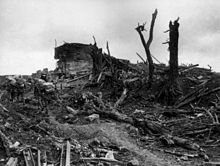
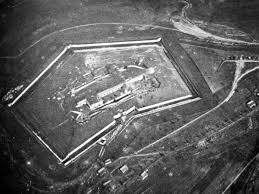
August 1916 marked two years of war and was little different from the month before or the one to follow.  On the Somme front the Battles of Delville Wood and Poziéres continued, piling up casualties for little gain and emulating the ongoing action to the south at Verdun.  There on 1 August the Germans launched a surprise assault on Fort Souville and were duly counterattacked by the French, who on 18 August recaptured Fleury – or what was left of it.

Fort Souville

Fort Souville

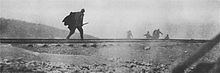
Poilus attacking Fleury

Poilus attacking Fleury

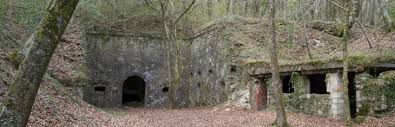
Fort Souville today

Fort Souville today


On 29 August Verdun claimed a major German casualty when Falkenhayn was sacked as Chief of Staff and replaced by Hindenburg.  The apparent failure of the Verdun campaign and the beginning of the Somme and Brusilov Offensives played into the hands of Hindenburg and Ludendorff, who had been conspiring against Falkenhayn.  Ludendorff became First Quartermaster-General, but he was in fact the real power, rapidly assuming control of the entire military and ultimately the Reich itself.

Falkenhayn

Falkenhayn

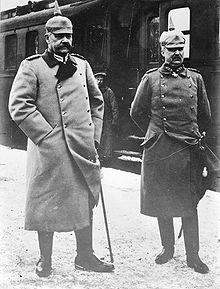
Hindenburg and Ludendorff

Hindenburg and Ludendorff


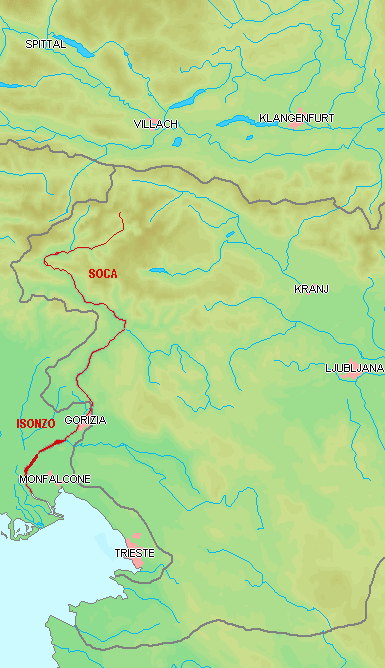
To the south the Isonzo Follies started up again as General Cadorna sought to take advantage of an Austrian line weakened by the removal of troops for the Trentino Offensive.  The Sixth Battle of the Isonzo (or Battle of Gorizia) kicked off on 6 August with a two pronged assault against the long-sought prize of Gorizia, which the Austrians abandoned on 8 August.  Gorizia was the gateway to Trieste and Ljubljana, but the poorly equipped Italian troops could make no further headway and Cadorna ended the offensive on 17 August.

Gorizia

Gorizia

General Luigi Cadorna

General Luigi Cadorna

Isonzo front

Isonzo front

This was Cadorna’s first success, and Italian morale skyrocketed with the capture of the city they had wanted since 1914.  But they wanted Gorizia in order to seize Trieste and invade Slovenia, and in fact that would never happen, leaving Cadorna with only a wrecked city and more dead: 21,000 (not counting the missing) to the Austrian’s 8000.  Throwing 22 divisions against 9 Austrian allowed the (limited) breakthrough to Gorizia, but Cadorna’s frontal assaults were extremely costly.

Exhausted Italian troops

Exhausted Italian troops

Battle of Doberdo (beginning of Isonzo six)

Battle of Doberdo (beginning of Isonzo Six)

Gorizia after capture

Gorizia after capture


Not costly enough, however, to prevent Rome from sending troops to join the growing international camp at Salonika on 12 August, presumably to back up Italian claims in the western Balkans. On 28 August Italy declared war on Germany, apparently under pressure from the Allies, since the two countries were not in direct conflict (German troops would not appear on the Italian front until 1917) and actually benefited from non-belligerence.

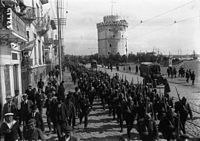
Meanwhile, Greece tottered toward open participation in the war.  National pride and the Bulgarians in Macedonia spurred the Venizelist (pro-Entente, anti-Royalist) forces clustered in Salonika, and on 29-30 August Venizelist officers, supported by the Allies, launched a successful coup against the loyalists.  Troops across northern Greece joined the revolt, and the seed of a government in opposition to Athens, the “National Defense Committee,” was formed.  Loyalist officers fled south.

Greek troops in Salonika

Greek troops in Salonika

Admiral Kountouriotis, Eleftherios Venizelos, and General Danglis.

Admiral Kountouriotis, Eleftherios Venizelos, and General Danglis.


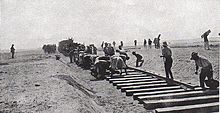
To the south the Turks, who had been steadily creeping across Sinai during July, took what would be a final shot at the Suez Canal on 3 August, advancing towards Romani, about 20 miles from the Canal.  The British had been busy, however, building a rail line east out of Kantara and could now send out more substantial forces.  The result was the Battle of Romani on 3-5 August, during which the Turkish army was decisively defeated, suffering 9200 casualties to the Allied 1130.  But the Ottoman commander, Friedrich Kress von Kressenstein, had prepared fortified positions during his advance, and his surviving forces were able to execute an orderly retreat.  Nevertheless, by 12 August the Turks had been driven all the way back across Sinai to El Arish.  The Battle of Sinai had ended and the Battle for Palestine could begin.

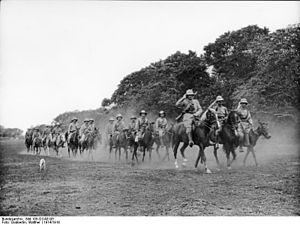
Australian 8th Light Horse at Romani

Australian 8th Light Horse at Romani

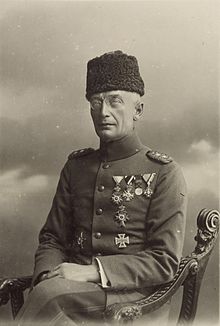
Kress von Kressenstein

Kress von Kressenstein

Turkish advance and retreat in Sinai

Turkish advance and retreat in Sinai

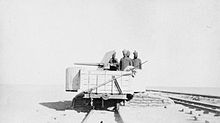
Building the railroad across Sinai

Building the railroad across Sinai

Kressenstein with a smoke

Kressenstein with a smoke


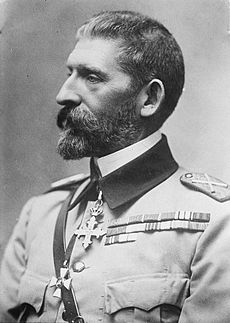
The big news of August 1916 was the entrance of Romania into the war.  King Carol I, a Hohenzollern like the Kaiser, had signed a defensive alliance with the Central Powers, but in 1914 the Romanian people favored the Allies and Romania remained neutral.  King Ferdinand I, who succeeded Carol in October 1914, was more inclined towards the Entente and wanted Transylvania, an Austrian province with a Romanian population, but was wary of the Russians and being left in the lurch by the French and British.  Only after the Allies agreed to stringent terms (most of which were subsequently ignored) did he make his move.

British propaganda

British propaganda

Romanian invasion of Transylvania

Romanian invasion of Transylvania

Romanians (black) in 1914

Romanians (black) in 1914

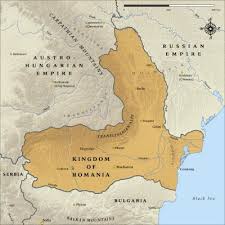
Romania om 1914

Romania in 1914

King Ferdinand I

King Ferdinand I

An alliance was made with the Entente on 17 August, and on the 27th Romania declared war on Austria-Hungary and began mobilization.  The next day a Romanian army invaded Transylvania, prompting Germany to declare war; Turkey followed on 30 (?) August and Bulgaria on 1 September.  September would not be a good month for the Romanians.

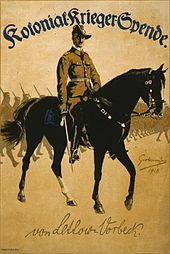
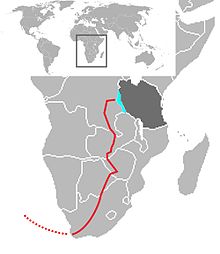
Oh, the South Africans and Belgians continued capturing towns in East Africa, but Lettow-Vorbeck continued to lead them on a merry chase.


Report from the Fronts #18: July 1916

On the Western Front July 1916 began with a bang, literally, as nineteen massive mines buried under German lines were exploded by the British to kick off the long-awaited Somme Offensive. The mines, many begun the previous year, contained a total of 210,800 pounds of high explosive, which together constituted one of the biggest non-nuclear blasts in history.  Three of the mines were behemoths: Hawthorn Ridge at Beaumont-Hamel (40,600 lbs.) and Y Sap and Lochnagar at La Boisselle (40,000 and 60,000 lbs. respectively); Lochnagar was believed to be the loudest man-made noise up to that time, heard as far away as London.  Impressive, but they did not substantially aid the offensive.

Mine tunnel

Mine tunnel

Lochnagar crater today

Lochnagar crater today

Hawthorn Ridge mine

Hawthorn Ridge mine

Hawthorn Ridge crater

Hawthorn Ridge crater

Lochnagar crater

Lochnagar crater


The Somme Offensive had been in the works since 1915 and was intended to be a primarily French operation with the British in support, but the German assault at Verdun had drained away French troops and it was British/Commonwealth forces that ended up bearing the brunt of this Big Push.  The section of the trench line north and south of the Somme River, defended by General Fritz von Below’s Second Army, was chosen by Joffre for the attack, though it is not at all clear why.  There was no particular strategic importance to the area, and because it had been quiet since 1915, the Germans had been busy increasing the stiffness and depth of their fortifications.

The Butcher of the Somme

The Butcher of the Somme

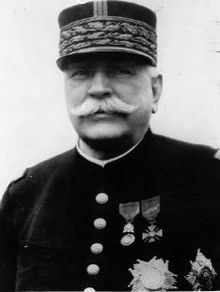
Papa Joffre

Papa Joffre

Somme Offensive

Somme Offensive

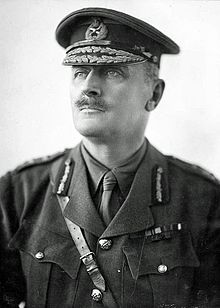
Haig of course went right along with this, delighted it would be primarily a British show.  Eleven divisions from General Henry Rawlinson’s Fourth Army would attack in the area of Albert, supported on their left flank by two divisions of General Edmund “Bloody Bull” Allenby’s Third Army; the right flank would be covered by five divisions of the French Sixth Army on both sides of the Somme.  (Joffre had originally planned on 40 French divisions.)  The goal was the seemingly mythical “breakthrough,” which would allow forces (including all available cavalry!) to head for Douai and Cambrai.  The Allies had air superiority, a factor that was gaining in importance.

Edmund Allenby

Edmund Allenby


Fritz von Below

Fritz von Below

Henry Rawlinson

Henry Rawlinson

The Somme Offensive was in actuality a series of thirteen more or less distinctive named battles that stretched on into November.  The initial attack, the Battle of Albert (1-13 July), pushed the Germans into a substantial withdrawal south and north of the Somme, but the Commonwealth forces in the center got nowhere against the Germans on higher ground.  It was in fact a disaster.  The British suffered 57,470 casualties (19,240 killed) on the first day; their total casualties in the next eleven days were c. 25,000.  1 July 1916 is acknowledged as the worst day in the history of the British army.

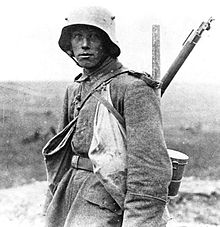
A German "Sommekämpfer"

A German Sommekämpfer

Tommys advancing in the Somme Offensive

Tommys advancing in the Somme Offensive

The fault can be pinned on Haig and Rawlinson, who believed (like most high commanders) that a heavy barrage would take out the machine guns and wire.  Perhaps against their own trench line, but not the deep triple lines and reinforced bunkers of the busy Germans.  The defenses were virtually intact, and the slow-moving British infantry were annihilated.  Two subordinate commanders were sacked (for not pushing their men harder!), but as historian Martin Middlebrook later put it, “Haig and Rawlinson were protected by the sheer enormity of the disaster.”  To fire or criticize them would be a PR disaster – and the offensive went on.

Indian cavalry at Bazentine

Indian cavalry at Bazentine

Battle of Bazentine Ridge

Battle of Bazentine Ridge

But it now comprised more limited engagements and objectives, as the Allies encountered nasty fighting in fortified villages and dense woods.  The Battle of Bazentin Ridge (14-17 July) went better than the original offensive, pushing out a thousand yards and capturing Bazentine le Petit, but further advance was foiled by the confusion and poor communications, frequent companions of Great War offensives.

Delville Wood 14 July

Delville Wood 14 July

Delville Wood 15 July

Delville Wood 15 July

Delville Wood 16 July

Delville Wood 16 July

Delville Wood 18-20 July

Delville Wood 18-20 July


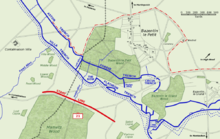
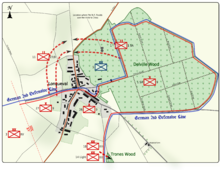
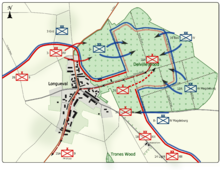
Meanwhile, a bit to the southeast the Battle of Delville Wood (14 July – 15 September) resulted from the effort to secure the right flank of the force in Bazentine, and on the first day the First South African Brigade, making its Western Front debut, seized most of the wood.  The Germans counterattacked, and by 20 July when British attacks rescued the remnants from the wood, the South African brigade had virtually ceased to exist.

Battle of Delville Wood

Battle of Delville Wood

South African General Henry Lukin

South African General Henry Lukin

Delville Wood

Delville Wood


The Battle of Fromelles (19-20 July) actually took place some fifty miles north of the Somme and was a small scale operation designed to take advantage of weaknesses brought on by the transfer of German troops to the Somme.  Well, there were none in this bit of the line, and the two divisions in fact attacked a ridge defended by twice their number, suffering 7080 casualties to the German’s 1500-2000.  The Australian Fifth Division, also making its first appearance on the Western Front, suffered 5533 of those casualties; the battle was later described as “the worst 24 hours in Australian history.’  For what?

The last Somme engagement to be initiated in July was the Battle of Pozières Ridge (23 July – 7 August), which was the only part of a general offensive north and south of the Somme to have any success.  Pozières was a village two miles northwest of Bazentine, and its capture would isolate the Germans in the fortified village of Thiepval.  The Australian First Division took the village immediately, but inasmuch as the rest of the offensive promptly collapsed into uncoordinated mini-engagements, the Aussies became the center of attention of the German artillery and suffered huge casualties.  The German counterattack would come at the beginning of August.

Pozières plateau

Pozières plateau

Road to Pozières

Road to Pozières

 Pozières- captured German bunker

Pozières- captured German bunker

Meanwhile, on the Eastern Front the Baranovichi Offensive in what is now Belarus finally began.  The commander of the Western Army Group, Alexei Evert, had resisted going on the offensive in June as the northern wing of the Brusilov Offensive, perhaps because he remembered the disaster of his Lake Naroch Offenisive back in March.  But the supreme Command insisted, and on 2 July 410,000 troops of the Russian Fourth Army attacked 70,000 Germans of the Ninth Army.  When the on and off offensive finally ended on 29 July, the Russians had gained no ground and lost 80,000 men to the German 13,000.  Is it any wonder revolution was brewing?

Evert's men - future corpses and revolutionaries

Evert’s men – future corpses and revolutionaries

Alexei Evert

Alexei Evert


In other news, the counterattack at the Trentino ended on 7 July, freeing General Cadorna free to contemplate another shot on the Isonzo.  On 25 July Serbian troops (Remember Serbia?) showed up at Salonika, followed in five days by a contingent of Russians, of whom there seemed to be an endless supply.  Incidentally, on 25 July the Russians took Erzincan (Erzinjan) in northeastern Turkey; this is as far as they would penetrate into Anatolia.

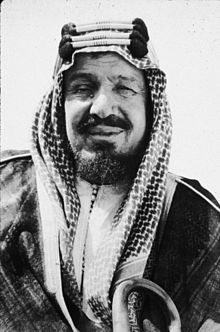
Finally, things were heating up on the Arab front.  In Sinai the Turks began an offensive towards the Suez Canal on 19 July, but far more important to the post-war world, Britain signed a treaty with Abdulaziz Ibn Sa’ud, Emir of Nejd and Hasa, the creator and future king of Saudi Arabia.  That kingdom would include the Hejaz (Too bad, Sherif Hussein) where on 27 July Arab forces took Yenbo, the port of Medina, easing their supply problems.  And soon Lawrence would show up.

Ibn Saud

Ibn Sa’ud

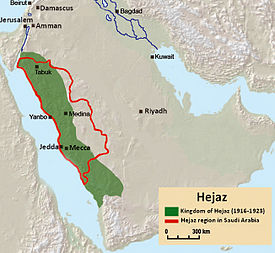
The Hejaz

The Hejaz


Report from the Fronts #15: May 1916

May 1916 was a relatively quiet month, at least by Great War standards. Even the great “Blood Pump” of Verdun slowed somewhat, though that was scant comfort for the men, especially on the west bank of the Meuse, who became casualties during the weeks of back and forth.  At the beginning of the month Pétain was moved up to command of the Groupe d’armées du centre (Army Group Center), and the Second Army, defending Verdun, was given to General Robert Nivelle, who determined to recover Fort Douaumont from the Germans.  Because of the impending Somme offensive, he was limited to one division with another in reserve (pocket change by Western Front standards), and after a three day bombardment General Charles Mangin, who was later known as the Butcher (“Quoi qu’on fasse, on perd beaucoup de monde” – “Whatever you do, you lose a lot of men”), attacked on 21 May.

The Butcher

The Butcher

General Robert Nivelle

General Robert Nivelle

Fort Douamont before the war

Fort Douaumont before the war

The French captured about half the fort the first day, but reinforcements were cut off by a German counter-attack and on 24 May the thousand soldiers in the fort surrendered.  The failed assault cost the French 5,640 casualties, about half the attacking force; the Germans lost 4,500 men.  Incidentally, the German defenders of Douaumont had already suffered casualties without the French lifting a trigger finger.  On 8 May some soldiers had attempted to make coffee using flamethrower liquid for fuel, and the cooking fire spread, igniting shells and a firestorm in the fort.  Hundreds died immediately, but more tragic – and by the dark standards of the war, comic – soot covered men fleeing the fort were shot at by their fellow soldiers, who thought they were being attacked by French African troops.

Fort Douaumont entrance today

Fort Douaumont entrance today

Inside Fort Douaumont

Inside Fort Douaumont

Inside Fort Douaumont

Inside Fort Douaumont

Fort Douamont today

Fort Douaumont today

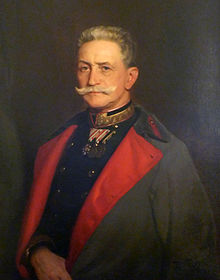
On the Italian front General Cadorna was not ready for the next installment of the Isonzo Follies, but the Austrians felt it was time for them to take a shot. Despite incredible supply difficulties because of the terrain the Austrian Chief of Staff, Franz Conrad von Hötzendorf, planned an offensive out of the Austrian-occupied Trentino, the area north of Lake Garda.  If the 11th and 3rd Austrian Armies could break the Italian line, they would be loose in the Venetian plain, only forty miles from Venice and behind the Italian forces on the Isonzo some eighty miles to the east.  And the plan actually almost worked.

General Luigi Cadorna

General Luigi Cadorna

General Franz von Hötzendorf

General Franz Conrad von Hötzendorf

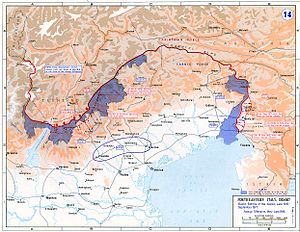
Italian front

Italian front: Trentino offensive red arrows to the left

Cadorna had a quarter million troops in the area of the offensive, but Hötzendorf had managed to concentrate twice that number along a thirty mile front. Italian intelligence could hardly miss these preparations, but Cadorna was convinced, mainly by the terrain, that nothing would be going down there, and in any case his First Army commander ignored his orders to prepare deeper defenses.

Italian troops

Italian troops

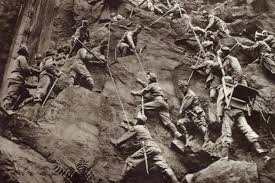
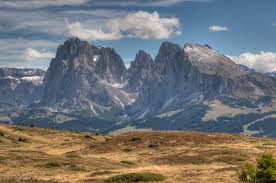
Fighting in the Alps

Fighting in the Alps

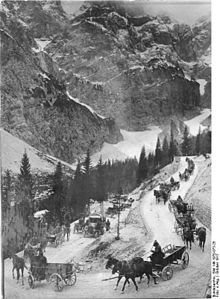
Austrian supply line

Austrian supply line

And so the Trentino Offensive (or Battle of Asiago) began on 14 May as 2000 Austrian guns opened up. The Italian center collapsed within days, and by the end of May the Austrians were six miles beyond Asiago and at the edge of the Venetian plain.  Cadorna rushed reinforcements to the area (the plain had an excellent railway grid) and the offensive was slowed by the immense logistical difficulties, but by the beginning of June the situation was definitely critical.

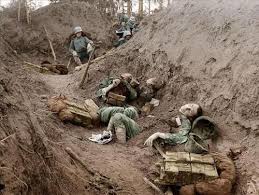
The inevitable result

The inevitable result

Fighting in the Alps

Fighting in the Alps

Asiago are after the offensive

Asiago area after the offensive

The Trentino Offensive was the only serious land engagement of May; major offensives were brewing on the Western and Eastern Fronts.  On 25 May a force from Rhodesia entered German East Africa, and both the Russians and British were occupying more territory in Persia.  By 15 May Russian forces were in northern Mesopotamia, and on 18 May a contingent of Cossacks made contact with the British on the Tigris River.

On 16 May the Second Military Service Act passed Commons and became law on the 25th; married men were no longer exempt.  The net was growing wider in order to supply the abattoir in France.

On 9 May the British and French agreed to the Sykes-Picot plan for partitioning the Ottoman Empire and on the 23rd notified the Russians, who were already on board.  Meanwhile, the Empire was about to break up on its own, as the Allies began blockading the coast of the Hejaz on 15 May.  The Turkish vilayet (province) of Hejaz comprised the western coastal area of the Arabian Peninsula south to Yemen, including the holy sites of Mecca and Medina, and was under the authority of the Sharif and Emir of Mecca, Hussein bin Ali, who had been in communication with the French and British and planned a revolt for June.

Mecca and the Kabba in 1910

Mecca and the Kaaba in 1910

Sharif

Sharif Hussein bin Ali

The Hejaz

The Hejaz

We will see.


Report from the Fronts #12: March 1916

(I have said next to nothing about life in the trenches, and rather than spend time detailing the unimaginable environment of the Western Front, I recommend two books. Richard Holmes, Tommy (2004) is an exhaustive but delightful study of every aspect of trench life, and Ernst Jünger, Storm of Steel (In Stahlgewittern) (many editions) is the sometimes surreal memoir of a German soldier who lived through the entire war.  I have discovered that my major chronological source for the war was in error regarding the Fifth Battle of the Isonzo, which began in March and not February.)


When we left Verdun at the end of February, the German offensive had stalled because of mud, and von Falkenhayn began considering whether to cancel the operation.  The expectation had been that artillery could suppress the enemy guns on the west side of the Meuse, but this did not prove to be the case, and the French artillery, well-positioned on heights and behind hills, wreaked havoc among the German troops advancing along and to the east bank of the river.  But the front crossed the Meuse north of Verdun, and von Falkenhayn was convinced by subordinates that a southward advance on the west side of the river could silence the French guns.  General Heinrich von Gossler’s plan involved assaulting the village of Mort-Homme and Hill 265 (sounds like Vietnam) near the Meuse on 6 March and then Avocourt and Hill 305 to the west on 9 March.

Phillipe Pétain (far left)

Phillipe Pétain (far left)

Falkenhayn

Falkenhayn

Verdun front at the end of March

Verdun front at the end of March

Like so many offensives on the Western Front, it did not work out that way.  Despite a heavy bombardment – Hill 304 was lowered by seventeen feet – the French artillery and counterattacks slowed the advance and inflicted great casualties.  Only after a week did the Germans achieve the objectives for the first day, capturing Hill 265 on 14 March.  On 22 March two German divisions attacked a position near Hill 304 and were slaughtered by a rain of shells, and the offensive came to an end.  By the end of the month the Germans had suffered 81,607 casualties for minimal gains, and Verdun was still French.  There would be nine more months of this.  The commander on the French side at this time, incidentally, was General Philippe Pétain, who would later become the head of state of the Germany puppet Vichy France (1940-44). 


Elsewhere in the war, the Fifth Battle of the Isonzo began on 9 March.  The Italian army in the north had been rested and refurbished, and the French were pressuring Rome for an offensive.  After four failed attempts one must suspect that there was little expectation of any breakthrough, and the point of the operation was in fact to relieve the pressure on the Russians and on Verdun, though how that would happen is not at all clear, especially in the case the French at Verdun.  Even General Cadorna termed the offensive a “demonstration,” which label of course made no difference to the troops, who would be just as dead when shot.

Austrian fort on the Isonzo front

Austrian fort on the Isonzo front

Though some fighting continued to the end of the month, the battle essentially ended after only six days because of the horrible weather conditions, demonstrating once again the futility of these assaults. Despite an almost three to one advantage in men and guns the Italians could make no headway, and each side suffered just under 2000 casualties.  How fine to die for your country in a pointless “demonstration.”  Incidentally, the stony ground and cliffs made this front even more dangerous, since every shell impact would produce a deadly cloud of stone splinters.

Under the same pressure to take some of the heat off the Western Front on 18 March the Russians launched the Lake Naroch offensive in White Russia (Belarus). The Russians had more guns and three times as many troops as the Germans and came up with a somewhat less than novel plan: (inaccurately) shell the German positions for two days and then send bunched formations of infantry charging across the muddy ground.  By the end of the operation on 30 March General Alexei Evert had gained six miles and lost 110,000 men to the Germans’ 20,000 (German estimates).  The Germans promptly retook the territory.

German troops at Naroch

German troops at Naroch

Russian troops at Naroch

Russian troops at Naroch

General Alexei Evert

General Alexei Evert

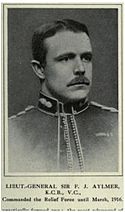
Meanwhile, the British troops besieged in Kut on the Tigris River had enough food to last until the middle of April, and in any case the spring rains would soon make the whole area a disease-ridden quagmire. On 8 March a relief force of some 20,000 under General Fenton Aylmer reached Dujaila, downriver from Kut, and assaulted a Turkish force half their size.  But the Turks, under the command of Golz Pasha and Halil Pasha (Halil Kut, a major actor in the Armenian genocide), had fortified Dulaila well, having learned a lot about entrenchment from Gallipoli. Aylmer lost about 4000 men to Golz’s 1200 and retreated down the river.  He was sacked on 12 March.

Turkish 6th army field headquarters

Turkish 6th army field headquarters

Halil Pasha - mass murderer

Halil Pasha – mass murderer

General Fenton Aylmer

General Fenton Aylmer

Golz Pasha

Golz Pasha

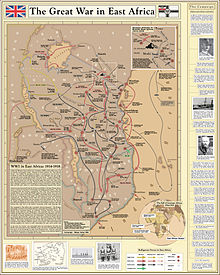
In Africa General Jan Smuts, who had fought against the British in the Second Boer War, invaded German East Africa (Burundi, Rwanda and Tanzania) on 5 March.  With an army of over 70,000 South Africans, Indians and Africans he struck southwest from British East Africa (Kenya), while Belgian forces attacked from the west.  On 10 March Smuts took back Taveta, just east of Mt. Kilimanjaro, and three days later Moshi, south of the peak.  The capture of Kahe, south of Moshi, on 21 March brought an end to the operations around Kilimanjaro; the Germans had left.  Lettow-Vorbeck had only 13,800 troops, mostly Askaris, and had no choice but to withdraw when faced with overwhelming numbers, something easily done given his superior mobility.  The Allies would steadily capture real estate, but never Lettow-Vorbeck, and meanwhile their troops were dying of disease.

Bridge destroyed by Lettow-Vorbeck

Bridge destroyed by Lettow-Vorbeck

General Paul von Lettow-Vorbeck

General Paul von Lettow-Vorbeck

General Jan Smuts (right)

General Jan Smuts (right)

hard to see map

hard to see map

The remainder of the events of March 1916 were of a political or strategic nature.  True to its word, on 1 March Germany expanded its submarine warfare, ultimately bringing the United States closer to involvement in the war.  On 9 March Germany declared war on Portugal, which had refused to return German steamers captured on the Tagus River in February; with even less reason Austria-Hungary also declared war six days later.  Actually, inasmuch as Portuguese East Africa (Mozambique) bordered on German East Africa there was indeed a point of contact between the two countries, and Lettow-Vorbeck would happily use that territory in his Great Chase with the British.

Lettow-Vorbeck

Lettow-Vorbeck

Allied interference in Persia continued, with Russian operations in the northwest and British forces – the south Persian Rifles under Sir Percy Sykes – in the south.  On 25 December 1915 the Allies had “persuaded” the Shah to appoint a more pro-Entente Prime Minister, Prince Farman Farma, and now on 5 March he and his cabinet were compelled to resign for refusing to support Russian-British control of the Persian military and finances.  Anglo-American meddling in Iranian affairs was just beginning.

Prince Farman Farma and Percy Sykes

Prince Farman Farma and Percy Sykes

            More “resignations.” On 15 (?) March Grand Admiral Alfred von Tirpitz, the father of the German navy, resigned as Secretary of State of the Imperial Naval Office, having lost the support of the Kaiser and naval establishment because, ironically, of his support for unrestricted submarine warfare.  More emblematic, on 29 March Alexei Polivanov, who had been struggling to reform the Russian army, resigned as the Minister of War.  In August 1915 he had argued against Nicholas’ assumption of supreme command and thus alienated Alexandra, who persuaded her husband to sack him.  One can hardly get choked up about the impending execution of this couple.

Empress Alexandra

Empress Alexandra

Grand Admiral Alfred von Tirpitz

Grand Admiral Alfred von Tirpitz

Alexei Polivanov

Alexei Polivanov

Finally, on 12 March the Allies held a conference in Chantilly to discuss the summer offensive; the outcome would be the nightmare of the Somme.  And there was another conference at Paris from 26 to 28 March, the result of which was a declaration of unity among the Allied powers: Britain, France, Belgium, Portugal, Italy, Serbia (which technically did not exist at the moment), Russia and Japan.  The Czar must have been delighted to have as an ally the power that had annihilated his Baltic and Far Eastern fleets a decade earlier.  (Yes, Japan; I have been ignoring the relatively trivial events of the Far East and Pacific.)

Paris in 1916

*Paris in 1916

Reports from the Front #9: December 1915

1915 came to an end with few significant changes made in the past year of fighting. Bulgaria was in, Serbia was out and Greece was both in and out, all of which strategically aided the Central Powers, but hardly caused any swing in the overall balance of power.  More significantly, the Russians were driven out of Poland and Galicia, but as events would demonstrate, they were far from being a spent force.  Perhaps the most significant result of a year of conflict was that hundreds of thousands of men were no longer alive or no longer in possession of all their body parts.  Governments and generals had certainly come to the conclusion that this war was not going to be easy or brief after all, but they could come up with nothing better than doing the same old same old.

Actually, one simple “solution” was to change or at least shuffle generals.  On 3 December Joffre was made Commander in Chief of all the French armies, hardly a great development, inasmuch as his tactical inclinations were unchanged from a year of slaughter and as ponderous as his imposing physique.  Meanwhile, Sir John French, the C-in-C of the BEF, was under mounting criticism from just about everyone, including Joffre, Kitchener, Haig, Asquith and the King, who generally felt he was not an aggressive enough commander.  Rather than be sacked, he resigned on 15 December and was replaced four days later by Douglas Haig, who was sufficiently aggressive; he would become known as the ”Butcher of the Somme.”  On 22 December the Chief of the General Staff of the BEF and the Chief of the Imperial General Staff also resigned.

The Butcher of the Somme

The Butcher of the Somme

Papa Joffre

Papa Joffre

French and PM Asquith

French and PM Asquith

In the east it was withdrawal time for the allies. On 2 December the French force in Macedonia withdrew to Salonika, followed on 7 December by the British.  They then demanded that the Greek forces in Salonika leave, which on 11 December they refused to do.  It was after all their country, and they were officially a neutral, demonstrated on 14 December by an agreement with the Bulgarians to establish a neutral zone along the Greek frontier.  But they were a relatively helpless neutral: on 30 December French general Maurice Sarrail had all consuls of the Central Powers in Salonika arrested and deported.  Salonika was now a huge fortified camp, containing 150,000 allied troops, who became known as the ”Gardeners of Salonika.”

General Maurice Sarrrail

General Maurice Sarrrail

French soldiers at Salonika

French soldiers at Salonika

Further east, on 3 December the British/Indian expeditionary force retreating down the Tigris reached Kut-al-Amara, which Townshend decided to fortify. Four days later 11,000 Ottoman troops, commanded by the 72 year old Field Marshal Colmar von der Goltz, an old Turkish hand (Goltz Pasha), arrived and placed Kut and the 8000 British troops under siege.  After a month of this, including an unsuccessful Turkish assault on Christmas Eve, Townshend decided to break out and head for Basra, but he was overruled by his commander, Sir John Nixon, the senior general of the Indian Army, who thought the siege was an excellent way to tie up Ottoman forces.  It would also prove an excellent way to lose 8000 Imperial troops.

Golz Pasha

Goltz Pasha

Townshend

Townshend

Nixon

Nixon

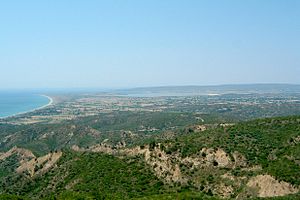
Elsewhere in the Ottoman Empire a more successful withdrawal began, when the allies finally gave up the completely stalled Gallipoli campaign.  On 19 December the evacuation of troops from Suvla Bay and Anzac Cove began and was completed without trouble the following day.  The main force at Helles would leave in January.

Bones left at Anzac Cove

Bones left at Anzac Cove

Aussies charging just before the Anzac evacuation

Aussies charging just before the Anzac evacuation

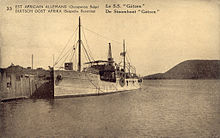
On the other hand, the East African Front was lighting up again, as the British began naval operations on Lake Tanganyika.  The gunboats Mimi and Toutou had completed their 10,000 mile journey from Britain to South Africa and overland to Tanganyika and were launched on 22 and 23 December.  On 26 December they engaged the German gunboat Kingani, which was captured and refitted by the British as the Fifi. More action would follow.

The Kingani/Fifi

The Kingani/Fifi

The epic journey of the Mimi and Toutou

The epic journey of the Mimi and Toutou

On 10 December the Fourth Battle of the Isonzo came to an end.  The Italians had suffered 49,500 casualties, the Austrians 32,100.  For nothing.  Yet, General Cadorna was not sacked, but allowed to carry on his attempts to capture Gorizia and achieve the big breakthrough that all these characters dreamed of.

Finally, a couple of diplomatic arrangements of some interest.  On 28 December two German military attachés in Washington, Captains Karl Boy-Ed and Franz von Papen were declared personae non gratae for being actively involved in espionage and sabotage (America was supplying arms to the Entente) and recalled to Germany.  Von Papen would after the war become the Chancellor of the Weimar Republic and his intrigues would help elevate Adolf Hitler to the Chancellorship.

The young von Papen

The young von Papen

Boy-Ed

Boy-Ed

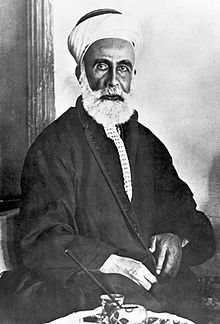
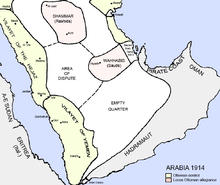
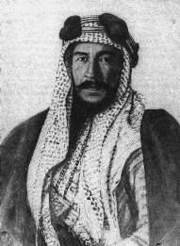
On 26 December Britain signed a treaty with Ibn Saud (or Abdulaziz), an Arab sheik who from 1902 had been extending the control of the House of Saud out from Riyadh.  His main enemy was the House of Rashid, which with Ottoman aid defeated Ibn Saud in 1904, only to be driven out two years later, along with their Turkish allies.  By 1912 Ibn Saud had conquered most of Nejd (the interior of the peninsula) and the eastern coast, becoming the Emir of Nejd and Hasa.  The Ottomans were left with control of the Hejaz, the western coast of the peninsula, where Mecca and the holy sites of Islam were.

Hussein ibn Ali Sharif and Emir of Mecca

Hussein ibn Ali
Sharif and Emir of Mecca

Ibn Saud

Ibn Saud

Arabia in 1914

Arabia in 1914

The British interest was not oil, which was not discovered in Arabia until 1938, but finding a stable ally in Arabia, who could protect British interests in the Persian Gulf and fight the Turks.  By virtue of the Treaty of Darin of 1915 Saudi Arabia became a British protectorate with delineated borders and agreed to respect British interests.  Ibn Saud did not, however, agree to keep his hands off the Hejaz, despite the fact that only two months earlier the British had made an agreement with the Sherif of Mecca.  Why should a Great Power worry about promises made to wogs?

And so 1915 came to an end.  Oh, this year there was no Christmas truce.  The generals and governments were not about to put up with that again.


Reports from the Front #5: August 1915

August was a good time to be on the Western Front: neither side launched any serious assaults on the trench lines. It was also a good time to be on the Eastern Front, if you happened to be German or Austrian. The Gorlice-Tarnów offensive, which Falkenhayn had launched at the beginning of May, continued its rapid advance eastward, destroying Russian units all along the line. This operation was remembered by the Russians as the “Great Retreat,” but that retreat, accelerated by the Stavka (the Russian supreme headquarters) saved the army from any large encirclements, especially in the Warsaw salient. On 5 August the Central Powers took Warsaw, on 25 August Brest-Litovsk and on 26 August Byelostok. The Russians were now being squeezed out of Poland.

Poniatowski bridge (Warsaw) destroyed by the Russians

Poniatowski bridge (Warsaw) destroyed by the Russians

German cavalry enters Warsaw

German cavalry enters Warsaw

Moving east

                                      Moving east

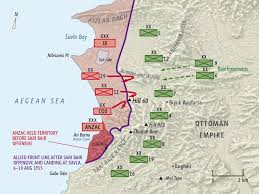
They were not doing so well on the Turkish front either, and on 3 August they evacuated the Van district, which they had captured in May. The Turks reoccupied the area on 5 August, but the next day they faced a serious challenge hundreds of miles to the west. On 6 August the western allies reopened the Gallipoli campaign, landing two fresh divisions at Suvla Bay, just north of “Anzac cove.” The plan was for the two beachheads to unite, seize the surrounding heights before the Turks could bring up reinforcements and then cross to the east coast of the peninsula, trapping the Turkish forces to the south.

Suvla Bay

                                  Suvla Bay

Kemal in the trenches at Gallipoli - not the cigarette holder

Kemal in the trenches at Gallipoli – note the cigarette holder

Liman von Sanders

          Liman von Sanders

The allied failure at Suvla Bay

             The allied failure at Suvla Bay

The plan failed utterly, not so much because of the quick reaction of the (German) Turkish commander, Liman von Sanders, and the equally able Lieutenant Colonel Mustafa Kemal, but because of the incompetence of the British command. The Secretary of State for War, Field Marshal Herbert Kitchener (of Omdurman fame), refused to appoint a younger general and instead saddled the Suvla landing with the inexperienced and 61 year old Frederick Stopford, who was asleep when the assault began and visited the beach only once. He left the operation in the hands of his subordinates, many of whom were also lethargic, and although the two beachheads were joined, inactivity, confusion and conflicting orders prevented the troops from controlling the heights. By the middle of August the battle was essentially over, and another static trench line had been established on the peninsula. By this time there were over 500,000 allied and 300,000 Turkish troops involved in the campaign.

Aussies in a captured Turkish trench

Aussies in a captured Turkish trench

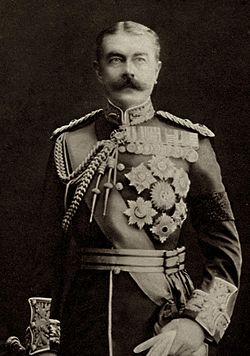
Lord Kitchener

                    Lord Kitchener

Yes, that's Kitchener

               Yes, that’s Kitchener

Off in the west 10 August saw the culmination of the Second Battle of the Isonzo, which ended like the First: little gained beyond mammoth casualties on both sides. More important, on 21 August Italy declared war on the Ottoman Empire. The Treaty of London, signed by Italy and the Triple Entente on 26 April, had lured the Italians into the war with promises of Austrian territory and a protectorate over Albania, but it also confirmed Italy’s possession of the Dodecanese Islands in the Aegean (just off the coast of Turkey) and provided that “in the event of total or partial partition of Turkey in Asia, she ought to obtain a just share of the Mediterranean region adjacent to the province of Adalia (on the south coast of Turkey)…” Diplomatic promises apart, the Italian government apparently felt that being in an actual state of war with Turkey would enhance her position when it came time to dispose of the Ottoman Empire.

Fighting on the Italian front - Austrians

    Fighting on the Italian front – Austrians

And so it was in August 1915, an excellent month for the Central Powers.


Reports from the Front #4: June to July 1915

(Finally. I have found the research for these pieces to be fairly time consuming, so I may have to back off on the detail. It would be nice to comment on other things occasionally.  Incidentally, my Latrodectus Hesperus has disappeared – pity, I got used to seeing her there whenever I went into the utility room.)


In Westen nichts Neues

Im Westen nichts Neues


In June and July of 1915 nothing much was happening on the Western Front: Im Westen nichts Neues. Nothing much beyond a daily death toll from shelling, trench raids and suchlike. But there was plenty of action in the east. At the beginning of June it was decided to continue the Gorlice-Tarnów offensive in Galicia despite the entry of the Italians into the war, and Lemberg was captured on 22 June and the Bug River reached by 13 July. This created a huge Russian salient stretching west to Warsaw, and the next step would be to pinch it off.

 Russian prisoners


Russian prisoners

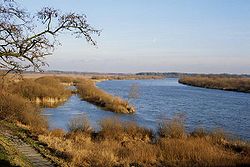
Bug River

Bug River

Galician offensive

Galician offensive

Further to the south in the Caucasus the Russians launched a new offensive on 19 June and immediately ran into stiff Turkish resistance. Most specifically, on 10 July they attempted to clear the area west of Manzikert, captured earlier, and found themselves outnumbered three to one by the Turks, who promptly counterattacked on 16 July. The Russians evacuated the entire Van region, and on 20 July Turkish forces recaptured Manzikert, site of the monumental victory of the Seljuq Turks over the Byzantine Empire in 1071. Even further to the south the Indian Expeditionary Force was slowly making its way up the Tigris, suffering far more from the heat and disease than Ottoman resistance.

Troops of the Indian Expeditionary Force

Troops of the Indian Expeditionary Force

Area around Manzikert

Area around Manzikert

Lake Van

Lake Van

Off to the west the Italians struck their first blow on 23 June, seeking to force the Austrians from the Isonzo (Soča) River and capture Gorizia, the key to Trieste to the south. The Italians had a three to one edge in troops, but their equipment was inadequate, the morale of the poorly trained recruits was low and their commander, General Count Luigi Cadorna, unpopular. Cadorna understood only one offensive tactic, the frontal assault, which was certainly a questionable approach against the well-fortified Austrians on higher ground. The First Battle of the Isonzo ended on 7 July with minimal Italian gains and 15,000 casualties against 10,000 for the enemy. Receiving reinforcements and more artillery, he tried again on 18 July, and fierce hand-to-hand fighting characterized the Second Battle of the Isonzo, which came to an end on 10 August when both sides ran out of ammunition. The Austrian lines held, though they lost 46,600 men; Cadorna lost 41,000. There would be more.

Isonzo river

Isonzo river

The Isonzo Front

The Isonzo Front

Count Cadorna

Count Luigi “Isonzo” Cadorna

Meanwhile, far to the south an odd naval war was taking place. Crippled by engine problems, the German light cruiser SMS Königsberg hid in the Rufiji River delta, where she was discovered in October 1914. On 5 November three British cruisers cornered the Königsberg, but they were unable to sail up the delta and after firing a few shells they settled for a blockade. By March 1915 the Königsberg was in trouble with shrinking food supplies, low morale and deaths from tropical diseases, but though a German supply ship pretending to be Danish was trapped in Manza Bay and burned, much of the cargo was retrieved and delivered to the Königsberg and German land forces. In June two British monitors towed from Malta arrived at the Rufiji, and aided by spotter aircraft (before they fell apart in the glue-melting heat), they destroyed the Königsberg, which was scuttled by her captain, Commander Max Looff. Salvaging the cruiser’s ten 105-mm guns, the crew ultimately joined

SMS Königsberg scuttled

SMS Königsberg scuttled

Lettow-Vorbeck’s merry band.

One of SMS Königsberg's guns

One of the Königsberg’s guns

The Königsberg

SMS Königsberg

Captain Max Looff

Captain Max Looff

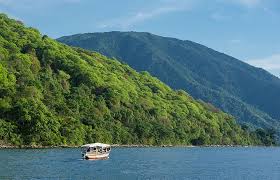
Then there was Lake Tanganyika. At the outbreak of war the Germans had two small warships on the lake, SMS Hedwig von Wissman and SMS Kingani, both in the fifty ton range. They quickly seized control of the lake, sinking a Belgian and a British steamer, and that allowed them to easily send raiding parties into the Belgian Congo and Rhodesia. In February 1915 the Germans launched the 1600 ton SMS Graf von Goetzen, which had been built in Germany in 1913, disassembled and packed into 5000 crates and shipped to Africa. In response the British ordered from England two forty foot motor boats, the Mimi and the Toutou, which were loaded on a freighter and dispatched to Africa on 15 June 1915. Their arrival would set the scene for Hepburn and Bogart in the African Queen.

The Goetzen's 105 mm gun from the Königsberg

The Goetzen’s 105-mm gun from the Königsberg

SMS Graf von Goetzen

SMS Graf von
Goetzen

Lake Tanganyika

Lake Tanganyika

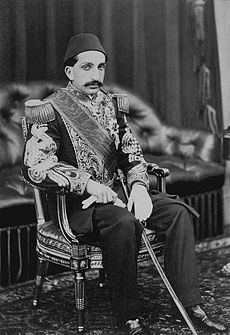
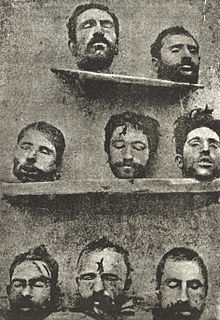
Finally, the Armenians. As non-Muslims in the Ottoman Empire, the Armenians had long suffered discrimination and disabilities, but not until the late nineteenth century did the oppression blossom into widespread violence, as growing Armenian resistance, the proximity of the Russian Empire and Great Power interference brought on a Turkish backlash. While the government deliberately stirred rebellions with harsh measures, Kurdish irregulars were unleashed on the Armenians to essentially do as they pleased. The result was the Hamidian massacres of 1894-96, in which between 100,000 and 300,000 Armenians were killed. But in July 1908 Third Army officers who were members of the progressive Young Turk movement compelled the despised Sultan Abdul Hamid II to establish a constitutional monarchy. All the minorities rejoiced.

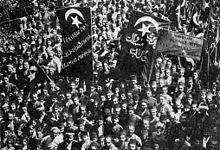
Armenians celebrating the Young Turk coup

Armenians celebrating the Young Turk coup

Abdul Hamid II

Abdul Hamid II

Victims in Erzurum 1895

Victims in Erzurum 1895

Early next year there was a counterrevolution, but the government was able to suppress it and depose Hamid in favor of Mehmed V, who would be only a figurehead. During the brief struggle, however, the reactionaries took out their anger on Armenians, and when troops were sent in to quell the massacres, many joined in the looting and killing in Adana province. Anywhere from 15,000 to 30,000 Armenians died in the Adana Massacre. The loss of most of the Ottoman territory in Europe as a result of the Balkan Wars (1912-1913) convinced many Turks to focus more attention on the Anatolian heartland, in which region the Armenians were a large minority. Further, a flood of Muslim refugees from Europe washed across the Bosporus, and perhaps 800,000 settled in Armenian areas, where they would play a major role in the slaughter to come.

Christian quarter of Adana

Christian quarter of Adana

Victims in adana

Victims in Adana

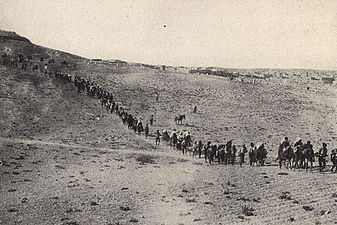
On 24 April 1915 some 250 Armenian leaders and intellectuals were arrested, later to be executed or deported, and on 27 May Istanbul ordered the forced deportation of all Armenians, the notorious Temporary Law of Deportation. Granted, many had been aiding the Russians, but old hatreds mattered more, and it quickly became clear that deportation was simply a mechanism for killing Armenians of all ages. The “deportations” were actually death marches, and for those who survived the depredations and attacks there were “concentration” camps, where the inmates were essentially starved to death. The Turks did not operate with the incredible efficiency later displayed by the Third Reich, but the whole operation was a deliberate attempt to exterminate the Armenians. It was in fact witnessed by many of the German officers aiding the Turks, and they were appalled by what they recognized as simply murder on a mass scale. And a century later Turkey still maintains this holocaust never happened.

Hauntingly familiar

Hauntingly familiar

Scenes like this could be seen across Turkey in 1915

Scenes like this could be seen across Turkey in 1915

Some of the victims of 24 April 1915

Some of the victims of 24 April 1915


This could be Poland in the 1940s.

This could be Poland in the 1940s.


"Deportation"

“Deportation”


Reports from the Front #3: Ottomans and Others – August 1914 to May 1915

(This is more work than I anticipated.)


All the operations associated with the Ottoman Empire and the German colonies in Africa were certainly peripheral to a victory in Europe; even the campaigns in the Caucasus, while important to the Russians, had little to do with the European war.  But they are part of the Great War, and the campaigns in the Middle East would have an impact on the shape of the post-war

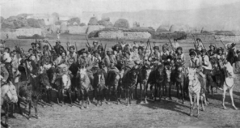
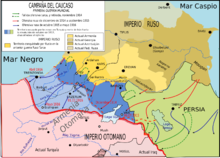
On 2 November the Russians made the first move, sending an army into northeastern Turkey, where they had allies in the form of the Armenians, anxious to escape Turkish oppression.  The offensive petered out by 16 November, and the following day the Ottoman Third Army counterattacked, driving the Russians back with heavy casualties.  By the end of the month the front stabilized some fifteen or so miles into Turkey, but Russian morale was low, while that of the Turks was high.  So high, in fact, that Enver Pasha launched his own offensive towards Sarikamish on 22 December, despite objections from military advisors that the winter conditions would make the campaign extremely difficult.

Kurdish cavalry

Kurdish cavalry

The Caucasus front

The Caucasus front

Well, Enver was a far better politician than general, and the Battle of Sarikamish ended on 17 January, a major Turkish defeat.  The Turks suffered some 60,000 casualties, the Russians half that, many on both sides freezing to death.  Enver gave up generaling and blamed the Armenians for the defeat.  On 20 April the Armenian population of Van, fearing massacre, revolted, and the city was besieged by the Turks until May, by which time the Russians had occupied the province of Van; they entered the city on 23 May.  The Caucasus front was then relatively quiet until late in the year.

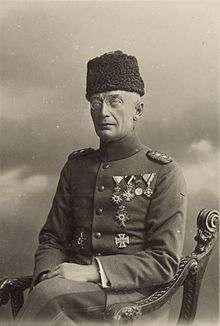
Baron Kress von Kressenstein

Baron Kress von Kressenstein

For good reason: the British had begun putting pressure on the Empire’s southern provinces and the Dardanelles, drawing Ottoman troops away from the Caucasus.  In the far south the Turks decided immediately to attack Egypt, which though nominally a part of the Empire, had been occupied by the British since 1882.  On 18 November Baron Friedrich Kress von Kressenstein, one of the clutch of German advisors in Istanbul, was given command of part of the Turkish Fourth Army and began preparations for an advance across Sinai, which the British had evacuated.  Since the coast road to Egypt would mean being shelled by the Royal Navy, Kress von Kressenstein had to take his 20,000 troops through the Sinai desert, which he did with little loss of life, no mean feat.  The Turkish force reached the Canal on 2 February, and the following day the battle proper began.  Some units actually crossed near Ismailia, but 30,000 troops (most of them colonials) and gunboats on the Canal and lakes were too much, and the battle ended on the 4 February with the Ottoman army retreating to Palestine.

Iraq before it was Iraq

Iraq before it was Iraq

The British had meanwhile gone on the offensive, landing a mostly Indian force at Fao on the Shatt-al-Arab in Mesopotamia (Iraq) on 6 November in order to protect the Anglo-Persian Oil Company’s refinery at Abadan, just across the frontier in Iran.  The automobile had arrived and more important, navies were switching from coal to oil, and suddenly the Middle Eastern backwater was emerging as a center of imperial attention.  On 22 November the Indian Expeditionary Force captured Basra (sound familiar, Americans?) and continued up the river to Qurna at the confluence of the Tigris and Euphrates Rivers, where after being surrounded the Ottoman force of a thousand men surrendered on 9 December.  The Turks, hard pressed at Gallipoli, did not counterattack until 9 April, when they assaulted the British position at Shaiba, near Basra.  The 14,000 Arab and Kurdish irregulars were easily scattered, but it took the 7000 man British garrison two days to defeat the 4000 regular troops.  London ordered the local commander, Charles Townshend, to continue advancing up the Tigris.

Prince Mubarak of Kuwait

Prince Mubarak of Kuwait

General Charles Townshend

General Charles Townshend

The British successes in lower Mesopotamia, albeit against weak Turkish forces, enhanced their credibility in the Arab world.  Even before the invasion Sheikh Mubarak Al-Sabah, ruler of Kuwait, nominally part of the Ottoman Empire, had sent forces to drive out the small garrisons in southern Mesopotamia, and in return London declared Kuwait an independent state under British “protection.”  Arab nationalism had begun to emerge in the previous century, competing with the Pan-Islamism represented by the Ottoman Empire, but demands on Istanbul were still moderate in the early twentieth century.  The British Foreign Office understood the value of encouraging local insurgencies once the war started, but the great Arab Revolt would not occur until 1916.

Of greater concern for the Empire was the Allied assault on the Dardanelles, the narrow straights that lead from the Aegean Sea to the Sea of Marmara and through the Bosphorus to the Black Sea.  When the Turks entered the war in November, they immediately closed the straights and began to mine them, choking off the major Allied supply route to Russia (the German fleet blocked the Baltic, and Vladivostok might have been the other side of the moon).  Winston Churchill, then First Lord of the Admiralty, suggested forcing the straights with a fleet of obsolete warships that were useless against the German navy, thus risking little for huge rewards: Russia could be supplied by sea, Istanbul could be bombarded and the Bulgarians and Greeks, who hated their one-time Ottoman masters, might enter the war.

Admiral John de Robeck

Admiral John de Robeck

Guess who?

Guess who?

The Dardanelles fleet

The Dardanelles fleet

On 2 January 1915 Russia, dealing with the Ottoman offensive in the Caucasus, asked the Allies to divert Turkish troops by attacking in the Aegean, and the Dardanelles operation was set in motion.  On 19 February the Anglo-French squadron began shelling the forts on both sides of the entrance to the straights and by 25 February had destroyed them and cleared the entrance of mines.  The problem was the mobile artillery batteries, which could evade the naval gunfire and attack the minesweepers, but pressed by Churchill Admiral Sackville Carden planned an all-out attack, claiming that the fleet could be at Istanbul in two weeks.  Because of illness Carden was replaced by Admiral John de Robeck, and on 18 March eighteen old battleships and a supporting cast of lesser vessels headed up the straights towards the “Narrows,” where most of the forts and minefields were.

(An historical note: some fifteen miles past the Narrows on the European side is a small river called Aegospotomi by the Greeks.  It was at this point in the straights in 405 BC that the Spartan Lysander and his Persian-supported Peloponnesian fleet annihilated the last Athenian fleet, bringing about the surrender of Athens the following year and ending the twenty-seven year-long Peloponnesian War.)

The Bouvet

The Bouvet

Naval gunnery was able to destroy communications among the forts and take out some guns, but despite ammunition shortages (it was later learned) Turkish fire continued, and the minesweepers, which were crewed by civilians (!), decided the party was over and left.  The French battleship Bouvet was the first to strike a mine, capsizing with almost all hands lost; two other French battleships were damaged.  Two British battleships were sunk and a third severely damaged, and the fleet retreated to the Aegean.  Some of the captains wanted a second shot at the Turks, but de Robeck and important figures in the Admiralty opposed it, and the operation was abandoned.

HMS Irresistible sinking

HMS Irresistible sinking

The Bouvet sinking

The Bouvet sinking

That left Plan B, an amphibious assault on the Gallipoli Peninsula, which formed the European bank of the Dardanelles, in order to silence the Turkish guns on the northern bank of the straights with troops.  This was a mighty ambitious undertaking, given that no one had ever conducted a landing against opposition with twentieth century weaponry, but the Allies presumed there would be no problem since Turkish soldiers were very poor, a conclusion reached from Turkish losses in the Balkan Wars of 1912 and 1913 and traditional European notions of superiority.  Further, British intelligence underestimated the number of defending troops and had only vague ideas concerning the terrain.

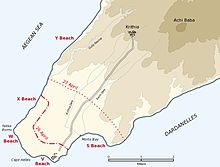
Cape Hellas, Gallipoli

Cape Hellas, Gallipoli

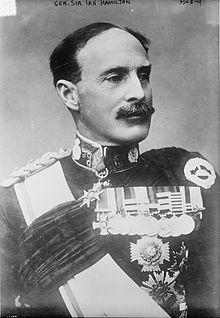
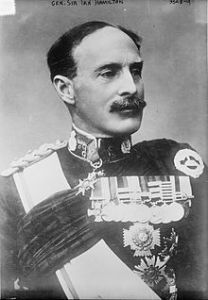
The 78,000 men of the Mediterranean Expedition Force gathered in Egypt, where Imperial troops training for France were organized into the first Australian and New Zealand Army Corps (ANZAC), which would be forever associated with Gallipoli.  Novel logistical problems and weather prevented the Expedition, under Sir Ian Hamilton, from reaching Gallipoli until late April, during which time the Turks were able to reinforce their positions and prepare defenses.  The Ottoman Fifth Army, some 60,000 men, was put under the command of a German officer, Otto Liman von Sanders, who set up a flexible and mobile defense; one of his division commanders was Mustafa Kemal, later known as Atatürk, who would become the founder of the Turkish Republic.

Mustafa Kemal
Mustafa Kemal

Sir Ian Hamilton

Sir Ian Hamilton

Otto Liman von Sanders

Otto Liman von Sanders

On 25 April the main landing commenced at Cape Hellas on the tip of the peninsula, while the Anzacs went ashore some ten miles up the northern shore near Suvla Bay.  The landings were relatively unopposed, but a swift counterattack by Kemal pinned the Anzacs on the beach.  The main force pushed about two miles inland, but counterattacks drove them back, and by 8 May both fronts were static, replete with the trenches and wire.  The Western Front had been recreated on Gallipoli, and Hamilton had already suffered 20,000 casualties.  Nothing much more would happen until August, leaving the troops to be worn down by heat, disease and Turkish shelling.

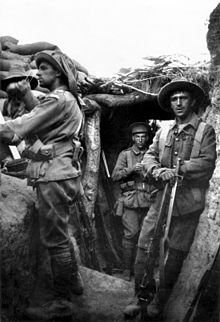
In the trenches at Gallipoli
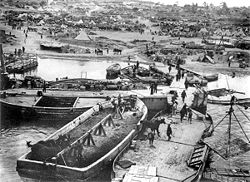
In the trenches at Gallipoli

Gallipoli landing

Gallipoli landing

Off in the west of the Mediterranean the Italians finally got involved.  Italy had in fact been allied to the Central Powers, but was lured away by the Allies with promises of territory, notably the southern Tyrol, taken from the Austrians after the war.  On 23 May Italy declared war against Austria, despite not being really prepared for warfare in the mountainous terrain against well-fortified Austrian positions (though it should be noted Italy entered the Second World War with less and poorer quality artillery that it did the First).  The result would be twelve Battles of the Isonzo River from June 1915 to November 1917.

The Italian front

The Italian front

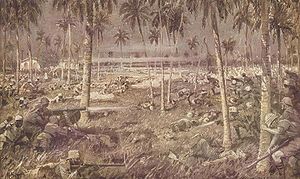
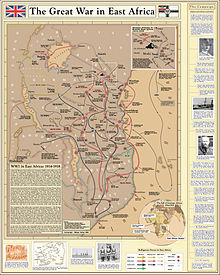
Meanwhile, Austrian and German foreign possessions were quickly overrun at the outbreak of the war – with the exception of German East Africa (Burundi, Rwanda and part of Tanzania), where the local commander, General Paul Emil von Lettow-Vorbeck, would lead the British on a merry chase for the entire war.  To conquer the German territory and stop the raiding into British East Africa (Kenya, Uganda, Zanzibar and part of Tanzania) the British brought in Indian troops for a two pronged attack.  The German garrison was all of 260 colonial troops (Schutztruppe) and 2472 native levies, the Askari, who proceeded to set the pattern for the next four years.  On 3 November 86 mounted Germans and 600 Askaris defeated the northern prong of 1500 Punjabis at the Battle of Kilimanjaro and then raced south to join the Battle of Tanga, where on 4 November Lettow-Vorbeck’s 1000 troops routed the British force of 8000 men.  There would be no easy pickings for the British here, and more than 200,000 Indian and South African troops would be kept busy until the end of the war.

German cavalry at Kilimanjaro

German cavalry at Kilimanjaro

Battle of Tanga

Battle of Tanga

Askaris

Askaris

Genera Paul von Lettow-Vorbeck

Genera Paul von Lettow-Vorbeck

East Africa

East Africa

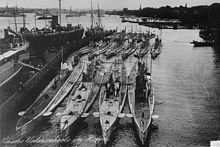
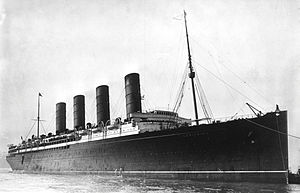
Finally, two ominous incidents occurred during these first ten months of the war.  On 7 May the German submarine U-20 sank the liner RMS Lusitania (which was carrying small arms munitions), killing 128 Americans, and this, together with the dramatically inflated atrocity stories about Belgium, began swaying American opinion against Germany.  Berlin made the case that a surfaced submarine was easy prey for an armed merchant vessel and had publically warned Americans about traveling to Britain, but in response to a warning from President Woodrow Wilson submarines were directed to steer clear of passenger liners.

U-20 (second from left)

U-20 (second from left)

RMS Lusitania

RMS Lusitania


And on 27 May the Turkish Minster of the Interior ordered all Armenians deported from Ottoman territory, and the killing began.  Yes, President Erdoğan, there was an Armenian Genocide.