English Poetry of the Great War

War has always produced poetry, traditionally paeans to courage, honor and self-sacrifice and celebrations of the warrior fighting and perhaps dying nobly and the soldier giving his life for his country.  The Great War initially produced such sentiments, and perhaps the best remembered English language poem of the war is In Flanders Fields by John McCrae, a Canadian physician, who composed the verse on 3 May 1915 in memory of a friend who had died at the Second Battle of Ypres.  (McCrae himself died of influenza in 1918.)  The poem succinctly captures two traditional aspects of war poetry: the honored dead and the sense of mission, now to be carried on by others, that brought them to the grave.


In Flanders fields the poppies blow
Between the crosses, row on row,
That mark our place; and in the sky
The larks, still bravely singing, fly
Scarce heard amid the guns below.

We are the Dead. Short days ago
We lived, felt dawn, saw sunset glow,
Loved and were loved, and now we lie,
In Flanders fields.

Take up our quarrel with the foe:
To you from failing hands we throw
The torch; be yours to hold it high.
If ye break faith with us who die
We shall not sleep, though poppies grow
In Flanders fields. 

John McCrae

John McCrae 1914

But the Great War was unlike any previous conflict in history.  Firearms and cannon, the weapons of industry, had been present for centuries, but this was the first truly industrialized war.  Traditionally, the hideous face of war – the disemboweled men, the stinking bodies, the maimed survivors – had generally been ignored in favor of those noble qualities associated with men facing death.  Twentieth century weaponry blew away this romantic mantle.

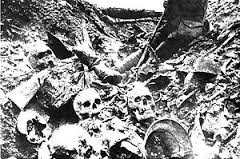
It was now extremely difficult to ignore the utter horror and to see anything at all heroic in the mega-death of the trench lines. You no longer died on a field of green, exhorting your comrades with your last breath and confident you would be celebrated by them.  Now you died in the mud, choking on the gas or shredded by shrapnel.  Now you were incinerated or blown into nothing or buried alive by the artillery.  Now your comrades might never find you and were in any case likely to soon be casualties themselves.

And by 1916 the seeming pointlessness of it all, the sacrifice of thousands for a few yards of ground in a struggle that appeared to have no end, was wearing away old notions of glory and patriotism. Even Rudyard Kipling, whose son John was killed at Loos in September 1915, had doubts, writing the epitaph “If any question why we died/ Tell them, because our fathers lied.”

Rudyard Kipling 1916

Rudyard Kipling 1915

At the beginning of the conflict the age-old sentiment of Horace (Odes 3.2.13) was paramount: Dulce et decorum est pro partia mori – Sweet and proper is it to die for the fatherland.  But the ghastly conditions of the trenches soon made a mockery of dulce et decorum, and it became less and less clear how one’s death benefited one’s country, especially when the generals, comfortable in their chateaux, did not seem to be given many opportunities pro patria mori.

Dulce et decorum est...

Dulce et decorum est…

...pro patria mori

…pro patria mori


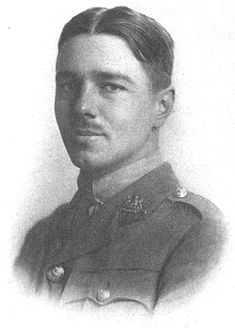
Wilfred Owen, who was killed exactly one week before the war ended, reflected this disillusionment in what is perhaps my favorite poem from the whole bloody affair: Dulce et Decorum est.


Bent double, like old beggars under sacks,
Knock-kneed, coughing like hags, we cursed through sludge,
Till on the haunting flares we turned out backs,
And towards our distant rest began to trudge.
Men marched asleep. Many had lost their boots,
But limped on, blood-shod. All went lame, all blind;
Drunk with fatigue; deaf even to the hoots
Of gas-shells dropping softly behind.

Gas! GAS! Quick, boys! – An ecstasy of fumbling
Fitting the clumsy helmets just in time,
But someone still was yelling out and stumbling
And flound’ring like a man in fire or lime.-
Dim through the misty panes and thick green light,
As under a green sea, I saw him drowning.

In all my dreams before my helpless sight
He plunges at me, guttering, choking, drowning.

If in some smothering dreams, you too could pace
Behind the wagon that we flung him in,
And watch the white eyes writhing in his face,
His hanging face, like a devil’s sick of sin,
If you could hear, at every jolt, the blood
Come gargling from the froth-corrupted lungs
Obscene as cancer, bitter as the cud
Of vile, incurable sores on innocent tongues,-
My friend, you would not tell with such high zest
To children ardent for some desperate glory,
The old Lie: Dulce et decorum est
Pro patria mori.

Wilfred Owen

Wilfred Owen


Such images could hardly be more distant from the maudlin call of In Flanders Fields.  The environment of war may produce noble actions – and great literature – but it is after all impersonal slaughter, and the Great War demonstrated that in a way unmatched before or since.

Report from the Fronts #12: March 1916

(I have said next to nothing about life in the trenches, and rather than spend time detailing the unimaginable environment of the Western Front, I recommend two books. Richard Holmes, Tommy (2004) is an exhaustive but delightful study of every aspect of trench life, and Ernst Jünger, Storm of Steel (In Stahlgewittern) (many editions) is the sometimes surreal memoir of a German soldier who lived through the entire war.  I have discovered that my major chronological source for the war was in error regarding the Fifth Battle of the Isonzo, which began in March and not February.)


When we left Verdun at the end of February, the German offensive had stalled because of mud, and von Falkenhayn began considering whether to cancel the operation.  The expectation had been that artillery could suppress the enemy guns on the west side of the Meuse, but this did not prove to be the case, and the French artillery, well-positioned on heights and behind hills, wreaked havoc among the German troops advancing along and to the east bank of the river.  But the front crossed the Meuse north of Verdun, and von Falkenhayn was convinced by subordinates that a southward advance on the west side of the river could silence the French guns.  General Heinrich von Gossler’s plan involved assaulting the village of Mort-Homme and Hill 265 (sounds like Vietnam) near the Meuse on 6 March and then Avocourt and Hill 305 to the west on 9 March.

Phillipe Pétain (far left)

Phillipe Pétain (far left)

Falkenhayn

Falkenhayn

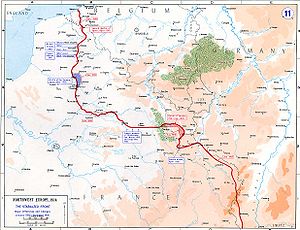
Verdun front at the end of March

Verdun front at the end of March

Like so many offensives on the Western Front, it did not work out that way.  Despite a heavy bombardment – Hill 304 was lowered by seventeen feet – the French artillery and counterattacks slowed the advance and inflicted great casualties.  Only after a week did the Germans achieve the objectives for the first day, capturing Hill 265 on 14 March.  On 22 March two German divisions attacked a position near Hill 304 and were slaughtered by a rain of shells, and the offensive came to an end.  By the end of the month the Germans had suffered 81,607 casualties for minimal gains, and Verdun was still French.  There would be nine more months of this.  The commander on the French side at this time, incidentally, was General Philippe Pétain, who would later become the head of state of the Germany puppet Vichy France (1940-44). 


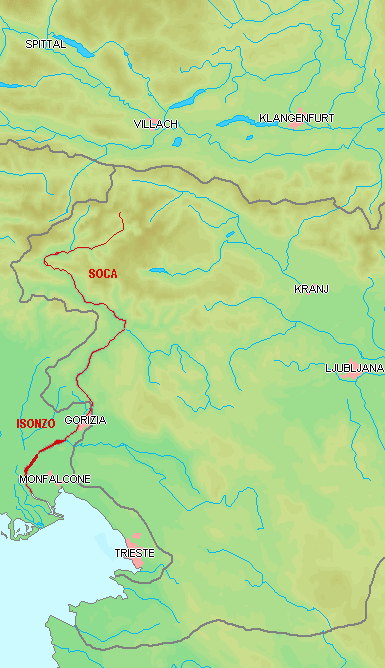
Elsewhere in the war, the Fifth Battle of the Isonzo began on 9 March.  The Italian army in the north had been rested and refurbished, and the French were pressuring Rome for an offensive.  After four failed attempts one must suspect that there was little expectation of any breakthrough, and the point of the operation was in fact to relieve the pressure on the Russians and on Verdun, though how that would happen is not at all clear, especially in the case the French at Verdun.  Even General Cadorna termed the offensive a “demonstration,” which label of course made no difference to the troops, who would be just as dead when shot.

Austrian fort on the Isonzo front

Austrian fort on the Isonzo front

Though some fighting continued to the end of the month, the battle essentially ended after only six days because of the horrible weather conditions, demonstrating once again the futility of these assaults. Despite an almost three to one advantage in men and guns the Italians could make no headway, and each side suffered just under 2000 casualties.  How fine to die for your country in a pointless “demonstration.”  Incidentally, the stony ground and cliffs made this front even more dangerous, since every shell impact would produce a deadly cloud of stone splinters.

Under the same pressure to take some of the heat off the Western Front on 18 March the Russians launched the Lake Naroch offensive in White Russia (Belarus). The Russians had more guns and three times as many troops as the Germans and came up with a somewhat less than novel plan: (inaccurately) shell the German positions for two days and then send bunched formations of infantry charging across the muddy ground.  By the end of the operation on 30 March General Alexei Evert had gained six miles and lost 110,000 men to the Germans’ 20,000 (German estimates).  The Germans promptly retook the territory.

German troops at Naroch

German troops at Naroch

Russian troops at Naroch

Russian troops at Naroch

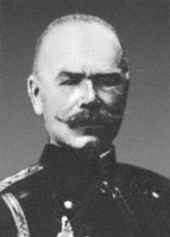
General Alexei Evert

General Alexei Evert

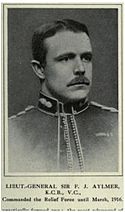
Meanwhile, the British troops besieged in Kut on the Tigris River had enough food to last until the middle of April, and in any case the spring rains would soon make the whole area a disease-ridden quagmire. On 8 March a relief force of some 20,000 under General Fenton Aylmer reached Dujaila, downriver from Kut, and assaulted a Turkish force half their size.  But the Turks, under the command of Golz Pasha and Halil Pasha (Halil Kut, a major actor in the Armenian genocide), had fortified Dulaila well, having learned a lot about entrenchment from Gallipoli. Aylmer lost about 4000 men to Golz’s 1200 and retreated down the river.  He was sacked on 12 March.

Turkish 6th army field headquarters

Turkish 6th army field headquarters

Halil Pasha - mass murderer

Halil Pasha – mass murderer

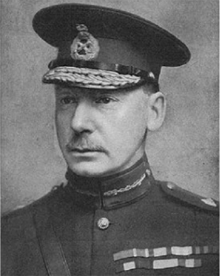
General Fenton Aylmer

General Fenton Aylmer

Golz Pasha

Golz Pasha

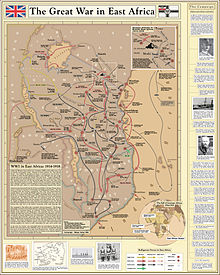
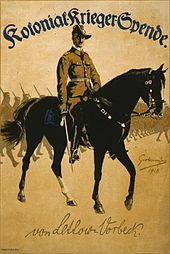
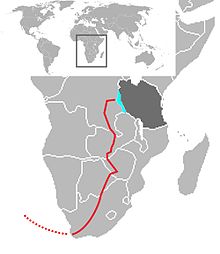
In Africa General Jan Smuts, who had fought against the British in the Second Boer War, invaded German East Africa (Burundi, Rwanda and Tanzania) on 5 March.  With an army of over 70,000 South Africans, Indians and Africans he struck southwest from British East Africa (Kenya), while Belgian forces attacked from the west.  On 10 March Smuts took back Taveta, just east of Mt. Kilimanjaro, and three days later Moshi, south of the peak.  The capture of Kahe, south of Moshi, on 21 March brought an end to the operations around Kilimanjaro; the Germans had left.  Lettow-Vorbeck had only 13,800 troops, mostly Askaris, and had no choice but to withdraw when faced with overwhelming numbers, something easily done given his superior mobility.  The Allies would steadily capture real estate, but never Lettow-Vorbeck, and meanwhile their troops were dying of disease.

Bridge destroyed by Lettow-Vorbeck

Bridge destroyed by Lettow-Vorbeck

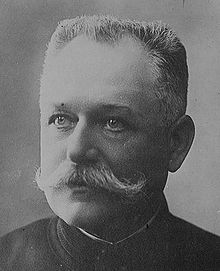
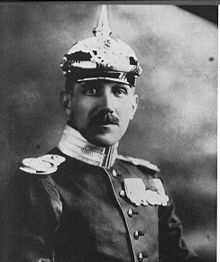
General Paul von Lettow-Vorbeck

General Paul von Lettow-Vorbeck

General Jan Smuts (right)

General Jan Smuts (right)

hard to see map

hard to see map

The remainder of the events of March 1916 were of a political or strategic nature.  True to its word, on 1 March Germany expanded its submarine warfare, ultimately bringing the United States closer to involvement in the war.  On 9 March Germany declared war on Portugal, which had refused to return German steamers captured on the Tagus River in February; with even less reason Austria-Hungary also declared war six days later.  Actually, inasmuch as Portuguese East Africa (Mozambique) bordered on German East Africa there was indeed a point of contact between the two countries, and Lettow-Vorbeck would happily use that territory in his Great Chase with the British.

Lettow-Vorbeck

Lettow-Vorbeck

Allied interference in Persia continued, with Russian operations in the northwest and British forces – the south Persian Rifles under Sir Percy Sykes – in the south.  On 25 December 1915 the Allies had “persuaded” the Shah to appoint a more pro-Entente Prime Minister, Prince Farman Farma, and now on 5 March he and his cabinet were compelled to resign for refusing to support Russian-British control of the Persian military and finances.  Anglo-American meddling in Iranian affairs was just beginning.

Prince Farman Farma and Percy Sykes

Prince Farman Farma and Percy Sykes

            More “resignations.” On 15 (?) March Grand Admiral Alfred von Tirpitz, the father of the German navy, resigned as Secretary of State of the Imperial Naval Office, having lost the support of the Kaiser and naval establishment because, ironically, of his support for unrestricted submarine warfare.  More emblematic, on 29 March Alexei Polivanov, who had been struggling to reform the Russian army, resigned as the Minister of War.  In August 1915 he had argued against Nicholas’ assumption of supreme command and thus alienated Alexandra, who persuaded her husband to sack him.  One can hardly get choked up about the impending execution of this couple.

Empress Alexandra

Empress Alexandra

Grand Admiral Alfred von Tirpitz

Grand Admiral Alfred von Tirpitz

Alexei Polivanov

Alexei Polivanov

Finally, on 12 March the Allies held a conference in Chantilly to discuss the summer offensive; the outcome would be the nightmare of the Somme.  And there was another conference at Paris from 26 to 28 March, the result of which was a declaration of unity among the Allied powers: Britain, France, Belgium, Portugal, Italy, Serbia (which technically did not exist at the moment), Russia and Japan.  The Czar must have been delighted to have as an ally the power that had annihilated his Baltic and Far Eastern fleets a decade earlier.  (Yes, Japan; I have been ignoring the relatively trivial events of the Far East and Pacific.)

Paris in 1916

*Paris in 1916

Reports from the Front #10: January 1915

Most of the action in the first month of 1916 was in the Balkans and Mesopotamia. The troops on the Western Front were busy enough fighting the mud and cold, little realizing that the cataclysm of Verdun would get underway the following month.  The Eastern Front was quiet: the Russians were recovering from the disasters of 1915 and planning a new offensive, while the Germans and Austrians were engaged in picking apart the Balkans.  Even General Cadorna was taking a break from his Isonzo Follies.

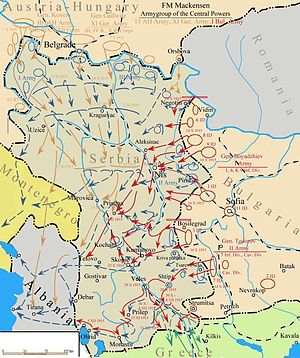
The destruction of Serbia

The destruction of Serbia

Serbs were raining down on Greece.  On New Year’s Day King Peter I of Serbia arrived at Salonika, and on 17 January he moved to Aidipsos on the Greek island of Euboea to take the waters at the thermal springs (he was old and ailing).  Meanwhile, his troops were going to Corfu.  On 10 January the allies informed the Greek government that the remnants of the Serbian army would be moved to the island, and three days later the Greeks refused.  Well, the French had already occupied Corfu two days earlier, and on 15 January they began to ship something like 100,000 exhausted Serbs to the island and other locations, where they would die in droves from malnutrition and disease.  The Serbian government in exile was established at Brindisi.220px-Pobedata_nad_syrbia[1]

Serbs on Corfu

Serbs on Corfu

Peter I of Serbia

Peter I of Serbia

Hard on the heels of the Serbs came the Austrians, who by the end of the month occupied all Albania except the far south. Albania had only come into existence a few years earlier in the wake of the Second Balkan War of 1913 and was assigned territory, Epirus, in the south that was ethnically Greek.  (This disregard for ethnic realities would become endemic in the formation of countries in eastern Europe in the wake of the war.)

As a result the Greeks, who had already occupied the territory earlier and left, sent in troops (with allied approval) on 27 October 1914, while the Italians seized a number of islands. The result was the Macedonian Front, running along the northern Greek frontier through southern Albania to the Adriatic, and any Austrian or Bulgarian advance further south was thwarted.  The Albanian monarch (a German), Wilhelm I, fled.  Albania, incidentally, was not a belligerent.

Wilhelm I of Albania

Wilhelm I of Albania

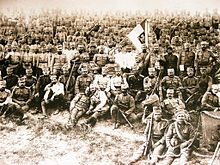
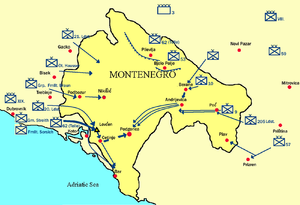
On 10 January the Austrians began nosing into Montenegro, leading to an armistice between the two powers two days later.  But Montenegro had helped the Serbs and in any case was important to Austria, being situated between the Empire and their new possession of Albania, and on 20 January the armistice ended.  The country fell to the Austrians, and King Nicola I fled to France and the Albanian government was ensconced in Bordeaux.

Montenegran soldiers

Montenegran soldiers

The Montenegro campaign

The Montenegro campaign

Nikola I of Montenegro

Nikola I of Montenegro

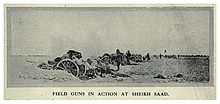
The other hot spot in January 1916 was the Tigris River.  On 4 January a force of some 19,000 troops, mostly Indian, under General Fenton Aylmer began moving north to relieve Kut.  They encountered Goltz Pasha at Sheikh Sa’ad on 6 January, and although the Turks were outnumbered four to one, Goltz managed to hold out until 8 January, when he moved about ten miles up the river to Wadi. On 14 January the British attacked this new position, and while they failed to break through, Goltz retreated another 5 miles to the Hanna defile.

Golz Pasha

Goltz Pasha

General Fenton Aylmer

General Fenton Aylmer

British artillery at Sheikh Sa'ad

British artillery at Sheikh Sa’ad

On 19 January General Percy Lake replaced Nixon as supreme commander of the Mesopotamian campaign. It made no difference.  The British attacked at Hanna on 21 January and failed, and having suffered heavy casualties in the battles and from disease, the relief force retreated south to Ali Gharbi, where they had started.  In the three battles the British had suffered 8600 casualties, the Turks 2230.  The siege of Kut would go on.

General Percy Lake

General Percy Lake

British hospital ship on the Tigris

British hospital ship on the Tigris

British troops on the Tigris

British troops on the Tigris

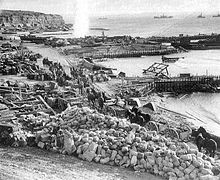
Another failed operation finally came to an end when on 7-8 January allied troops were evacuated from Helles beach at the tip of the Gallipoli Peninsula.  The evacuation proved to be the most successful operation of the whole campaign, and not a man was lost, though the Turks knew it was about to take place.  The Gallipoli campaign proved a disaster, with tens of thousands of lives lost for absolutely no gains, hardly surprising since the landings resulted almost immediately in a mini-Western Front on the peninsula.  Both sides suffered about a quarter million casualties, though the Turks could of course claim a victory.

Helles beach

Helles beach

The political repercussions had a more lasting effect.  Winston Churchill, who had been an instrumental force behind the operation, lost his job as First Lord of the Admiralty and went off to fight on the Wester Front.  Kitchener’s influence began to wane, and the failure would contribute to the fall of the Asquith government at the end of the year.

Churchill would earn a reputation for hare-brained military schemes, but to some extent this was unfair.  The basic idea made sense.  It is very unlikely that a naval bombardment of Istanbul would drive the Turks out of the war, but an allied naval presence in the Sea of Marmara and the Bosphorus would take pressure off the Russians and render communications between the European and Asiatic parts of the Ottoman Empire far more difficult.

Churchill on the Western Front 1916

Churchill on the Western Front 1916

The problem was not the idea but rather extremely poor operational planning and execution, in which Churchill had no real role.  The naval component was woefully inadequate and poorly led, especially the minesweeping units, but the land campaign had a reasonable chance of seizing the forts on the European side of the straights.  That they did not was due to poor planning and intelligence (tourist maps had to be used), overconfidence, insufficient artillery and above all, terrible leadership at all levels.  There were any number of instances in the early stages at Helles when the troops could have kept the initiative and rolled over Turkish positions, but few of the commanders were actually on the beaches, communications were hopeless and requests for support were ignored.  The Turks thus had the time to bring up reinforcements and prepare their defenses, and the result was stalemate.

In other news, on 13 January the Turks began occupying positions in western Iran, partly in reaction to Russian forces in the northwest of the country and British in the south.  Iran was neutral but was in no position to resist these incursions, any more than she could resist the later violation of her sovereignty during the Second World War. Or the CIA engineered overthrow of their democratically elected government in 1953, which resulted in the ascendancy of the brutal US supported Shah.  What would you be chanting in the streets if this had happened to your country?

On 22 January Romania, encircled by belligerents and avid for territorial gains, specifically Transylvania, opened negotiations with Russia for aid.  Rumania was bound by treaty to come to the aid of Austria were she attacked, and the Rumanian king, Carol I, was a Hohenzollern, the ruling house of the German Empire.  When the war broke out, Carol wanted to enter the war as an ally of the Central Power, but the government and public opinion preferred the allies, particularly since Transylvania was a Hungarian possession.  Rumania decided she was not bound by the treaty, since Austria had “started the war,” and the country initially remained neutral.  In October of 1914 Carol was succeeded by Ferdinand I, who was more amenable to honoring the will of the people.

Carol I of Rumania

Carol I of Rumania

Ferdinand I of Rumania

Ferdinand I of Rumania

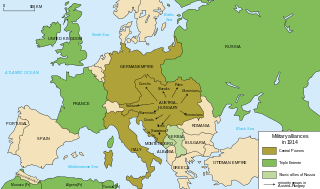
Rumania in 1914

Rumania in 1914

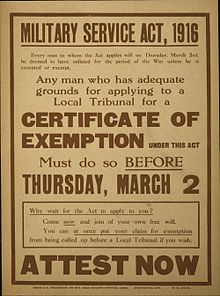
Finally, as a sign of the times, on 27 January the British Parliament passed the first Military Service Act, in effect establishing conscription, which already existed in France, Russia, Austria and Germany.  Defended by its navy and requiring only relatively small forces to secure the Empire, unlike the continental powers Britain could make do with a volunteer army, and in 1914 the regular army was just short of a quarter million men, half of whom garrisoned the Empire.  The BEF initially comprised only 150,000 men; the Germans fielded 1,850,000 and the French 1,650,000.  That certainly would not fill the maw of the trenches, and single men without children in the 18 to 41 age group would henceforth (it would become effective on 2 March) be liable for service unless they were in a war related occupation.  Subsequent acts would expand the pool, as the meat grinder of the Western Front demanded more and more bodies, and by 1918 the British had some 4,000,000 men in uniform.

1916 conscription notice

1916 conscription notice

And so the third calendar year of the war began.

Reports from the Front #9: December 1915

1915 came to an end with few significant changes made in the past year of fighting. Bulgaria was in, Serbia was out and Greece was both in and out, all of which strategically aided the Central Powers, but hardly caused any swing in the overall balance of power.  More significantly, the Russians were driven out of Poland and Galicia, but as events would demonstrate, they were far from being a spent force.  Perhaps the most significant result of a year of conflict was that hundreds of thousands of men were no longer alive or no longer in possession of all their body parts.  Governments and generals had certainly come to the conclusion that this war was not going to be easy or brief after all, but they could come up with nothing better than doing the same old same old.

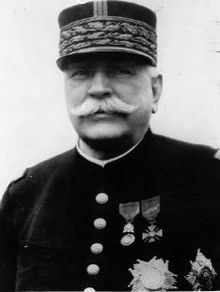
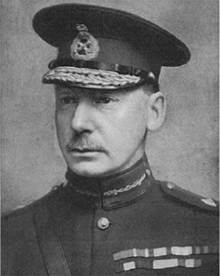
Actually, one simple “solution” was to change or at least shuffle generals.  On 3 December Joffre was made Commander in Chief of all the French armies, hardly a great development, inasmuch as his tactical inclinations were unchanged from a year of slaughter and as ponderous as his imposing physique.  Meanwhile, Sir John French, the C-in-C of the BEF, was under mounting criticism from just about everyone, including Joffre, Kitchener, Haig, Asquith and the King, who generally felt he was not an aggressive enough commander.  Rather than be sacked, he resigned on 15 December and was replaced four days later by Douglas Haig, who was sufficiently aggressive; he would become known as the ”Butcher of the Somme.”  On 22 December the Chief of the General Staff of the BEF and the Chief of the Imperial General Staff also resigned.

The Butcher of the Somme

The Butcher of the Somme

Papa Joffre

Papa Joffre

French and PM Asquith

French and PM Asquith

In the east it was withdrawal time for the allies. On 2 December the French force in Macedonia withdrew to Salonika, followed on 7 December by the British.  They then demanded that the Greek forces in Salonika leave, which on 11 December they refused to do.  It was after all their country, and they were officially a neutral, demonstrated on 14 December by an agreement with the Bulgarians to establish a neutral zone along the Greek frontier.  But they were a relatively helpless neutral: on 30 December French general Maurice Sarrail had all consuls of the Central Powers in Salonika arrested and deported.  Salonika was now a huge fortified camp, containing 150,000 allied troops, who became known as the ”Gardeners of Salonika.”

General Maurice Sarrrail

General Maurice Sarrrail

French soldiers at Salonika

French soldiers at Salonika

Further east, on 3 December the British/Indian expeditionary force retreating down the Tigris reached Kut-al-Amara, which Townshend decided to fortify. Four days later 11,000 Ottoman troops, commanded by the 72 year old Field Marshal Colmar von der Goltz, an old Turkish hand (Goltz Pasha), arrived and placed Kut and the 8000 British troops under siege.  After a month of this, including an unsuccessful Turkish assault on Christmas Eve, Townshend decided to break out and head for Basra, but he was overruled by his commander, Sir John Nixon, the senior general of the Indian Army, who thought the siege was an excellent way to tie up Ottoman forces.  It would also prove an excellent way to lose 8000 Imperial troops.

Golz Pasha

Goltz Pasha

Townshend

Townshend

Nixon

Nixon

Elsewhere in the Ottoman Empire a more successful withdrawal began, when the allies finally gave up the completely stalled Gallipoli campaign.  On 19 December the evacuation of troops from Suvla Bay and Anzac Cove began and was completed without trouble the following day.  The main force at Helles would leave in January.

Bones left at Anzac Cove

Bones left at Anzac Cove

Aussies charging just before the Anzac evacuation

Aussies charging just before the Anzac evacuation

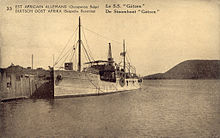
On the other hand, the East African Front was lighting up again, as the British began naval operations on Lake Tanganyika.  The gunboats Mimi and Toutou had completed their 10,000 mile journey from Britain to South Africa and overland to Tanganyika and were launched on 22 and 23 December.  On 26 December they engaged the German gunboat Kingani, which was captured and refitted by the British as the Fifi. More action would follow.

The Kingani/Fifi

The Kingani/Fifi

The epic journey of the Mimi and Toutou

The epic journey of the Mimi and Toutou

On 10 December the Fourth Battle of the Isonzo came to an end.  The Italians had suffered 49,500 casualties, the Austrians 32,100.  For nothing.  Yet, General Cadorna was not sacked, but allowed to carry on his attempts to capture Gorizia and achieve the big breakthrough that all these characters dreamed of.

Finally, a couple of diplomatic arrangements of some interest.  On 28 December two German military attachés in Washington, Captains Karl Boy-Ed and Franz von Papen were declared personae non gratae for being actively involved in espionage and sabotage (America was supplying arms to the Entente) and recalled to Germany.  Von Papen would after the war become the Chancellor of the Weimar Republic and his intrigues would help elevate Adolf Hitler to the Chancellorship.

The young von Papen

The young von Papen

Boy-Ed

Boy-Ed

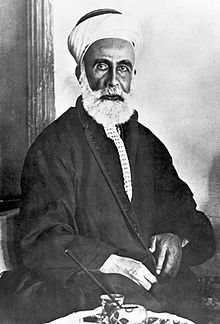
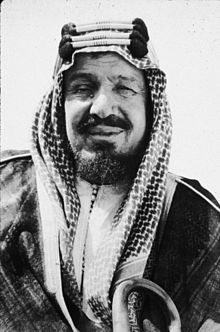
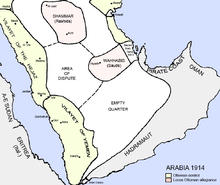
On 26 December Britain signed a treaty with Ibn Saud (or Abdulaziz), an Arab sheik who from 1902 had been extending the control of the House of Saud out from Riyadh.  His main enemy was the House of Rashid, which with Ottoman aid defeated Ibn Saud in 1904, only to be driven out two years later, along with their Turkish allies.  By 1912 Ibn Saud had conquered most of Nejd (the interior of the peninsula) and the eastern coast, becoming the Emir of Nejd and Hasa.  The Ottomans were left with control of the Hejaz, the western coast of the peninsula, where Mecca and the holy sites of Islam were.

Hussein ibn Ali Sharif and Emir of Mecca

Hussein ibn Ali
Sharif and Emir of Mecca

Ibn Saud

Ibn Saud

Arabia in 1914

Arabia in 1914

The British interest was not oil, which was not discovered in Arabia until 1938, but finding a stable ally in Arabia, who could protect British interests in the Persian Gulf and fight the Turks.  By virtue of the Treaty of Darin of 1915 Saudi Arabia became a British protectorate with delineated borders and agreed to respect British interests.  Ibn Saud did not, however, agree to keep his hands off the Hejaz, despite the fact that only two months earlier the British had made an agreement with the Sherif of Mecca.  Why should a Great Power worry about promises made to wogs?

And so 1915 came to an end.  Oh, this year there was no Christmas truce.  The generals and governments were not about to put up with that again.


Reports from the Front #8: November 1915

(This has been delayed by injured ribs and the decision to have the Whitie Comes to America dinner at my house.)


The October focus on the Balkans continued into November, during which month one of the minor powers was eliminated from the war.  On 2 November British Prime Minister Asquith declared that the independence of Serbia was an allied war aim, which was presumably an incentive for the Serbs to continue resisting, inasmuch as the country was peripheral to British interests.  If so, it could not stem the Austrian-Bulgarian flood, and by 30 November the remnants of the Serbian army were streaming into Albania.  Serbia was out of the war.

Goodbye, Serbia

Goodbye, Serbia

At the same time, more in line with the stalemate in the west the Third Battle of the Isonzo came to an end on 3 November, with 60,000 Italian and 40,000 Austrian casualties, including 20,000 dead on both sides.  But never fear, General Luigi Cadorna was not discouraged, and on 10 November he initiated the Fourth Battle of the Isonzo.  He seemed determined to outdo the big boys on the Western Front, where on 6 November the Second Battle of Champagne ended with no gains but 145,000 French and 72,500 German casualties.  German Chief of Staff Erich von Falkenhayn commented on the offensive in his memoirs: Attempts at a mass breakthrough, even with the extreme accumulation of men and material, cannot be regarded as holding out the prospects of success.

Falkenhayn

Falkenhayn


General Luigi Cadorna "The fourth time is the charm."

General Luigi Cadorna
“The fourth time is the charm.”

In the Cameroons the third attempt to capture Mora was abandoned on 4 November, but two days later the allies took Banyo.  Ever hear of either of these places?  Meanwhile, the Anglo-Indian force in Mesopotamia continued their advance up the Tigris River towards Baghdad, only to be stopped just short at Ctesiphon, the ancient capital of the Sassanian Persian Empire.  The Battle of Ctesiphon lasted from 22 to 25 November, resulting in 4600 Anglo-Indian casualties, fully 40% of the force; the victorious Turks lost perhaps 6000.  General Charles Townshend retreated down the river to Kut-al-Amara, which he began to fortify.  A disaster was in the offing.  Incidentally, a British soldier later remarked concerning Ctesiphon: “We calls it Pistupon.”

Townshend

Townshend

The great arch of Ctesiphon

The great arch of Ctesiphon

Up a lazy river

Up a lazy river

Finally, on 8 November the Entente loaned Greece £1,600,000 in an attempt to sweeten the legally questionable presence of their forces in the country.  On the last day of the month the Treaty of London, reapportioning territory in the post-war Balkans, was signed.  It would be superseded by the Versailles Treaty.

In the west the low level slaughter continued, but the chateau generals were already planning the next big push.

Reports from the Front #7: October 1915

(This has taken a long time and no other posts have appeared, but a lot has been going on in my life. And it’s not like I am being paid for this – I get no cut from those ads you might see at the end of a post.  Hey, I like to write.)


October 1915 was “Balkan Month” in the Great War.  At the invitation of Prime Minister Venizélos allied troops showed up at Salonika on 3 October, prompting the Greek government to protest.  Despite this opposition and that of King Constantine, leading to the resignation of Venizélos, the French and British landed two days later, and on 8 October the new Greek government proclaimed a policy of armed neutrality.  This seems a strange call inasmuch as one group of belligerents was actually in Greece, but the Greeks feared the now mobilized Bulgarians.

In response to that mobilization on 4 October the Entente Powers delivered an ultimatum to Sofia, demanding all German officers be expelled from the country.  It was ignored.  The west had lost the territorial bidding war for the allegiance (or at least neutrality) of the strategically located Bulgaria.  Russia recalled its ambassadors on 5 October and Britain on 13 October, on which day French and Bulgarian troops in Macedonia actually engaged one another.  On 15 October Montenegro and Britain declared a state of war with Bulgaria, and the French followed the next day; Russia and Italy came in on 19 October.

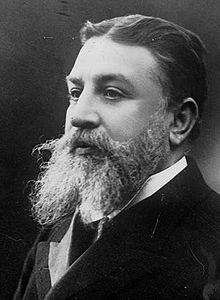
Prime Minister Vasil Radoslavov of Bulgaria

Prime Minister Vasil Radoslavov of Bulgaria

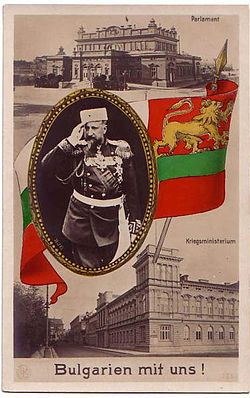
Czar Ferdinand of Bulgaria

Czar Ferdinand of Bulgaria

"Bulgaria is with us"

“Bulgaria is with us”

Meanwhile, the Austrians had been busy.  On 7 October the final solution of the Serbian question began, even though the three previous attempts to conquer Serbia in 1914 had been complete failures.  But the Empire wanted the Serbs crushed, Germany wanted a land passage to the Ottomans and the Bulgarians were eager to bite off chunks of Serbian territory.  The invasion force consisted of the German Eleventh Army and the Austro-Hungarian Third Army in the north and the Bulgarian First Army in the east, more than 300,000 men (I could not locate accurate figures) led by Field Marshal Mackensen.

Goodbye, Serbia

Goodbye, Serbia

They were faced by perhaps 200,000 poorly equipped Serbians, who would essentially be on their own. Serbia’s ally Montenegro had a miniscule untrained militia, and Greece, bound by treaty to defend Serbia, lawyered up and argued that the agreement was no longer valid.  There were only 13,000 allied troops at Salonika, and the French units that did move into Macedonia were easily brushed aside by the Bulgarians.  On 9 October the Austrians captured Belgrade, which was right on the Austrian frontier, while the Bulgarians slowly pushed west and south.  The invaders were hampered by the mountainous terrain, which prevented Mackensen from encircling and annihilating the Serbian army, which had retreated to the center of the country.  Nevertheless, by the end of the month half of Serbia was occupied, and the Serbs were streaming westward.

Retreating Serbians

Retreating Serbians

In other news, the stalemate in Gallipoli continued, the Indians were still sweating up the Tigris and in northern Italy General Cadorna began the Third Battle of the Isonzo on 18 October. Of more importance in the long run on 24 October the British government sent a letter to the Sharif of Mecca defining a post-war Arab state.  Both sides were courting the Arabs, but the Entente was in a far better position inasmuch as the Turkish imperial masters were on the side of the Central Powers.

General Luigi Cadorna "The men just need to fight harder."

General Luigi Cadorna
“The men just need to fight harder.”

Hussein ibn Ali Sharif and Emir of Mecca

Hussein ibn Ali
Sharif and Emir of Mecca

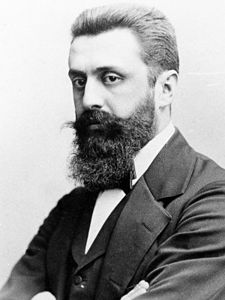
In one of the more bizarre actions of the war both sides were also courting the Jews, not because they could supply some sort of military force, but because they were so economically and politically powerful. Or at least that is what the Germans, French and British thought.  Influential persons in their governments actually fell for the old anti-Semitic idea that there was a powerful worldwide Jewish network, which could possibly alter the course of the war.  This was of course nonsense, but the Zionist movement, particularly strong in Britain, was hardly going to pass on the leverage they received from this silly notion.  This resulted in vague promises of a Jewish state, such as the Balfour Declaration, which would appear in 1917, despite the fact that similar promises were being made to the Arabs and that both Britain and France were in interested in the colonial pickings available from a dissolved Ottoman Empire.

Chaim Weizmann, leader of  British Zionism 1915

Chaim Weizmann,
leader of British Zionism 1915

Theodor Herzel, founder of the World Zionist Organization 1897

Theodor Herzel,
founder of the World Zionist Organization 1897

On the Western Front the slaughter continued: the Third Battle of Artois ended on 15 October, a bloody failure, but the Second Champagne Campaign plodded on until 6 November. As early as 3 October Papa Joffre announced there would be no breakthrough but the offensive would continue as a battle of attrition, and on 22 October he declared that the campaign had made important tactical gains and achieved a “moral superiority” over the Germans by inflicting heavy casualties.  The “tactical gains” amounted to moving the line a few kilometers, and one might expect the Germans did not feel particularly morally inferior, inasmuch as 35 French divisions failed to break a line defended by 15 German divisions.

He was right about one thing: the casualties. The French lost 145,000 men, the Germans 72,000 (25,000 of them prisoners); it is not clear how inflicting heavier casualties on your own troops advanced the cause.  The Third Battle of Artois (including Loos) cost the French another 48,000 casualties, the British 121,000 and the Germans 149,000, not bad for little more than a month of fighting.  The German defense in depth had again demonstrated its effectiveness, but the lesson seemed lost on the chateau generals on the western side of the trench line.  Joffre’s remark about a battle of attrition would prove to be prophetic when 1916 rolled around.

There was one more casualty from the Third Battle of Artois – Field Marshall John French. As Commander-in-Chief of the British Expeditionary Force, French had not got on very well with his fellow generals, both British and French, and only a visit from the Secretary of State for War, Lord Kitchener, could move him to take part in the First Battle of the Marne.  He was blamed for losing at Loos because of mishandling his reserves, which seems more like scapegoating from Kitchener and French’s other enemies than an objective appraisal.  In any case, with such powerful foes in London his days were numbered.

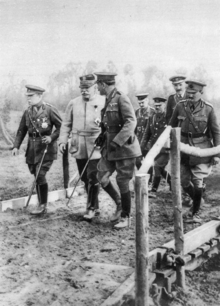
Haig, Joffre and French in a rare visit to the front

Haig, Joffre and French in a rare visit to the front

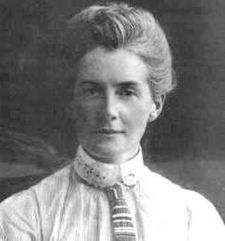
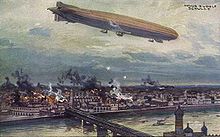
A few other events of note in October.   The third Allied attack on Mora in the Cameroons began on 30 October, and on 13 October the heaviest airship attack yet produced some 200 casualties in London and along the east coast of Britain.  On 12 October the Germans executed a British nurse, Edith Cavell, who had been arrested in August.  Stationed in Brussels, Cavell had been helping smuggle allied soldiers to Holland and on to England, a violation of German military law.  Medical personnel were protected by the First Geneva Convention, but Cavell lost that protection by actively aiding one of the belligerents.  Some German officers called for clemency, but the military governor of Brussels, General Traugott Martin von Sauberzweig, ordered her execution “for reasons of state,” thus denying her any hope of clemency from further up in the German command. The death of Cavell was a propaganda windfall for the allies, and General von Sauberzweig was later relieved.  After the war a British commission concluded that Cavell’s execution was in accordance with the laws of war.

Edith Cavell

Edith Cavell

German Gotha strategic bomber

German Gotha strategic bomber

German airship bombing Warsaw

German airship bombing Warsaw


Laws of war, always an interesting concept.


Reports from the Front #6: September 1915

September 1915 saw the Austrian-German tide in the east slow down because of lengthening lines of communication, but by the beginning of that month the Russians had already lost all of Poland and 750,000 prisoners. Perhaps more important than these losses was a change in command. On 5 September the Supreme Commander of all Russian forces, Grand Duke Nicholas Nickolaevich, was sacked by the Czar. He was a decent soldier but seemingly incapable of controlling the unprepared and fragmented command structure of the Russian army, which was loaded with incompetent appointees. In his place Czar Nicholas appointed…himself. A bigger blunder could hardly have been made.

Grand Duke Nicholas

Grand Duke Nicholas

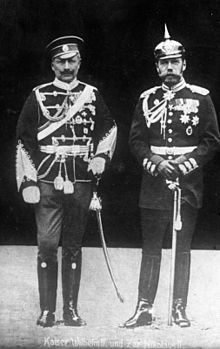
The Czar and the Kaiser, who seem to have put on the uniforms

The Czar and the Kaiser, who seem to have put on the wrong uniforms

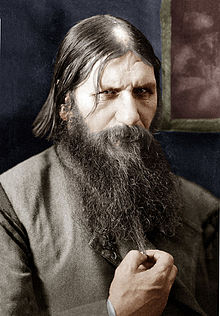
In reality the head of the Stavka, General Mikhail Alekseyev, managed the war, but by assuming supreme command the Czar had identified himself with the conduct of the war, regardless of whether he actually had anything to do with it. And the conduct of the war under Alekseyev was terrible. He clearly did not understand modern warfare and in any case could do little about the corruption and incompetence of the officer class, much of which stemmed from nepotism and court intrigue. Now the Czar, who already had a rep for not being overly concerned about the welfare of his people and had no idea how to wage a war, would take the blame, especially as his presence at the front advertised the fact that he was indeed in command. As defeats mounted and life became even more miserable for the average Russian soldier, it was only natural that he be blamed, particularly since it was easy to believe the Czar was being jerked around by his unpopular German wife, Alexandra, and the notorious “monk” Rasputin. With this decision Czar Nicholas stepped closer to the abyss of the Revolution.

Rasputin

Rasputin

Alekseyev

Alekseyev

Empress Alexandra

Empress Alexandra

With a new El Supremo on 7 September the Russians launched a counter offensive at Tarnopol, in the far south of the front; nine days later it was abandoned. On 16 September the Germans captured Pinsk, and two days later they took Vilna, threatening to break open the northern front. Italy’s entry into the war helped by drawing Austrian forces to the southwest, but nevertheless, by the end of the month things were looking grim for the Russians.

Moving east

Moving east

Meanwhile, the Balkans were lighting up with diplomacy as the neutrals were considering their options. On 22 September Bulgaria ordered general mobilization in the wake of reaching a favorable frontier agreement with the Turks, who wanted Bulgaria in the war on their side. The Bulgarians were seeking territorial expansion, especially at the expense of the Serbs, and finally decided the Central Powers were the better bet. The Greeks, who had little love for the Turks (and had over a million fellow Hellenes in western Turkey) and now feared the Bulgarians, began negotiations with the western allies, asking for a guarantee of 150,000 allied troops. At least the Greek Prime Minister, Elefthérious Venizélos, did; King Constantine I was seriously pro-German. Nevertheless, on 23 September the Greeks began to mobilize, and the next day the French and British agreed to send troops. On 27 September the King secretly gave in to the allied deal, but the following day the Greek government (minus Venizélos) formally refused the allied help and Constantine went along. This would ultimately lead to the “National Schism,” a veritable division of Greece between the monarchists and the supporters of Venizelos.

Constantine I in a German uniform

Constantine I in a German uniform

Venizelos

Venizelos

On the Western Front the lazy, hazy days of summer came to end with the fall offensives. On 25 September the French opened the Second Champagne Offensive, while to the north they and the British began the Third Battle of Artois (the Battle of Loos was the British component and saw the first use of gas by them). Do these names seem familiar? They are the same sectors of the front attacked back in May, and the result would be the same. Granted, there were good strategic reasons to mount this offensive, but why should anyone expect it to succeed this time, when in fact the German defenses in depth were far more developed now? The battles would last into October and November and achieve nothing but casualties. This is the sort of wishful thinking that would characterize the decisions of the chateau generals for the next several years.

Im Westen nur Dummheit

Im Westen nur Dummheit

There was an allied attack in the Cameroons on 8 September, but otherwise, in Afrika nichts Neues. On 1 September Germany agreed to demands by the United States to limit submarine warfare; she would later be more desperate.

And that’s what happened 100 years ago this month.

Reports from the Front #5: August 1915

August was a good time to be on the Western Front: neither side launched any serious assaults on the trench lines. It was also a good time to be on the Eastern Front, if you happened to be German or Austrian. The Gorlice-Tarnów offensive, which Falkenhayn had launched at the beginning of May, continued its rapid advance eastward, destroying Russian units all along the line. This operation was remembered by the Russians as the “Great Retreat,” but that retreat, accelerated by the Stavka (the Russian supreme headquarters) saved the army from any large encirclements, especially in the Warsaw salient. On 5 August the Central Powers took Warsaw, on 25 August Brest-Litovsk and on 26 August Byelostok. The Russians were now being squeezed out of Poland.

Poniatowski bridge (Warsaw) destroyed by the Russians

Poniatowski bridge (Warsaw) destroyed by the Russians

German cavalry enters Warsaw

German cavalry enters Warsaw

Moving east

                                      Moving east

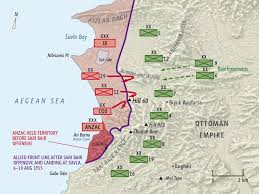
They were not doing so well on the Turkish front either, and on 3 August they evacuated the Van district, which they had captured in May. The Turks reoccupied the area on 5 August, but the next day they faced a serious challenge hundreds of miles to the west. On 6 August the western allies reopened the Gallipoli campaign, landing two fresh divisions at Suvla Bay, just north of “Anzac cove.” The plan was for the two beachheads to unite, seize the surrounding heights before the Turks could bring up reinforcements and then cross to the east coast of the peninsula, trapping the Turkish forces to the south.

Suvla Bay

                                  Suvla Bay

Kemal in the trenches at Gallipoli - not the cigarette holder

Kemal in the trenches at Gallipoli – note the cigarette holder

Liman von Sanders

          Liman von Sanders

The allied failure at Suvla Bay

             The allied failure at Suvla Bay

The plan failed utterly, not so much because of the quick reaction of the (German) Turkish commander, Liman von Sanders, and the equally able Lieutenant Colonel Mustafa Kemal, but because of the incompetence of the British command. The Secretary of State for War, Field Marshal Herbert Kitchener (of Omdurman fame), refused to appoint a younger general and instead saddled the Suvla landing with the inexperienced and 61 year old Frederick Stopford, who was asleep when the assault began and visited the beach only once. He left the operation in the hands of his subordinates, many of whom were also lethargic, and although the two beachheads were joined, inactivity, confusion and conflicting orders prevented the troops from controlling the heights. By the middle of August the battle was essentially over, and another static trench line had been established on the peninsula. By this time there were over 500,000 allied and 300,000 Turkish troops involved in the campaign.

Aussies in a captured Turkish trench

Aussies in a captured Turkish trench

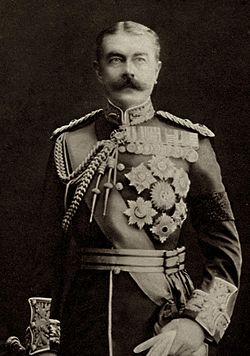
Lord Kitchener

                    Lord Kitchener

Yes, that's Kitchener

               Yes, that’s Kitchener

Off in the west 10 August saw the culmination of the Second Battle of the Isonzo, which ended like the First: little gained beyond mammoth casualties on both sides. More important, on 21 August Italy declared war on the Ottoman Empire. The Treaty of London, signed by Italy and the Triple Entente on 26 April, had lured the Italians into the war with promises of Austrian territory and a protectorate over Albania, but it also confirmed Italy’s possession of the Dodecanese Islands in the Aegean (just off the coast of Turkey) and provided that “in the event of total or partial partition of Turkey in Asia, she ought to obtain a just share of the Mediterranean region adjacent to the province of Adalia (on the south coast of Turkey)…” Diplomatic promises apart, the Italian government apparently felt that being in an actual state of war with Turkey would enhance her position when it came time to dispose of the Ottoman Empire.

Fighting on the Italian front - Austrians

    Fighting on the Italian front – Austrians

And so it was in August 1915, an excellent month for the Central Powers.


Alexander Lives!

(This piece is being published again in order that the participants at my talk on alternative history can read the full text on the alternate Alexander; a new post will take its place in a week or so.  The names in bold type are historical characters; for clarity the Greeks are given their original royal cognomina, though they do not apply in this history. Alexander’s son, born after his death, was named Alexander [IV]; here is named Philip [III].)

Our boy in fighting trim

Our boy in fighting trim


……..Once the fever had passed, Alexander’s first act was to order the construction in Babylon of a massive new temple of Marduk, whom he believed had saved his life. He then dispatched Craterus to take over the governorship of Macedon and Greece from the aging Antipater and made further arrangements for the training of 20,000 Persian youths brought west by Peucestas. The already planned expedition to circumnavigate Arabia then got underway, with the King accompanying the fleet, which would keep the land forces supplied. But the heat was debilitating, especially for the army, and it rapidly became more difficult to gather food and even water. Reaching the point where the Arabian Peninsula turns south and west and getting a better idea of just how big Arabia was, Alexander created a smaller squadron of ships, provided them with all the supplies that could be spared and sent them on. He meanwhile led the remaining forces back to Babylon, a march that many said outdid the Gedrosia in hardship.

Babylon

Babylon

Alexander and Craterus in their younger days

Alexander and Craterus in their younger days

Roxane and with her son Philip

Roxane and with her son Philip

Back in the capital the King was pleased to discover that his Bactrian wife, Roxane, had delivered a boy, whom he named Philip after his father, to the delight of the older Macedonian veterans, who were unenthusiastic about Alexander’s Asian ways. He attended to the administration of the Empire and the training of the new Greco-Persian units, one of those Asian programs so disliked by his soldiers. Towards the end of the year he traveled to the Phoenician coast to inspect the new fleet being assembled in the Mediterranean, then spent the winter in Alexandria, indulging himself in ordering new temples built around the Hellenic world, including a splendid monument to his father in the ancestral Temenid royal burial grounds in Aegae.
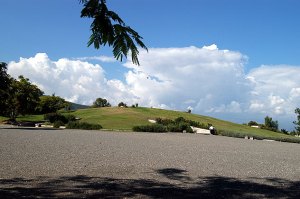
The royal tombs at Aegae

The royal tombs at Aegae

In the spring of 322 Alexander got word that his tutor, Aristotle, had died, and he ordered a period of mourning throughout the Greek world. He also dispatched a squadron of ships south in the Red Sea to meet the expedition coming from the east and spent most of the year mustering forces and supplies for a march west along the African coast. The Greek cities in Sicily, which had congratulated him on his return from the east, were now beginning to make dire predictions of what threats would emerge should the Carthaginians seize the entire island and consolidate their position there. The King, who had always wanted to bring all the Greeks into the Empire, agreed and began preparations for an expedition against Carthage. Meanwhile, Craterus was compelled to take an army north to deal with the Paeonian tribes that had renewed their traditional raiding south into Macedon.

Alexandria (Egypt)

Alexandria (Egypt)

The African army began its march westwards in the spring of 321. The coastal towns of Cyrene had submitted to Alexander when he entered Egypt a decade earlier, but the heat and constant need to feed and water his forces without devastating the area’s inhabitants meant fairly slow progress. At the site of modern Benghazi the King left a force to build yet another Alexandria and continued westward along the coast with the bulk of the army and navy, driving into the territory of tribes nominally allied to Carthage. Sandstorms and constant harassment by the desert tribes, who seemed to spring out of nowhere, slowed progress greatly, however, and with growing supply problems Alexander decided to turn back and winter at the new Alexandria Kyrenaea. The western desert had proved a much greater challenge than the Sinai had back in 332.

During the winter the King learned that the fleet sent around Arabia had sailed up the Red Sea to Egypt, and he ordered that bases be established along the route to facilitate trade. He had been sending out mounted units to reconnoiter the African coast, especially regarding water supplies, and contact the tribes along the route. With the treasure of the old Persian Empire at his disposal buying the Libyans away from Carthage was easily done, and when the army was ready to march in the spring, he sent to the Punic capital demanding an alliance and the evacuation of their troops from Sicily. Their answer, delivered a few weeks later, was a surprise raid on Alexander’s fleet, during which his transports suffered heavy damage and his Phoenician crews revealed an extreme reluctance to attack their Punic cousins.

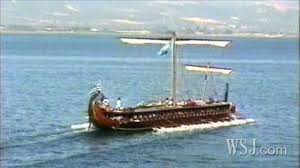
A rooky trireme going into battle with its mast still up

A rooky trireme going into battle with its masts still up

Triremes under sail

Triremes under sail

Sending the Phoenicians back to Alexandria with instructions that new crews and more warships and transports were to join him as soon as possible, Alexander characteristically moved quickly, trusting his new Libyan allies to provide information about the enemy and the land. By summer’s end he had reached Lepcis Magna, well into Carthaginian territory. The extremes of heat and cold had once more taken a toll on his army, and he decided to rest here where supplies were plentiful and await the reinforcements coming by sea. Soon enough the Carthaginian navy reappeared, this time in greater numbers, and Alexander was forced to beach his supply vessels and guard them with troops while his outnumbered and out rowed warships were so roughly handled that they were soon fleeing and heading for the shore. The enemy fleet departed, and the next day the King sent the surviving naval units east to meet the reinforcements and continued the march to Carthage. Despite the naval defeat morale was high, since the men knew that if the King could take an army though the Hindu Kush, he could certainly traverse this region.

A week’s march from Carthage his way was blocked by the enemy army at Bararus. The force was larger than his and composed of Libyans and mercenaries, most of them veterans from the Carthage’s Sicilian campaigns, and cavalry from Numidia. Ptolemy Soter suggested that the King simply buy the army from its Carthaginian leaders, but he replied “I will not purchase a victory.” While some of the King’s newly raised units performed poorly and his smaller cavalry force had a time of it with the Numidians, his Macedonians and Greeks broke through the enemy center, at which point the Numidians fled and the subject and mercenary infantry surrendered. Alexander promptly hired the mercenaries and gave the Libyans the option, eagerly taken, of joining his army.

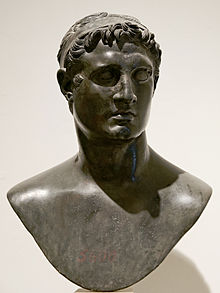
Ptolemy Soter

Ptolemy Soter

Within a month Carthage and the other Punic towns had surrendered. Knowing that he could not yet deal with their navy, Alexander had offered terms that left the Carthaginians in possession of their emporia, excepting in Sicily, and their commercial empire, but they were bound in an alliance. They in turn supplied ships to transport Alexander’s disabled troops east and to find his long overdue fleet, which in fact had turned back due to storms. He meanwhile continued west to accept the surrender and alliance of the Numidian king, who agreed to supply cavalry to the King’s army. Taken once more by his pothos, his “longing,” which had compelled him to cross the Danube and the Gedrosia desert, Alexander wished to continue on to the Pillars of Heracles, named after his ancestor, but Ptolemy and the other Companions managed to convince him that after three years on the march he needed to return to the heart of the Empire.

The Pillars of Heracles

The Pillars of Heracles

In 317 Alexander was back in Babylon, once more replacing failed governors, as he had in 324 upon his return from the east. Later in the year he returned to Pella for the first time in seventeen years, there to meet his mother, Olympias, and host massive banquets celebrating the Macedonian achievement. He also celebrated by taking a small army into Illyria, which had been conspiring with the Dardani to invade northern Macedon. Completely surprised, the Illyrians were easily defeated, and the King established a chain of fortresses to watch over them. The following year he took a larger force north and was joined by several Thracian tribes eager to benefit from the campaign against the Dardani and Triballi, who were duly crushed and scattered. More territory was awarded to the Thracians, and Alexander settled old veterans in a new city on the Danube, Alexandria Istria.
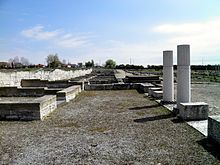
Ruins of Pella

Ruins of Pella

Ruins of Pella

Ruins of Pella

The Queen Mother Olympias

The Queen Mother Olympias

The King decided in 315 to begin preparing an expedition to settle affairs in Sicily, where the removal of the Carthaginian menace had led to a destructive free-for-all among the Greek cities, Syracuse leading the way as the strongest player. A new fleet was ordered from the Phoenicians and the Athenians, who were reminded of the humiliation they had suffered at the hands of Syracuse a century earlier during the Sicilian expedition, and Alexander himself attended to training a younger generation of Macedonians and Greeks. Late in the year, however, word of trouble in India finally reached the west. An Indian adventurer, Chandragupta, having established himself along the Ganges, had engineered revolts in the northern Indus valley and was pressing Alexander’s one time foe and now ally Porus. Engaged in the preparations for Sicily, Alexander dispatched his Companion Seleucus Nicator with a largely Asiatic force with a strong contingent of Greek mercenaries.
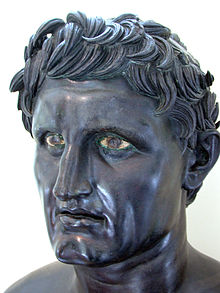
Seleucus Nicator

Seleucus Nicator

Porus surrendering to Alexander

Porus surrendering to Alexander back in the day

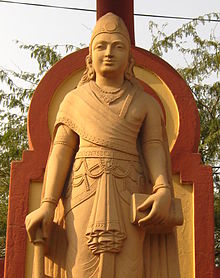
Chandragupta

Chandragupta

Having intimidated the Italian Greek cities of Tarentum, Croton and Rhegium into alliance, in 314 Alexander, recovered from another bout of malaria, invaded Sicily, where Syracuse under the tyrant Agathocles had formed a coalition of Sicilian cities to resist the invasion. By 312 he had defeated several Greek armies and gained the entire island except Syracuse, which was put under siege. It took almost a year to take the city, after which Alexander organized the Sicilian cities into a confederation similar to that of the Greek cities in Asia Minor. Now, most all the Greeks, except those in Italy, were under Macedonian control, and Alexander began planning an incursion into Italy, where the fledgling Roman Republic was still dealing with the Samnites in the central highlands. Alexander of course saw this as another step in his dream of reaching the Pillars of Heracles.

Agathocles the tyrant

Agathocles the tyrant

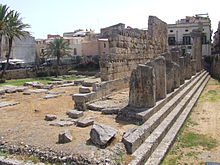
Ruins of Syracuse

Ruins of Syracuse

Late in 311, however, the King learned that Seleucus had been unable to stop Chandragupta, whose forces were pressing Porus and threatening to seize the passes west into Afghanistan. Alexander determined, with no little enthusiasm, that it was time for him to return to India. The Macedonian-Greek forces destined for Italy instead moved to Babylon, where they were joined by newly raised Asiatic troops. The army spent the winter of 309/308 in Ecbatana, where Alexander discovered that the Scythians had poured across the Jaxartes and were plundering Sogdiania and Bactria. In the spring the King moved into these provinces and after months of pursuit finally drove the major Scythian force into a battle, where it was annihilated. He wintered in Kabul, where he was joined by Seleucus and the remnants of his army and informed that Porus had sided with Chandragupta. In 307 Alexander moved east, dividing the army into three contingents, as he had done almost two decades before. Debouching into the north Indus watershed, he once again faced Porus, who was once again defeated. This time, however, the Indian prince was sent west under guard, and the area was placed under the control of Seleucus, who was left with a substantial garrison of Greek mercenaries.

Once more Alexander built a flotilla and proceeded down the Indus, meeting Chandragupta’s huge army not far south of Porus’ kingdom. Thinking wistfully of the battles against the last Persian king, Darius III, the King took on an Indian army at least twice the size of his own and as at Gaugamela won a crushing victory. And once again the leader escaped, fleeing eastward. Alexander repeated his journey down the Indus, reestablishing garrisons in the major towns, and then followed the route west taken by Craterus years before. In 304 he was back in Babylon, where the news was uniformly bad.

He learned that two years earlier Antipater’s son Cassander had procured the assassination of Craterus and proclaimed Philip Arrhidaeus, the halfwit son of Alexander’s father, king of Macedon, asserting his pure Macedonian blood in contrast to Alexander’s son, who was only one quarter Macedonian. The King’s most able governor in Asia Minor, Antigonus Monopthalmos, had promptly marshaled his forces and marched on Europe, where he defeated and killed Cassander in a particularly bloody battle and having little choice, had the pathetic figure of Arrhidaeus executed. The King’s position in Macedon had been restored, but his long absence in the east and the coup in Macedon had led to the revolt of Syracuse and Carthage, which had regained its Sicilian fortress of Lilybaeum.

Antipater

Antipater

Cassander

Cassander

Philip Arrhidaeus

Philip Arrhidaeus

Antigonus Monopthalmos

Antigonus Monopthalmos


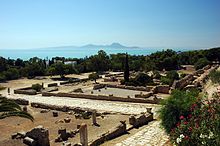
Alexander immediately moved to Pella, where he found that Cassander had executed his mother, Olympias. Overwhelmed by grief and anger dwarfing that following the death of Hephaestion in 324, Alexander killed everyone even remotely associated with Cassander and then took an army northeast to slaughter every barbarian he could lay his hands on. In 299 he invaded Sicily a second time, this time accompanied by his son, and after another siege captured Syracuse again in 298, this time to make the streets run with blood, seemingly a sacrifice to his mother. Carthage was next, and while an army marched from Alexandria, the King landed his Sicilian army to the west of Utica, his warships, led by the Rhodians, fending off attacks by the Punic navy. A Carthaginian army of Greek and Italian mercenaries was easily defeated, and united with the force from Alexandria, he besieged the Punic capital. It took the almost two years to take the city, and the final assault would be long remembered, as Alexander was treated to a stiff dose of Semitic fury. The devastated city was settled with Greeks and renamed Alexandria Hesperia.

Ruins of Carthage

Ruins of Carthage

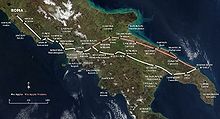
It was now 295 and Alexander returned to Babylon to spend two years dealing with administrative problems and inspecting the new facilities being built at the head of the Persian Gulf. In 292 he dispatched his son Philip to occupy Kolchis and the southeastern shore of the Black Sea, while he traveled to Alexandria to attend to affairs in the “second capital.” The following year he again prepared for the invasion of southern Italy, moving his fleet and army to Epirus. He assembled a force of some 35,000 infantry and 3000 cavalry while making contact with the Samnites, the Greek cities in the south and the Gallic tribes settled in the Po valley. In 290 the expedition crossed the Adriatic with no opposition and landed at Tarentum, which had agreed to an alliance on the promise of new territory. Other Greek cities joined, seeking aid against the local Italic tribes, the Lucanians and Bruttians, and the King and received word that the Senones and Boii were preparing to cross the Appenines, but chastised by the just concluded war with Rome, very few Samnite communities revolted. The fleet went on to Messana to ferry a Sicilian Greek army to the mainland.

The Senate meanwhile had been negotiating with the Lucanians and Bruttians, offering them new lands to be taken from their traditional Greek foes, while Samnite loyalty was buttressed with promises of land in Apulia. Two legions and allies under the consul P. Cornelius Rufinus were sent north to overawe the Etruscan towns and join a Ligurian army hoping to acquire land from the Senones. His colleague, M’. Curius Dentatus, raced south along the Appian Way with two more legions, picking up some Samnite units along the way. A fifth, understrength legion was hastily raised and sent south along the coast to make contact with the Lucanians.
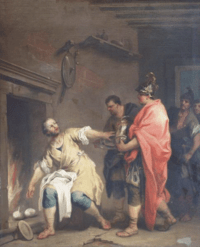
Dentatus telling the Samnites to shoved it

Dentatus telling the Samnites to shove it

In the north Rufinus marched to Arretium, which was being besieged by an army of Senones, which was obliterated in a set battle outside the city walls. Intimidated, the Boii hesitated, only to be overrun by the Ligurians moving east into their lands. Establishing a few key garrisons and leaving the Ligurians to sort things out, Rufinus headed back south. Almost 500 miles to the south the King moved his army to Thurii to confront a Lucanian horde converging on that city and defeated it with ease at the Battle of the Sybaris River, leading the major Bruttian tribes to open negotiations with him. Using his mercenaries as garrison troops and taking the meager forces of his Italian Greek allies, Alexander then began the march up the recently extended Appian Way, awed by the Roman engineering. To his surprise he learned that Dentatus had already passed Maleventum on his way to the Roman colony of Venusia. Leaving his Greek allies to straggle, he undertook the kind of forced march that had surprised Thebes forty-five years earlier, but he himself was surprised to find Dentatus and his army encamped south of the city. Never had he encountered a foe who could move as fast as he. Further surprise came when the consul refused to withdraw into the city though outnumbered by as much as a third. The resulting Battle of Venusia was a victory for Alexander, but while the legions could make little headway against his phalanx, they seriously cut up his Greek infantry before being flanked by his cavalry. Dentatus lost his life, and less than half his men made it into Venusia, which refused to surrender. With winter coming on the King returned to Tarentum and sent his son back to Macedon to gather more troops.
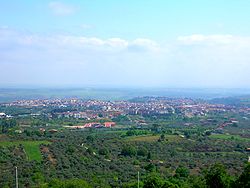
Venusia

Venusia

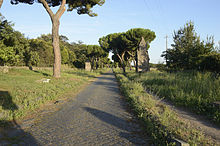
Via Appia

Via Appia

Appian Way

Appian Way

The following year Alexander sent the Sicilians up the western coast, while he again traveled the Appian Way, his army augmented by replacements from the east. Harassed constantly by bands of Lucanians, the Greeks met the now reinforced legion from Rome near Paestum and despite the presence of Macedonian officers were roughly handled and headed back south. The defenses of Venusia had been strengthened, and leaving a covering force, the King marched on Maleventum, where a gate was betrayed and the Roman garrison massacred. Continuing towards Capua, Alexander ran into three legions under the consul M. Valerius Maximus Corvinus, and the Battle of Caudium was fought. This time the Senate had dispatched all the cavalry they could find, but though holding out longer and actually damaging the phalanx, the Romans were sent reeling back to Capua, which the King prepared to besiege. The Senate began discussing negotiation, but the blindold censor Appius Claudius Caecus shamed them with his outrage that they dare talk peace while an enemy was still on Roman soil.

Appius Claudius chastising the Senate

Appius Claudius chastising the Senate

Maleventum
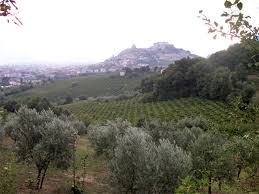
Maleventum

Caudium

Caudium

Meanwhile, Alexander discovered that the other consul, Q. Caedicius Noctua, was approaching Venusia with two legions from Apulia, and abandoning the siege of Capua, he rushed south to deal with the threat to his communications, passing Venusia before Noctua arrived. With his army damaged by two major battles, facing yet another Roman force and worse, learning of troubles in Asia, he made the hardest decision of his impetuous life and sent envoys to Rome. Exhausted, the Romans agreed to stay out of Sicily in return for the King’s evacuation of Italy. Alexander returned to Macedon, and the following year on his way through Thrace he succumbed to a heart attack at the age of 68.

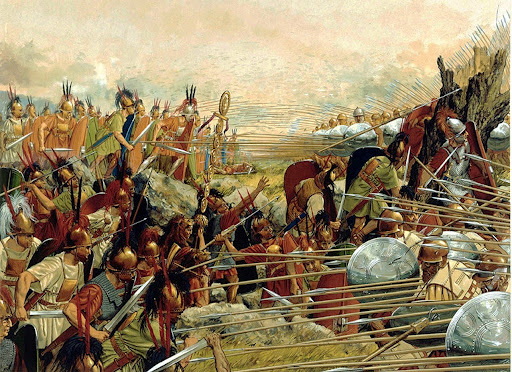
Roman legions vs. Macedonian phalanx

Roman legions vs. Macedonian phalanx

The world held its breath, and Philip III succeeded his father as ruler of the oikoumene, the Greek-speaking world. The body was taken to Aegae, where the tribute of an Empire reaching from Numidia to India was spent to inter Macedon’s greatest king. Across this vast landscape Macedonian soldiers wept as they received the news of his death and consoled themselves with the thought that he was now a god, looking down upon them from the heights of Olympus. The greatest hero since Achilles was dead.

But not everyone grieved, and the new King was immediately faced with revolts from Sicily to the far east. Philip sent Antigonus’ son Demetrius Poliorcetes to deal with Sicily, while he moved east to deal with revolts by his governors in Media and Bactria and reached the Iranian plateau in 285. Media was easily pacified, but there he encountered Greek troops fleeing the occupation of the Indus valley by Chandragupta and learned that Seleucus had been killed. The King made a momentous decision and sent envoys to recognize Chandragupta’s conquest and Bactrian independence, deciding to withdraw the frontiers of the Empire west to a line from the Caspian Gates south along the eastern border of Persis. Seleucus’ son Antiochus Soter, was made viceroy of the entire Persian heartland.

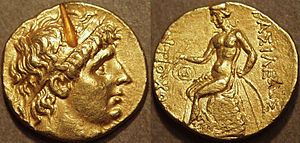
Antiochus Soter

Antiochus Soter

Demetrius

Demetrius Poliorcetes

Back in Babylon in 283 Philip decided to move the capital to Alexandria and ordered the Old Royal Road west of Babylon refurbished and a spur built south to Egypt. With the Empire momentarily at peace he turned to domestic activities, especially Hellenization, and began a program of encouraging poorer Greeks to settle in western Asia, particularly Syria-Palestine and along the route to Babylon. Because of continued Macedonian resistance, his father’s experiment with joint Greco-Iranian units was abandoned, and Asian troops were henceforth used almost exclusively in the east. Despite calls by his more aggressive generals to revive the Italian campaign, the King decided to postpone it in favor of more consolidation. Then suddenly he was dead, killed when thrown from his horse in 280.

The heir, Alexander IV, was still in his early teens, and Ptolemy Philadelphos, son of the Alexander’s Companion of the same name, was established as Regent. Until his death in 262 Ptolemy continued to advise the King, even after he achieved his majority, but Alexander was not cut from the same cloth as his predecessors and fell into a life of indolence, the court filling with sycophants. The administration of the Empire fell upon the shoulders of its governors and viceroys, who began passing their power on to their own sons. Revolts, all stirred by Greek and Macedonian adventurers, were successfully suppressed with little direction from Alexandria. In 263 the viceroy in Macedon, Demetrius’ son Antigonus Gonatus, having spent the later 260s smashing Gauls on both sides of the Danube, foolishly decided to expand his power by “liberating” the Greek cities in Italy, which had by now fallen under Roman control. Experienced only in fighting barbarians, however, his poorly led army was twice defeated by the Roman legions, and the enterprise was abandoned. Intimidated by the Macedonian fleet in the Adriatic, Rome was content with repelling the invasion, but was now clearly eyeing Sicily, whose garrisons were beefed up by Antigonus.
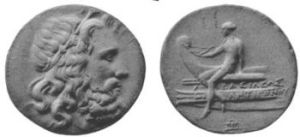
Antigonus Gonatus

Antigonus Gonatus

Ptolemy Philadelphos

Ptolemy Philadelphos

Alexander died in 248 and was succeeded by his son Perdiccas III, who after three years of incompetent rule was assassinated, perhaps by his younger brother, who succeeded him as Philip IV. Philip is generally considered the last of the great Temenid kings, and during his long reign the Empire was as united as it ever would be. While he confirmed the position of many of the governors inherited from his brother, he attempted to regain control of the offices, fearing any long tenure of power could provide a dangerous local power base. Unfortunately, that was already the case in Macedon and Babylonia, and for all his ruthlessness Philip hesitated plunging the Empire into civil war and tolerated the powerful Antigonid and Seleucid families. He signed a treaty with Rome delineating spheres of influence: Spain and Gaul, where the Romans already had colonies, would be off limits to the Empire, and while both parties were free to send raids into the area north of the Alps and the Adriatic, neither could establish any permanent facilities. Apart from punishing various barbarians off the northern and eastern frontiers and an expedition up the Nile, he refrained from serious military operations and oddly, patronized the arts.

Incredibly, Philip ruled until 199, dying at the age of 80, still loved and feared by his subjects. He had outlived all his sons, and a nephew took the throne as Alexander V. Trouble began almost immediately. In Pella Philip, grandson of Antigonus Gonatus, contested the succession, asserting that the Macedonian troops did not accept Alexander, and in 198 he began moving forces into Asia Minor, replacing the local governors with his own men. Alexander mustered what forces he could and moved north to bar the Cilician Gates, summoning Antiochus Megas, great great grandson of Seleucus, from the east, where he was embroiled with the troublesome Parthians. Fortunately for the King, whose hastily collected forces would have serious trouble facing Philip, the Illyrians, quiet for several generations, poured into Macedon and more threatening, Syracuse was said to have appealed to Rome for liberation from the Macedonian yoke. Leaving what forces he could, Philip rushed back west and sent his fleet back from the Aegean to Sicily to block any attempt by the Romans to cross to the island.

Antiochus Megas

Antiochus Megas

Philip

Philip

Coming west, Antiochus affirmed his loyalty to the King, if only to see the rival Antigonids crushed, and 197 was spent clearing Asia Minor and raising new troops. The following year Alexander invaded Europe, while Antiochus returned to the east to deal with a Parthian invasion of Media through the Caspian Gates. The Illyrians had been subdued, but now outmatched by the King, Philip retreated into the Macedonian highlands and offered the Gauls land in Thrace if they aided his cause. This caused the Thracian tribes to enthusiastically support the King, and soon Philip’s Macedonians were deserting in ever increasing numbers. He fled to Italy and sought asylum with the Romans.

Alexander spent two more years in the ancestral homeland and the lands to the north, repairing the damage done by Philip and executing every member of the Antigonid family he could get his hands on. In early 193 came news of a usurper in Alexandria claiming to be a surviving son of King Philip and raising an army, his funds most likely supplied by Antiochus, now surnamed Parthicus. The following year the King easily defeated the usurper, who had been unable to secure Gaza and had remained in the Delta, but he was killed in the battle under suspicious circumstances. Alexander’s youngest son, still a boy, was proclaimed King as Alexander VI by the Macedonians in the army, while his eldest brother, serving as viceroy in Pella, was elevated as Philip V by his Macedonians and immediately began collecting an army. With a promise of autonomy he recruited Alexandria Hesperia and Numidia to his side, raised troops in Sicily and sent several delegations to the Parthians.

Antiochus collected his forces from his eastern frontier and marched toward Anatolia, while Philip secured the Ionian cities and cleared the Cilician Gates. Remembering the destruction of Carthage, the Phoenician cities declared for Antiochus, who had reached the upper Euphrates by 190. But the grand battle never materialized. From east and west came the news: the Parthians were swarming into Media and the Romans had invaded Sicily. Antiochus agreed to recognize Philip as the true King, and Philip in turn formally ceded all the territory east of the Euphrates to Antiochus and guaranteed his right to recruit from the Greek cities. King Antiochus I returned home to face the Parthians, the Phoenician cities submitted and Philip’s boy king brother was dead by the time his men reached Alexandria. Philip took his army back to Macedon, where he confirmed that the Romans, never very good at siege craft, were bogged down before the walls of Syracuse. Ignoring the lessons of a century earlier, he began assembling in Macedon forces from all over the Empire and demanded that Rome evacuate Sicily or face war. Delighted with being presented a casus belli and opportunity to deal with the threat across the Adriatic, the Romans declared war.

The invasion came in 187, after Rome spent the previous year securing its position in Sicily and dealing with problems in the Po valley. A new Roman fleet with new boarding tactics cleared the way across the Adriatic, and four legions were shipped to Greece. It took the Romans almost three years to break into Macedon, and there they met Philip at Dion in the biggest battle ever fought: P. Claudius Pulcher and L. Porcius Licinus led more than 40,000 men against Philip’s 55,000. By nightfall Philip and his Companions lay dead on the field, along with perhaps 25,000 Greeks and Romans. The King’s eldest son, now Alexander VI, fled with his remaining troops to Anatolia, where a number of revolts had erupted. The Romans declared the Greeks free and placed the exiled Philip on the Macedonian throne. The Empire had lost the homeland and all its European possessions.

The dynasty began a downward spiral. Alexander was assassinated in 183 while on campaign in Cappadocia, to be followed by Alexander VII, Perdiccas IV and Alexander VIII in scarcely two decades. Although the Romans kept Philip and his successor Perseus on a short leash during this period, a Gallic invasion of Anatolia and internal revolts, some prompted by Rome, were chipping away at the Empire. Adding to the troubles were the Seleucids, who seized control of Syria-Palestine when they were finally driven from Mesopotamia by the Parthians. By the middle of the century the Alexandrine Empire, once stretching from Numidia to the Indus, had been reduced to Lower Egypt, Cyrene and the fortress of Gaza and under the child King Philip VI was being governed by a constantly scheming coterie of advisors. Prematurely aged from his sybaritic life, Philip died suddenly in 132 and a nephew was elevated as Alexander XII. Within the year he was dead, the victim of a coup launched by a Sicilian Greek mercenary, who promptly proclaimed himself Sosistratus I, ruler of Egypt. The ancient Temenid dynasty was at an end.

Perseus

Perseus

In the century following the demise of Alexander the Great’s Empire the Romans slowly moved into the lands of the oikoumene, ending the second Antigonid dynasty in Macedon when its kings refused to stop meddling in Greece and then occupying Anatolia and Syria in order to prevent the Parthians from doing so. Thus, the Romans became rulers of the Hellenic world, and while the Alexandrine Empire had disappeared, the work of the Temenid kings in Hellenizing Anatolia, Syria-Palestine and Lower Egypt remained. The urban centers and even some of the rural populations of these regions were thoroughly Greek; even the curious and obstinate Judeans, having lost the most fanatic zealots of their invisible god in a failed revolt, were Hellenized. The Romans would preserve this inheritance for another half millennium and pass it on to Europe.

Finally, there has long been speculation about the course of Western history had Alexander the Great conquered Rome. The destruction of Roman power would certainly have left Hellenism dominant in the Mediterranean, but there is little reason to believe, given the history of the post-Alexander III oikoumene, that a Greek Mediterranean could produce the long-term stability that allowed the Roman Republic/Empire to establish classical civilization so well in western Europe that its core could survive the devastation of the barbarian migrations. And in any case, it was essentially Hellenic civilization that was passed on by Rome.

What a guy!

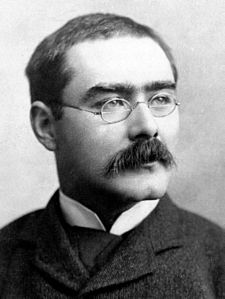
What a guy!
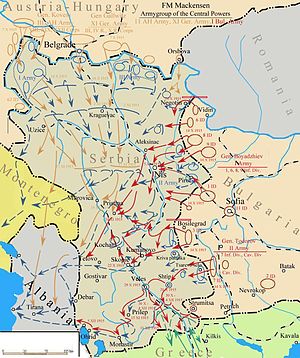
Reports from the Front #4: June to July 1915

(Finally. I have found the research for these pieces to be fairly time consuming, so I may have to back off on the detail. It would be nice to comment on other things occasionally.  Incidentally, my Latrodectus Hesperus has disappeared – pity, I got used to seeing her there whenever I went into the utility room.)


In Westen nichts Neues

Im Westen nichts Neues


In June and July of 1915 nothing much was happening on the Western Front: Im Westen nichts Neues. Nothing much beyond a daily death toll from shelling, trench raids and suchlike. But there was plenty of action in the east. At the beginning of June it was decided to continue the Gorlice-Tarnów offensive in Galicia despite the entry of the Italians into the war, and Lemberg was captured on 22 June and the Bug River reached by 13 July. This created a huge Russian salient stretching west to Warsaw, and the next step would be to pinch it off.

 Russian prisoners


Russian prisoners

Bug River

Bug River

Galician offensive

Galician offensive

Further to the south in the Caucasus the Russians launched a new offensive on 19 June and immediately ran into stiff Turkish resistance. Most specifically, on 10 July they attempted to clear the area west of Manzikert, captured earlier, and found themselves outnumbered three to one by the Turks, who promptly counterattacked on 16 July. The Russians evacuated the entire Van region, and on 20 July Turkish forces recaptured Manzikert, site of the monumental victory of the Seljuq Turks over the Byzantine Empire in 1071. Even further to the south the Indian Expeditionary Force was slowly making its way up the Tigris, suffering far more from the heat and disease than Ottoman resistance.

Troops of the Indian Expeditionary Force

Troops of the Indian Expeditionary Force

Area around Manzikert

Area around Manzikert

Lake Van

Lake Van

Off to the west the Italians struck their first blow on 23 June, seeking to force the Austrians from the Isonzo (Soča) River and capture Gorizia, the key to Trieste to the south. The Italians had a three to one edge in troops, but their equipment was inadequate, the morale of the poorly trained recruits was low and their commander, General Count Luigi Cadorna, unpopular. Cadorna understood only one offensive tactic, the frontal assault, which was certainly a questionable approach against the well-fortified Austrians on higher ground. The First Battle of the Isonzo ended on 7 July with minimal Italian gains and 15,000 casualties against 10,000 for the enemy. Receiving reinforcements and more artillery, he tried again on 18 July, and fierce hand-to-hand fighting characterized the Second Battle of the Isonzo, which came to an end on 10 August when both sides ran out of ammunition. The Austrian lines held, though they lost 46,600 men; Cadorna lost 41,000. There would be more.
Isonzo river

Isonzo river

The Isonzo Front

The Isonzo Front

Count Cadorna

Count Luigi “Isonzo” Cadorna

Meanwhile, far to the south an odd naval war was taking place. Crippled by engine problems, the German light cruiser SMS Königsberg hid in the Rufiji River delta, where she was discovered in October 1914. On 5 November three British cruisers cornered the Königsberg, but they were unable to sail up the delta and after firing a few shells they settled for a blockade. By March 1915 the Königsberg was in trouble with shrinking food supplies, low morale and deaths from tropical diseases, but though a German supply ship pretending to be Danish was trapped in Manza Bay and burned, much of the cargo was retrieved and delivered to the Königsberg and German land forces. In June two British monitors towed from Malta arrived at the Rufiji, and aided by spotter aircraft (before they fell apart in the glue-melting heat), they destroyed the Königsberg, which was scuttled by her captain, Commander Max Looff. Salvaging the cruiser’s ten 105-mm guns, the crew ultimately joined

SMS Königsberg scuttled

SMS Königsberg scuttled

Lettow-Vorbeck’s merry band.

One of SMS Königsberg's guns

One of the Königsberg’s guns

The Königsberg

SMS Königsberg

Captain Max Looff

Captain Max Looff

Then there was Lake Tanganyika. At the outbreak of war the Germans had two small warships on the lake, SMS Hedwig von Wissman and SMS Kingani, both in the fifty ton range. They quickly seized control of the lake, sinking a Belgian and a British steamer, and that allowed them to easily send raiding parties into the Belgian Congo and Rhodesia. In February 1915 the Germans launched the 1600 ton SMS Graf von Goetzen, which had been built in Germany in 1913, disassembled and packed into 5000 crates and shipped to Africa. In response the British ordered from England two forty foot motor boats, the Mimi and the Toutou, which were loaded on a freighter and dispatched to Africa on 15 June 1915. Their arrival would set the scene for Hepburn and Bogart in the African Queen.

The Goetzen's 105 mm gun from the Königsberg

The Goetzen’s 105-mm gun from the Königsberg

SMS Graf von Goetzen

SMS Graf von
Goetzen

Lake Tanganyika

Lake Tanganyika

Finally, the Armenians. As non-Muslims in the Ottoman Empire, the Armenians had long suffered discrimination and disabilities, but not until the late nineteenth century did the oppression blossom into widespread violence, as growing Armenian resistance, the proximity of the Russian Empire and Great Power interference brought on a Turkish backlash. While the government deliberately stirred rebellions with harsh measures, Kurdish irregulars were unleashed on the Armenians to essentially do as they pleased. The result was the Hamidian massacres of 1894-96, in which between 100,000 and 300,000 Armenians were killed. But in July 1908 Third Army officers who were members of the progressive Young Turk movement compelled the despised Sultan Abdul Hamid II to establish a constitutional monarchy. All the minorities rejoiced.

Armenians celebrating the Young Turk coup

Armenians celebrating the Young Turk coup

Abdul Hamid II

Abdul Hamid II

Victims in Erzurum 1895

Victims in Erzurum 1895

Early next year there was a counterrevolution, but the government was able to suppress it and depose Hamid in favor of Mehmed V, who would be only a figurehead. During the brief struggle, however, the reactionaries took out their anger on Armenians, and when troops were sent in to quell the massacres, many joined in the looting and killing in Adana province. Anywhere from 15,000 to 30,000 Armenians died in the Adana Massacre. The loss of most of the Ottoman territory in Europe as a result of the Balkan Wars (1912-1913) convinced many Turks to focus more attention on the Anatolian heartland, in which region the Armenians were a large minority. Further, a flood of Muslim refugees from Europe washed across the Bosporus, and perhaps 800,000 settled in Armenian areas, where they would play a major role in the slaughter to come.

Christian quarter of Adana

Christian quarter of Adana

Victims in adana

Victims in Adana

On 24 April 1915 some 250 Armenian leaders and intellectuals were arrested, later to be executed or deported, and on 27 May Istanbul ordered the forced deportation of all Armenians, the notorious Temporary Law of Deportation. Granted, many had been aiding the Russians, but old hatreds mattered more, and it quickly became clear that deportation was simply a mechanism for killing Armenians of all ages. The “deportations” were actually death marches, and for those who survived the depredations and attacks there were “concentration” camps, where the inmates were essentially starved to death. The Turks did not operate with the incredible efficiency later displayed by the Third Reich, but the whole operation was a deliberate attempt to exterminate the Armenians. It was in fact witnessed by many of the German officers aiding the Turks, and they were appalled by what they recognized as simply murder on a mass scale. And a century later Turkey still maintains this holocaust never happened.

Hauntingly familiar

Hauntingly familiar

Scenes like this could be seen across Turkey in 1915

Scenes like this could be seen across Turkey in 1915

Some of the victims of 24 April 1915

Some of the victims of 24 April 1915


This could be Poland in the 1940s.

This could be Poland in the 1940s.


"Deportation"

“Deportation”